Artwork
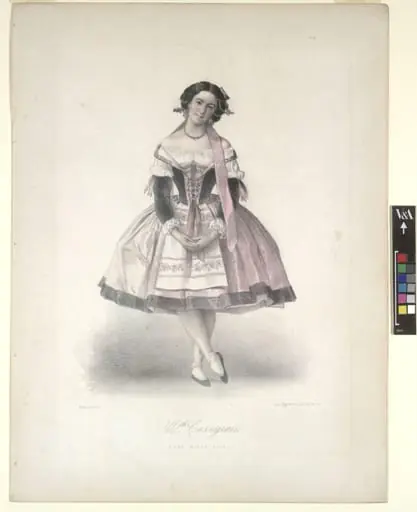
Melle Caroline
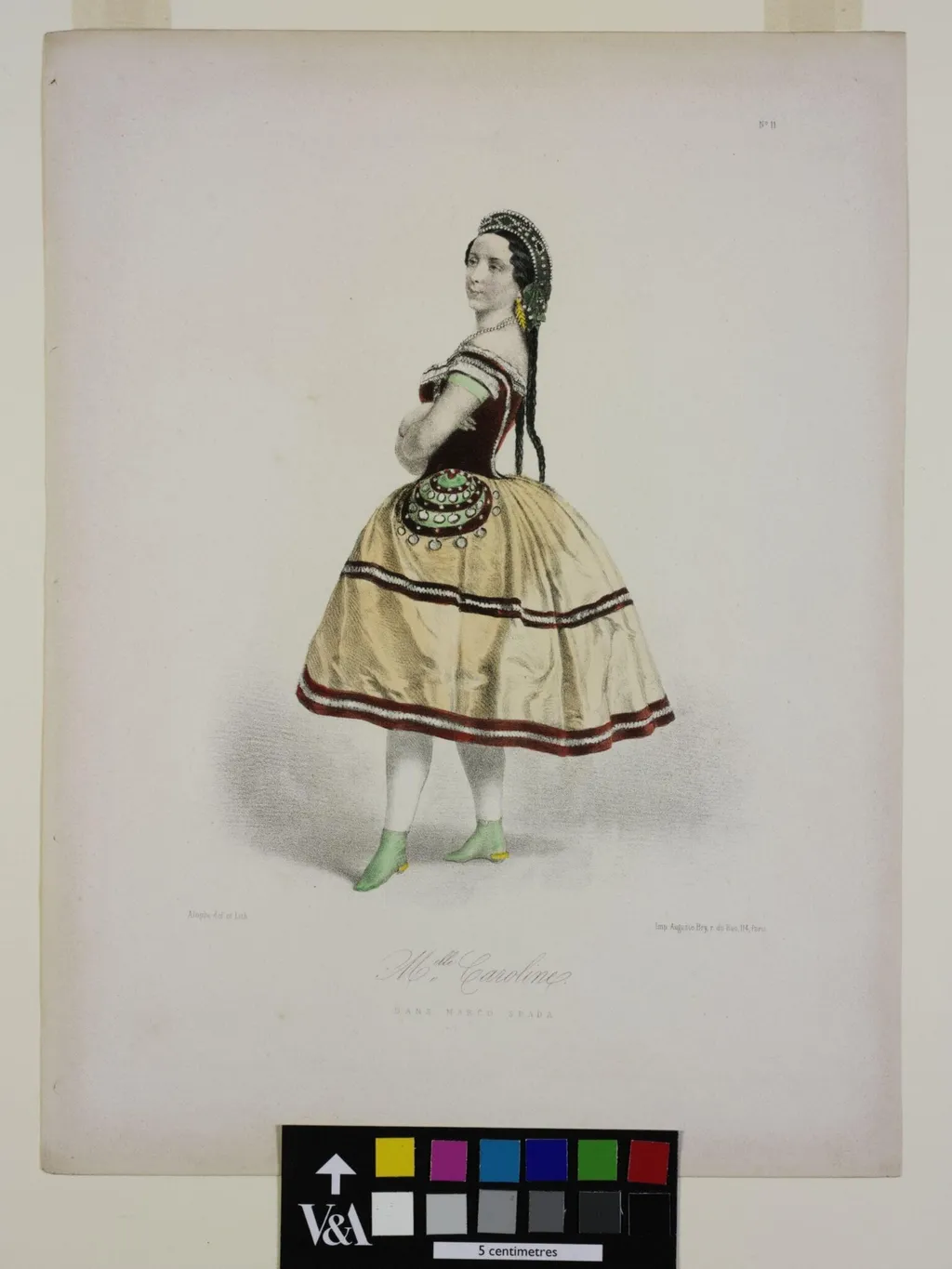
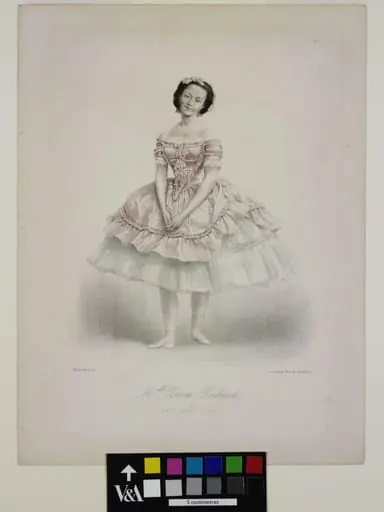
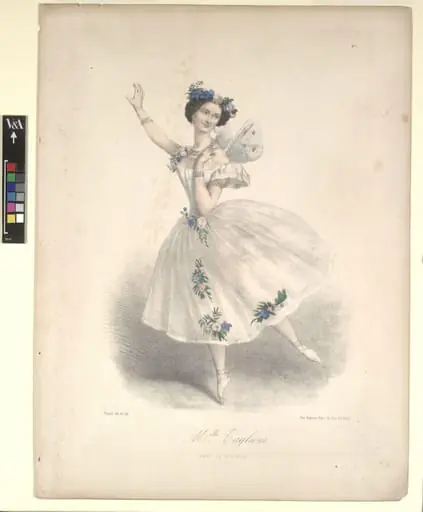
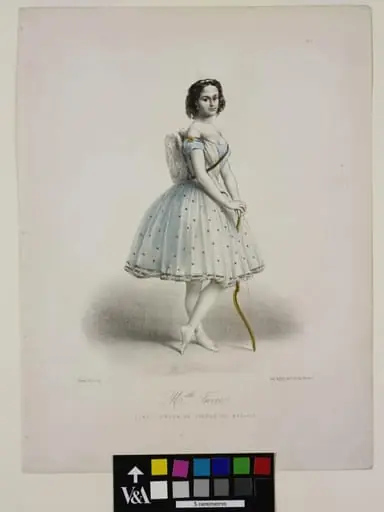
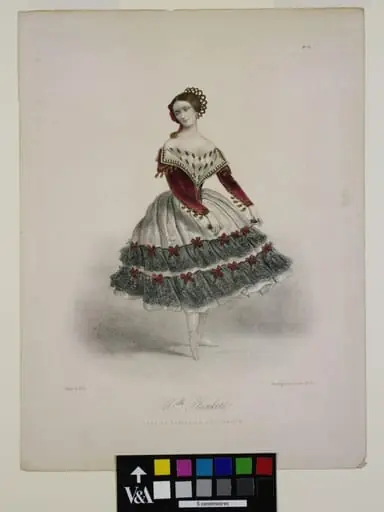
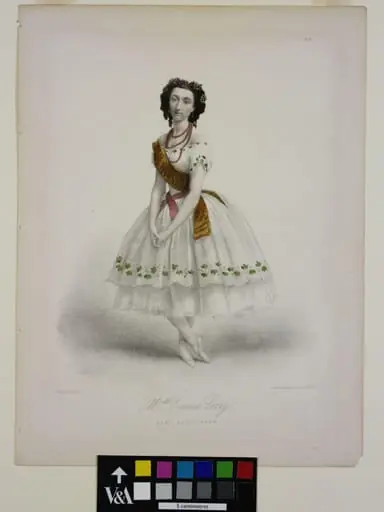
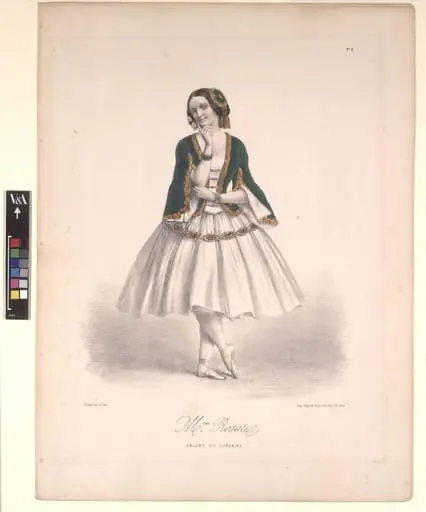
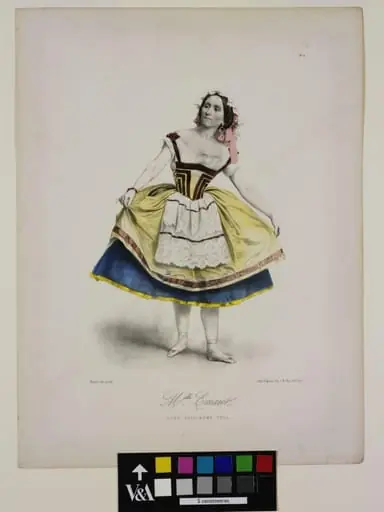
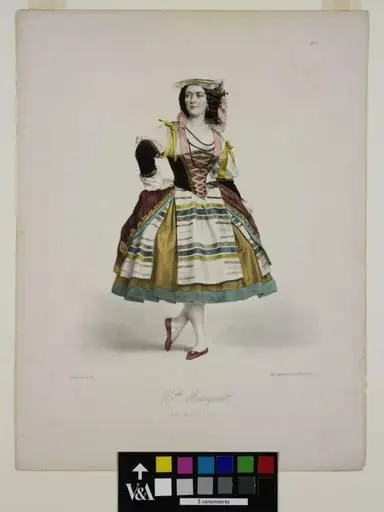
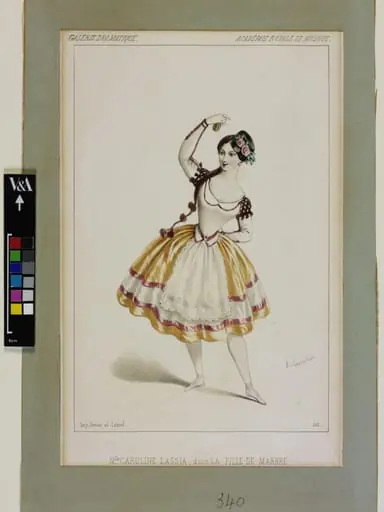
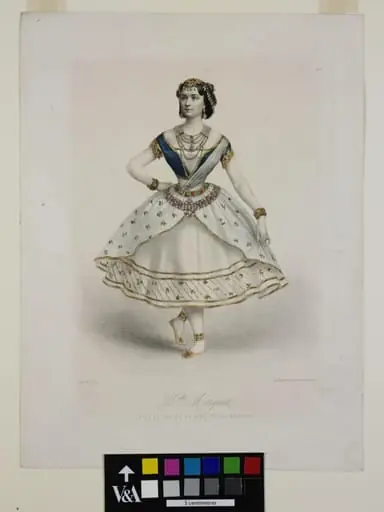
Melle Caroline is a print by the Impressionist artist Marie-Alexandre Alophe. It dates from 1860 and is held in the collection of the Victoria and Albert Museum. Marco Spada was a ballet produced at the Paris Opera in 1857, notable for its convoluted plot and lavish staging.
About this work
Overview
Its legacy survives primarily through printed images of supporting dancers, rather than the performance itself, which faded from repertory after a brief run.
Marco Spada was a ballet produced at the Paris Opera in 1857, notable for its convoluted plot and lavish staging. Though critically dismissed as overwrought, it gained attention for its theatrical spectacle and the prominence it gave to two leading ballerinas. Its legacy survives primarily through printed images of supporting dancers, rather than the performance itself, which faded from repertory after a brief run.
Subject & Meaning
The narrative centered on melodramatic tropes—bandits, mistaken identities, and adopted heirs—designed to showcase emotional contrasts and dramatic reversals. Its primary function was not storytelling but providing vehicle for star dancers, particularly Carolina Rosati and Amalia Ferraris. The resolution, in which the bandit chief’s daughter is revealed to be of noble birth, served as a conventional device to legitimize her union with her lover, reinforcing social hierarchies through fantasy.
Technique & Style
The ballet employed elaborate stage machinery, most notably a mechanical lift that raised the entire ensemble to reveal an underground cavern—a rare technical feat for its time. Choreography struggled to articulate the intricate plot, leading to reliance on spectacle over narrative clarity. Costumes were designed to suggest regional authenticity, with each dancer’s attire reflecting a stylized national identity, even as they adhered to emerging ballet silhouettes.
History & Provenance
Following a series of mishaps during performances, dancers reportedly began wearing charms as talismans against misfortune. The production closed after a short season, and no full score or choreographic notation survives. The only enduring records are lithographs and engravings, mostly depicting minor performers like Caroline Lassiat in costume, preserving visual details otherwise lost to time.
Context
Created during the French Second Empire, Marco Spada reflected the era’s taste for grandiose, emotionally charged entertainment. While opera and drama embraced complex narratives, ballet still prioritized spectacle and star power. The ballet’s reliance on two principal dancers highlights the growing influence of individual performers in shaping repertoire, even as choreographic language lagged behind narrative ambition.
Legacy
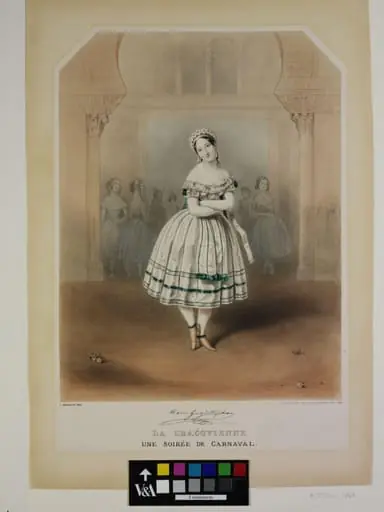
Though forgotten as a performance, Marco Spada endures in printed imagery that documents the evolution of ballet costume and stage design. The prints of dancers like Caroline Lassiat offer insight into how national motifs were codified in dance attire during the mid-19th century. These images remain valuable for understanding the visual culture of ballet beyond its most celebrated works.
Artist & collection
Artist
French lithographer who printed theater stars on silky paper in the 1860s. His prints capture ballerinas in *La Sylphide* and *Marco Spada*, Mademoiselle Fiocre in a Florentine drama, and Mademoiselle Plunkett twirling…