Artwork
Melle Taglioni
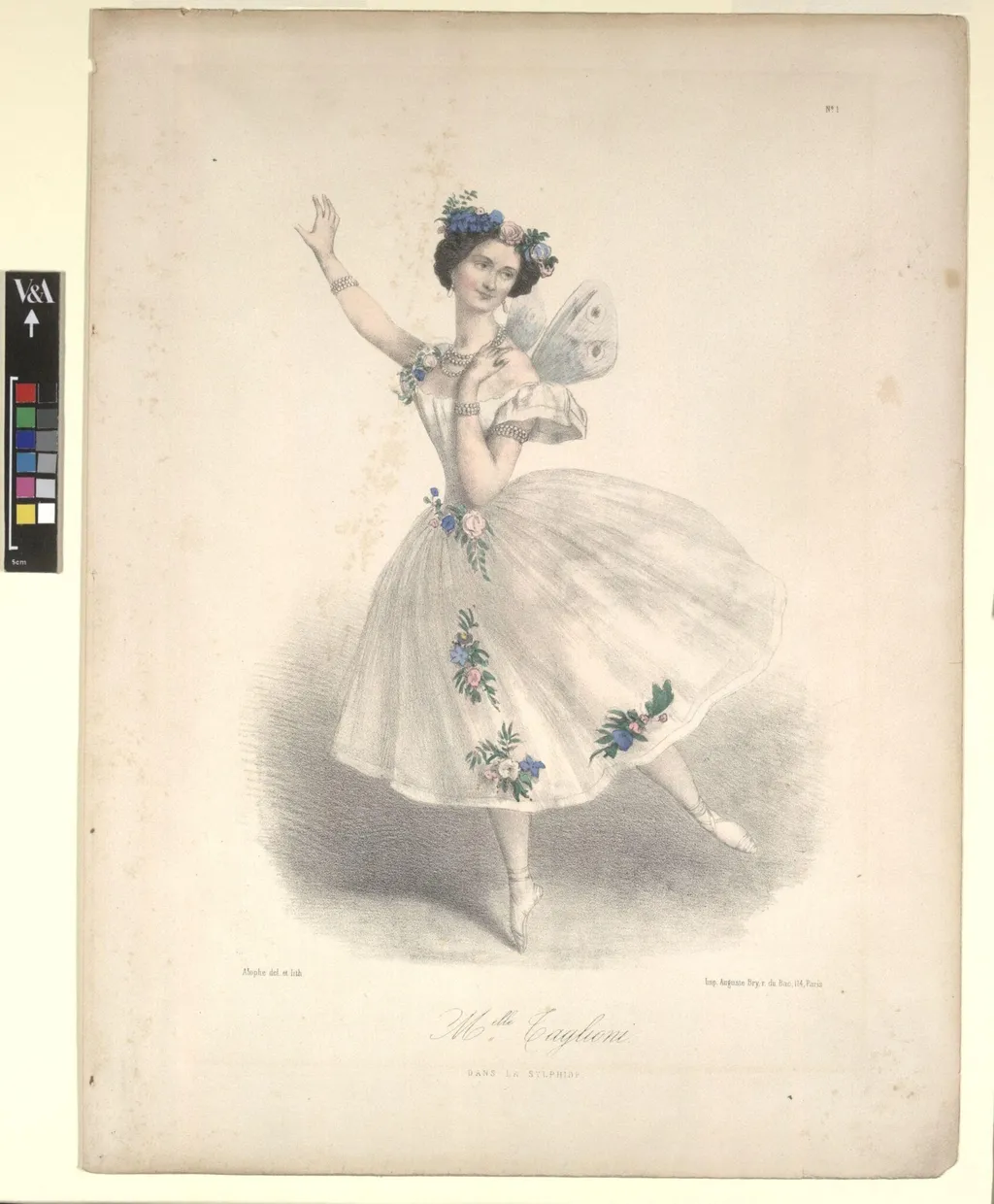
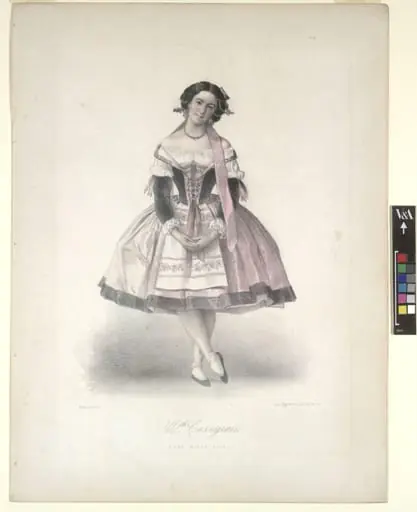
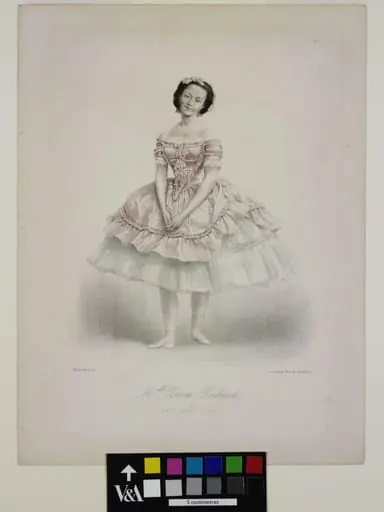
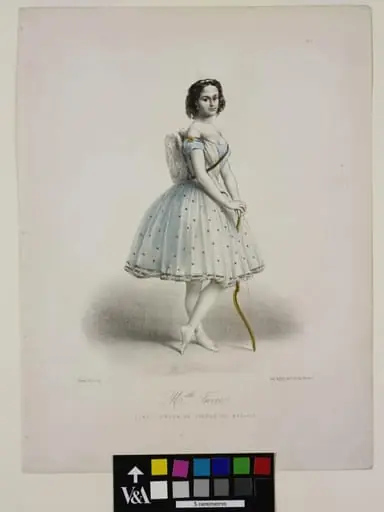
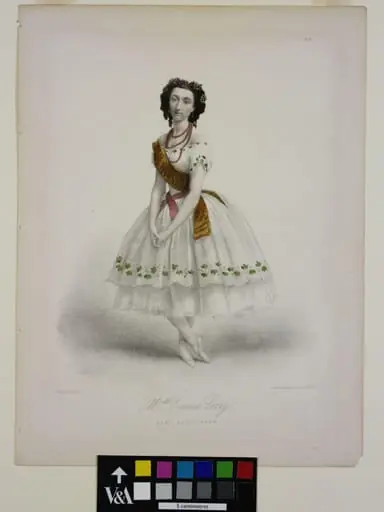
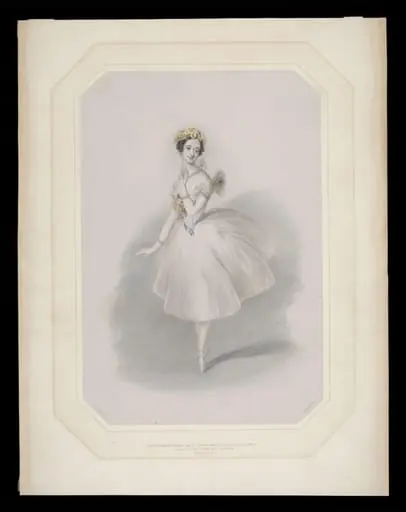
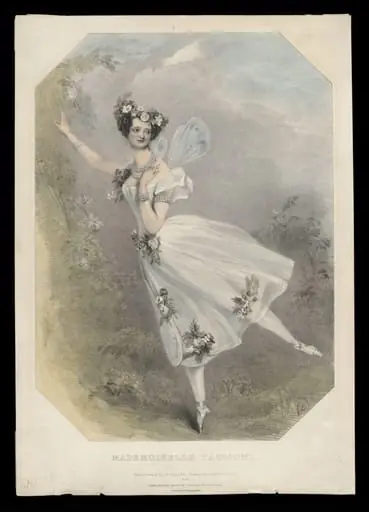
Melle Taglioni is a print by the Impressionist artist Marie-Alexandre Alophe. It dates from 1860 and is held in the collection of the Victoria and Albert Museum. This print depicts Marie Taglioni in her defining role as the Sylph from the 1830 ballet La Sylphide.
About this work
Published around 1860, it’s a copy of an earlier image and captures her as the ideal “ethereal” ballerina.
This print shows Marie Taglioni as the Sylph from La Sylphide, a famous ballet she performed in 1830. Published around 1860, it’s a copy of an earlier image and captures her as the ideal “ethereal” ballerina.
Taglioni’s costume and pose became the standard look for ballerinas. The dress style and shoes reflect 1830s fashion, not stage inventions.
Check out the Victoria and Albert Museum for more on this print.
Overview
This print depicts Marie Taglioni in her defining role as the Sylph from the 1830 ballet La Sylphide. Though published in 1860, it reproduces an earlier image, reflecting a retrospective interest in her legacy. At the time of publication, Taglioni was teaching at the Paris Opera, and the print serves as a visual record of her influence rather than a contemporary portrayal.
Subject & Meaning
Taglioni’s portrayal of the Sylph embodied a 19th-century ideal of femininity—delicate, otherworldly, and detached from earthly concerns. Her performance transformed the ballerina into a symbol of spiritual purity, aligning with Romantic-era aesthetics that prized emotion and transcendence over physical realism. The image reinforces this mythos through her poised, floating posture and translucent attire.
Technique & Style
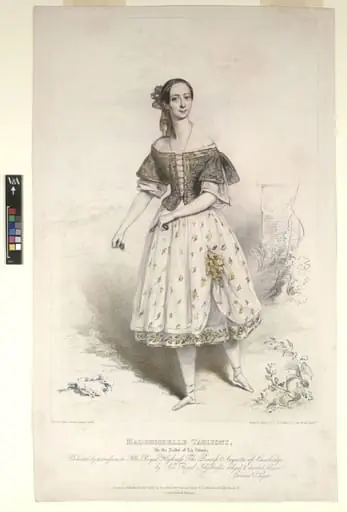
The costume shown follows contemporary civilian fashion of the 1830s: a low-necked, fitted bodice, full sleeves gathered at the upper arm, and a bell-shaped skirt ending at the calf. The slippers are heelless, with minimal reinforcement behind the toes, predating the development of the modern pointe shoe. The design reflects real-world dress, not theatrical invention, and became the template for future ballet attire.
History & Provenance
The print was produced in 1860 as a reproduction of an original image from the ballet’s premiere decade. Its circulation coincided with Taglioni’s later career as a teacher and the growing nostalgia for early Romantic ballet. It was likely intended to preserve her image for students and admirers, cementing her role as the archetype of the ballerina.
Context
In the 1830s, ballet shifted toward ethereal narratives and delicate movement, with Taglioni at its center. Her performances coincided with rising middle-class audiences and the romanticization of women as fragile, transcendent beings. The Sylph’s costume and movement style were adopted widely, shaping ballet’s visual language long before technical innovations like pointe work became standard.
Legacy
Taglioni’s Sylph costume and stage presence established enduring conventions for ballet aesthetics. Though pointe technique evolved later, her silhouette—light, flowing, and grounded in contemporary fashion—became the visual standard for ballerinas throughout the century. The print preserves this formative moment, illustrating how real-world dress informed theatrical identity.
Artist & collection
Artist
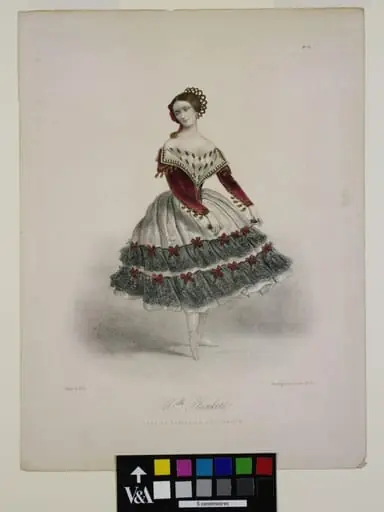
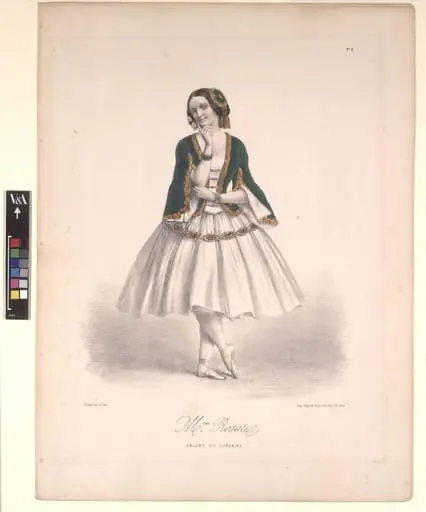
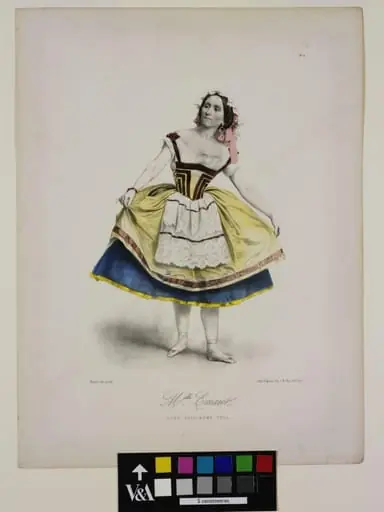
French lithographer who printed theater stars on silky paper in the 1860s. His prints capture ballerinas in *La Sylphide* and *Marco Spada*, Mademoiselle Fiocre in a Florentine drama, and Mademoiselle Plunkett twirling…