Artwork
Mlle Emarot
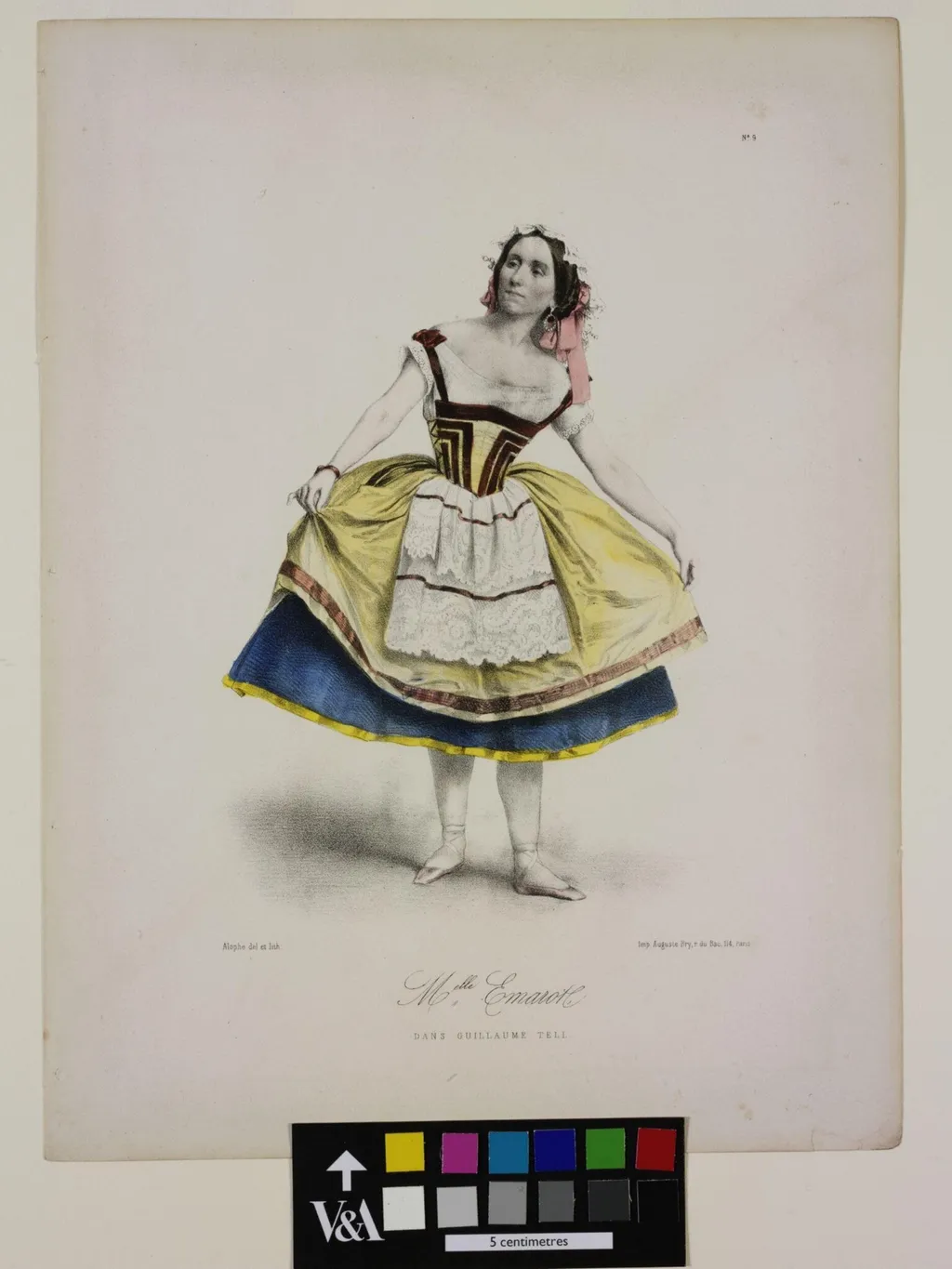
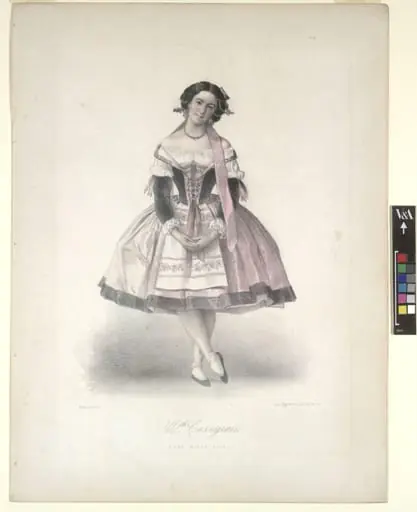
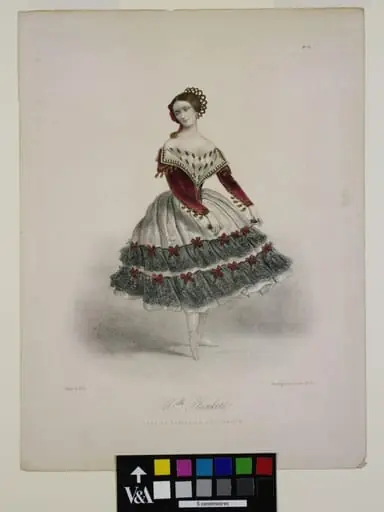
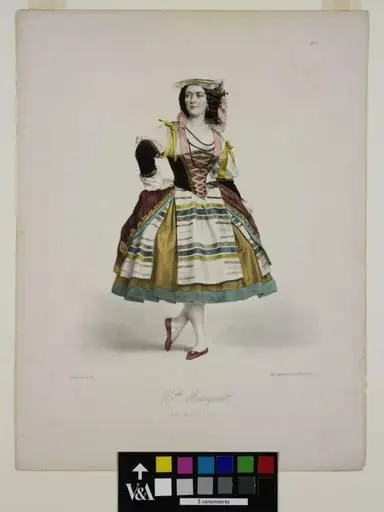
Mlle Emarot is a print by the Impressionist artist Marie-Alexandre Alophe. It dates from 1860 and is held in the collection of the Victoria and Albert Museum. This lithograph depicts Célestine Emarot, a principal dancer at the Paris Opera, portrayed in her stage role as Guillaume Tell’s daughter.
About this work
Overview
The image captures her in a stylized ballet costume typical of the era, reflecting both performance conventions and the visual culture of mid-century Paris.
This lithograph depicts Célestine Emarot, a principal dancer at the Paris Opera, portrayed in her stage role as Guillaume Tell’s daughter. Created around 1850, it belongs to a series documenting Opera dancers, blending theatrical representation with emerging photographic influences. The image captures her in a stylized ballet costume typical of the era, reflecting both performance conventions and the visual culture of mid-century Paris.
Subject & Meaning
Emarot is shown in costume for the role of Arnold’s beloved in Rossini’s opera, a character associated with innocence and national symbolism. Her attire—low-cut bodice, layered tarlatan skirt, and delicate embellishments—signals both her stage persona and the evolving aesthetic of ballet dress. The image functions not merely as portraiture but as a cultural artifact, linking the dancer’s public identity to the romanticized narratives of French opera.
Technique & Style
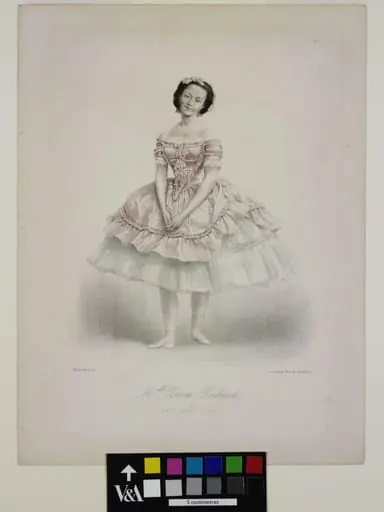
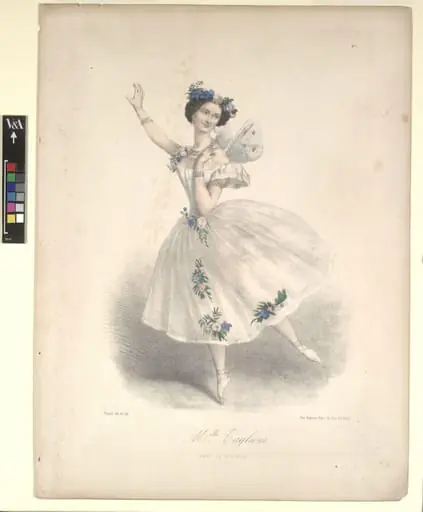
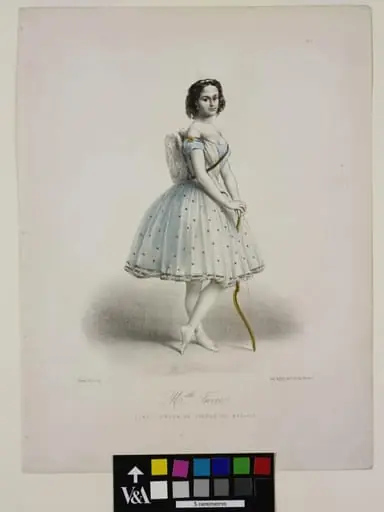
The print is a hand-colored lithograph, likely derived from a photographic source. Its clarity and tonal range suggest adaptation from a small sepia photograph, enlarged and enhanced for wider display. The coloring, applied by hand, adds vibrancy absent in early photographic prints, making the image more appealing as a decorative object. The lines are crisp, emphasizing costume detail over expressive facial rendering.
History & Provenance
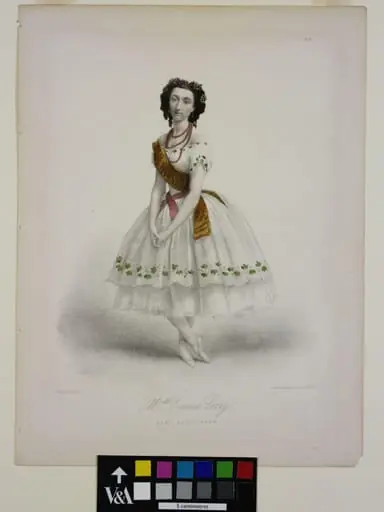
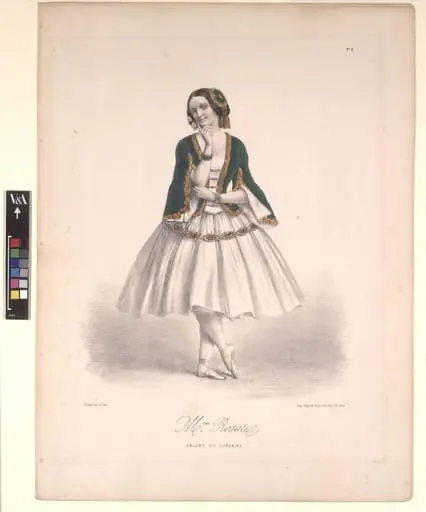
Célestine Emarot was a prominent dancer in the 1840s and 1850s, later known as the mother of Emma Livry, whose fatal accident in 1860 shocked Parisian society. This print was produced during the height of her career, before the tragedy. It was part of a commercial series, Les Danseuses de l’Opéra, distributed to the public as collectible portraits, reflecting the growing market for images of performers.
Context
By the 1850s, photography was beginning to influence printmaking, especially in documenting performers whose likenesses were in high demand. Lithographers translated these small, monochrome images into larger, colorful prints for home display. The ballet costume depicted here had become standardized by this time, with tarlatan skirts and fitted bodices defining the idealized female dancer’s silhouette across European stages.
Legacy
The print preserves a moment in the transition from live performance to mediated representation. While Emarot herself faded from public memory after her retirement, her image endures as evidence of how dancers were commodified and memorialized through print. The series she appears in marks an early effort to archive theatrical culture using new reproductive technologies, bridging stage and studio.
Artist & collection
Artist
French lithographer who printed theater stars on silky paper in the 1860s. His prints capture ballerinas in *La Sylphide* and *Marco Spada*, Mademoiselle Fiocre in a Florentine drama, and Mademoiselle Plunkett twirling…