Artwork
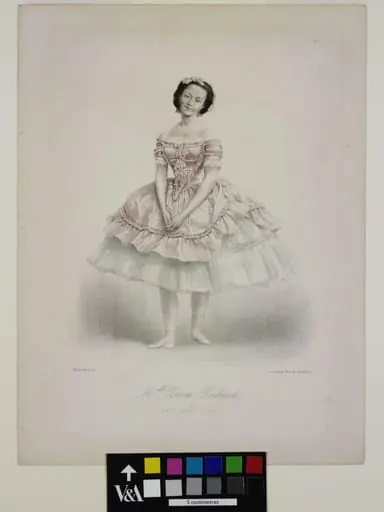
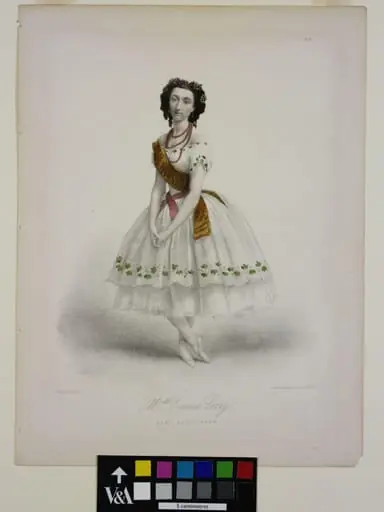
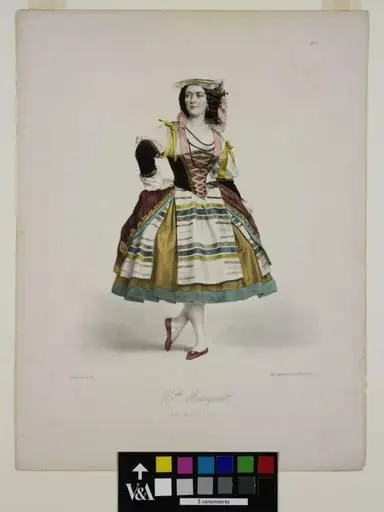
Mlle Cassegrain, dans Marco Spada
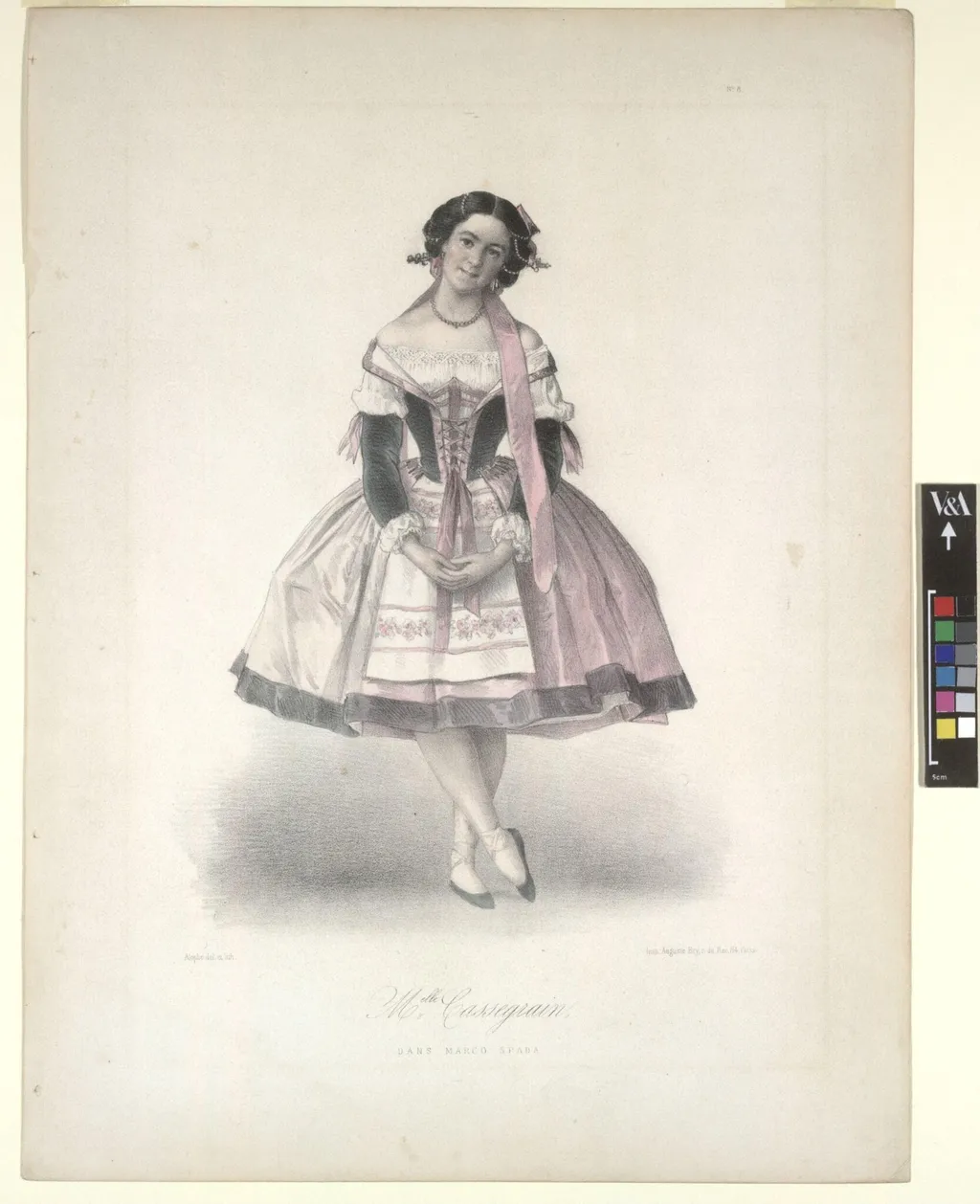
Mlle Cassegrain, dans Marco Spada is a print by the Impressionist artist Marie-Alexandre Alophe. It dates from 1860 and is held in the collection of the Victoria and Albert Museum.
About this work
The ballet had a wild plot full of twists, like bandits, mistaken identities, and a cave that rose up on stage.
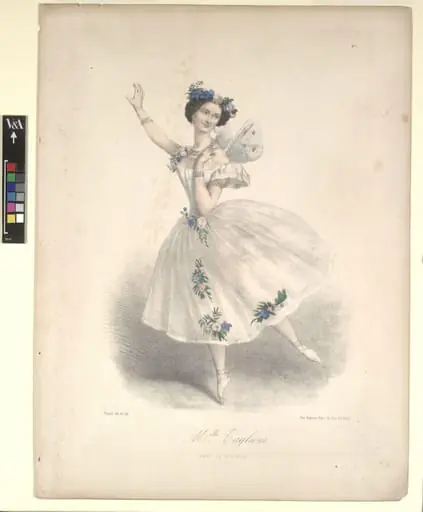
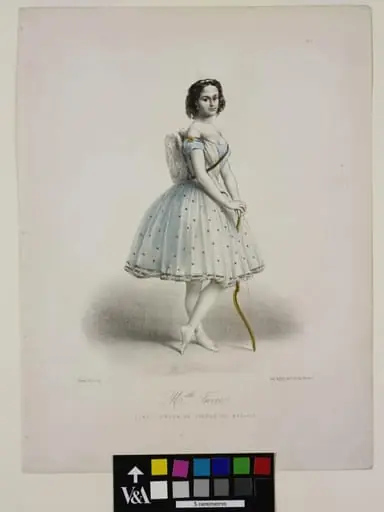
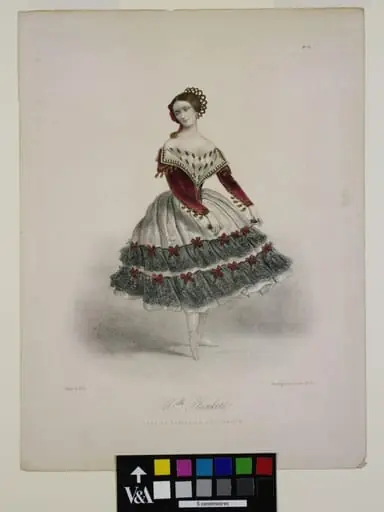
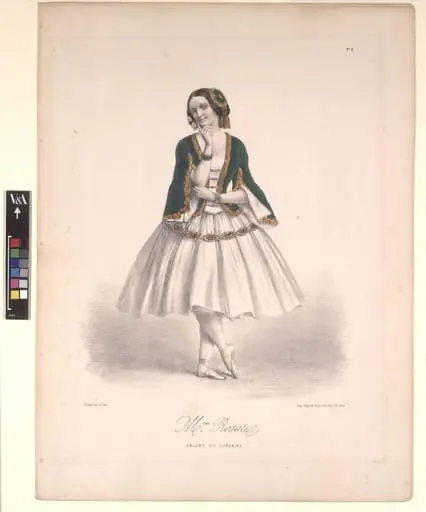
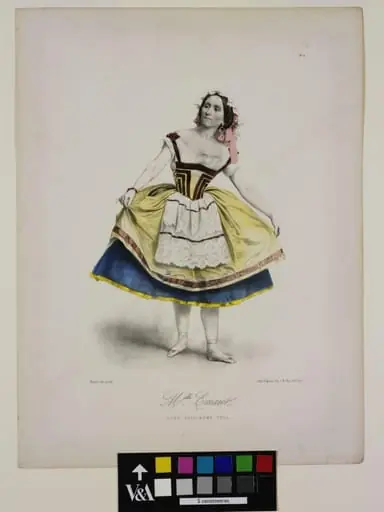
This print shows a dancer in costume for the ballet *Marco Spada*. It was made around 1860, during a time when artists used prints to capture stage scenes.
The ballet had a wild plot full of twists, like bandits, mistaken identities, and a cave that rose up on stage. It was written to showcase two leading ballerinas at the Paris Opera.
Check out the Victoria and Albert Museum if you want to see more prints like this one.
Overview
Mlle Cassegrain, dans Marco Spada is a mid-19th-century print depicting Julie Cassegrain, a minor soloist, in costume from the Paris Opera's 1857 ballet Marco Spada.
Subject & Meaning
The print captures Cassegrain in a conventional dancer's attire, consisting of a fitted blouse and laced bodice paired with a bell-shaped skirt, reflecting typical ballet costume design of the era.
Technique & Style
Created around 1860, the print exemplifies the period's artistic practice of documenting stage scenes through printmaking, offering a visual record of theatrical costume and performance.
History & Provenance
Originally performed at the Paris Opera in 1857, Marco Spada was a complex, melodramatic ballet featuring two strong female leads, designed to showcase stars Carolina Rosati and Amalia Ferraris.
Context
The ballet's notorious set piece, a mechanically raised stage revealing an underground cavern, was both memorable and perilous, leading to the use of charms by dancers for protection.
Legacy
Today, Marco Spada is largely remembered through prints like this one, preserving images of secondary performers and their costumes, rather than the ballet's overall narrative or main stars.
Artist & collection
Artist
French lithographer who printed theater stars on silky paper in the 1860s. His prints capture ballerinas in *La Sylphide* and *Marco Spada*, Mademoiselle Fiocre in a Florentine drama, and Mademoiselle Plunkett twirling…