Artwork
Interior of a Church in Brittany
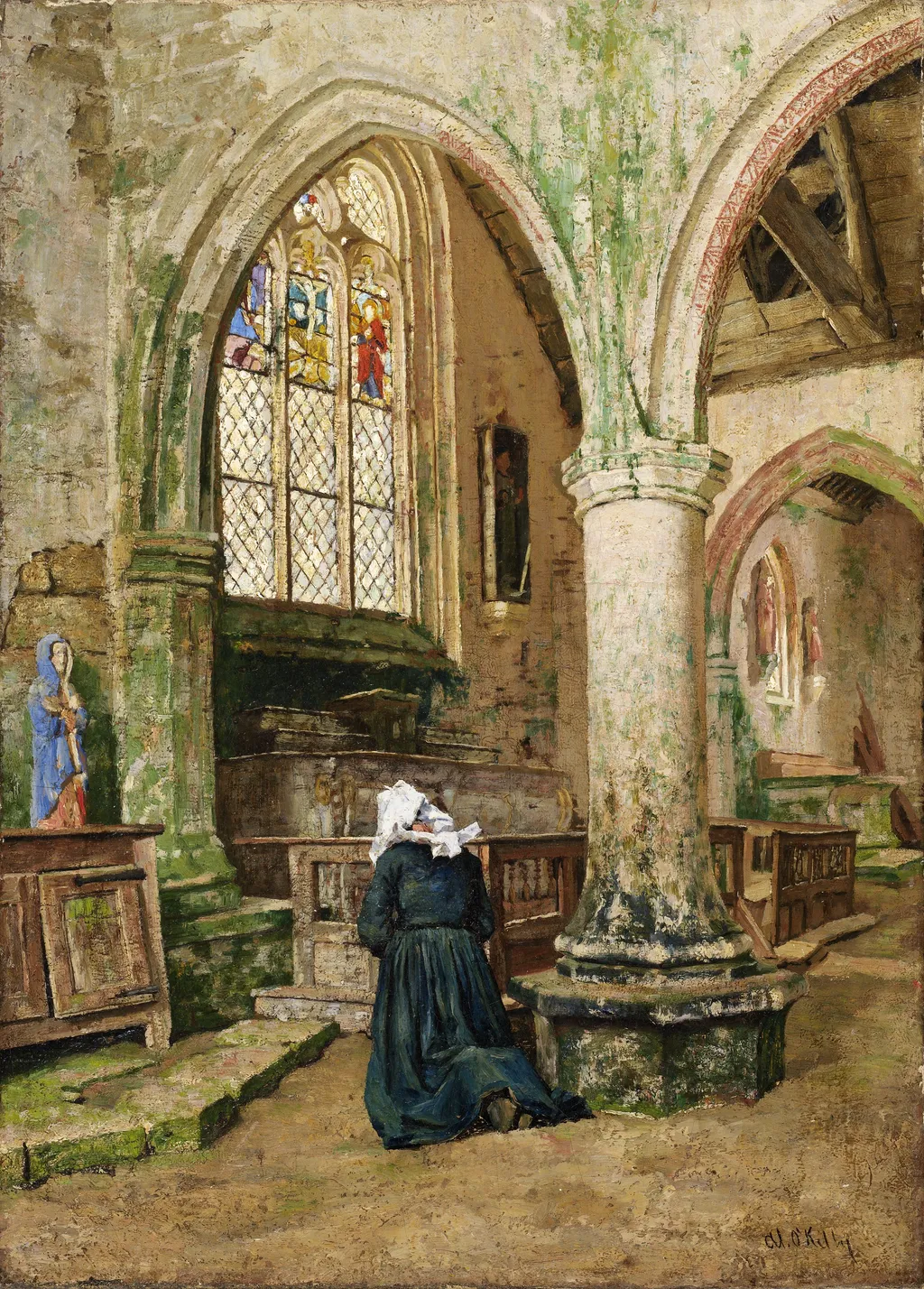
Interior of a Church in Brittany is an oil painting by the Post-Impressionist artist Aloysius O'Kelly. It dates from 1890 and is held in the collection of the National Gallery of Ireland.
About this work
Overview
Interior of a Church in Brittany, painted by Aloysius O'Kelly in 1890, is an oil work that captures the atmospheric quietude of a rural Breton sanctuary.
Interior of a Church in Brittany, painted by Aloysius O'Kelly in 1890, is an oil work that captures the atmospheric quietude of a rural Breton sanctuary. The composition centers on a solitary female figure dressed in traditional dark attire and a white headscarf, kneeling in prayer near a stone font with her back turned to the viewer. O'Kelly constructs the space using worn stone walls and a series of arched windows that admit natural light. This illumination interacts with the stained glass to cast pools of colored light across the floor, contrasting with the shadowed wooden pews that line the nave. A statue occupies a niche in the background, adding vertical balance to the scene. Executed during the height of O'Kelly's career as a painter of Irish and Breton peasant life, the work reflects his commitment to naturalism and his interest in the spiritual resonance of everyday settings. The painting demonstrates his skill in rendering light effects and his ability to evoke a sense of stillness and devotion without relying on dramatic narrative, situating it within the broader context of late 19th-century realist depictions of religious practice in Brittany.
Subject & Meaning
The painting presents a moment of private devotion within a communal sacred space, highlighting the contrast between the solitary act of prayer and the enduring architecture of the church. The presence of the kneeling woman, veiled and humble, suggests themes of piety, reverence, and the timeless relationship between individual faith and historic religious settings.
Technique & Style
O'Kelly employs a textured application of paint, using pronounced brushstrokes to convey the roughness of stone and the weight of fabric. The handling of light—sunlight filtered through colored glass—creates a subtle interplay of hue on the floor, while the overall tonal restraint lends the scene a sense of age and quiet dignity.
History & Provenance
Created in the late nineteenth century, the work entered the collection of the National Gallery of Ireland, where it remains on display. Its acquisition reflects the institution’s interest in representing Irish artists who engaged with broader European subjects, such as the ecclesiastical architecture of Brittany.
Own this work as a print
Artist & collection

 Church interior
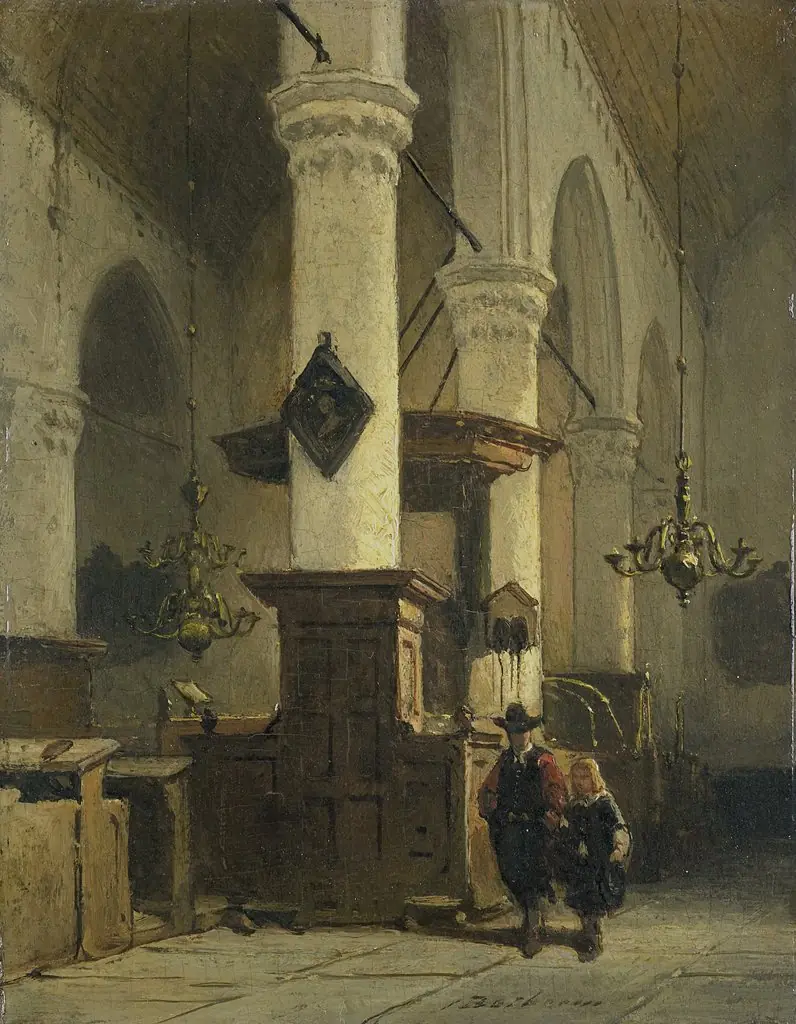 Church Interior
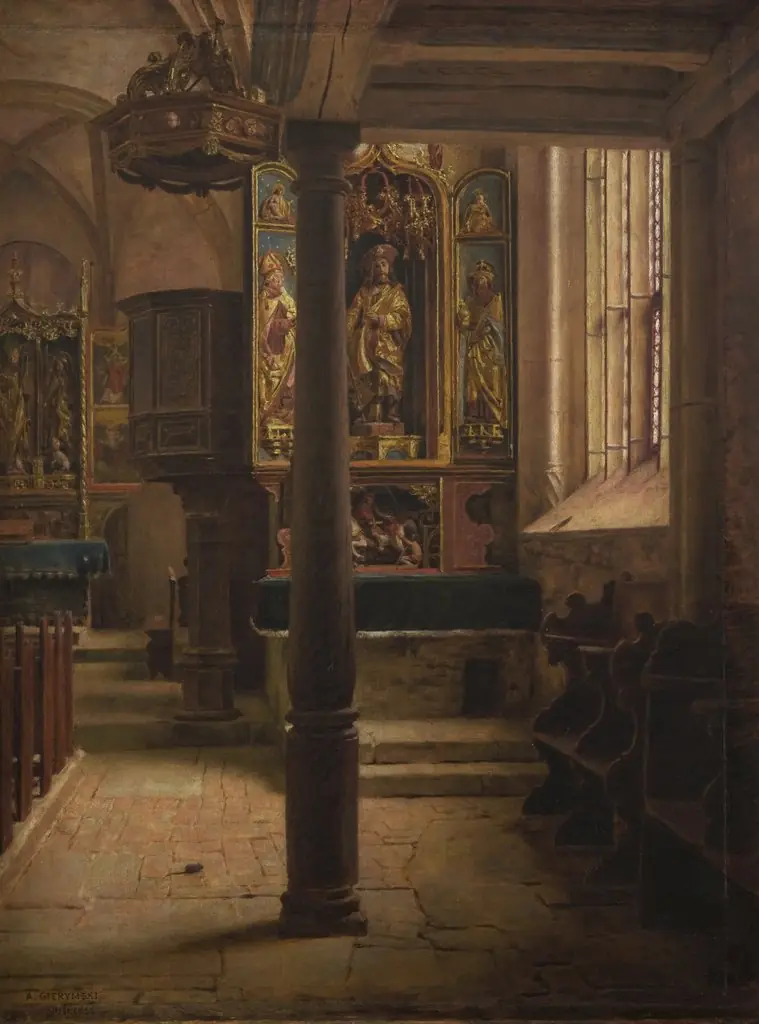 Interior of St Wolfgang's Church in Rothenburg
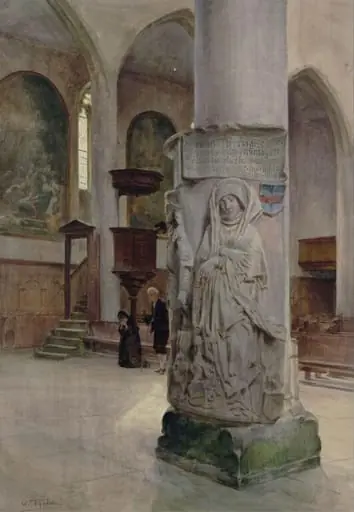 Interior of the Franciscan Church at Rotenburg, with the Tomb of Hans and Margarethe von Beulnsdorf
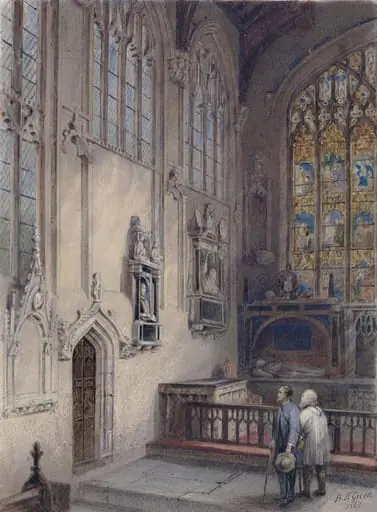 Interior of Stratford-on-Avon church, showing Shakespeare's Monument
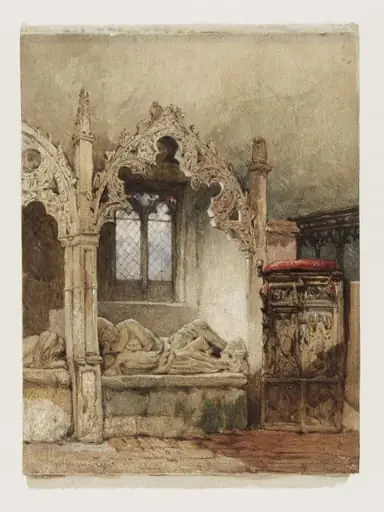 The Knight is Dust
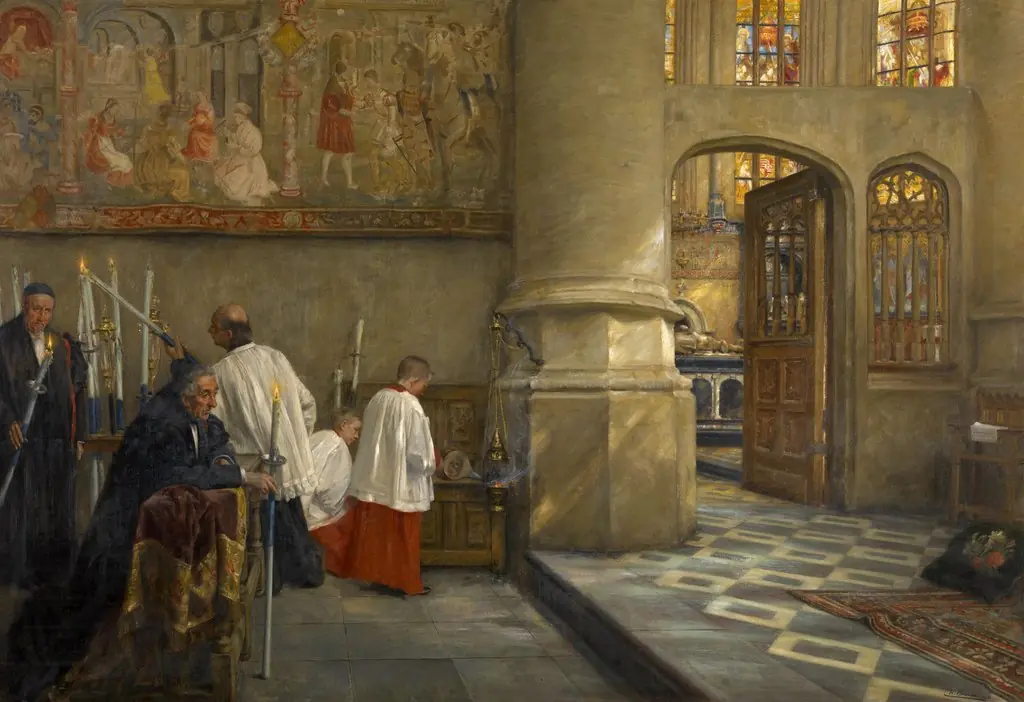 Before Blessing at the Church of Hoogstraten
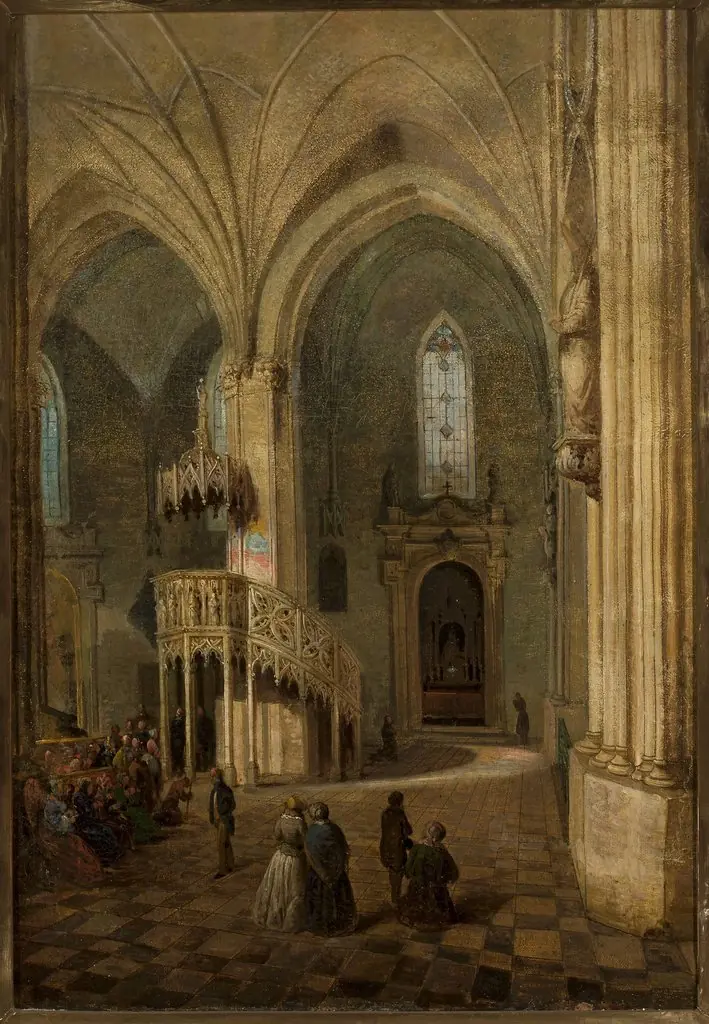 Interior of St. John’s Cathedral in Warsaw
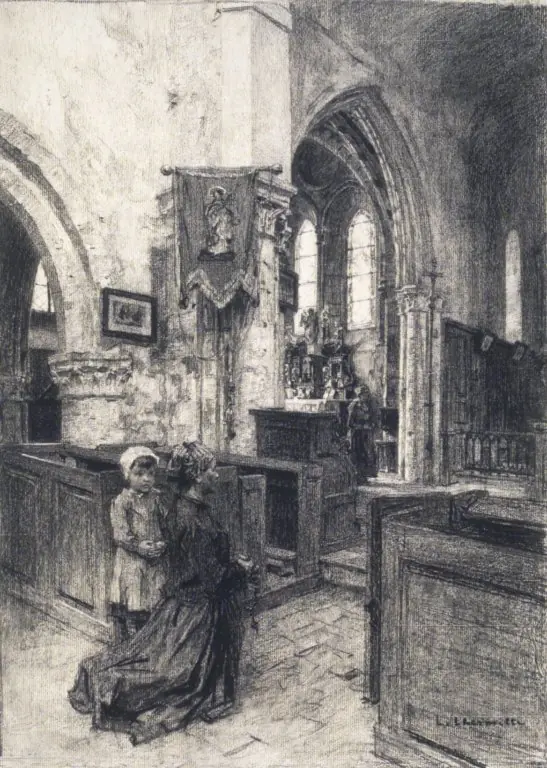 The Church of Saint-Eugène (L'Église de Saint-Eugène)
 An Episcopal Visitation