Artwork
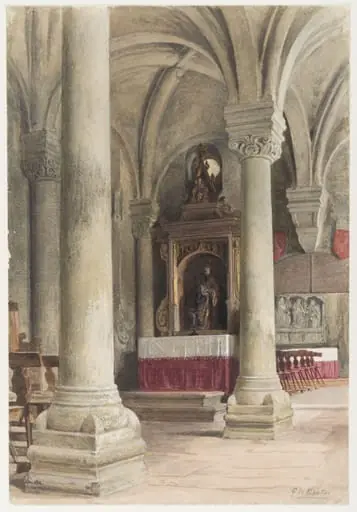
Interior of the Franciscan Church at Rotenburg, with the Tomb of Hans and Margarethe von Beulnsdorf
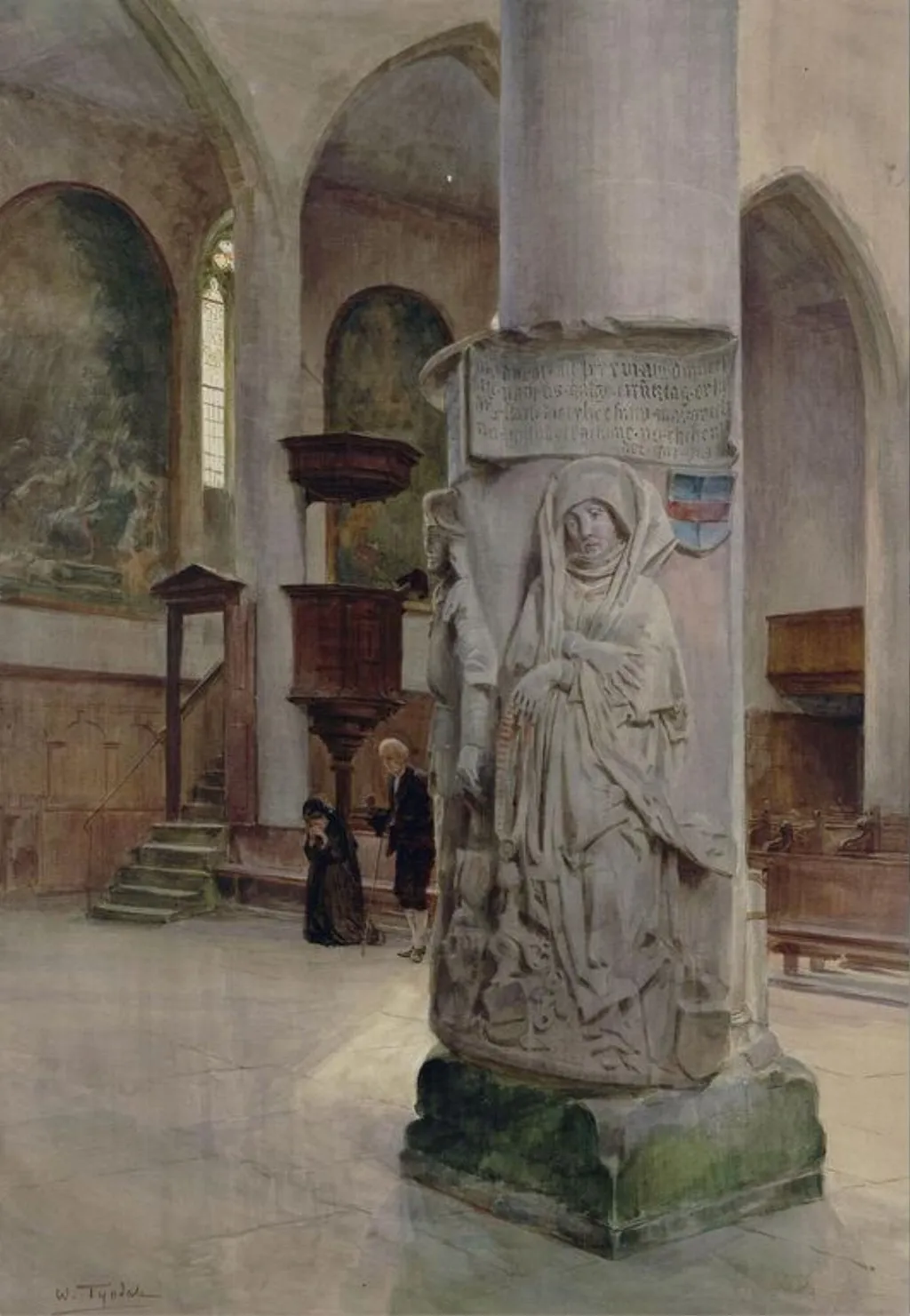
Interior of the Franciscan Church at Rotenburg, with the Tomb of Hans and Margarethe von Beulnsdorf is a watercolor work on paper by the Impressionist artist Tyndale. It is held in the collection of the Victoria and Albert Museum. This watercolour captures the interior of the Franciscan Church in Rotenburg, focusing on the tomb of Hans and Margarethe von Beulnsdorf.
About this work
Overview
Executed with careful attention to architectural detail and atmospheric light, the work combines topographical accuracy with quiet emotional resonance.
This watercolour captures the interior of the Franciscan Church in Rotenburg, focusing on the tomb of Hans and Margarethe von Beulnsdorf. Executed with careful attention to architectural detail and atmospheric light, the work combines topographical accuracy with quiet emotional resonance. The artist’s name and partial residence are inscribed on the surface, suggesting personal engagement with the site.
Subject & Meaning
The central focus is a sculpted figure of a robed individual, likely a saint or donor, resting on a pedestal beneath an inscribed memorial slab. Two figures in dark attire kneel nearby, indicating devotional practice. The composition emphasizes reverence and stillness, reflecting the tomb’s role as a site of memory and spiritual contemplation within the church.
Technique & Style
The artist employs delicate watercolour washes to render the play of light filtering through stained glass, creating soft gradients across stone surfaces. Shadows are subtly layered to model the three-dimensionality of the statue and architectural elements. The restrained palette and precise brushwork convey texture without ornament, aligning with the church’s austere Franciscan character.
History & Provenance
The work originates from the early 19th century, likely produced during a period of renewed interest in medieval religious architecture. Its inscription suggests the artist was familiar with Rotenburg, possibly a local or visiting draftsman documenting regional sites. The piece remained in private hands before entering institutional collections.
Context
Rotenburg’s Franciscan Church, founded in the 13th century, was a place of burial for local nobility, including the von Beulnsdorf family. By the 19th century, many such churches had fallen into disuse or partial ruin, prompting artists to record their interiors as cultural relics. This watercolour reflects a broader trend of topographical and ecclesiastical documentation in pre-industrial Europe.
Legacy
The work contributes to a modest but significant body of 19th-century watercolours that preserved the appearance of lesser-known religious spaces before modern restoration or decay altered them. Its quiet realism offers insight into how contemporaries perceived and interacted with medieval sacred architecture, valuing its solemnity over grandeur.
Artist & collection

Artist
William Tyndale was an English Biblical scholar and linguist who became a leading figure in the Protestant Reformation in the years leading up to his execution.