Artwork
The Knight is Dust
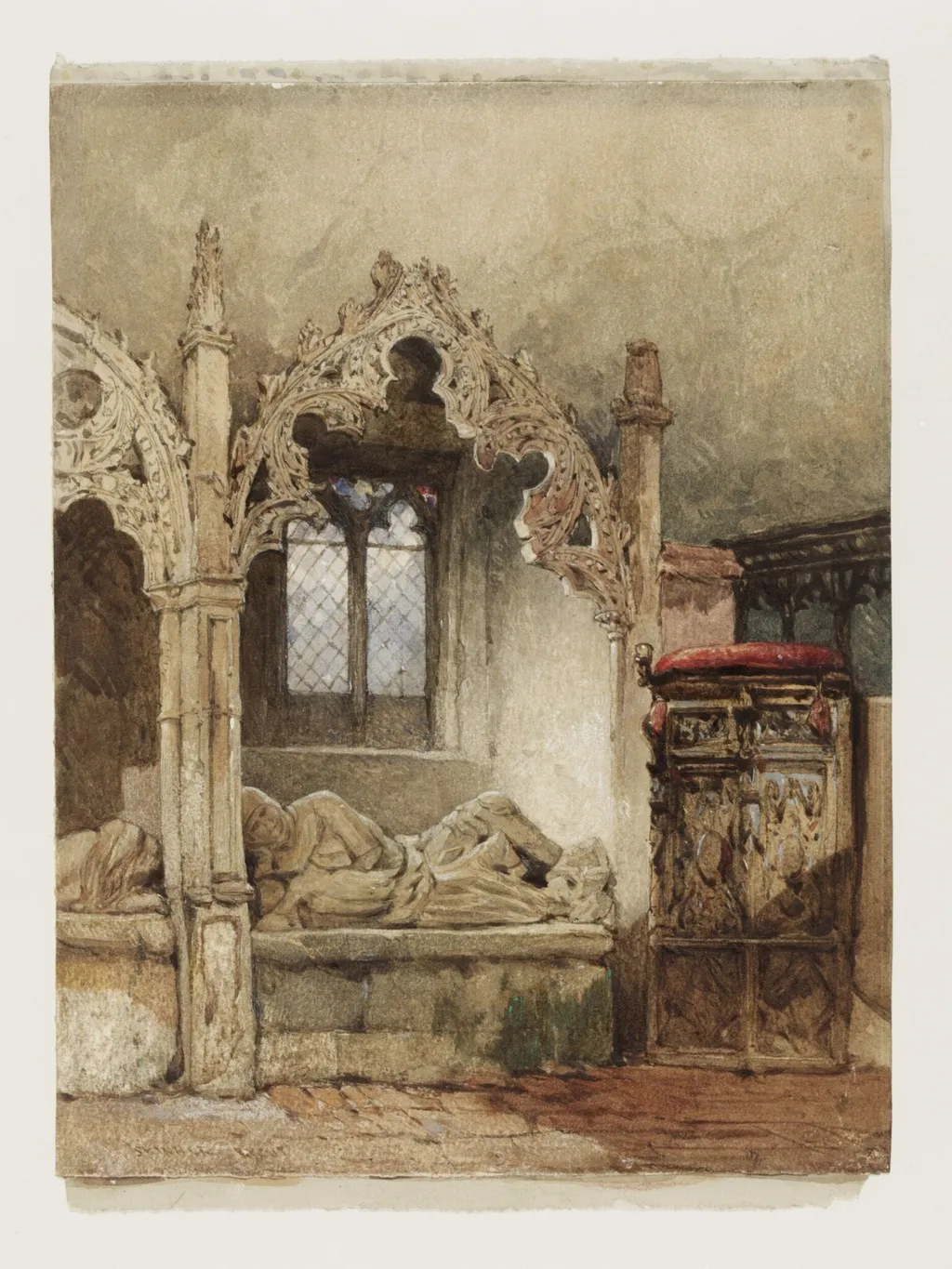
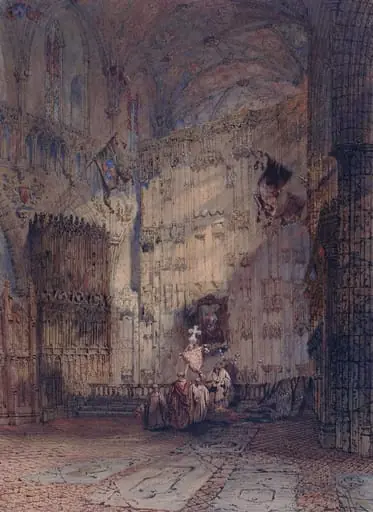
The Knight is Dust is a watercolor work on paper by the British Romanticist artist John Skinner Prout. It dates from 1869 and is held in the collection of the Victoria and Albert Museum.
About this work
Overview
John Skinner Prout created this 1869 watercolour as a detailed record of Sir Philip de la Beche’s tomb in Aldworth Church, Berkshire.
John Skinner Prout created this 1869 watercolour as a detailed record of Sir Philip de la Beche’s tomb in Aldworth Church, Berkshire. The work is signed and executed in delicate watercolour, reflecting the artist’s interest in architectural and funerary subjects. Its quiet composition and restrained palette align with 19th-century antiquarian practices, where documentation often carried an aesthetic sensitivity to decay and time.
Subject & Meaning
The painting portrays the effigies of two recumbent knights, likely representing Sir Philip de la Beche and a companion, resting beneath a carved wooden canopy. The figures, draped in stylized armor, appear weathered by centuries, their forms softened by dust and dim light. The inclusion of a solitary red-cushioned chair suggests a human presence once near the tomb, evoking contemplation rather than veneration.
Technique & Style
Prout employed translucent watercolour washes to capture the muted tones of aged stone and timber. Light filters through a diamond-paned window, casting subtle gradients across the surfaces, enhancing the sense of stillness. The brushwork is precise yet gentle, avoiding dramatic contrast to preserve the somber, intimate atmosphere of the sepulchral space.
History & Provenance
The watercolour was made in 1869 during a period when British artists frequently documented medieval monuments as part of a broader antiquarian movement. Prout, known for his topographical studies, likely visited Aldworth Church to record the tomb before potential deterioration. The work remains in private hands, with no public exhibition history recorded.
Context
In mid-19th-century England, interest in Gothic architecture and medieval tombs surged alongside the Gothic Revival. Artists like Prout contributed to this trend by producing accurate, atmospheric depictions of ecclesiastical sites. This work reflects a shift from idealized history painting toward observational realism, valuing authenticity over embellishment.
Legacy
Though not widely exhibited, the watercolour stands as a quiet example of Victorian topographical art. It contributes to the visual archive of England’s ecclesiastical heritage, preserving the appearance of a tomb that may have since altered. Its significance lies in its unembellished record of a place shaped by time, not by grandeur.
Artist & collection

Artist
John Skinner Prout (19 December 1805 – 29 August 1876) was a British painter, writer, lithographer and art teacher who worked in Australia in the 1840s.

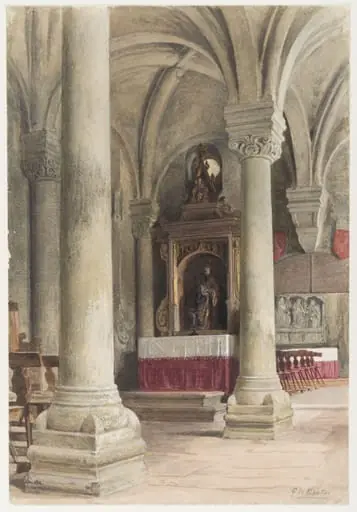 The Chapel of St Eucharius, Nuremberg
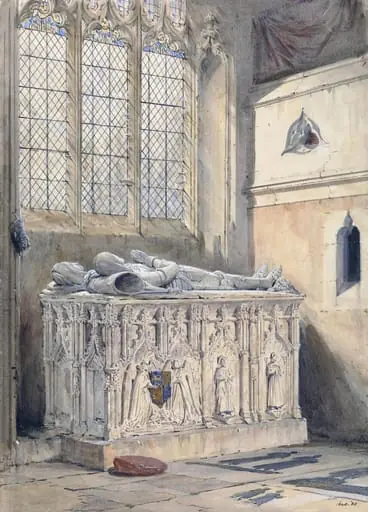 Tomb of the Crofts family at Chipping Norton church, Oxfordshire
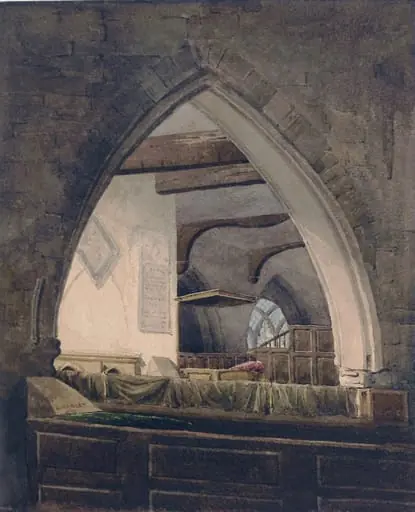 The interior of a church
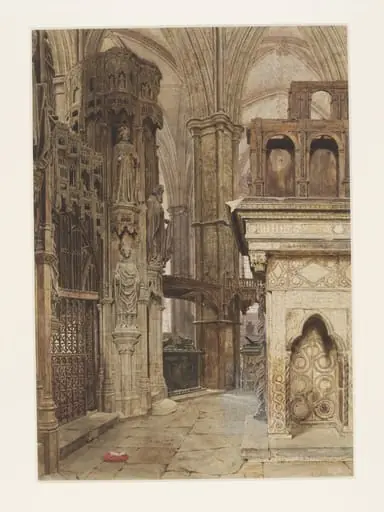 The East End of Edward the Confessor's Chapel and Tomb, As They Now Stand
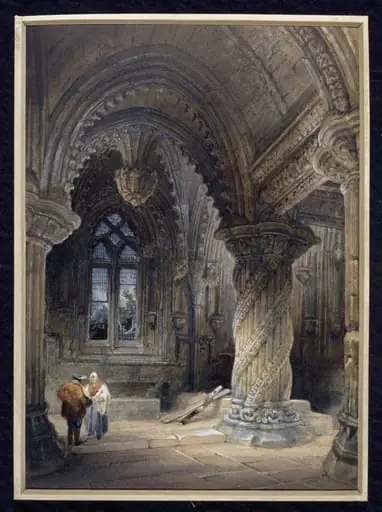 The Prentice Pillar, Roslin Chapel
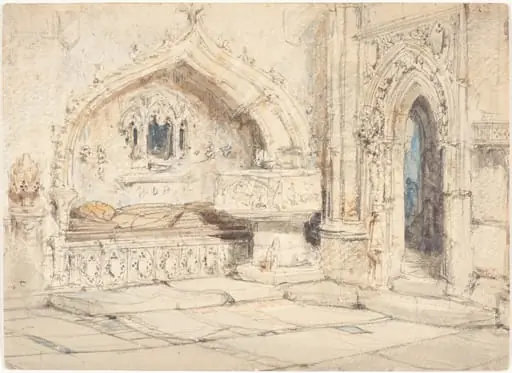 Interior of a Church with a Wall Tomb and Medieval Font
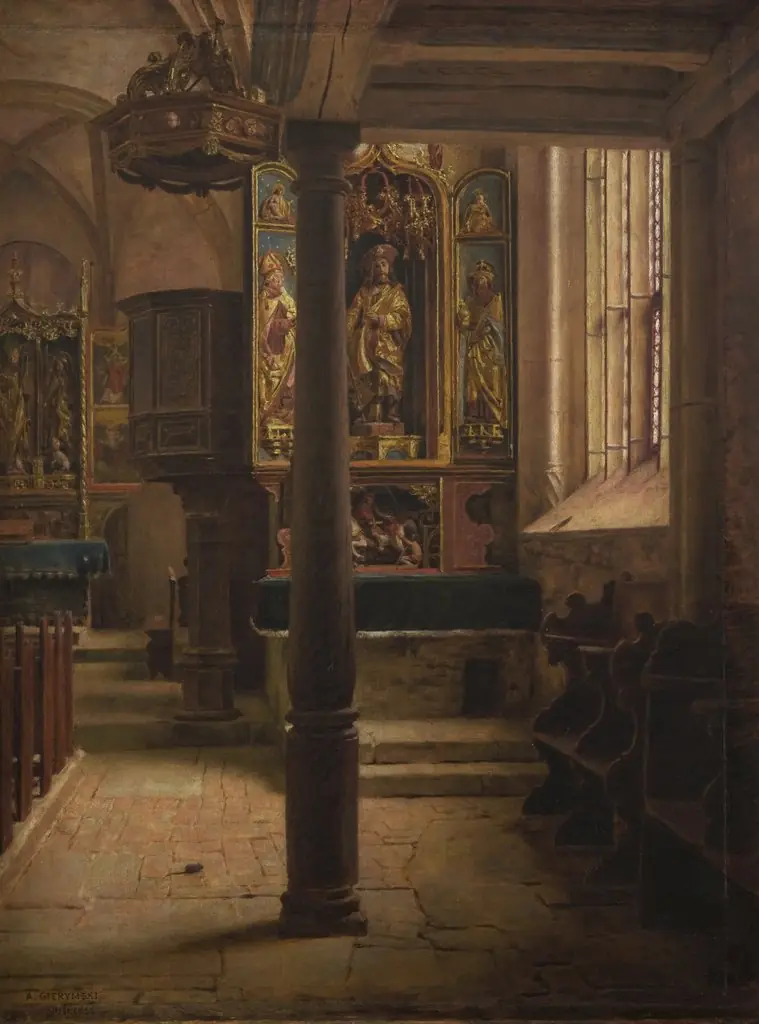 Interior of St Wolfgang's Church in Rothenburg
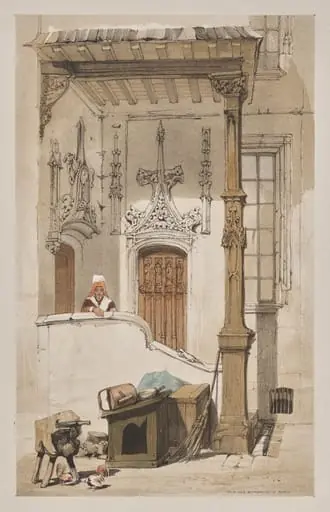 Picturesque Architecture in Paris, Ghent, Antwerp, Rouen: Rue des Marmousets, Paris
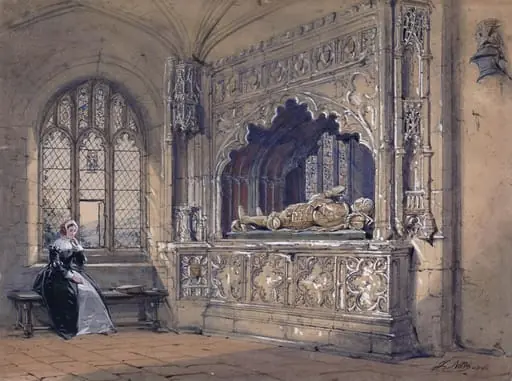 The supposed tomb of Thomas Fiennes, in Herstmonceux Church, Sussex, looking south-east from the North Chapel
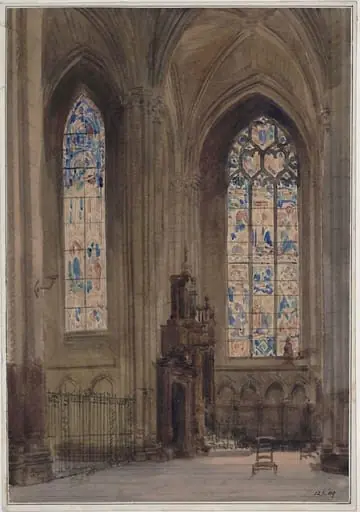 Chapel in the south transept of Rouen Cathedral
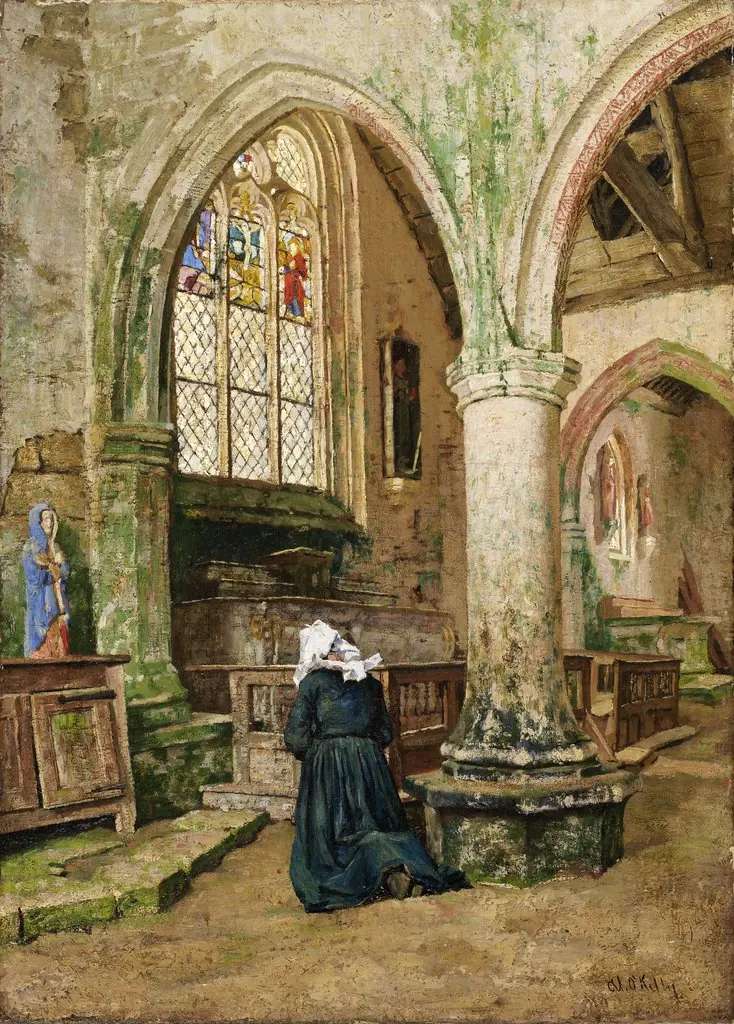 Interior of a Church in Brittany
 The High Altar Screen, St Albans Abbey