Artwork
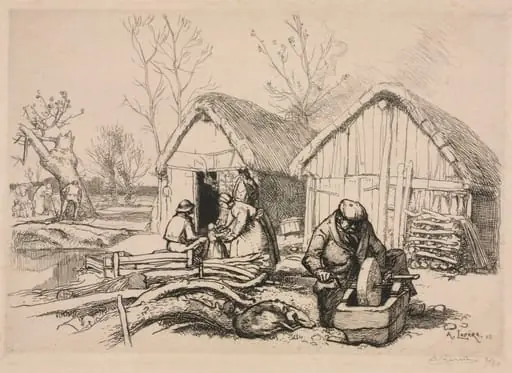
The House of the Woodcutter, Vendee (La maison du bucheron, Vendee)
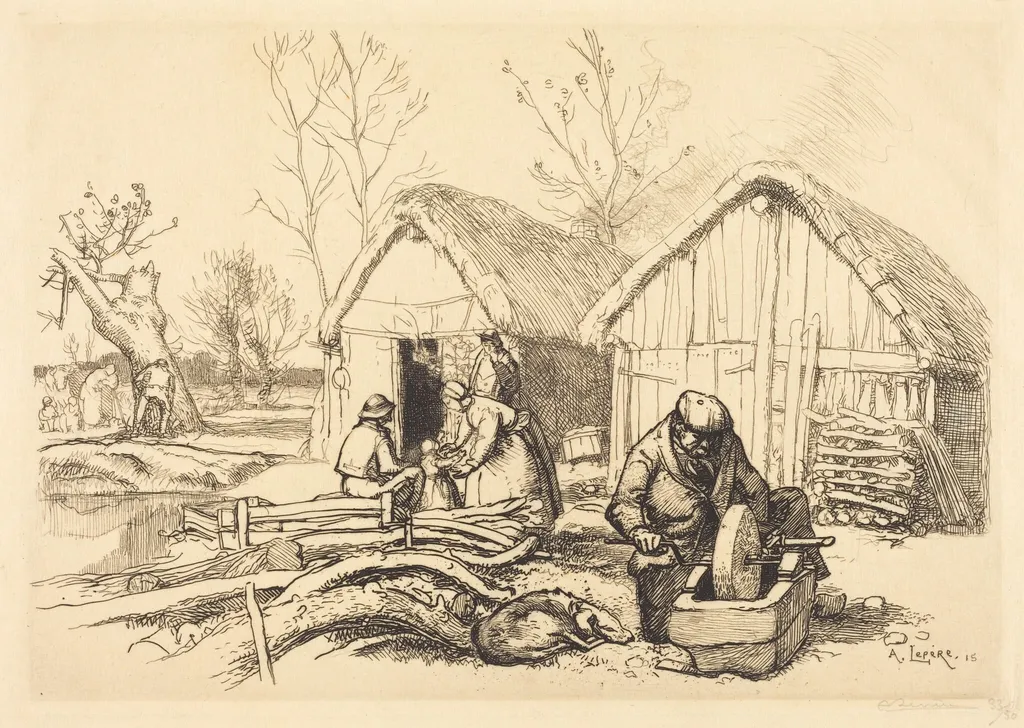
The House of the Woodcutter, Vendee (La maison du bucheron, Vendee) is an ink print by Auguste Lepère. It dates from 1915 and is held in the collection of the National Gallery of Art.
About this work
Overview
The House of the Woodcutter, Vendee is an etching created by Auguste Lepère in 1915. It is a print that showcases Lepère's skill as a French painter and etcher.
Subject & Meaning
The etching depicts a rural scene in Vendee, featuring a wooden house with a thatched roof surrounded by bare trees and muddy ground. The inhabitants are engaged in everyday activities, such as resting, conversing, and stirring a substance in a barrel.
Technique & Style
Lepère employed the etching technique to achieve a range of textures, from the rough bark of trees to the folds in the woman's clothing, using quick, scratchy lines. The resulting image is characterized by its simplicity and sense of everyday life.
History & Provenance
Auguste Lepère, born in 1849, was a key figure in reviving wood engraving across Europe. He created The House of the Woodcutter, Vendee during World War I, in 1915.
Own this work as a print
Artist & collection
Artist
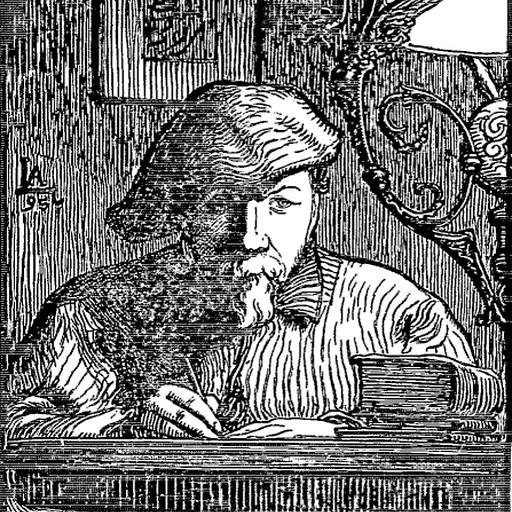
Louis-Auguste Lepère (30 November 1849 – 20 November 1918) was a French painter and etcher. Lepère is also considered a leader in the creative revival of wood engraving in Europe.

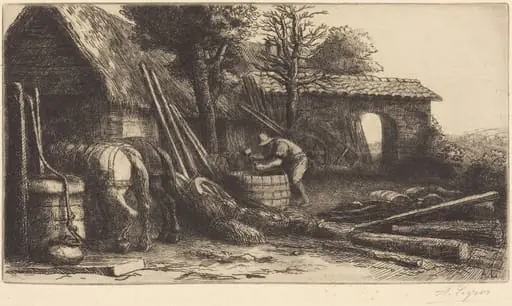 The Cooper (Le tonnelier)
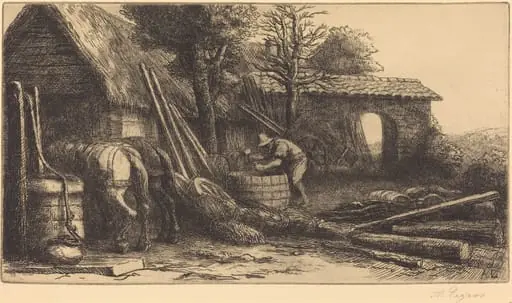 The Cooper (Le tonnelier)
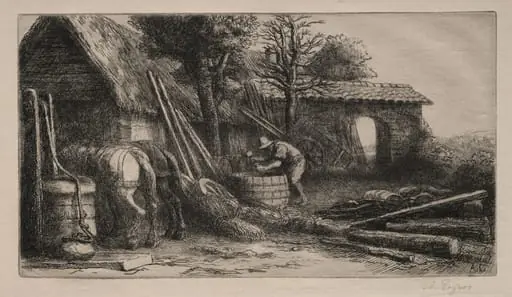 Le Tonnelier
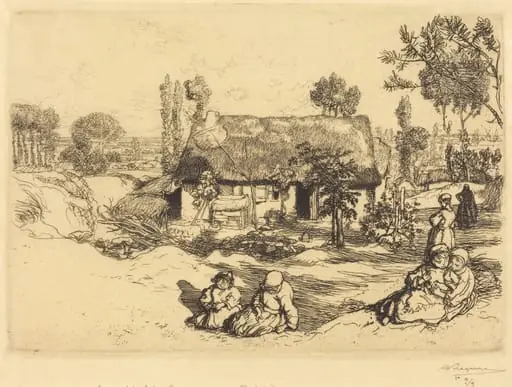 Shelter for the Poor, Vendee (Le nid de pauvres, Vendee)
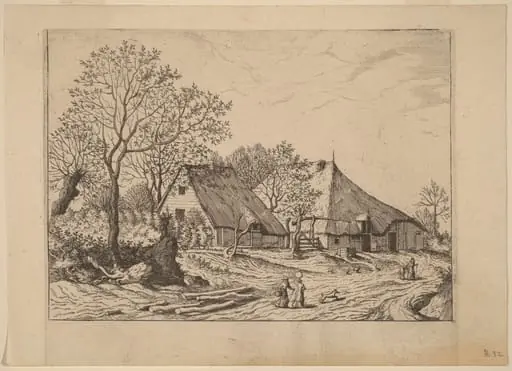 Farm with Shed and Draw Well
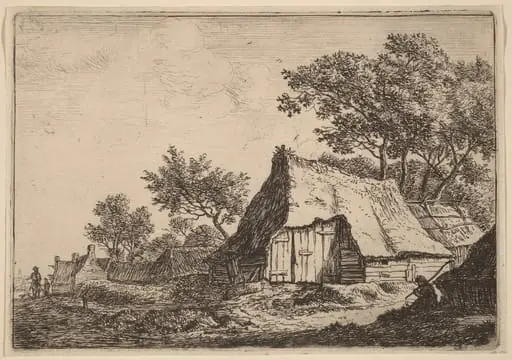 The Small Hamlet
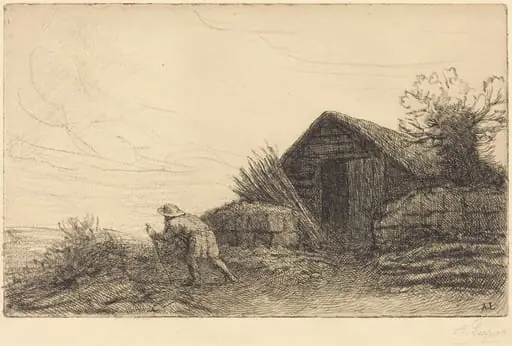 Along the Top of the Hill (Sur le haut de la colline)
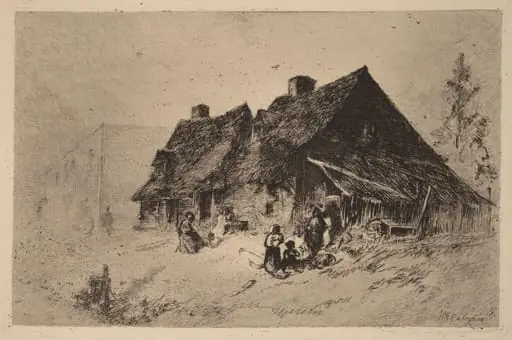 Negro Huts at Wilmington
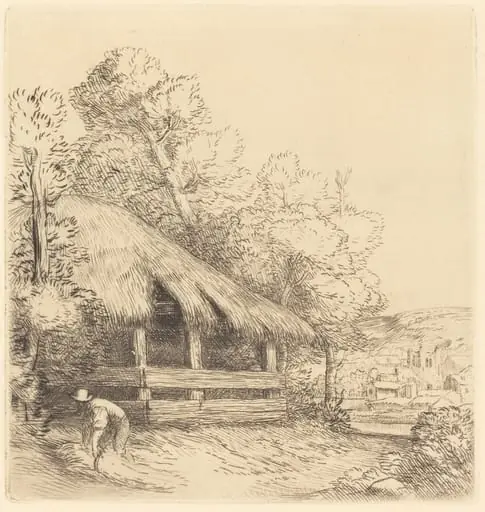 Little Shelter (Le petit hangar)
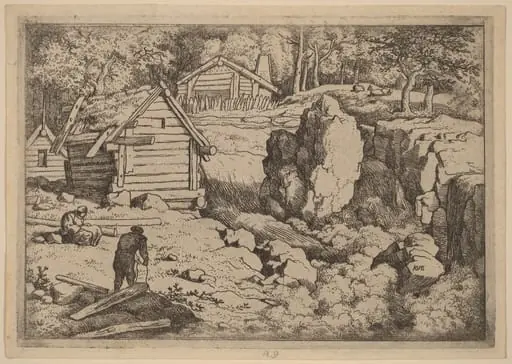 The Carpenter
 Two Cottages on a Bank
 The Woodcutter’s House (Vendée)