Artwork
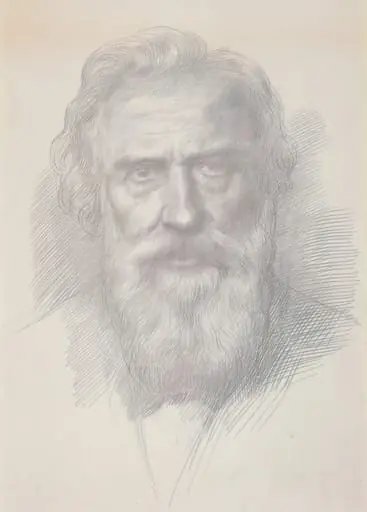
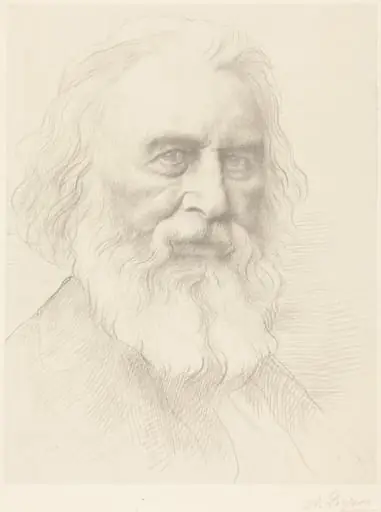
Portrait of Thomas Huxley (2nd Plate)
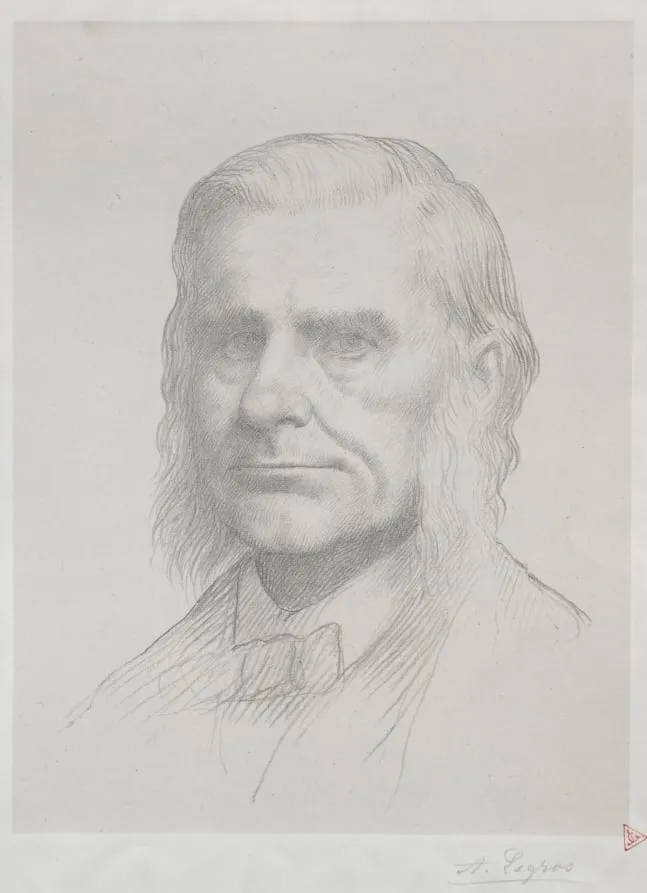
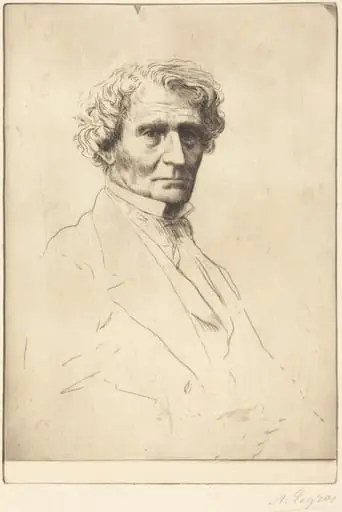
Portrait of Thomas Huxley (2nd Plate) is a print by the Impressionist artist Alphonse Legros. It dates from 1884 and is held in the collection of the Cleveland Museum of Art.
About this work
This style fits the Realism movement, which aimed to show people as they truly were.
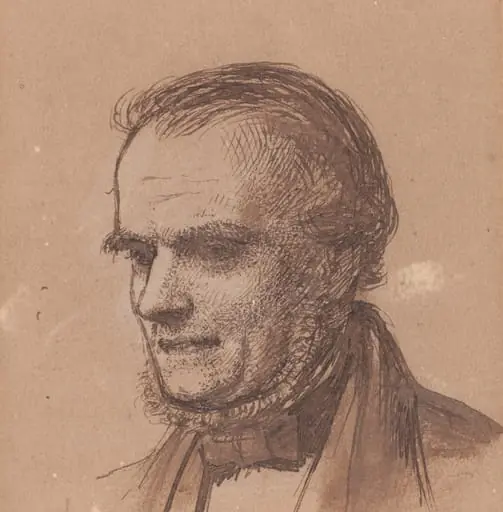
This sketch shows a serious-looking man with a thick beard and mustache. His hair is wavy, and he’s wearing a high collar with a bow tie. The lines are loose and sketchy, focusing on his face and neck.
The artist used quick, confident strokes to capture his expression. This style fits the Realism movement, which aimed to show people as they truly were.
Next, check out Alphonse Legros (French, 1837–1911) to see more of his work.
Overview
Created in 1884 by Alphonse Legros, this print is the second of two portrait plates depicting the British biologist Thomas Huxley. Executed in a direct, unadorned style, it belongs to a series of lithographic portraits Legros produced during his time in England. The work is part of the collection at The Cleveland Museum of Art, where it is preserved as an example of late 19th-century graphic portraiture.
Subject & Meaning
Thomas Huxley, a prominent advocate of Darwinian evolution, is rendered with quiet intensity. His thick beard, high collar, and bow tie reflect the formal dress of Victorian intellectuals. The portrait emphasizes his thoughtful gaze and firm jaw, conveying a sense of intellectual authority rather than personal warmth. Legros avoids idealization, presenting Huxley as a man of substance, grounded in observation and reason.
Technique & Style
Legros employed lithography with swift, decisive lines, capturing the texture of Huxley’s beard and the fall of light across his face with minimal detail. The sketch-like quality suggests immediacy, prioritizing expression over finish. The composition focuses tightly on the head and neck, eliminating background distractions. This restrained approach aligns with Realist principles, valuing truthful representation over embellishment.
History & Provenance
The print was produced during Legros’s tenure as a professor at the Slade School of Fine Art in London, where he influenced a generation of British artists. This second plate was likely made to refine the initial portrait, reflecting Legros’s iterative process. It entered the Cleveland Museum of Art’s collection in the 20th century, acquired as part of a broader interest in European graphic arts of the period.
Context
In the 1880s, lithography was increasingly used for portraiture among artists seeking alternatives to photography. Legros, trained in France but active in England, bridged continental and British artistic traditions. His portraits of scientists and scholars reflected a cultural moment in which intellectual figures were becoming public icons, and visual representation played a role in shaping their legacy.
Legacy
Legros’s portrait of Huxley exemplifies the quiet power of graphic portraiture in the age of scientific authority. Though less known than his paintings, these prints influenced how intellectual figures were visually documented. The work remains a reference for artists interested in capturing character through economical line and psychological presence, rather than ornamental detail.
Artist & collection

Artist
Alphonse Legros (French pronunciation: ; 8 May 1837 – 8 December 1911) was a French, later British, painter, etcher, sculptor, and medallist.