Artwork
The Village in Flames (L'Incendie du Hameau)
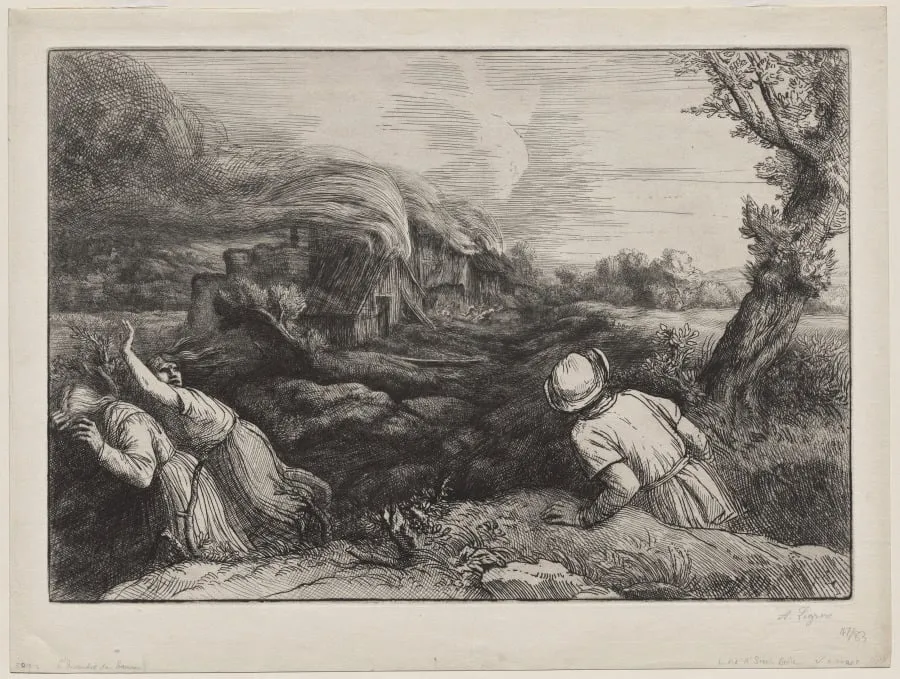
The Village in Flames (L'Incendie du Hameau) is a print by the Impressionist artist Alphonse Legros. It dates from 1894 and is held in the collection of the Cleveland Museum of Art.
About this work
The painting's use of chiaroscuro creates a dramatic contrast between light and dark, emphasizing the chaos and destruction caused by the fire.
The Village in Flames (L'Incendie du Hameau) is a painting by Alphonse Legros, created in 1893-1894. The image depicts a village engulfed in flames, with smoke billowing into the sky. In the foreground, two women are shown running away from the inferno, their faces contorted in fear. The woman on the left has her arms raised, while the one on the right is crouched down, looking back at the burning village. The scene is set against a backdrop of trees and a cloudy sky.
The painting's use of chiaroscuro creates a dramatic contrast between light and dark, emphasizing the chaos and destruction caused by the fire. The brushstrokes are bold and expressive, conveying a sense of urgency and panic.
The Village in Flames is a powerful depiction of disaster and human suffering. To learn more about the artist behind this work, explore the art of Alphonse Legros.
Overview
The Village in Flames (L'Incendie du Hameau) is a print by Alphonse Legros, dated to 1894, held at The Cleveland Museum of Art.
Subject & Meaning
The image depicts a village consumed by fire, with two fleeing women in the foreground, their faces distorted by fear. The scene is set amidst trees and a cloudy sky, conveying a sense of chaos and destruction.
Technique & Style
The work employs chiaroscuro, creating a stark contrast between light and dark, and features bold, expressive brushstrokes that convey urgency and panic.
Artist & collection

Artist
Alphonse Legros (French pronunciation: ; 8 May 1837 – 8 December 1911) was a French, later British, painter, etcher, sculptor, and medallist.

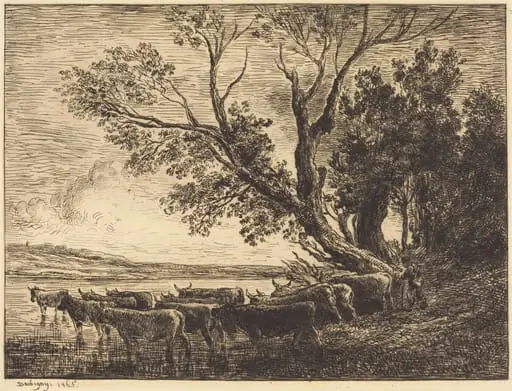 The Ford (Le Gue)
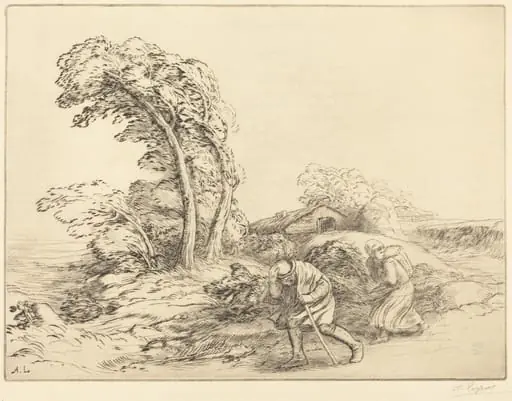 Gust of Wind (Un coup de vent)
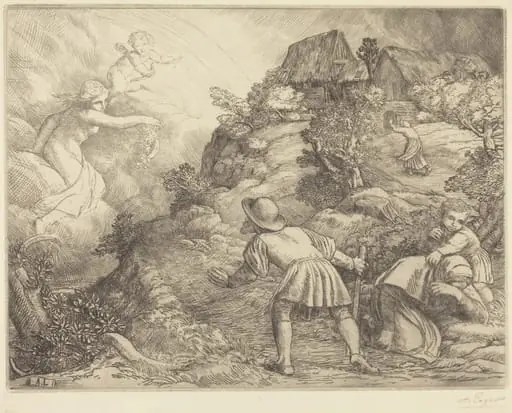 Allegory of the Peasant and Fortune (Le paysan et la fortune: Sujet allegorique
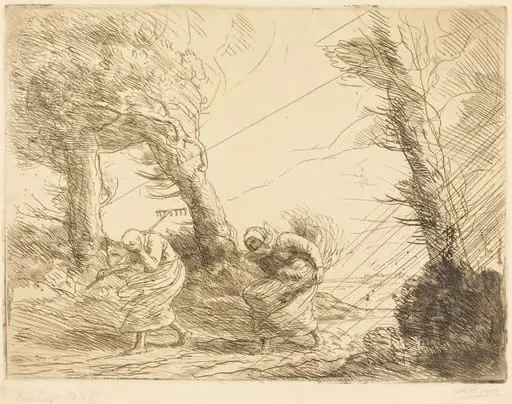 Harvesters Surprised by the Storm (Moissonneuses surprises par l'orage)
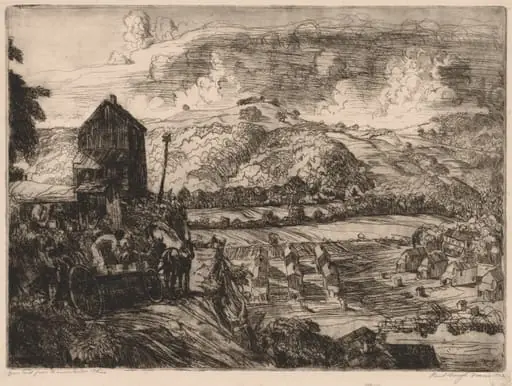 Our Hill from Dumstown, Ohio
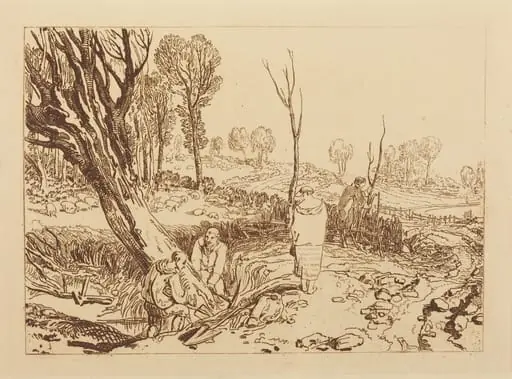 Hedging and Ditching
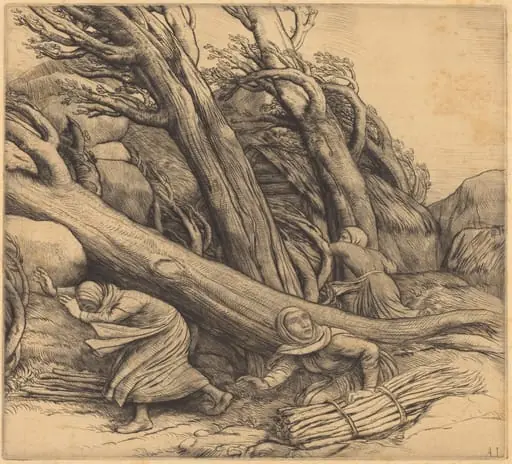 Tornado (Le typhon)
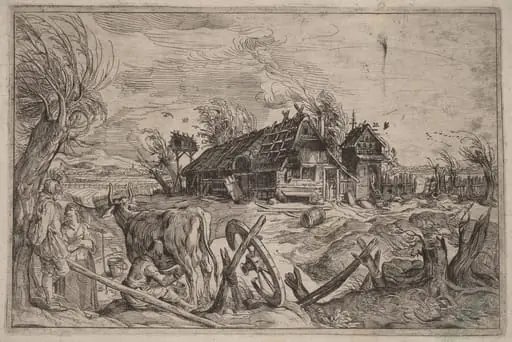 Landscape with a Farmhouse
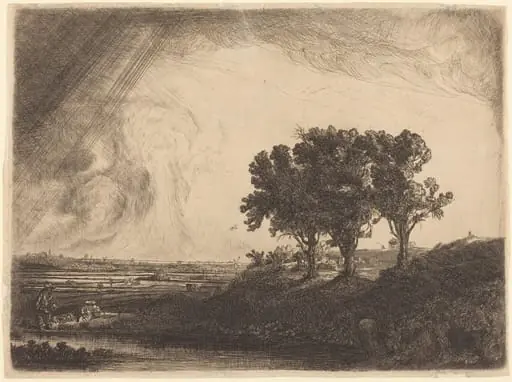 The Three Trees