Artwork
Shelter for the Poor, Vendee (Le nid de pauvres, Vendee)
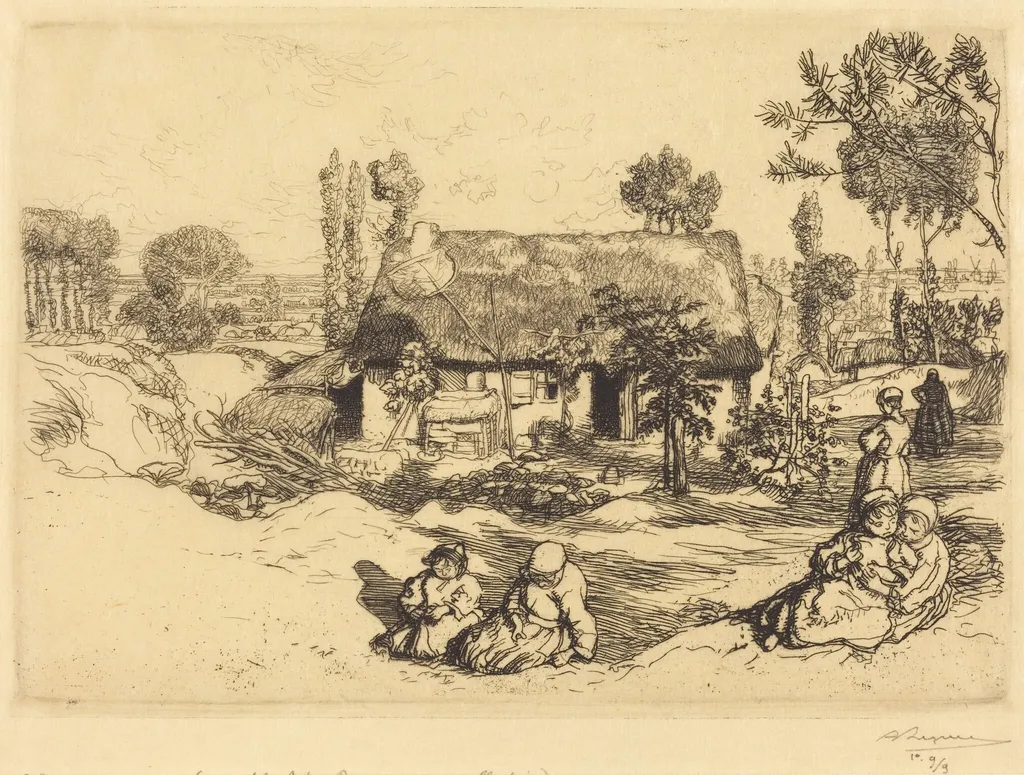
Shelter for the Poor, Vendee (Le nid de pauvres, Vendee) is an ink print by Auguste Lepère. It dates from 1909 and is held in the collection of the National Gallery of Art.
About this work
Overview
Created in 1909, *Shelter for the Poor, Vendee* is an etching by Auguste Lepère, a French artist instrumental in the revival of wood engraving.
Created in 1909, *Shelter for the Poor, Vendee* is an etching by Auguste Lepère, a French artist instrumental in the revival of wood engraving. The work belongs to a body of prints in which Lepère turned his attention to rural life and social conditions. Unlike his earlier decorative prints, this piece emphasizes quiet observation over ornamentation, using the precision of etching to capture the textures of a humble landscape and its inhabitants.
Subject & Meaning
The scene portrays a modest cottage surrounded by vegetation, with a small group of figures in the foreground: a woman cradling an infant, another seated on the ground, and possibly a third figure partially obscured. Their stillness and the isolation of the dwelling suggest hardship and resilience. Lepère avoids overt drama, instead inviting reflection on the quiet endurance of rural poverty in late 19th- and early 20th-century France.
Technique & Style
Lepère employed fine, controlled lines typical of etching to render the thatched roof, foliage, and textured earth with remarkable nuance. Subtle gradations of tone, achieved through cross-hatching and varying line density, create depth without heavy shadow. The composition is tightly framed, drawing focus to the figures and structure while allowing the distant hills to recede into atmospheric softness, reinforcing the scene’s somber intimacy.
History & Provenance
The print was produced during the final phase of Lepère’s career, after his influential work in reviving wood engraving had established his reputation. It was likely issued as part of a limited series of social-themed prints, though its early ownership records are sparse. It entered public collections in the mid-20th century, primarily through donations from private collectors interested in French graphic arts of the period.
Context
Lepère’s focus on rural poverty coincided with broader European interest in realism and social documentation, influenced by writers like Zola and artists such as Jules Breton. While not overtly political, the etching aligns with a cultural moment that sought to portray the lives of the rural poor with dignity. The Vendée region, historically marked by agrarian hardship and political unrest, lent symbolic weight to the subject.
Legacy
Though less known than his wood engravings, *Shelter for the Poor, Vendee* exemplifies Lepère’s commitment to printmaking as a vehicle for quiet social observation. It remains a representative work of early 20th-century French etching, valued for its technical restraint and emotional subtlety. The piece contributes to the understanding of how printmakers engaged with everyday life beyond urban centers during a time of rapid industrial change.
Own this work as a print
Artist & collection
Artist
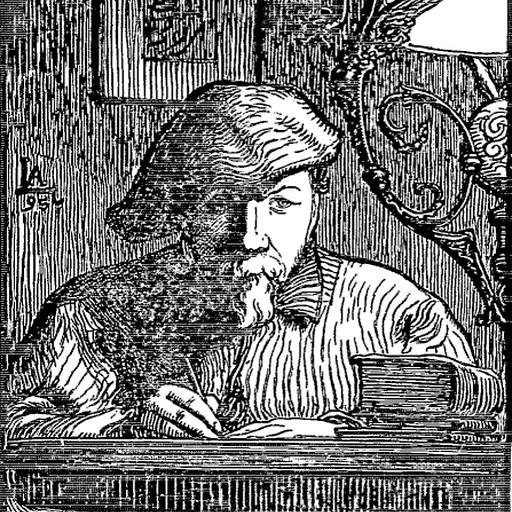
Louis-Auguste Lepère (30 November 1849 – 20 November 1918) was a French painter and etcher. Lepère is also considered a leader in the creative revival of wood engraving in Europe.

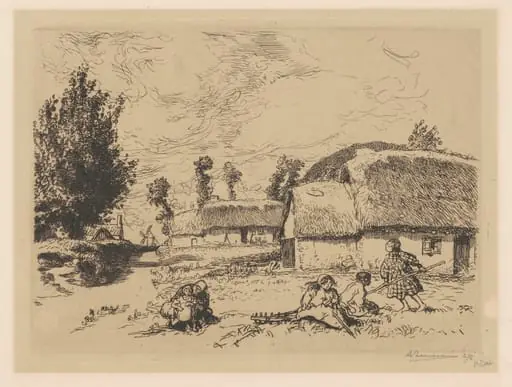 Les Deux Bourrines
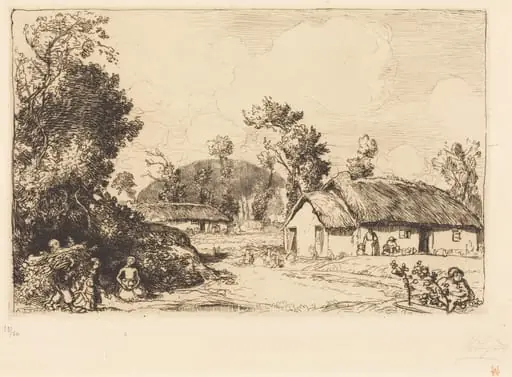 Pastime of Rest, Vendee (Le jeu du reposoir, Vendee)
 Negro Huts at Wilmington
 Landscape with Trees, Farm Buildings and a Tower
 Landscape with Trees, Farm Buildings and a Tower
 The Woodcutter’s House (Vendée)
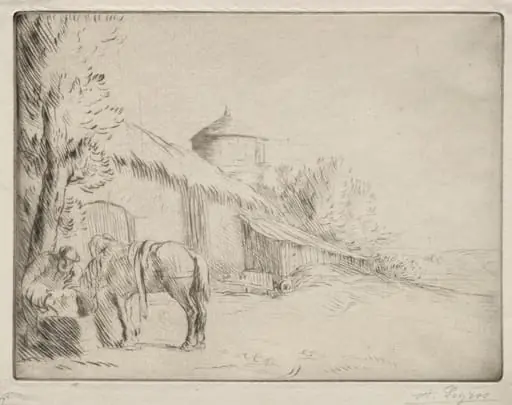 The Watering Place (2nd Plate)
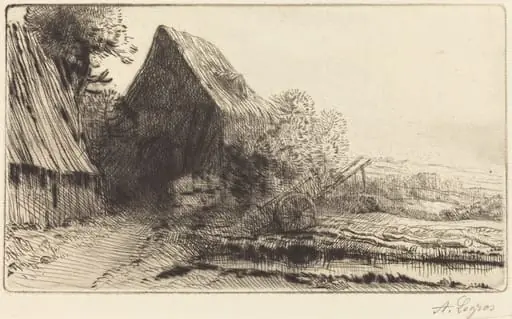 Wheelwright's Home (La maison du charron)
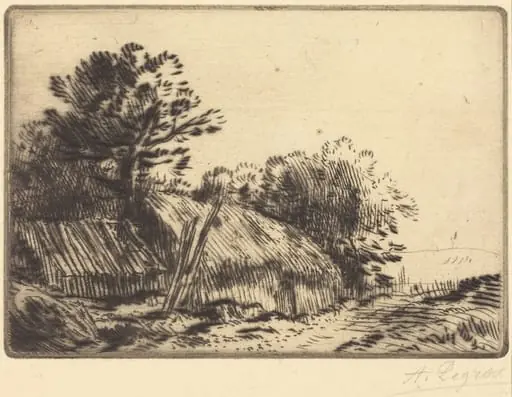 Rustic Scene (Scene rustique)
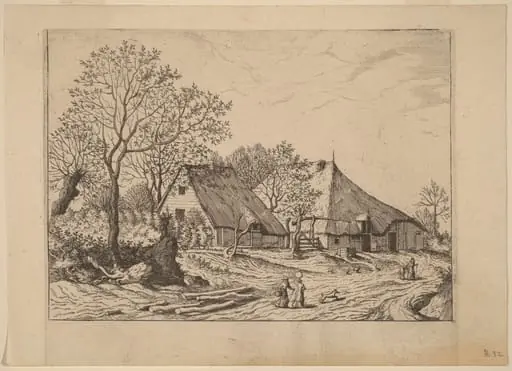 Farm with Shed and Draw Well