Artwork
Pyramus and Thisbe
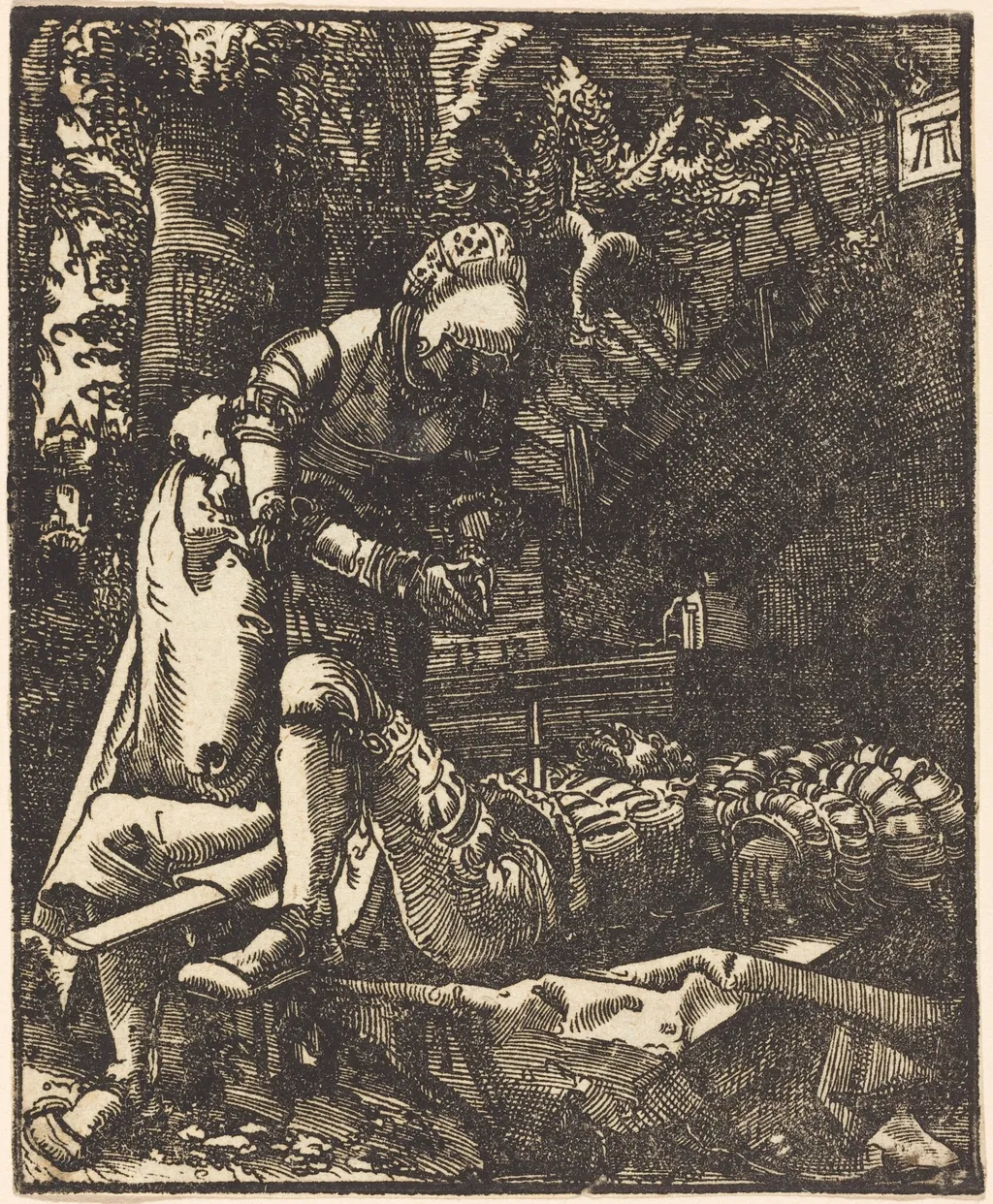
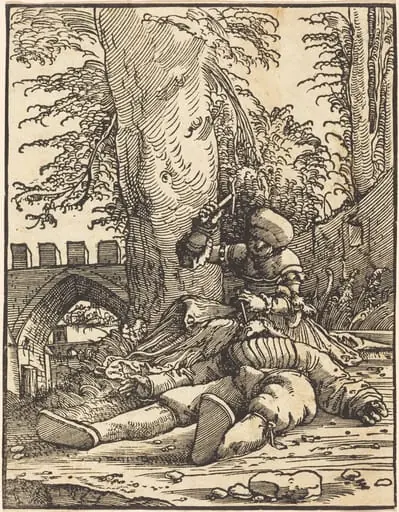
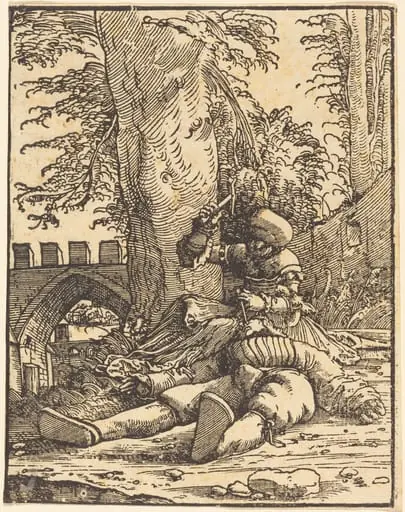
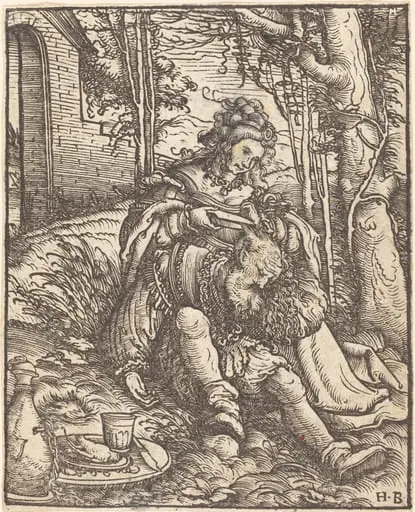
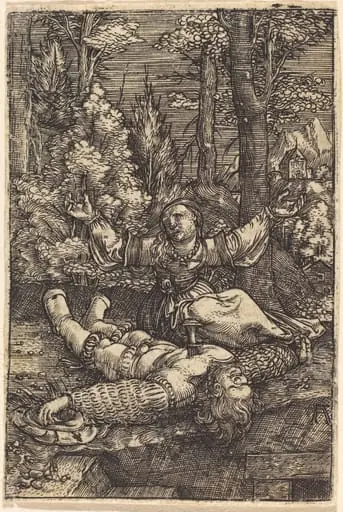
Pyramus and Thisbe is an ink print by the Renaissance artist Albrecht Altdorfer. It dates from 1518 and is held in the collection of the National Gallery of Art.
About this work
Overview
The print exemplifies his mastery of woodcut technique, using finely carved lines to render both narrative and environment with equal intensity.
Created in 1518 by Albrecht Altdorfer, this woodcut on laid paper depicts the tragic tale of Pyramus and Thisbe. As a German artist active in the early 16th century, Altdorfer was central to the Danube School, known for integrating human drama into immersive natural settings. The print exemplifies his mastery of woodcut technique, using finely carved lines to render both narrative and environment with equal intensity.
Subject & Meaning
The scene captures the moment after Pyramus, believing Thisbe dead, takes his own life with a sword, and Thisbe, returning to find him, dies beside him. Their outstretched hands and entangled forms suggest a final, futile connection. The vines and branches that bind them mirror the obstacles that separated them in life—nature itself becomes a symbol of fate’s cruel interference.
Technique & Style
Altdorfer employed the woodcut method, carving intricate lines into a wooden block to produce sharp, dense textures. The background is filled with swirling, jagged tree trunks and roots, creating a claustrophobic atmosphere. His use of overlapping contours and rhythmic line weight gives the forest a living, almost sentient quality, distinguishing his approach from the cleaner lines of contemporary Nuremberg printmakers.
History & Provenance
The print was made during Altdorfer’s time in Regensburg, where he served as city architect and maintained a prolific printmaking practice. While no early ownership records are widely documented, the work aligns with other woodcuts from his circle produced for private collectors interested in mythological themes. Its survival in multiple institutional collections suggests early appreciation for its technical and narrative complexity.
Context
In early 16th-century Germany, mythological subjects like Pyramus and Thisbe were increasingly favored over purely religious imagery among humanist patrons. Altdorfer’s treatment diverged from classical restraint, embedding the lovers’ tragedy within a wild, emotionally charged landscape—reflecting a broader shift toward expressive, atmospheric storytelling in Northern Renaissance art.
Legacy
Altdorfer’s woodcut helped redefine landscape as more than backdrop—it became an active force in narrative. His dense, emotive compositions influenced later generations of printmakers who sought to convey psychological depth through environment. Though less celebrated than his paintings, this print remains a key example of how woodcut could achieve lyrical intensity in the service of myth.
Artist & collection
Artist
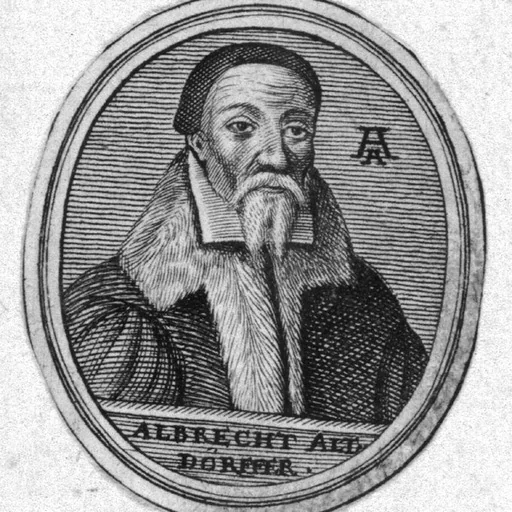
Albrecht Altdorfer (c. 1480 – 12 February 1538) was a German painter, engraver and architect of the Renaissance working in Regensburg. Along with Lucas Cranach the Elder and Wolf Huber he is regarded to be the main…