Artwork
Solomon Praying to the Idols
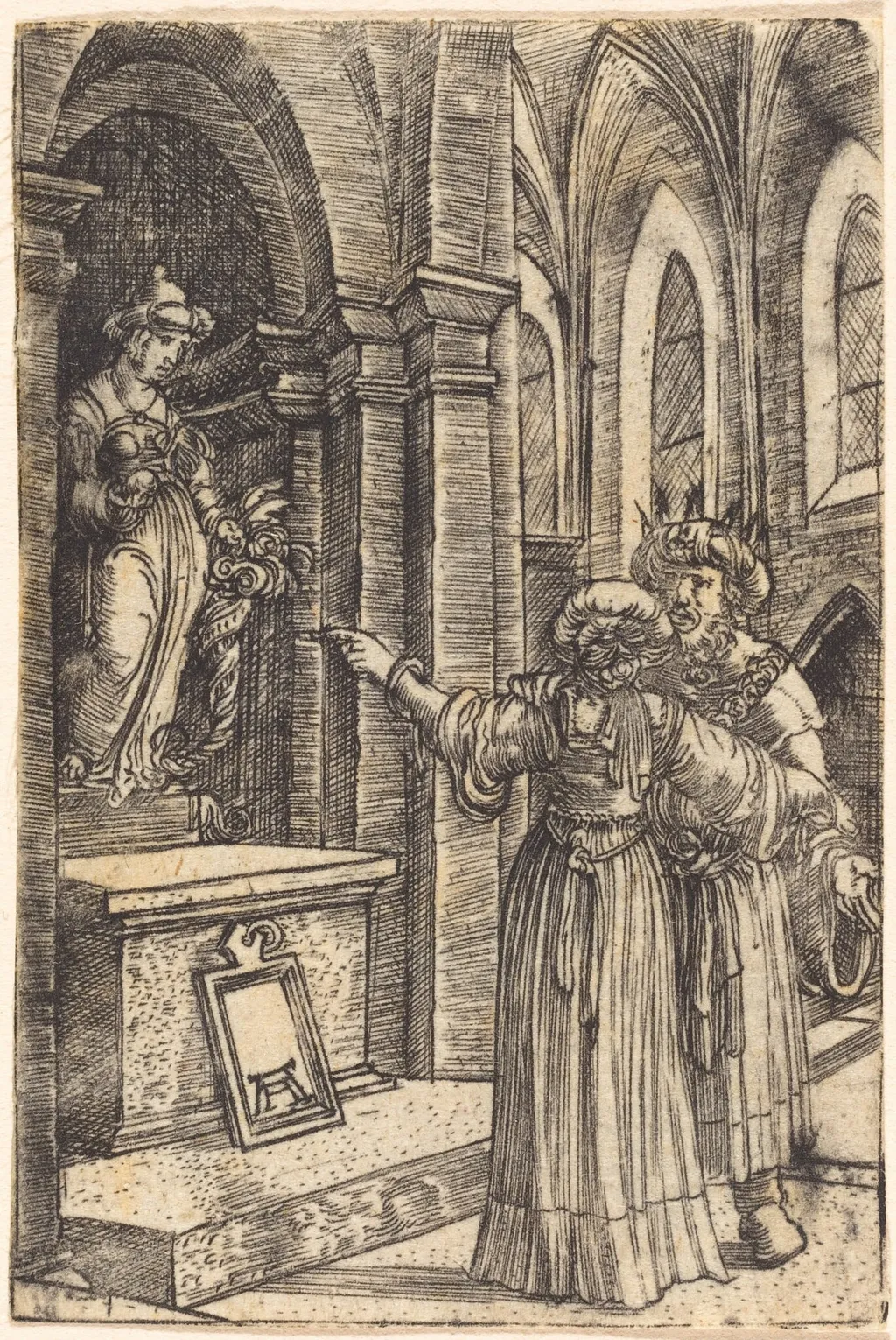
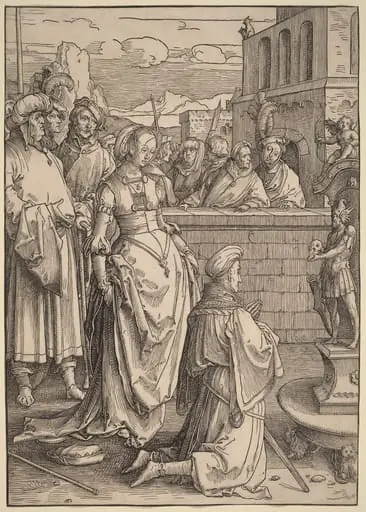
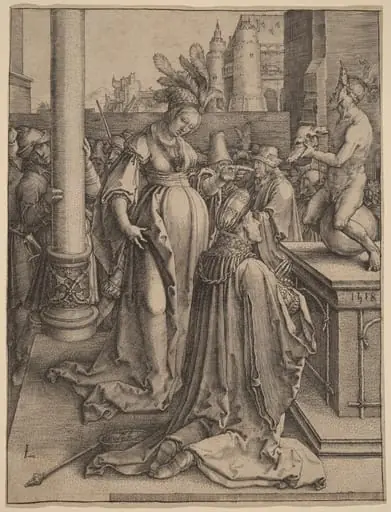
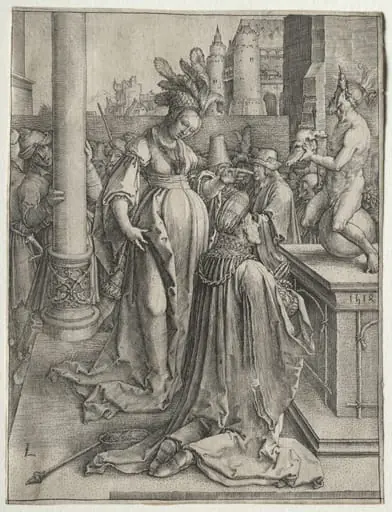
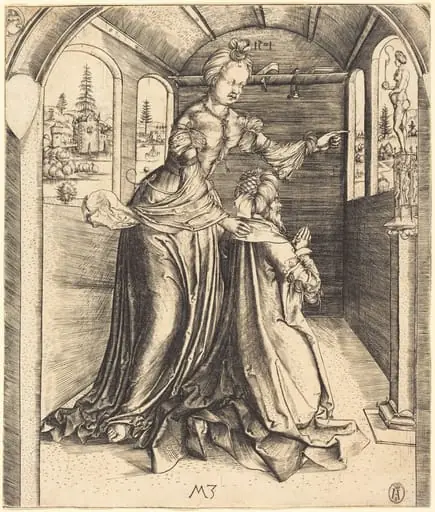
Solomon Praying to the Idols is an ink print by the Renaissance artist Albrecht Altdorfer. It dates from 1519 and is held in the collection of the National Gallery of Art.
About this work
Tiny details crowd the background—grapes, a bird, a snake—hiding meanings we can’t be sure of.
King Solomon kneels before a ring of idols on a dark slab of stone. The engraving uses fine lines to show shadows and folds in his robe. Tiny details crowd the background—grapes, a bird, a snake—hiding meanings we can’t be sure of.
Altdorfer carved this in 1519, when Northern artists loved tiny, tangled scenes. The work feels crowded but precise, like a riddle pressed into paper.
See it in person at the National Gallery of Art, Washington.
Overview
Created around 1519 by Albrecht Altdorfer, this engraving on laid paper depicts a biblical moment with meticulous detail. Altdorfer, based in Regensburg, was known for blending narrative with immersive landscapes. The work belongs to a small body of engravings he produced alongside his larger paintings, showcasing his skill in fine-line technique and compositional complexity.
Subject & Meaning
The scene illustrates King Solomon, once wise and devout, now kneeling before a circle of pagan idols—a reference to his later spiritual decline as described in the Bible. The dark stone slab beneath him suggests moral decay, while the surrounding natural elements may symbolize temptation or divine abandonment. The ambiguity of the background details invites interpretation without offering clear allegorical keys.
Technique & Style
Altdorfer employed fine, controlled lines to render texture in Solomon’s robe and the rough surface of the stone. The background teems with minute elements—grapes, a snake, a bird—each carefully incised but deliberately obscure. This density reflects the Northern Renaissance preference for intricate, almost puzzle-like compositions, where meaning is suggested rather than stated outright.
History & Provenance
The engraving was made during Altdorfer’s mature period, when he was active in Regensburg and deeply engaged with both religious themes and landscape innovation. It entered the collection of the National Gallery of Art in Washington, D.C., through established acquisition channels, likely in the 20th century, as part of broader efforts to preserve early German prints.
Context
In early 16th-century Germany, artists like Altdorfer moved beyond purely devotional imagery to explore psychological and moral complexity. His work stood apart from the more linear traditions of Nuremberg’s Little Masters by embedding figures within expansive, atmospheric settings. This print reflects a broader shift in Northern art toward landscape as a carrier of emotional and symbolic weight.
Legacy
Though less widely known than his paintings, this engraving exemplifies Altdorfer’s unique fusion of narrative and environment. It influenced later printmakers who sought to convey inner states through layered detail and natural settings. Today, it remains a key example of how Renaissance artists used printmaking to explore spiritual ambiguity with quiet precision.
Artist & collection
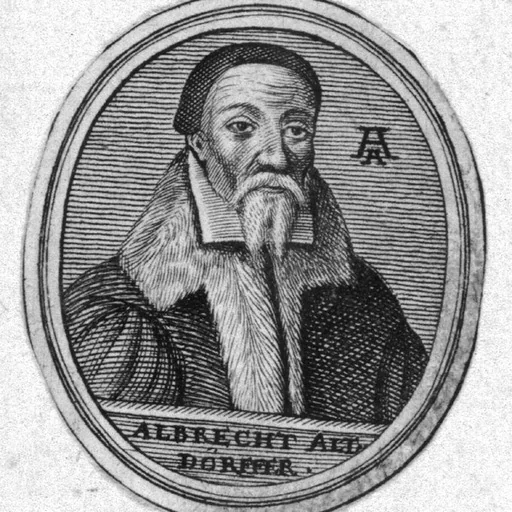
Artist
Albrecht Altdorfer (c. 1480 – 12 February 1538) was a German painter, engraver and architect of the Renaissance working in Regensburg. Along with Lucas Cranach the Elder and Wolf Huber he is regarded to be the main…