Artwork
Solomon Worshipping False Gods
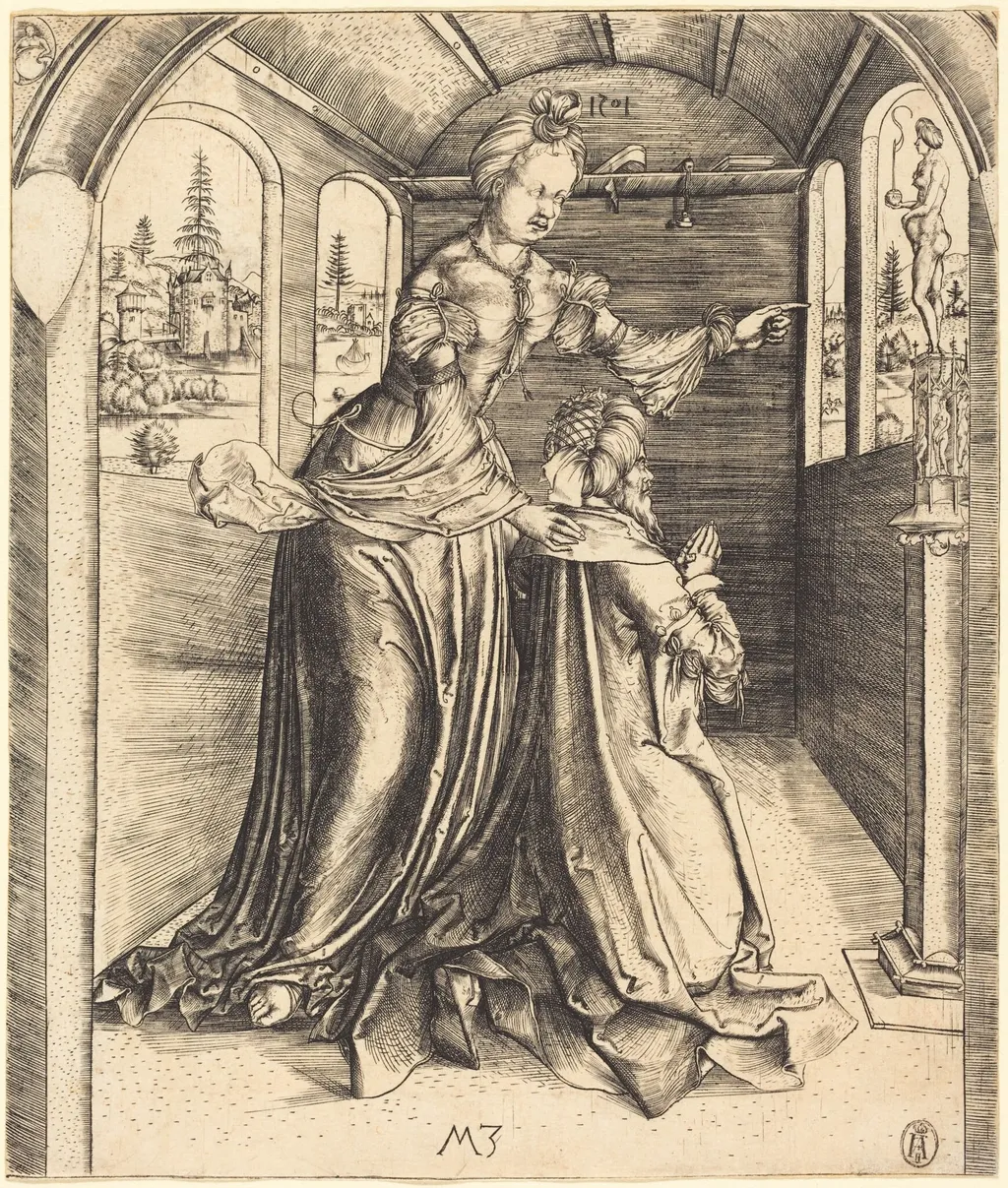
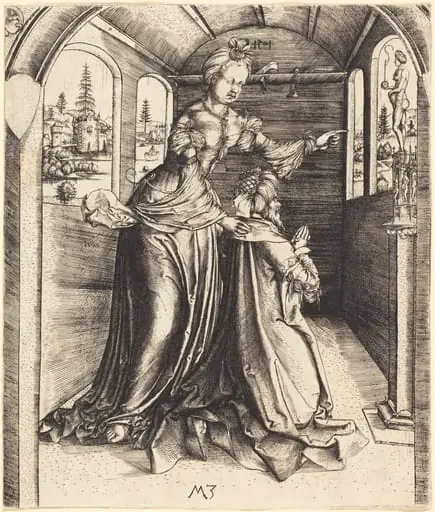
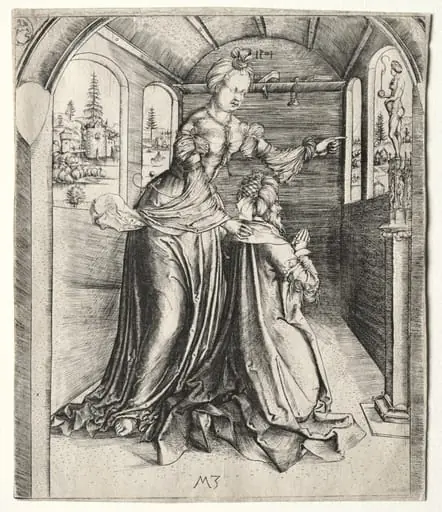
Solomon Worshipping False Gods is an ink print by the Renaissance artist Master MZ. It dates from 1501 and is held in the collection of the National Gallery of Art.
About this work
Overview
The architectural setting—arched windows and vaulted ceilings—frames the moment with formal grandeur, reinforcing the gravity of the act depicted.
Created in 1501, this engraving by Master MZ depicts a biblical scene of moral transgression through meticulous line work on laid paper. The composition centers on a robed male figure kneeling before a nude female statue, while a second figure gestures toward it. The architectural setting—arched windows and vaulted ceilings—frames the moment with formal grandeur, reinforcing the gravity of the act depicted.
Subject & Meaning
The scene illustrates King Solomon’s apostasy, as described in the Hebrew Bible, where he turns to the worship of foreign deities under the influence of his wives. The kneeling figure, adorned with a turban, symbolizes his surrender to idolatry, while the standing woman, likely a consort, directs his gaze. The nude statue represents the pagan idol, contrasting sharply with the solemnity of the figures’ attire and posture.
Technique & Style
The artist employs fine cross-hatching to model form and suggest spatial depth, with careful gradations of tone enhancing the texture of fabrics, stone, and skin. Light falls selectively, casting soft shadows that define volume without overwhelming detail. The precision of the lines and the control of density reflect a technique closely aligned with the engraving traditions of Northern Renaissance masters, particularly in their attention to surface and structure.
History & Provenance
The print is attributed to Master MZ, an anonymous German engraver active in the early 16th century, likely based in southern Germany or Austria. Few works by this hand survive, and this piece is among the most fully realized. It was likely produced for a learned audience familiar with biblical narratives, circulating in private collections rather than public markets.
Context
Created during a period of religious upheaval in Europe, the image engages with contemporary anxieties about idolatry and moral decay. While the subject is drawn from scripture, its visual language draws from classical sculpture and architectural ideals of the Renaissance. The engraving reflects a broader cultural dialogue between Christian doctrine and the revival of antiquity, often viewed with suspicion by reform-minded viewers.
Legacy
Though Master MZ remained obscure, this engraving demonstrates a high level of technical skill that places it within the orbit of Albrecht Dürer’s influence. Its survival in museum collections attests to its enduring value as a study in narrative precision and graphic control. It remains a rare example of early 16th-century German printmaking that treats biblical themes with psychological nuance and formal rigor.
Artist & collection