Artwork
The Circumcision
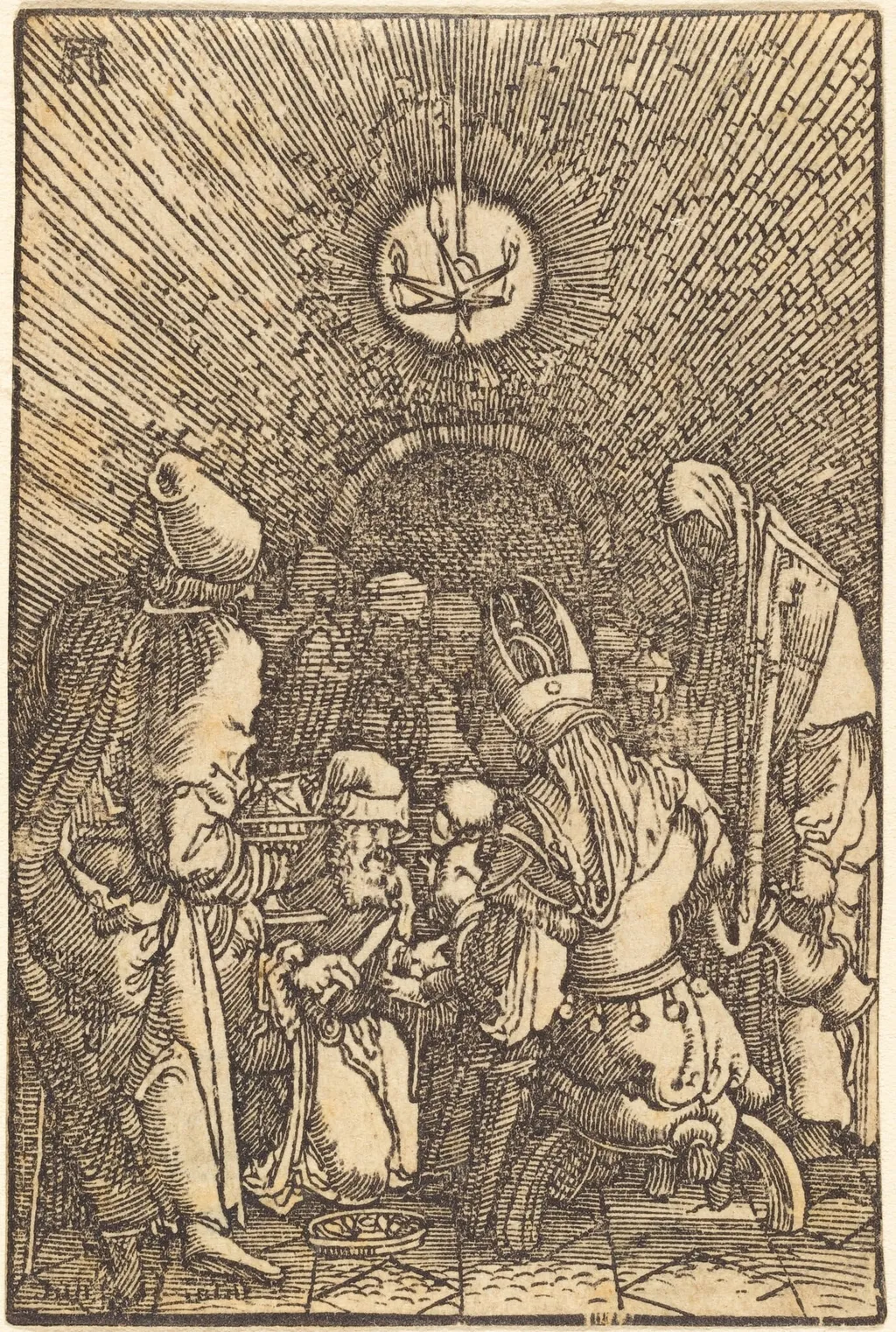
The Circumcision is an ink print by the Renaissance artist Albrecht Altdorfer. It dates from 1513 and is held in the collection of the National Gallery of Art.
About this work
Woodcuts print dark lines on paper, so the artist carves the image into wood first.
This print shows a crowded room with men in old clothes around a baby on a bed. The baby lies still while an adult holds his leg. Candles light the scene from the left.
Altdorfer made this in 1513. Woodcuts print dark lines on paper, so the artist carves the image into wood first. Here he uses fine lines to show folds in clothes and flickering candlelight.
This feels hushed and serious. Look for the quiet moment at the center. Try a woodcut next.
Overview
Created around 1513, *The Circumcision* is a woodcut on laid paper by Albrecht Altdorfer, a German artist active in the early 16th century. As a member of the Danube School, Altdorfer combined religious narrative with detailed natural settings. This print exemplifies his skill in woodcut technique, using fine, controlled lines to render texture and light. The work belongs to a period when printmaking was gaining artistic legitimacy alongside painting and sculpture.
Subject & Meaning
The scene depicts the ritual circumcision of the infant Jesus, as described in the Gospel of Luke. A quiet, intimate moment unfolds in a dimly lit interior, with figures gathered around a central bed. The stillness of the child and the focused gestures of the men suggest solemnity rather than ceremony. The emphasis on domestic space and subdued action reflects a humanized interpretation of sacred events, common in devotional imagery of the time.
Technique & Style
Altdorfer employed fine, precise carving to achieve intricate details in fabric, skin, and candlelight. The woodcut’s dark lines define folds in garments and the flickering glow of candles, creating depth without color. His handling of light suggests an awareness of contemporary painting techniques, while the dense composition and meticulous line work align with the Nuremberg Little Masters’ aesthetic. The print’s intimacy is amplified by its small scale and controlled tonal range.
History & Provenance
Produced in the early 1510s, the print likely circulated among educated patrons and clergy in southern Germany. Altdorfer’s reputation as both painter and printmaker helped disseminate his religious imagery beyond regional boundaries. While specific early ownership records are sparse, the work’s survival in multiple institutional collections indicates its enduring recognition among collectors of Renaissance prints.
Context
During this period, German artists were increasingly exploring landscape and interior space as carriers of emotional and spiritual meaning. Altdorfer’s integration of architectural detail and ambient light in *The Circumcision* reflects broader shifts in Northern Renaissance art, where the physical world became a vehicle for contemplation. His work stood apart from more rigidly iconographic traditions by emphasizing atmosphere and psychological nuance.
Legacy
Altdorfer’s woodcuts, including *The Circumcision*, influenced later generations of printmakers through their technical refinement and atmospheric sensitivity. Though less widely known than his paintings, these prints contributed to the elevation of printmaking as a medium capable of complex narrative and emotional expression. His blending of sacred subject matter with naturalistic detail helped shape the evolution of religious imagery in Northern Europe.
Artist & collection
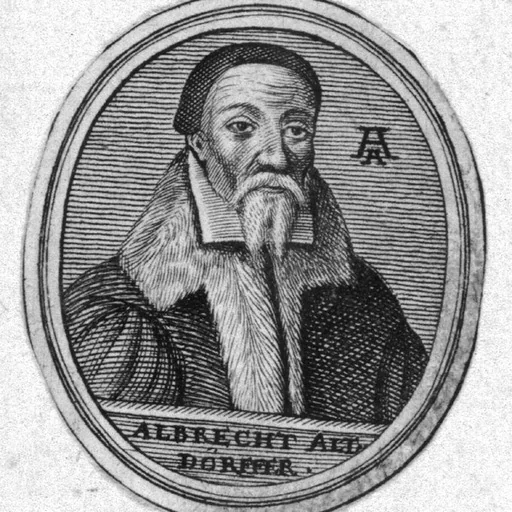
Artist
Albrecht Altdorfer (c. 1480 – 12 February 1538) was a German painter, engraver and architect of the Renaissance working in Regensburg. Along with Lucas Cranach the Elder and Wolf Huber he is regarded to be the main…