Artwork
The Nativity
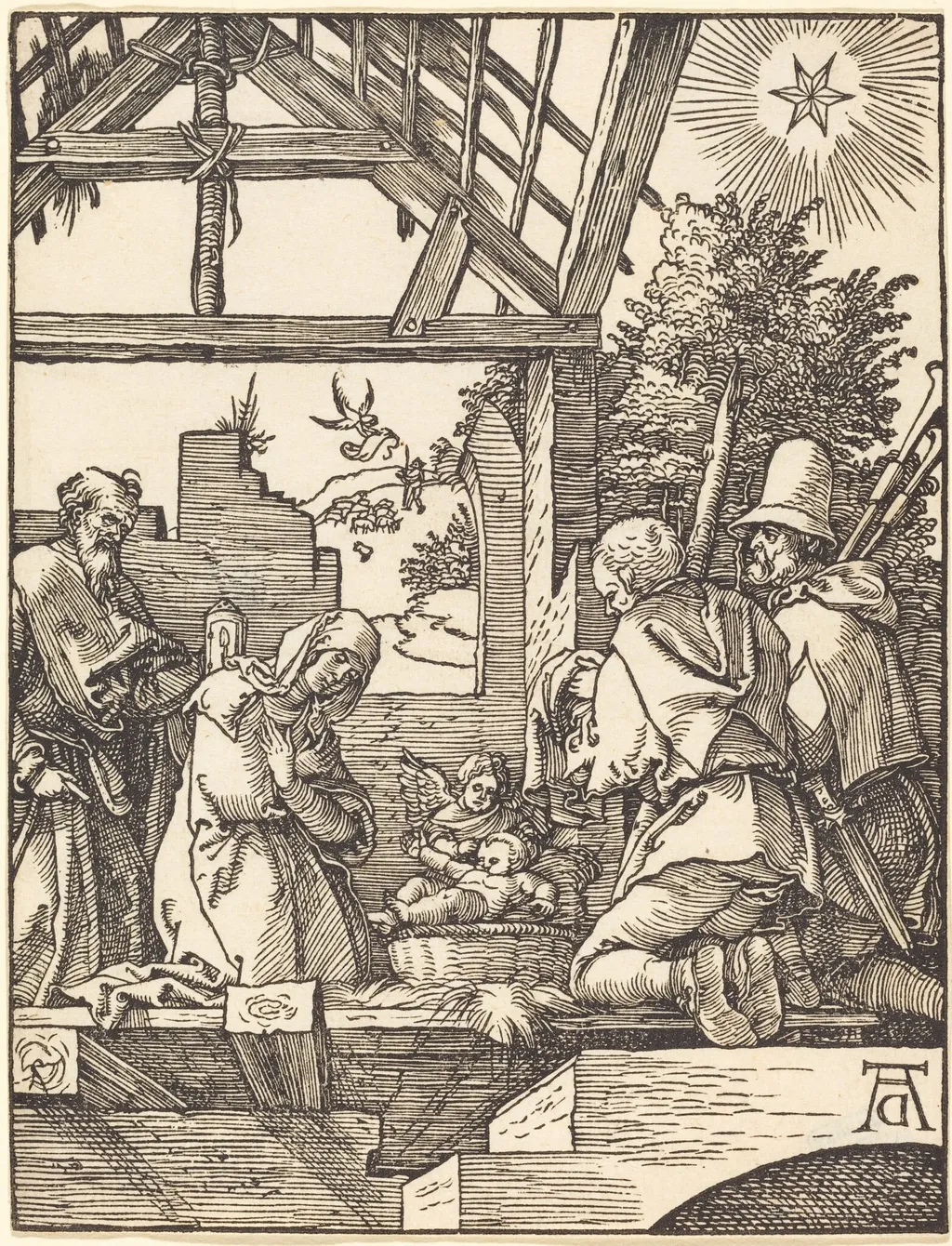
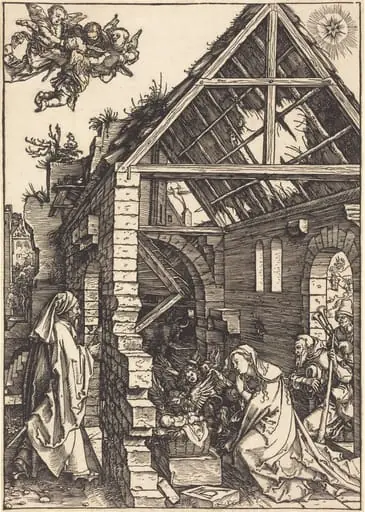
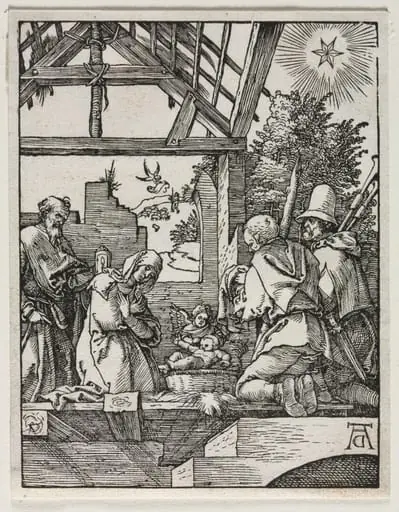
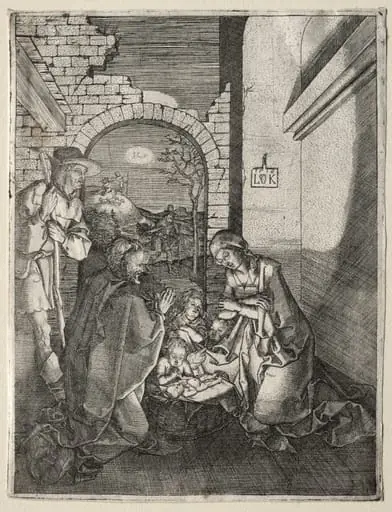
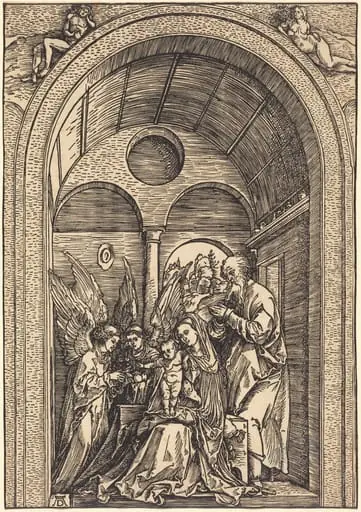
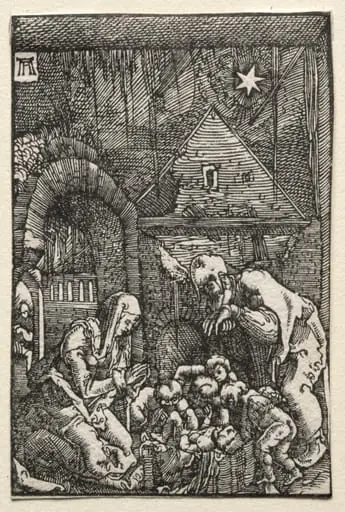
The Nativity is an ink print by the Northern Renaissance artist Albrecht Dürer. It dates from 1510 and is held in the collection of the British Museum.
About this work
Overview
Albrecht Dürer’s *The Nativity* is a woodcut print executed around 1510, part of a broader series of devotional images. Produced on laid paper, the work reflects Dürer’s mastery of the medium, combining intricate linework with a composition designed for mass reproduction. Intended for sale to pilgrims and collectors, the print distills a sacred narrative into a compact, reproducible format.
Subject & Meaning
The scene centers on the Adoration of the Christ Child, with the Virgin Mary kneeling in reverence beside the infant. A luminous glow emanates from the child, casting subtle shadows that define his form and underscore his divine nature. Joseph, positioned in the background, observes the moment with quiet devotion, his features partially illuminated by the same radiant light.
Technique & Style
The print’s linear economy and dramatic lighting align with the Northern Renaissance emphasis on meticulous craftsmanship and symbolic clarity.
Dürer carved the entire composition onto a single woodblock, achieving a balance between fine detail and bold contrast. The sharp, precise lines retain their clarity even on the soft, textured surface of the paper, a testament to his control over the medium. The print’s linear economy and dramatic lighting align with the Northern Renaissance emphasis on meticulous craftsmanship and symbolic clarity.
History & Provenance
Created as a commercial venture, *The Nativity* was produced in multiple impressions for distribution to travelers and patrons. Dürer’s workshop likely printed numerous copies from the original block, though the exact number of surviving examples remains uncertain. The print’s relatively modest scale and devotional subject suggest it was intended for private contemplation or inclusion in personal prayer books.
Context
Woodcuts like *The Nativity* played a crucial role in disseminating religious imagery during the early 16th century. Dürer’s work emerged in a period of heightened demand for affordable, portable devotional art, catering to a growing audience of literate and pious viewers. The print’s composition reflects both traditional Christian iconography and Dürer’s innovative approach to spatial organization and light.
Artist & collection
Artist
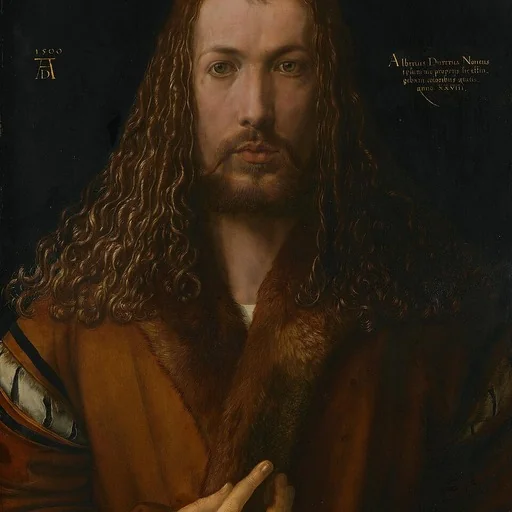
Albrecht Dürer spent his life in Nuremberg, a busy German city where artists traded prints like currency.

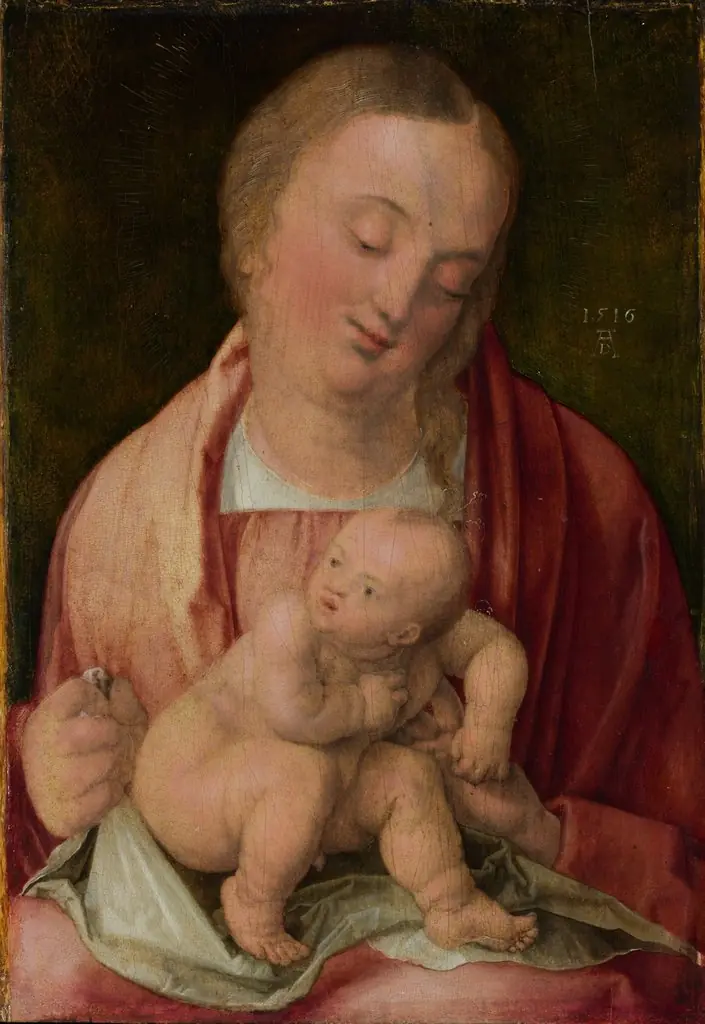
![Madonna and Child [obverse], by Albrecht Dürer](https://artifactworldgallery.com/img/albrecht-durer--madonna-and-child-obverse--d7b8ebf05d22ebe5-w320.webp)
![Lot and His Daughters [reverse], by Albrecht Dürer](https://artifactworldgallery.com/img/albrecht-durer--lot-and-his-daughters-reverse--b4ebf9b282faa17a-w320.webp)