Artwork
The Fall of Man
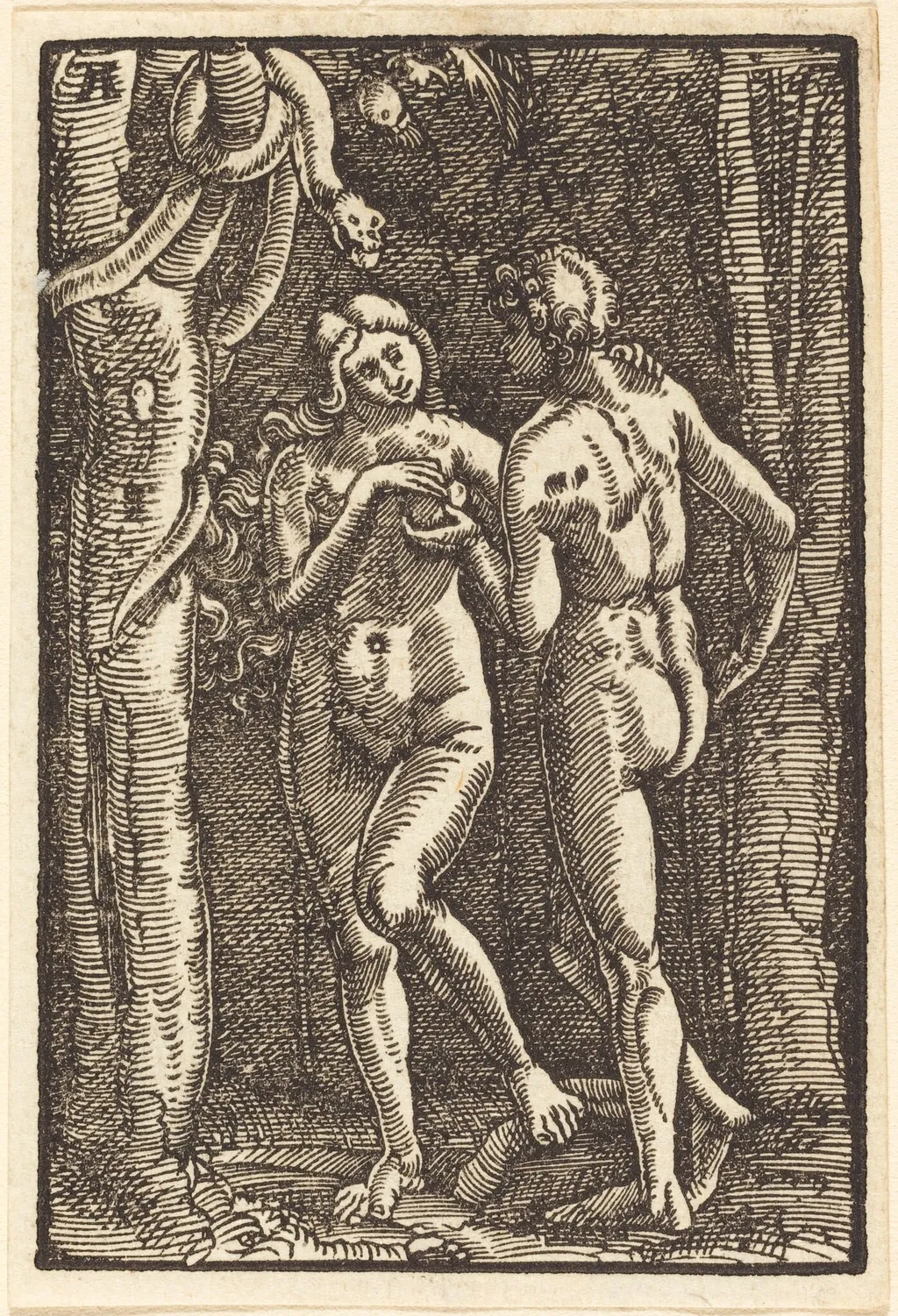
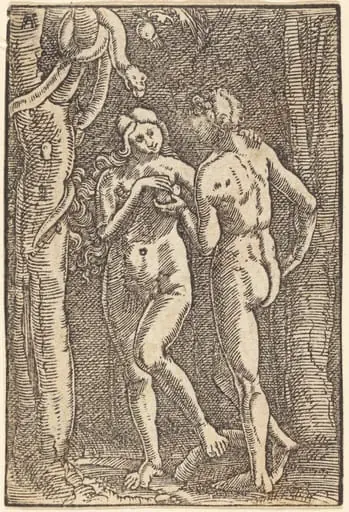
The Fall of Man is an ink print by the Renaissance artist Albrecht Altdorfer. It dates from 1513 and is held in the collection of the National Gallery of Art.
About this work
Overview
Albrecht Altdorfer's 'The Fall of Man' is a woodcut on laid paper, created around 1513. It exemplifies the artist's work within the Danube School, known for integrating biblical scenes into detailed landscapes.
Subject & Meaning
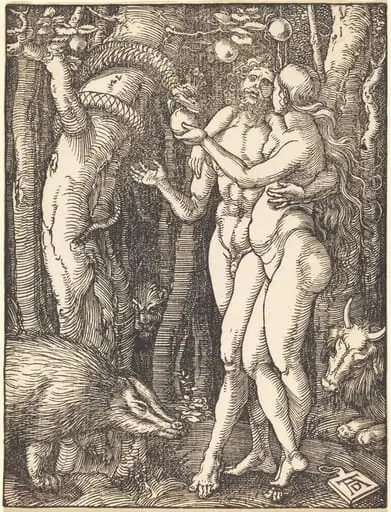
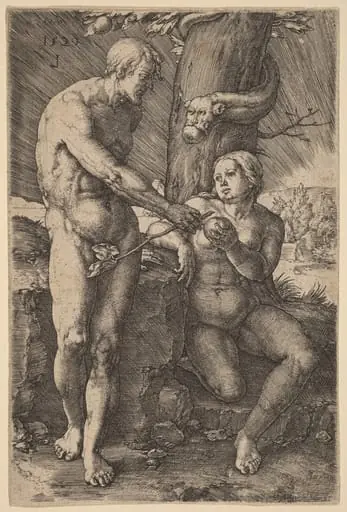
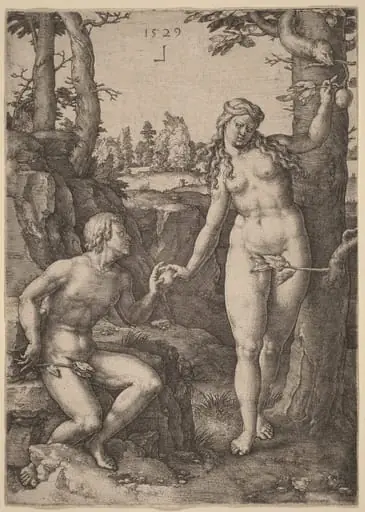
The print depicts Adam and Eve's expulsion from Eden, set in a dense forest. The figures are shown nude, with a serpent entwined around a nearby tree, conveying a sense of tension and narrative significance.
Technique & Style
As a woodcut, the work showcases Altdorfer's skill with the medium, characteristic of the Danube School's expressive use of landscape. The detailed rendering of figures and foliage demonstrates the artist's technical proficiency.
Context
Produced during the Renaissance, 'The Fall of Man' reflects the period's interest in biblical narratives and the natural world. Altdorfer's work was influenced by the Nuremberg Little Masters, known for their detailed engravings.
Artist & collection
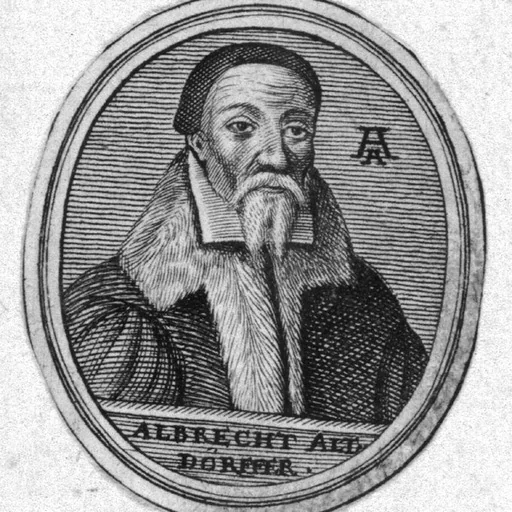
Artist
Albrecht Altdorfer (c. 1480 – 12 February 1538) was a German painter, engraver and architect of the Renaissance working in Regensburg. Along with Lucas Cranach the Elder and Wolf Huber he is regarded to be the main…