Artwork
The Fall of Man
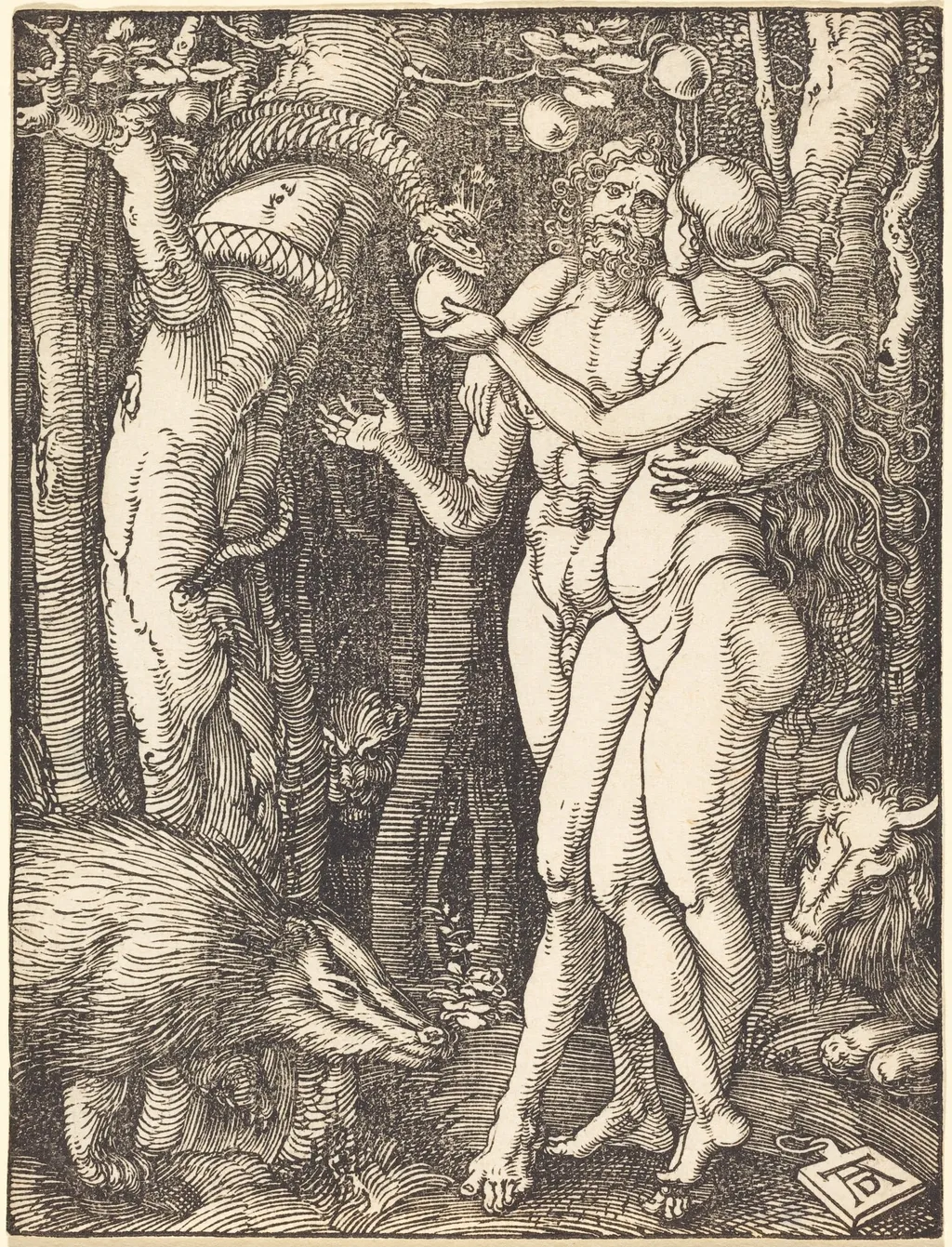
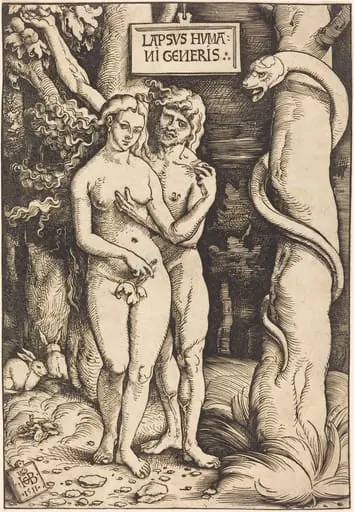
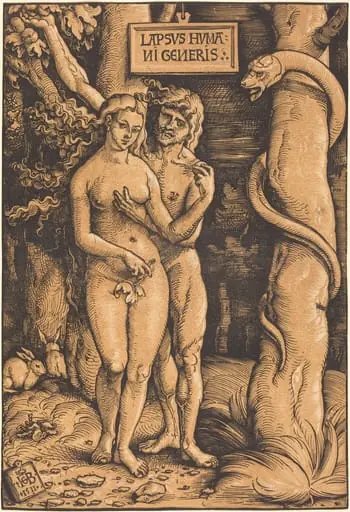
The Fall of Man is an ink print by the Northern Renaissance artist Albrecht Dürer. It dates from 1510 and is held in the collection of the British Museum.
About this work
Overview
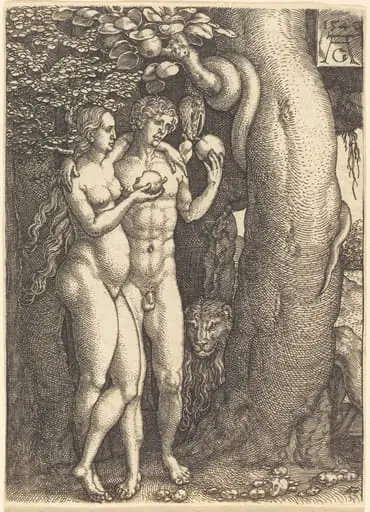
Albrecht Dürer’s woodcut entitled *The Fall of Man*, executed around 1510, presents a biblical scene on a sheet of laid paper. The print portrays the first humans, Adam and Eve, within a forest setting, illuminated by scattered shafts of light. The composition is notable for its tranquil atmosphere, where surrounding creatures, including a coiled serpent, appear calm rather than tumultuous.
Subject & Meaning
By placing Adam and Eve amid a serene woodland populated by placid animals, Dürer emphasizes the pre‑sin harmony between humans and nature.
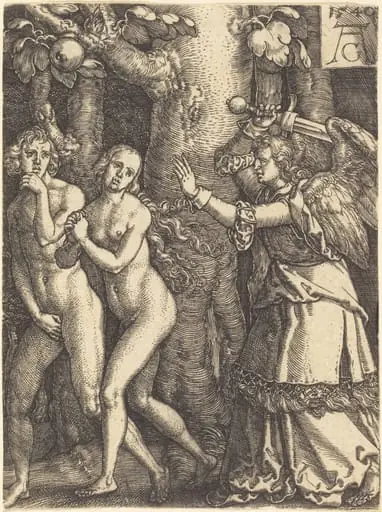
The image interprets the Genesis narrative of humanity’s original transgression. By placing Adam and Eve amid a serene woodland populated by placid animals, Dürer emphasizes the pre‑sin harmony between humans and nature. The subdued demeanor of the serpent, traditionally a symbol of temptation, adds a nuanced tension, suggesting the moment before the act of disobedience rather than its violent aftermath.
Technique & Style
Created through the woodcut process, Dürer incised fine, intersecting lines into a wooden block, then transferred the design onto paper by pressing inked impressions. The meticulous carving renders detailed musculature, delicate fur textures, and intricate foliage, demonstrating the artist’s command of line work to suggest volume and light. The use of laid paper contributes a subtle grain that interacts with the printed tones.
History & Provenance
The print belongs to Dürer’s mature period, when he explored complex religious subjects in the medium of printmaking. Produced circa 1510, it reflects his continued interest in disseminating theological imagery beyond painted panels. Surviving copies are held in several European collections, documenting the work’s circulation among collectors of early 16th‑century prints.
Artist & collection
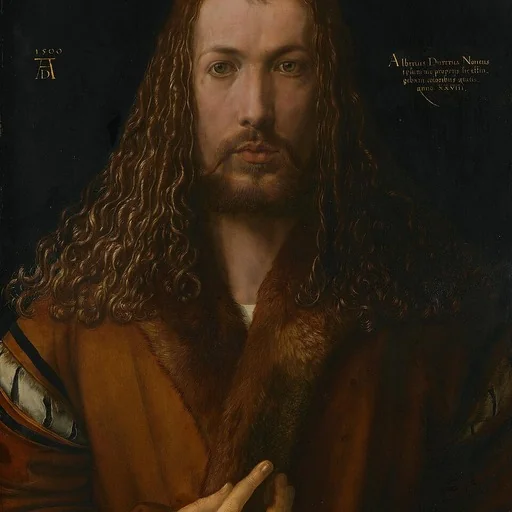
Artist
Albrecht Dürer spent his life in Nuremberg, a busy German city where artists traded prints like currency.

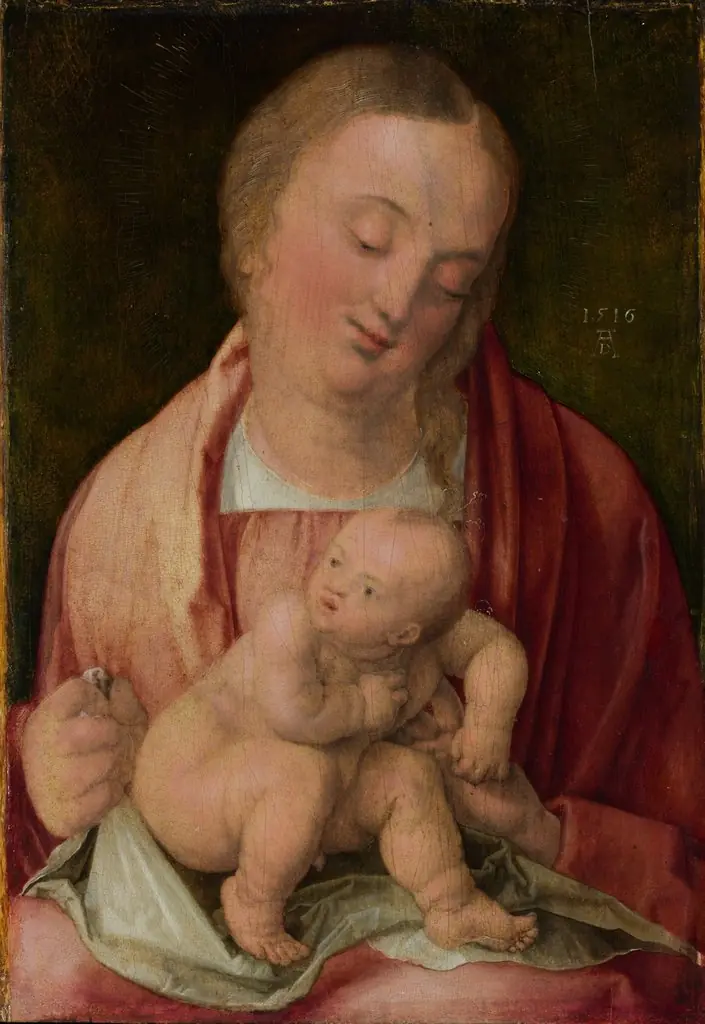
![Madonna and Child [obverse], by Albrecht Dürer](https://artifactworldgallery.com/img/albrecht-durer--madonna-and-child-obverse--d7b8ebf05d22ebe5-w320.webp)
![Lot and His Daughters [reverse], by Albrecht Dürer](https://artifactworldgallery.com/img/albrecht-durer--lot-and-his-daughters-reverse--b4ebf9b282faa17a-w320.webp)