Artwork
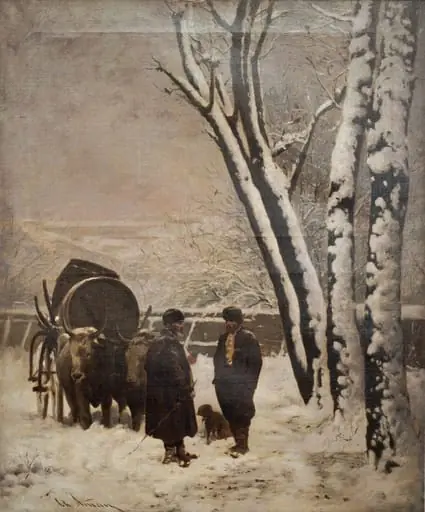
Car cu boi
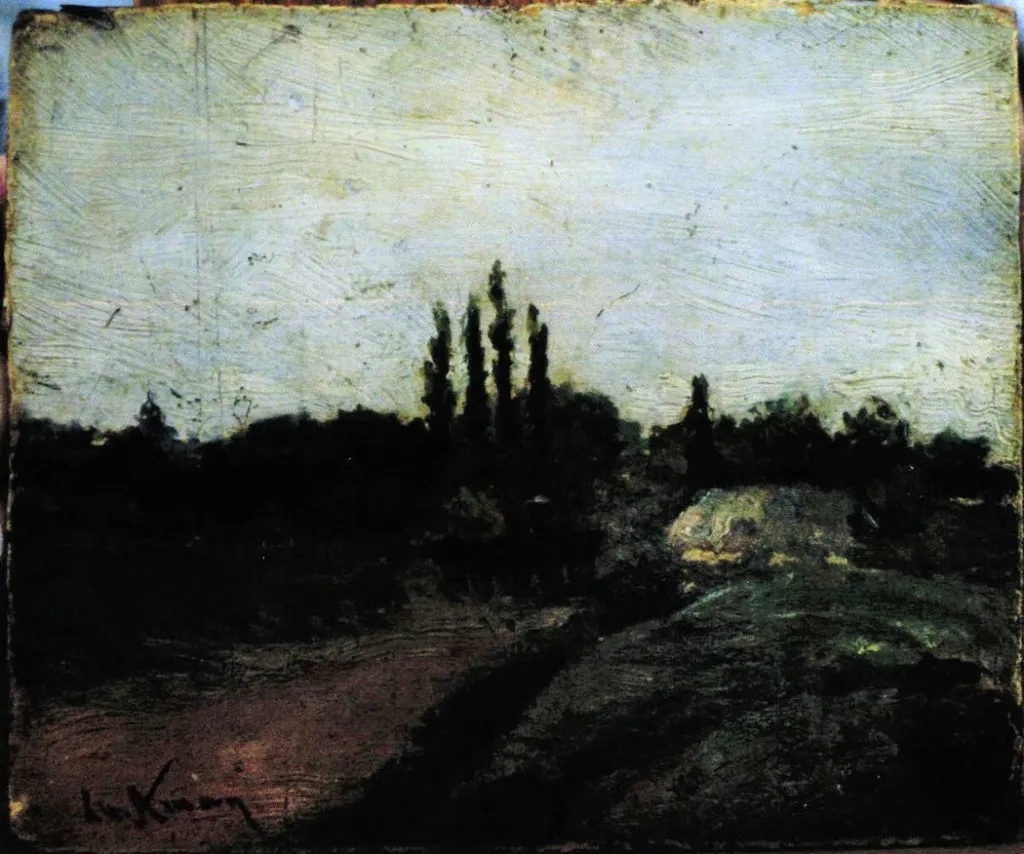
Car cu boi is a print by Theodor Aman. It dates from 1871 and is held in the collection of the Bucharest Municipality Museum.
About this work
Overview
The work is held in the collection of the Museum of Ethnography in Romania, reflecting its cultural significance rather than its formal finish.
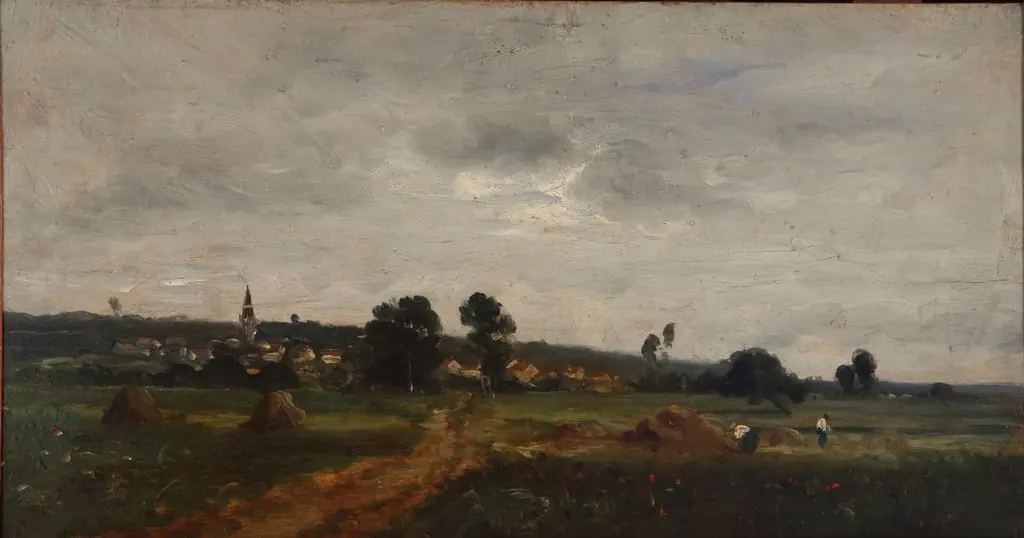
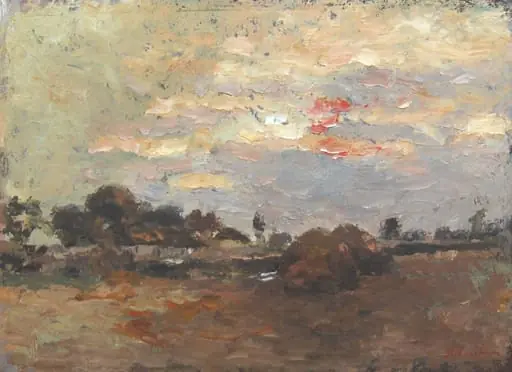
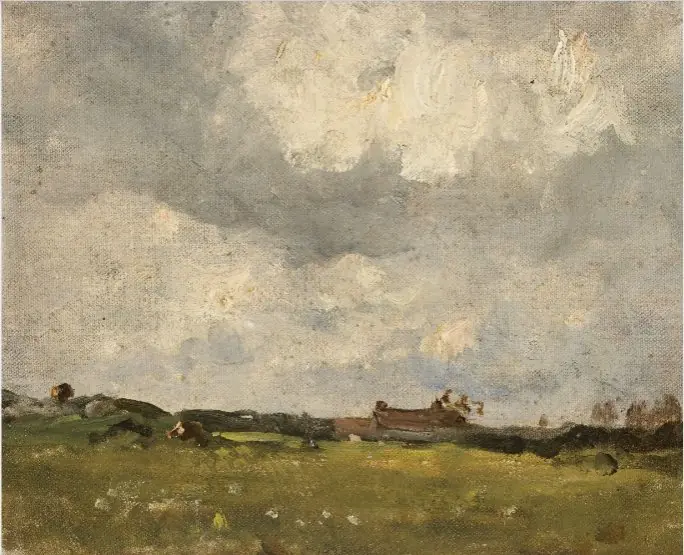
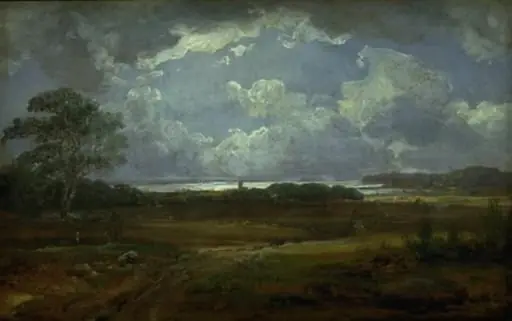
Created around 1871 by Romanian artist Theodor Aman, *Car cu boi* is a small-scale oil painting that captures a quiet rural scene. Aman, known for his genre and historical subjects, here turns to a solitary agricultural motif. The work is held in the collection of the Museum of Ethnography in Romania, reflecting its cultural significance rather than its formal finish. Its raw appearance suggests it may have been intended as a preparatory study or an intentional departure from polished academic norms.
Subject & Meaning
The painting depicts a single ox standing in a muted, shadowed landscape, surrounded by dense forest and an indistinct sky. There is no narrative action or human presence—only the animal and the land. This minimalism emphasizes solitude and the quiet rhythm of rural labor. The absence of detail invites contemplation of the relationship between livestock and environment, evoking themes of endurance and the unadorned reality of peasant life in 19th-century Romania.
Technique & Style
Aman employed loose, rapid brushwork and a restricted palette of earth tones to convey atmosphere over precision. Forms are suggested rather than defined, with the ox’s outline emerging faintly from the surrounding shadows. The sky is nearly blank, and the ground is rendered with textured, uneven strokes. This deliberate lack of finish aligns with emerging realist tendencies, prioritizing mood and immediacy over idealized detail, and recalls the observational quality of plein air sketches.
History & Provenance
The painting entered the Museum of Ethnography’s holdings in the late 19th or early 20th century, likely through institutional acquisition or donation tied to Aman’s role as an art educator. Its preservation in an ethnographic context, rather than a fine arts collection, signals its value as a cultural document. While little is documented about its early ownership, its placement reflects a broader effort to archive visual representations of rural Romanian life during a period of national identity formation.
Context
In the 1870s, Romanian artists increasingly turned to local subjects as part of a cultural movement seeking to define a distinct national identity. Aman, trained in Europe and influenced by academic traditions, nonetheless chose to depict unidealized rural scenes. *Car cu boi* fits within this shift, aligning with contemporaneous efforts to elevate everyday peasant life as worthy of artistic attention, even when rendered with minimal technique.
Legacy
Though not widely exhibited, *Car cu boi* remains a quiet example of Aman’s engagement with realism beyond grand historical themes. Its unpolished aesthetic influenced later Romanian artists who valued emotional resonance over technical finish. The work’s preservation in an ethnographic museum underscores its role as a record of material culture, offering insight into how rural labor was visually understood during Romania’s modernization.
Artist & collection
Artist
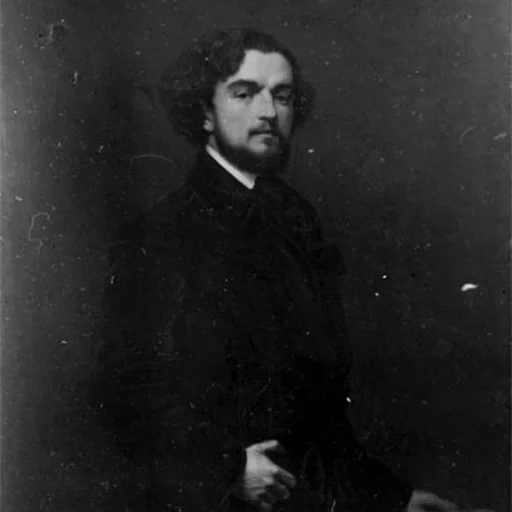
Theodor Aman (20 March 1831 – 19 August 1891) was a Romanian painter, engraver and art professor. He mostly produced genre and history scenes.