Artwork
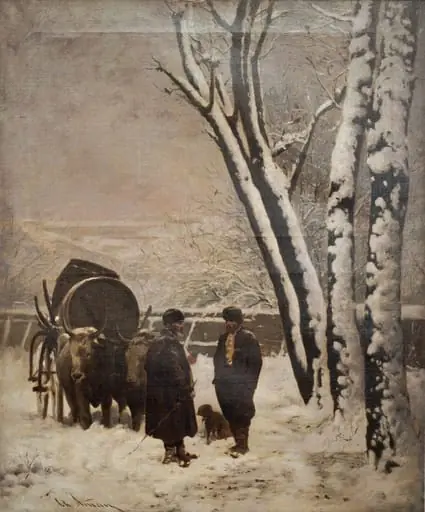
Scenă câmpenească
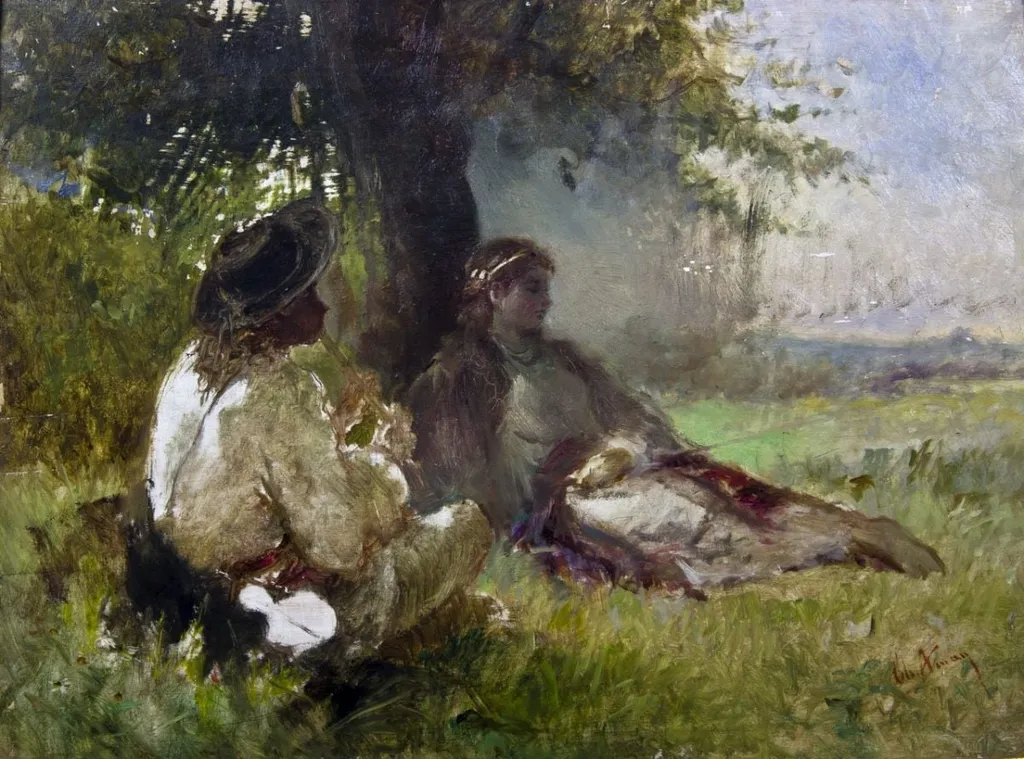
Scenă câmpenească is a print by Theodor Aman. It dates from 1850 and is held in the collection of the National Museum of Art of Romania.
About this work
Overview
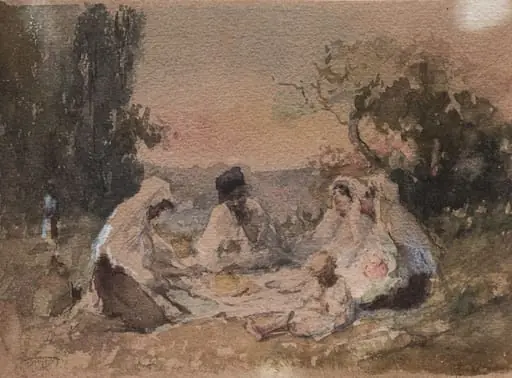
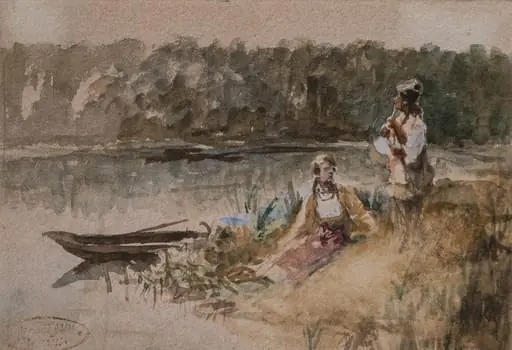
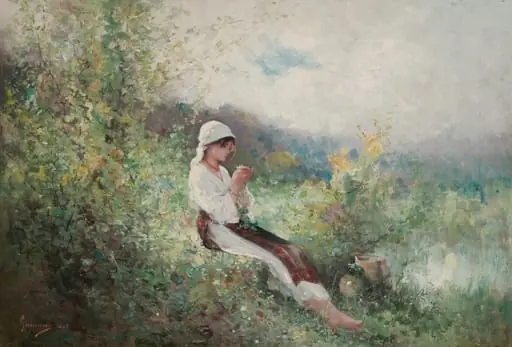
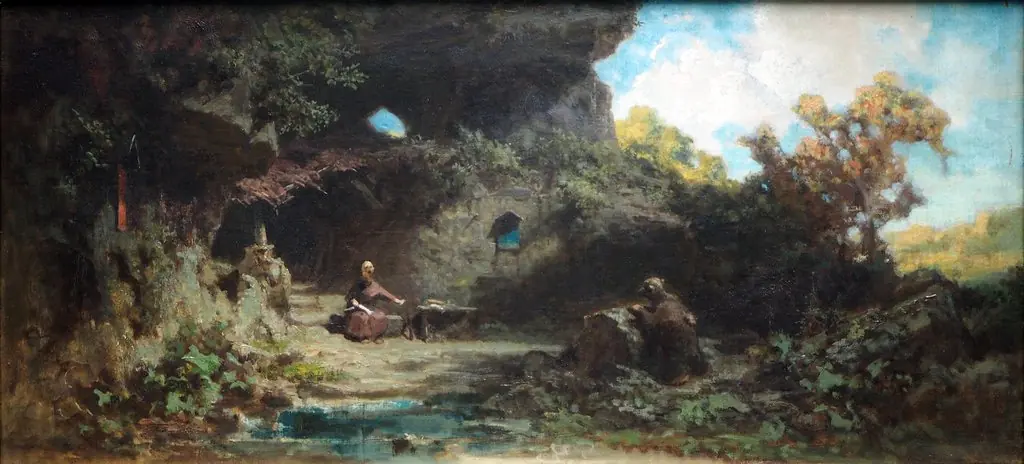
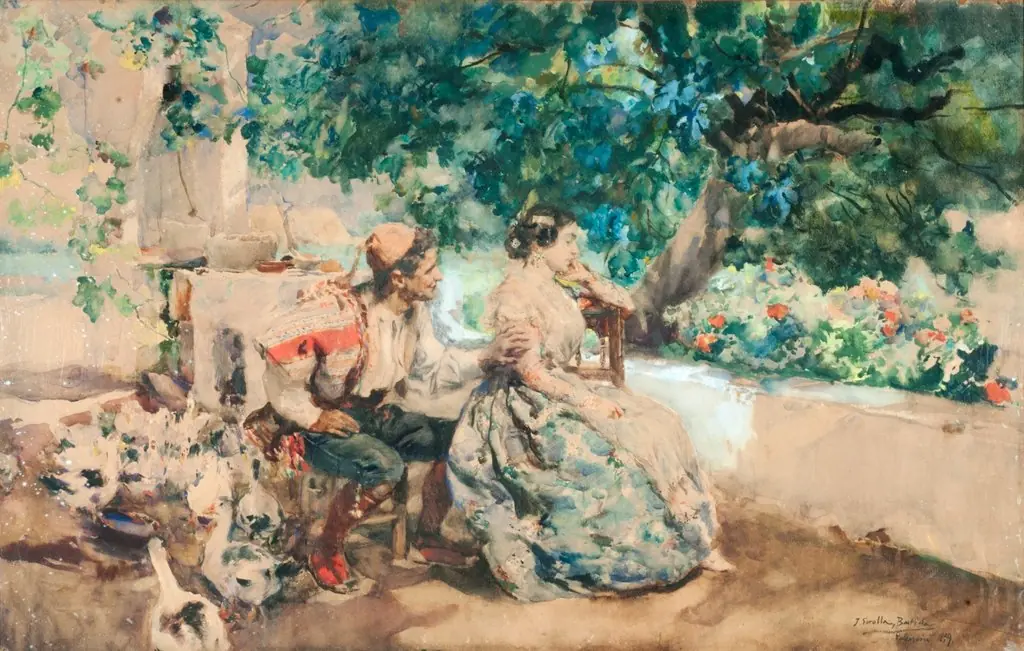
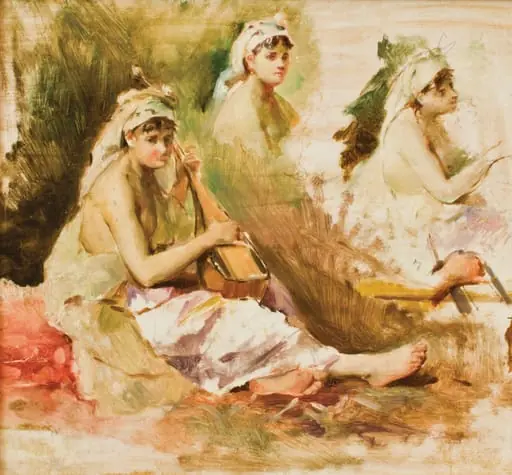
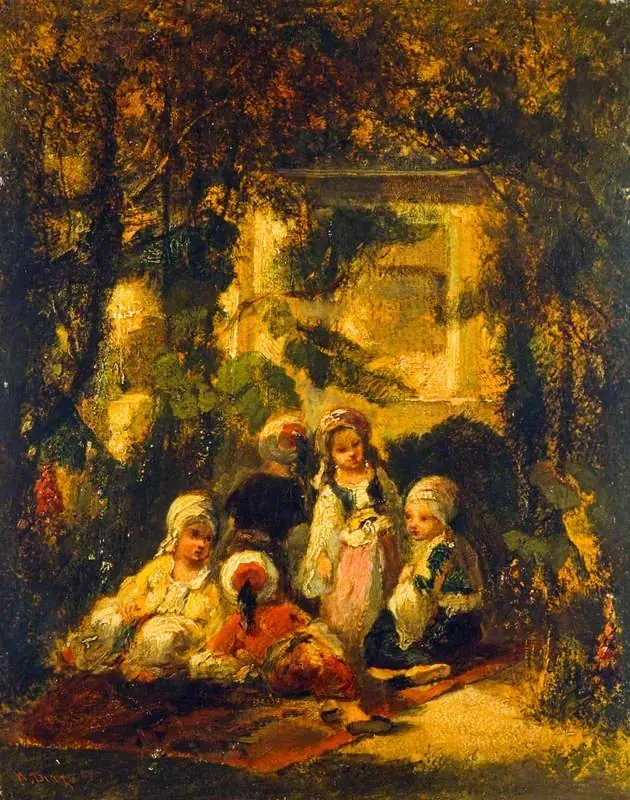
Scenă câmpenească, created around 1850 by Romanian artist Theodor Aman, is a genre painting capturing a serene rural moment. The work showcases Aman's blend of historical and everyday themes, characteristic of his style.
Subject & Meaning
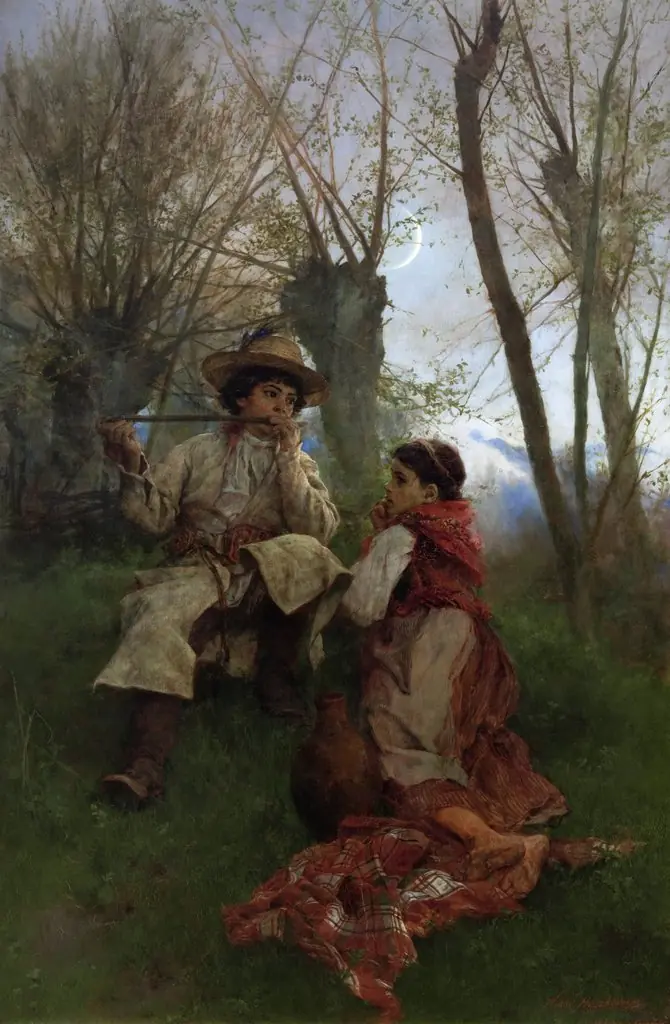
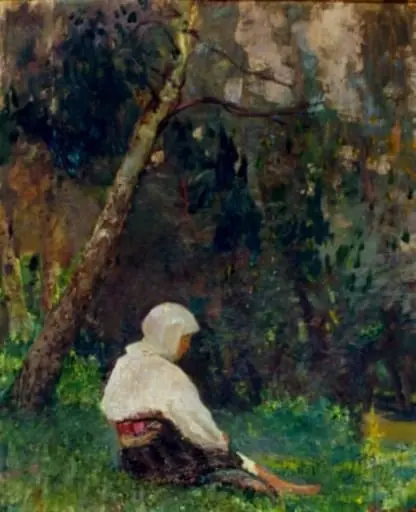
The painting depicts two figures in a natural setting: one individual with a dark hat and shawl holding a white cloth, and another facing away with a red blanket. The scene conveys a sense of everyday rural life, reflecting the artist's interest in portraying social scenes.
Technique & Style
Executed with thick, rough brushstrokes and impasto, the painting has a lively, almost unfinished quality. This technique enhances color vibrancy and imbues the figures with a sense of realism, set against a softly blurred backdrop of greens and blues.
History & Provenance
Dating to circa 1850, Scenă câmpenească aligns with the mid-19th-century European art trend of emphasizing genre painting to depict social life. Aman, a prolific painter, engraver, and educator, was well-positioned to contribute to this movement.
Artist & collection
Artist
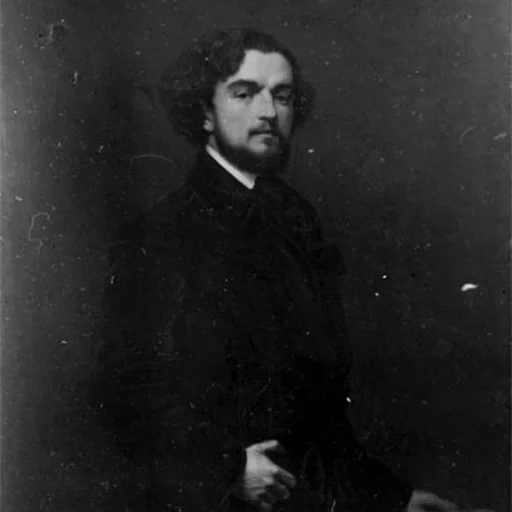
Theodor Aman (20 March 1831 – 19 August 1891) was a Romanian painter, engraver and art professor. He mostly produced genre and history scenes.