Artwork
Țărănci și țărani
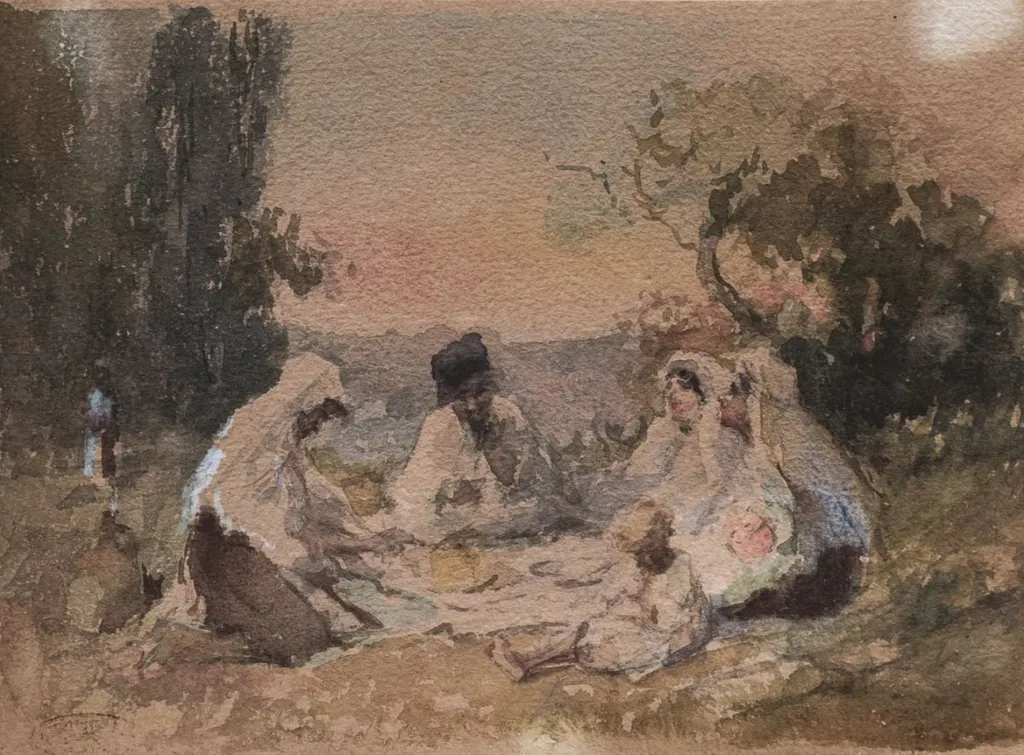
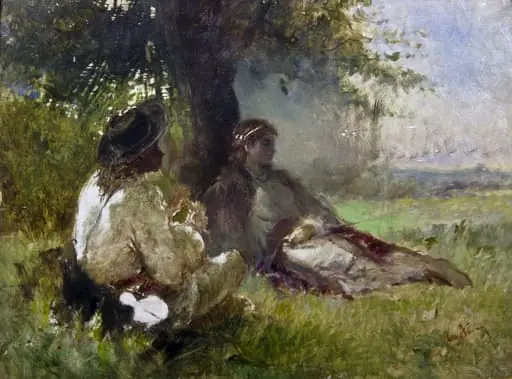
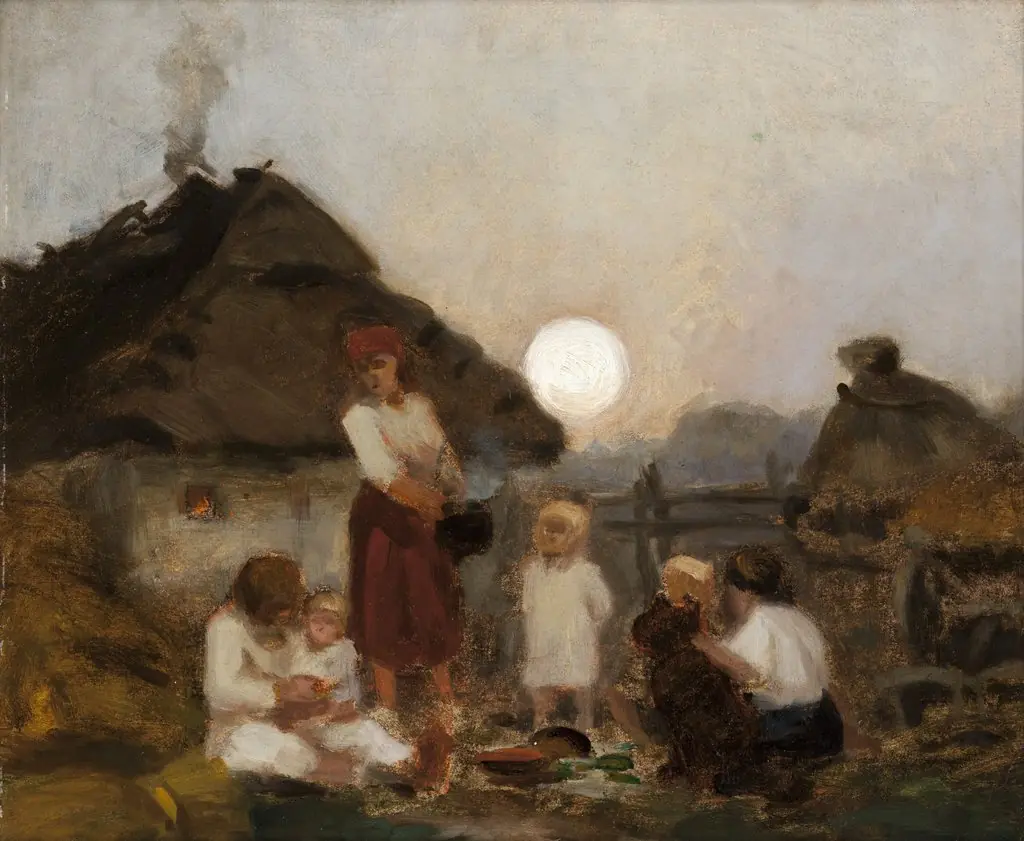
Țărănci și țărani is an unspecified painting by Theodor Aman. It dates from 1875 and is held in the collection of the Bucharest Municipality Museum.
About this work
Overview
The composition is informal, with minimal detail in the background—trees and a distant structure suggest a quiet countryside setting.
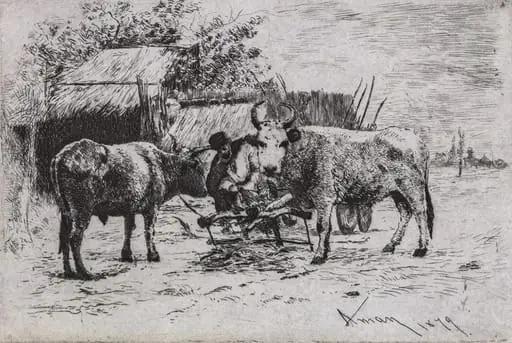
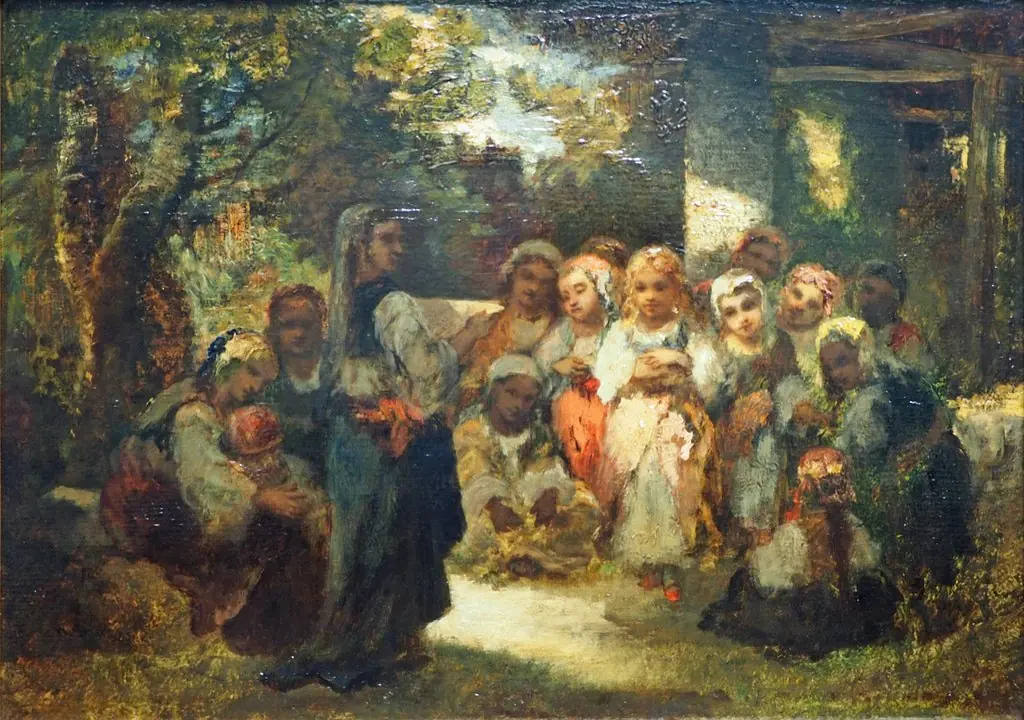
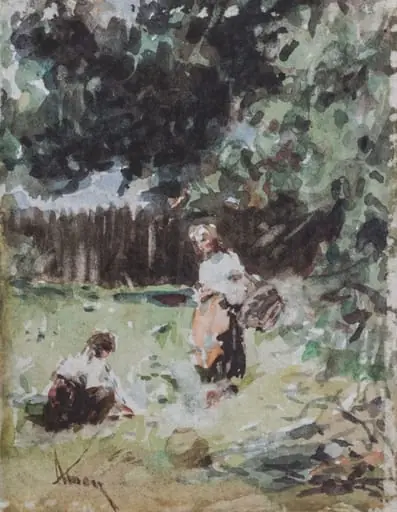
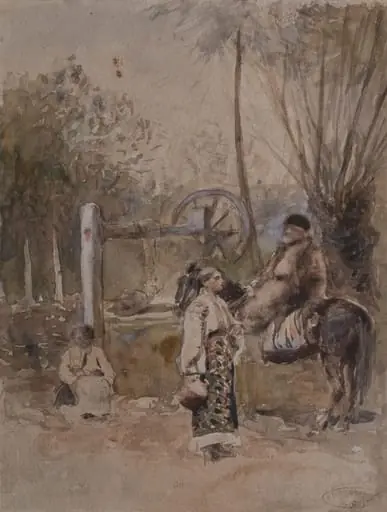
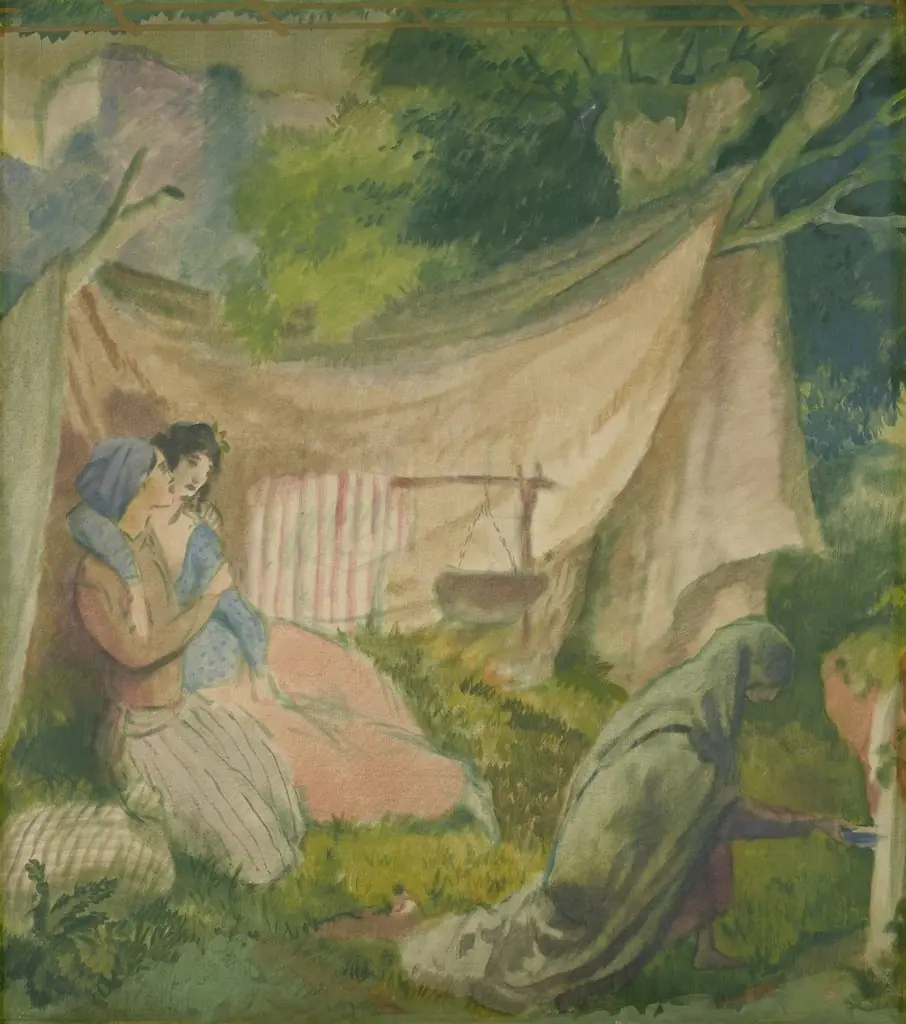
Created around 1875 by Theodor Aman, this image depicts two rural figures seated on a bench outdoors. Executed in oil, it resides in the Museum of Ethnography. The composition is informal, with minimal detail in the background—trees and a distant structure suggest a quiet countryside setting. The work’s unfinished appearance reflects a deliberate departure from academic polish, favoring immediacy over refinement.
Subject & Meaning
The two figures, a man and a woman, are dressed in plain, loose garments typical of Romanian peasant attire. Their posture is relaxed, suggesting a moment of rest rather than labor. The absence of narrative action or symbolic elements shifts focus to quiet dignity in everyday life. Aman presents rural subjects without idealization, emphasizing presence over story.
Technique & Style
Aman applied paint with rapid, uneven brushstrokes, creating a textured surface that captures fleeting light and atmospheric tone. Colors blend imperfectly, enhancing the sense of spontaneity. Thick applications of pigment, particularly in shadowed areas, suggest impasto techniques. The loose handling gives the work the character of an observational sketch, prioritizing sensory impression over polished finish.
History & Provenance
The painting entered the collection of the Museum of Ethnography shortly after its creation, likely through institutional acquisition or donation. Its preservation in this context indicates early recognition of its ethnographic value. Unlike Aman’s more formal portraits, this piece was not widely exhibited during his lifetime, remaining a private study until later scholarly interest emerged.
Context
In the 1870s, Romanian artists increasingly turned to rural life as a subject, reflecting national identity formation after independence. Aman, though trained in academic traditions, engaged with this trend through direct observation. This work aligns with broader European movements toward realism and plein air practice, though its roughness distinguishes it from more polished contemporaries.
Legacy
Though not widely reproduced, the painting is recognized for its unembellished portrayal of peasant life and its departure from academic norms. It influenced later Romanian artists seeking authenticity in depicting the countryside. Its preservation in an ethnographic museum underscores its role as a document of social and visual history rather than a conventional art object.
Artist & collection
Artist