Artwork
Paisagem com margens de um rio
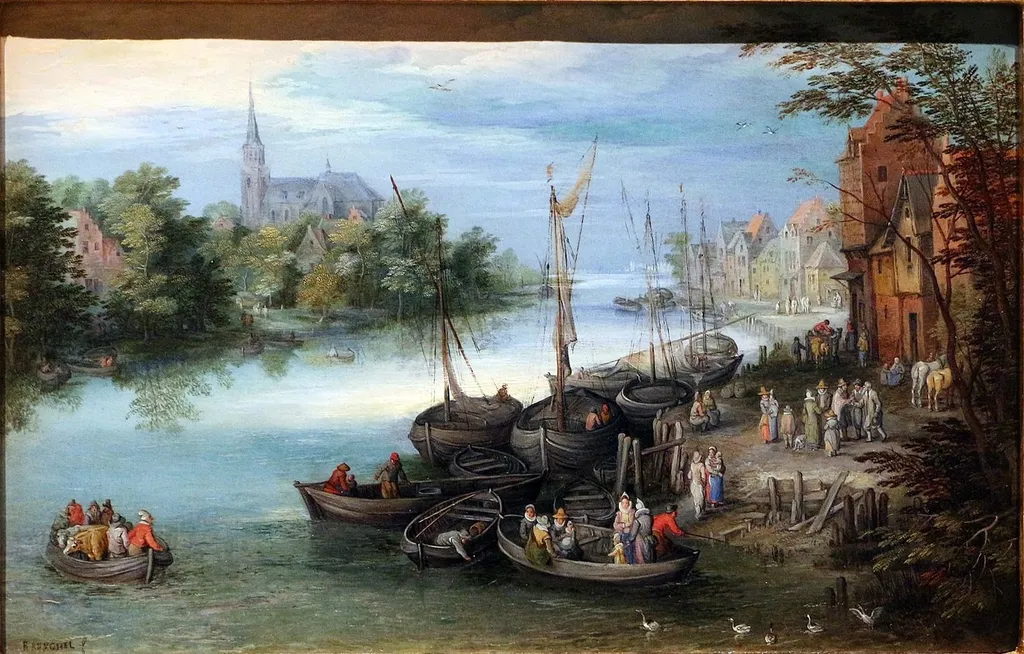
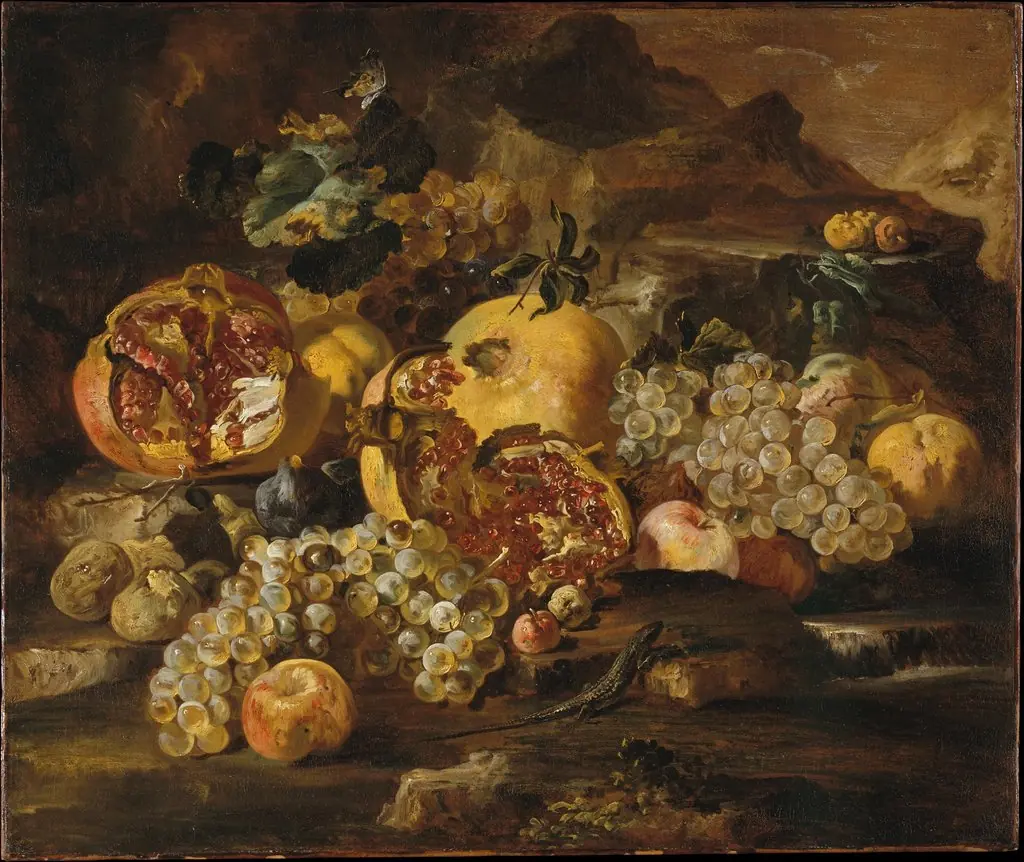
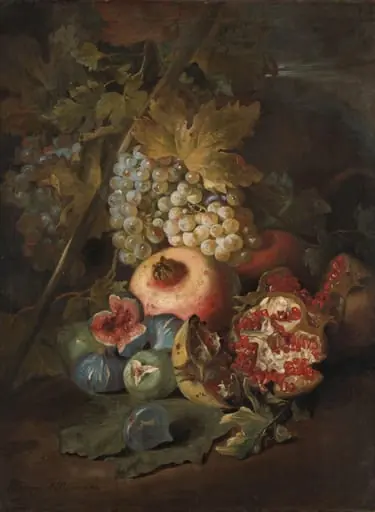
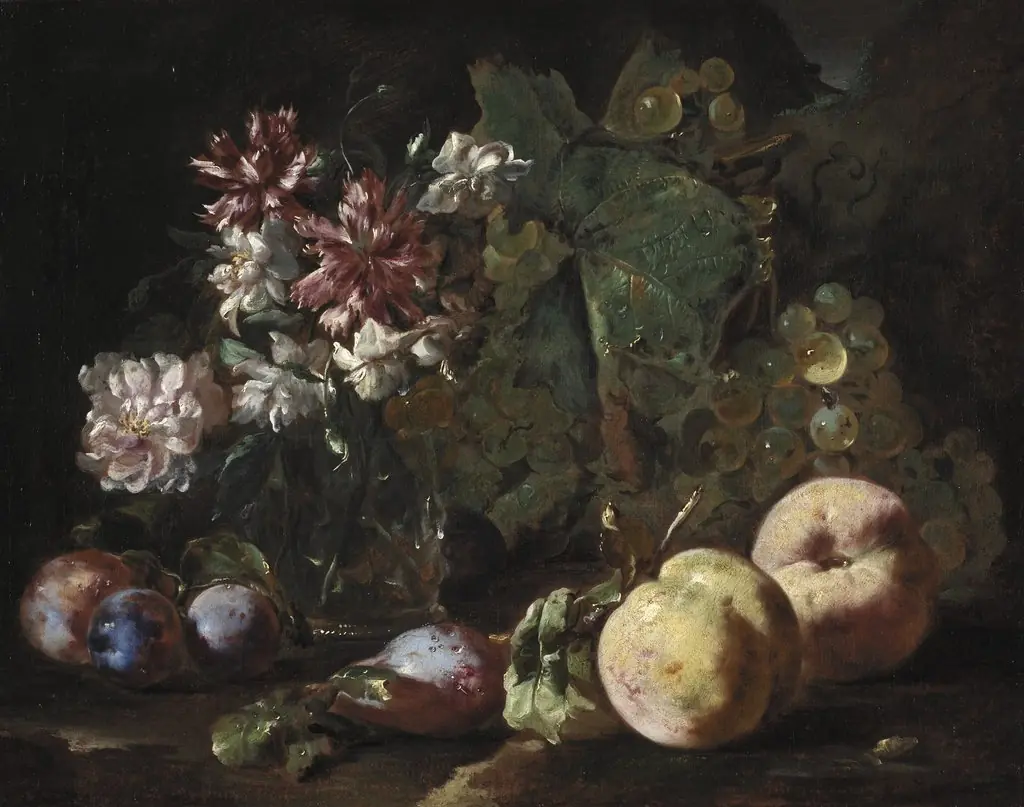
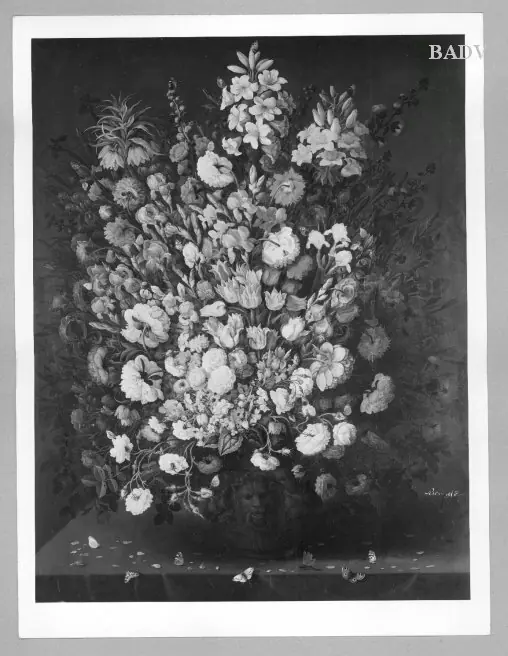
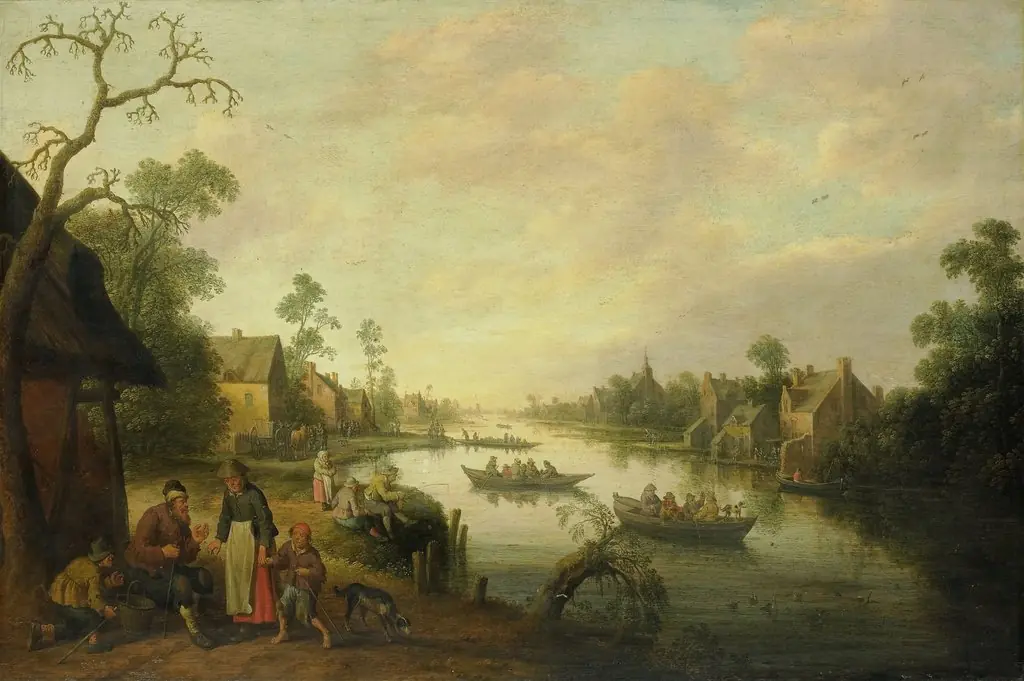
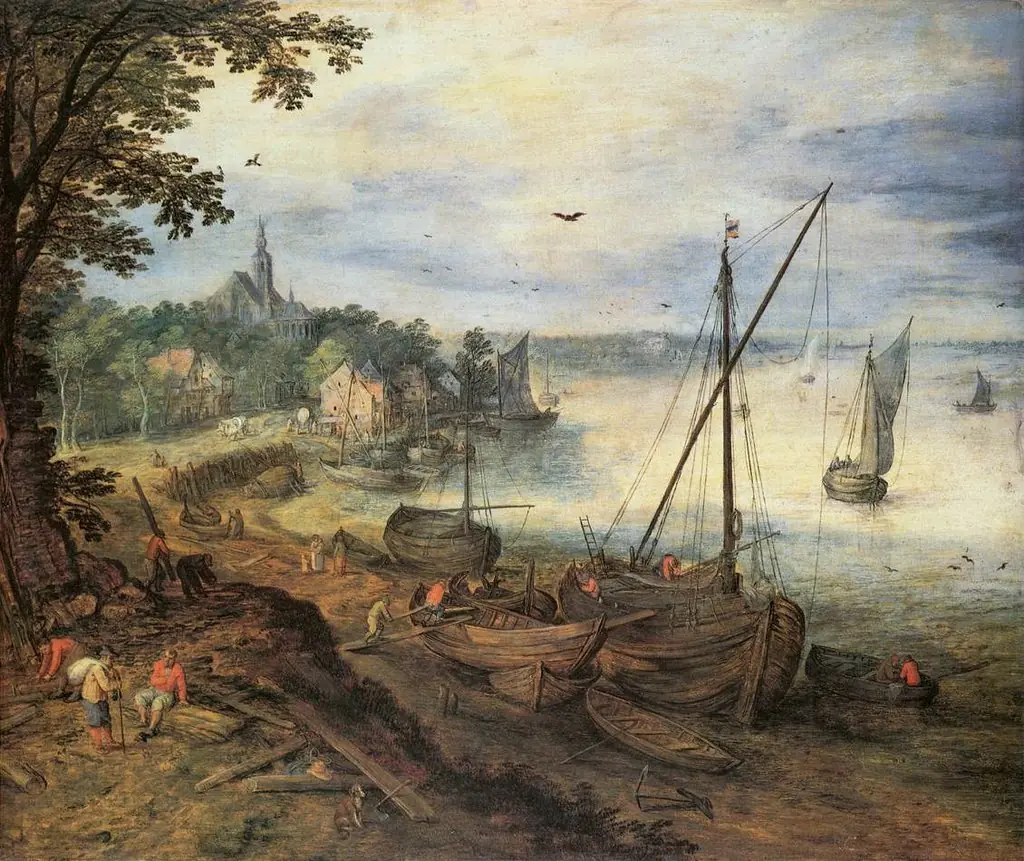
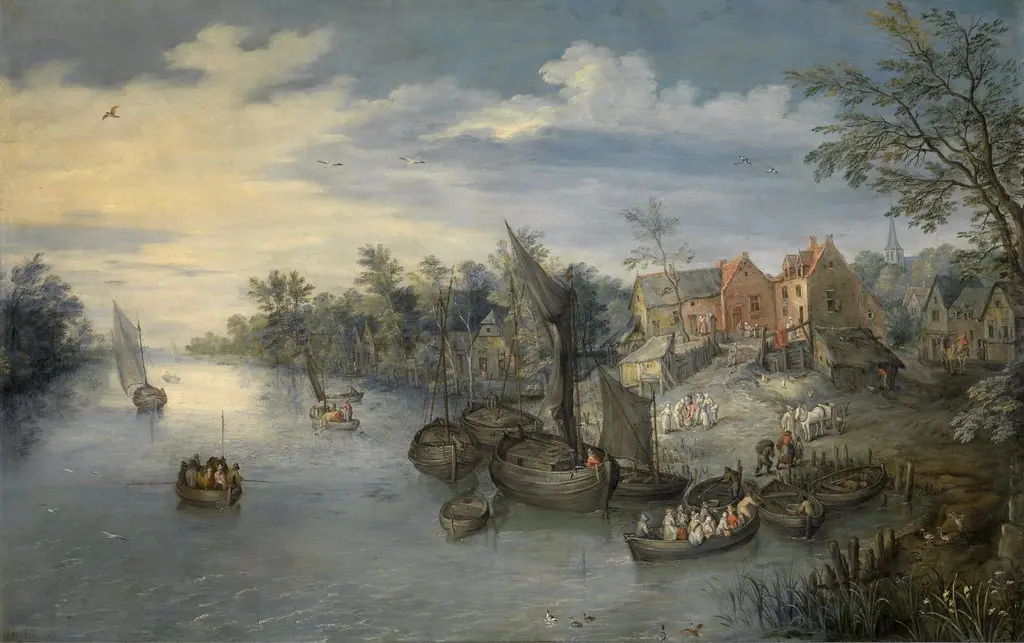
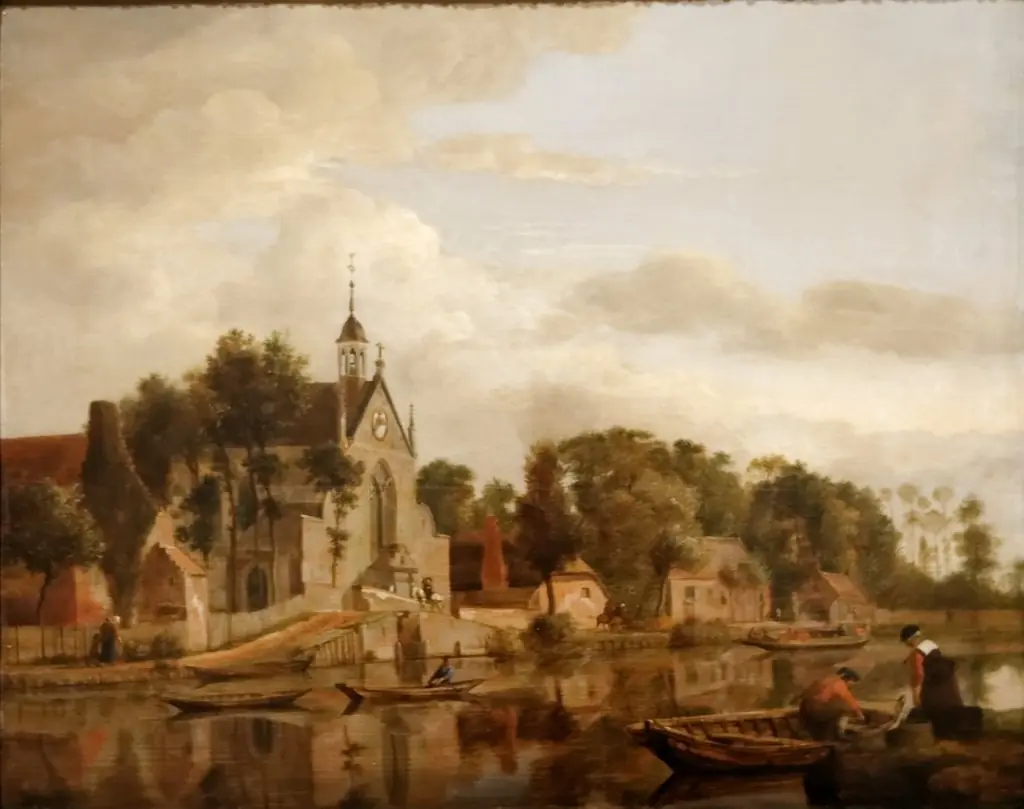
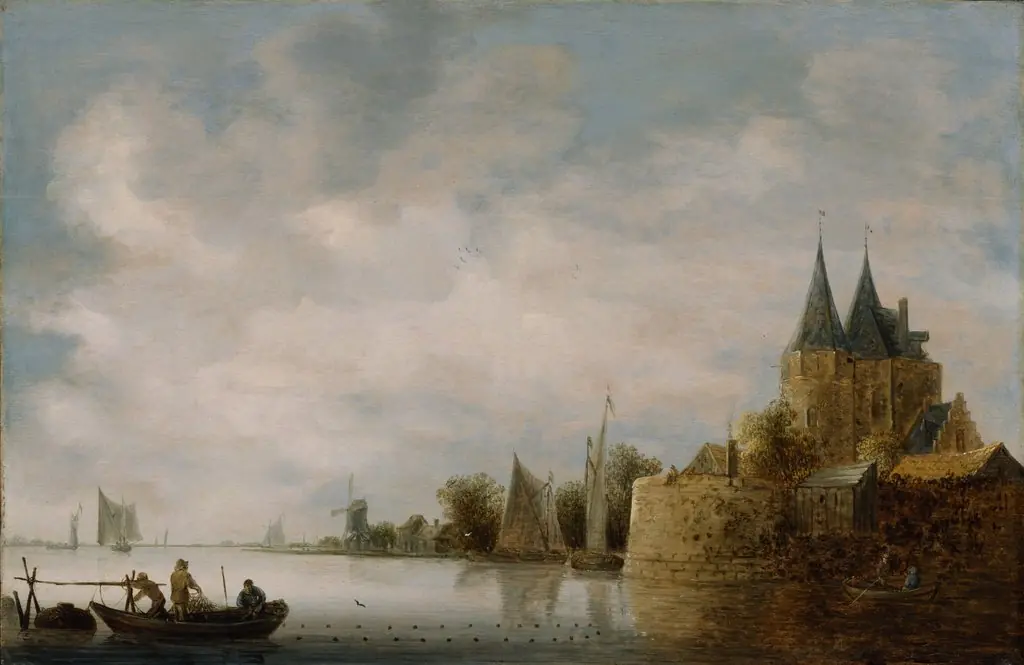
Paisagem com margens de um rio is an unspecified painting by the Flemish Baroque painting artist Abraham Brueghel. It dates from 1650 and is held in the collection of the National Museum of Ancient Art. Painted around 1650 by Ambrosius Brueghel, this landscape depicts a quiet riverside setting in the Flemish Baroque tradition.
About this work
Overview
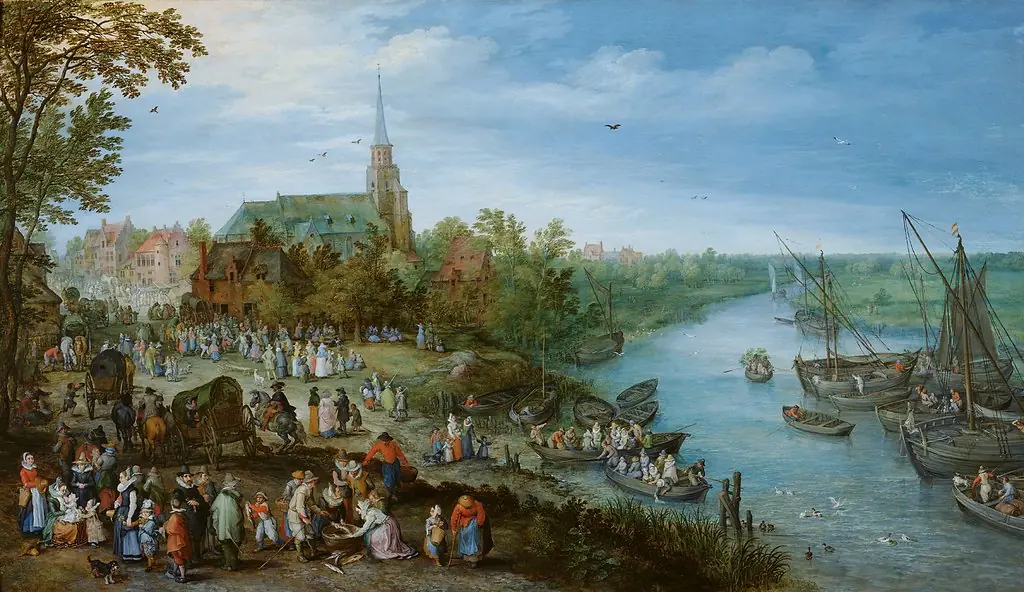
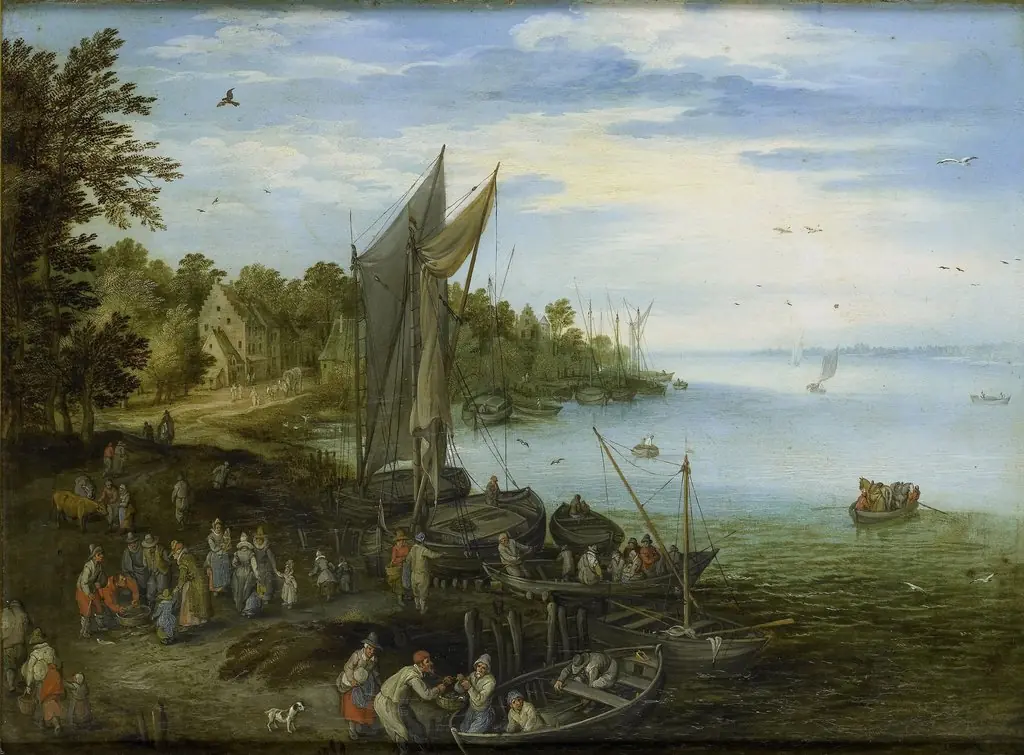
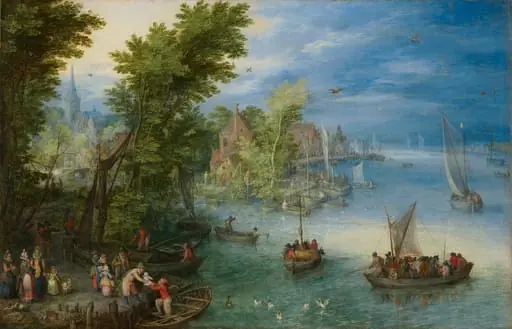
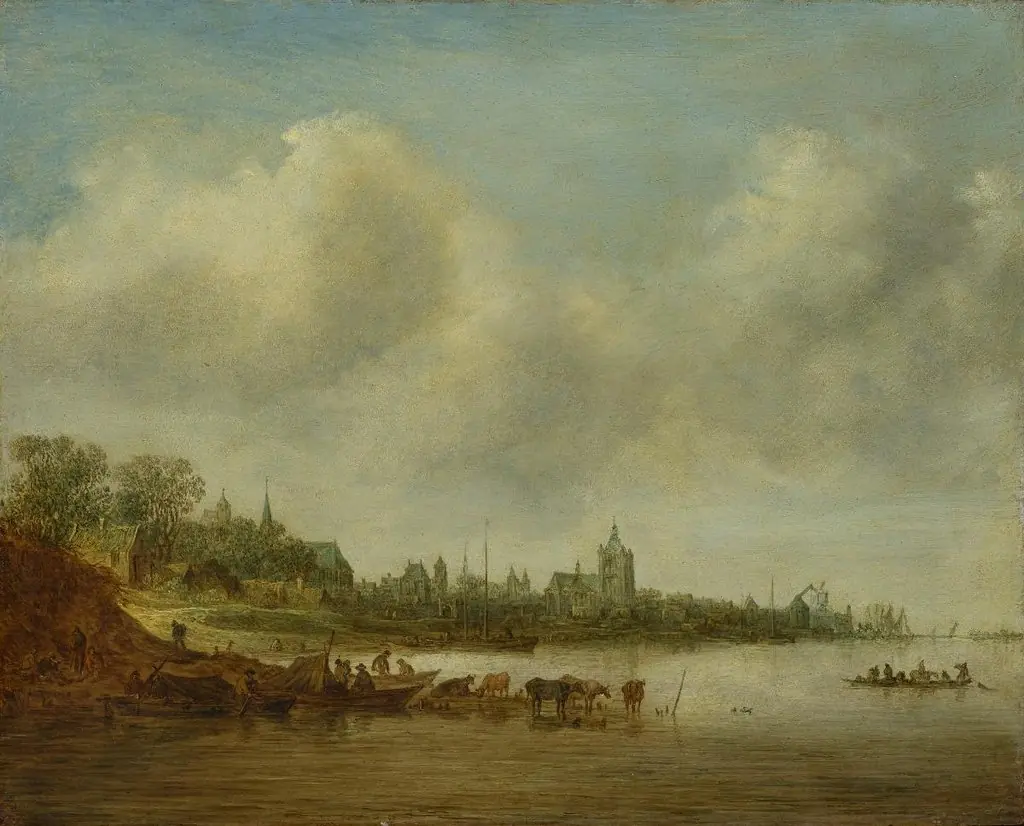
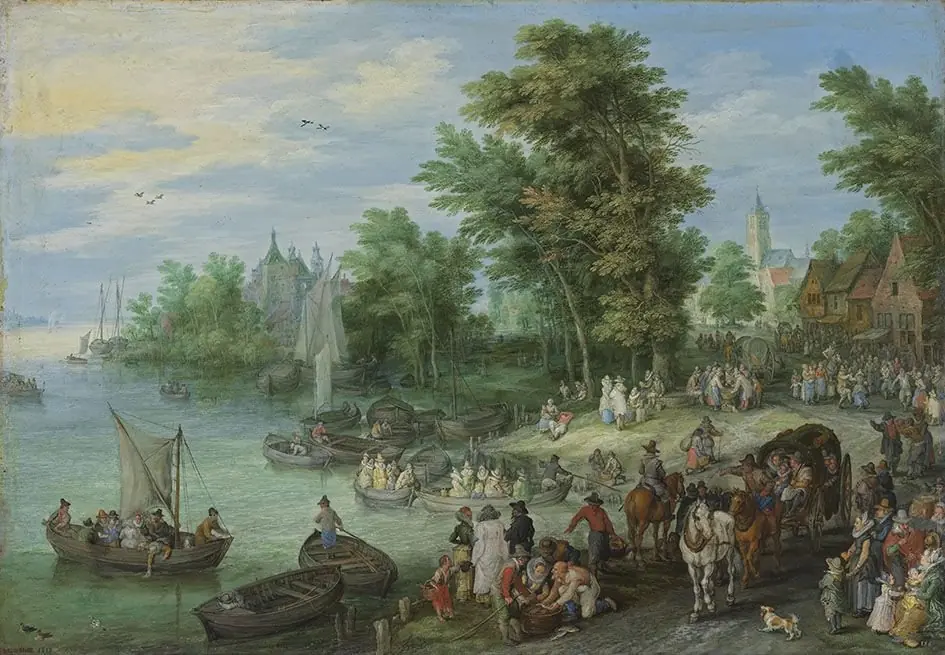
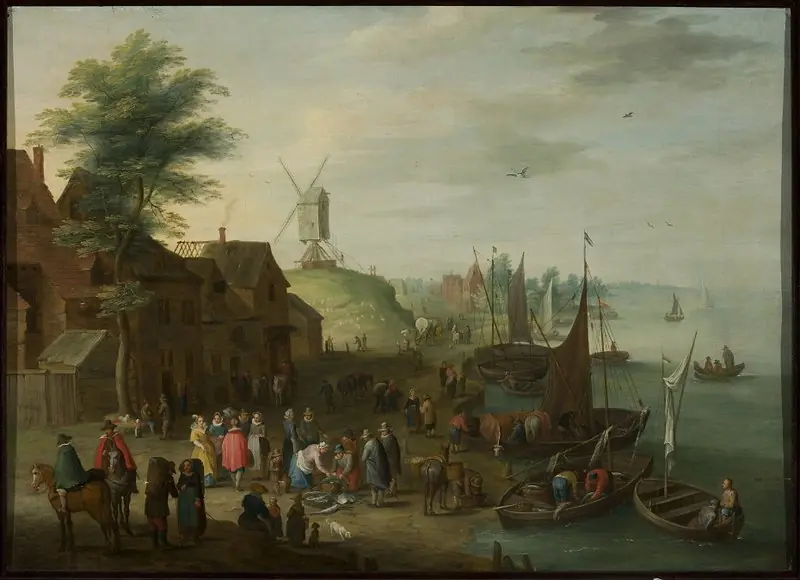
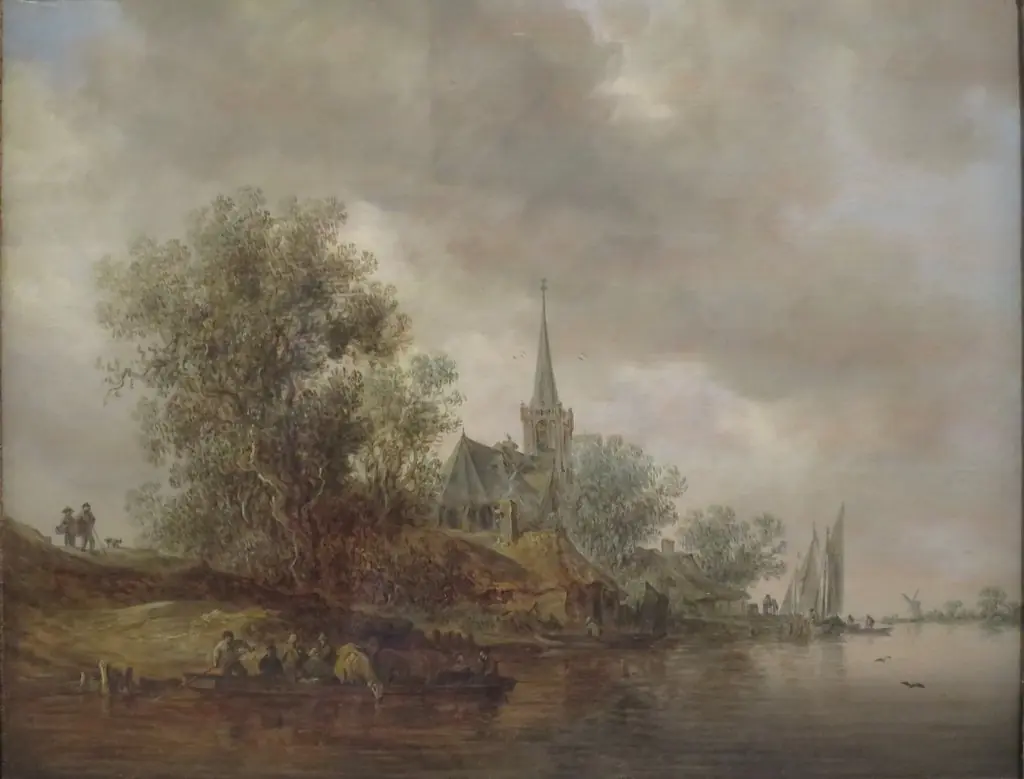
Painted around 1650 by Ambrosius Brueghel, this landscape depicts a quiet riverside setting in the Flemish Baroque tradition. Unlike dramatic religious or mythological scenes common in the period, the work focuses on everyday life along a waterway, emphasizing naturalism and atmospheric harmony. It is held in the collection of the National Museum of Ancient Art in Lisbon.
Subject & Meaning
The scene presents ordinary figures—fishers, travelers, and laborers—gathered near the riverbank, engaged in routine activities. No singular narrative dominates; instead, the painting conveys a sense of quiet continuity in rural life. The absence of grandeur or symbolism suggests an interest in the dignity of daily routines, characteristic of Flemish genre painting of the mid-seventeenth century.
Technique & Style
Ambrosius Brueghel employs subtle chiaroscuro to model forms and suggest depth, particularly in the folds of clothing and the surfaces of boats. The palette is restrained, with muted earth tones and soft greens, enhancing the calm mood. Fine brushwork captures textures—fabric, wood, water—while a receding perspective guides the eye from foreground boats to distant horizons.
History & Provenance
Its attribution to Ambrosius Brueghel, grandson of Pieter Bruegel the Elder, reflects the family’s enduring influence in Northern European landscape painting.
The painting entered the National Museum of Ancient Art’s collection as part of a broader effort to preserve Portuguese holdings of Flemish art. Its attribution to Ambrosius Brueghel, grandson of Pieter Bruegel the Elder, reflects the family’s enduring influence in Northern European landscape painting. While its exact early ownership is undocumented, its presence in Lisbon by the 19th century confirms its long-standing recognition in European collections.
Context
Created during a period when Flemish artists increasingly turned to secular landscapes and genre scenes, this work aligns with a broader shift away from religious iconography. The emphasis on natural observation and quiet human activity mirrors trends seen in the works of contemporaries like Jacob van Ruisdael and Aelbert Cuyp, reflecting a growing appreciation for the everyday environment.
Legacy
Though not among Ambrosius Brueghel’s most widely studied works, the painting contributes to the understanding of his role in sustaining the Brueghel family’s tradition of landscape painting. It stands as a quiet testament to the Flemish commitment to detailed, unidealized observation of nature and human presence, influencing later generations of regional painters focused on tranquil, realist scenes.
Artist & collection
Artist
Abraham Brueghel (baptised 28 November 1631 – c. 1690) was a Flemish painter from the famous Brueghel family of artists. He emigrated at a young age to Italy where he played an important role in the development of the…