Artwork
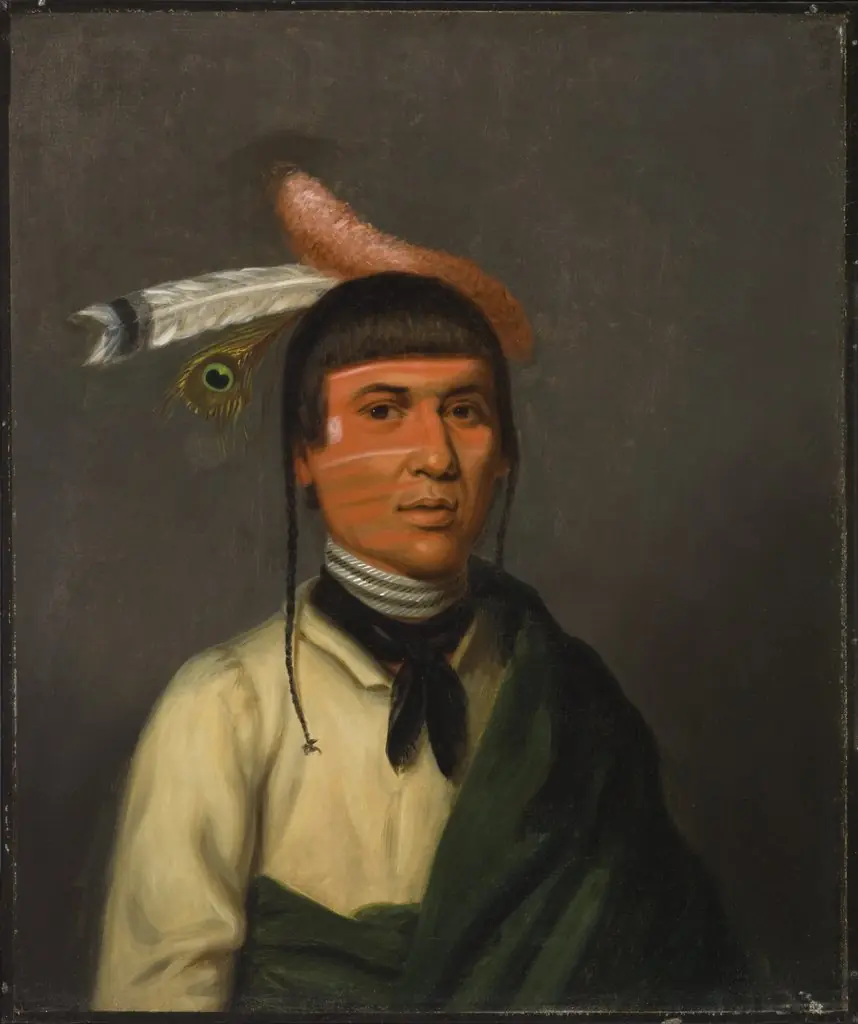
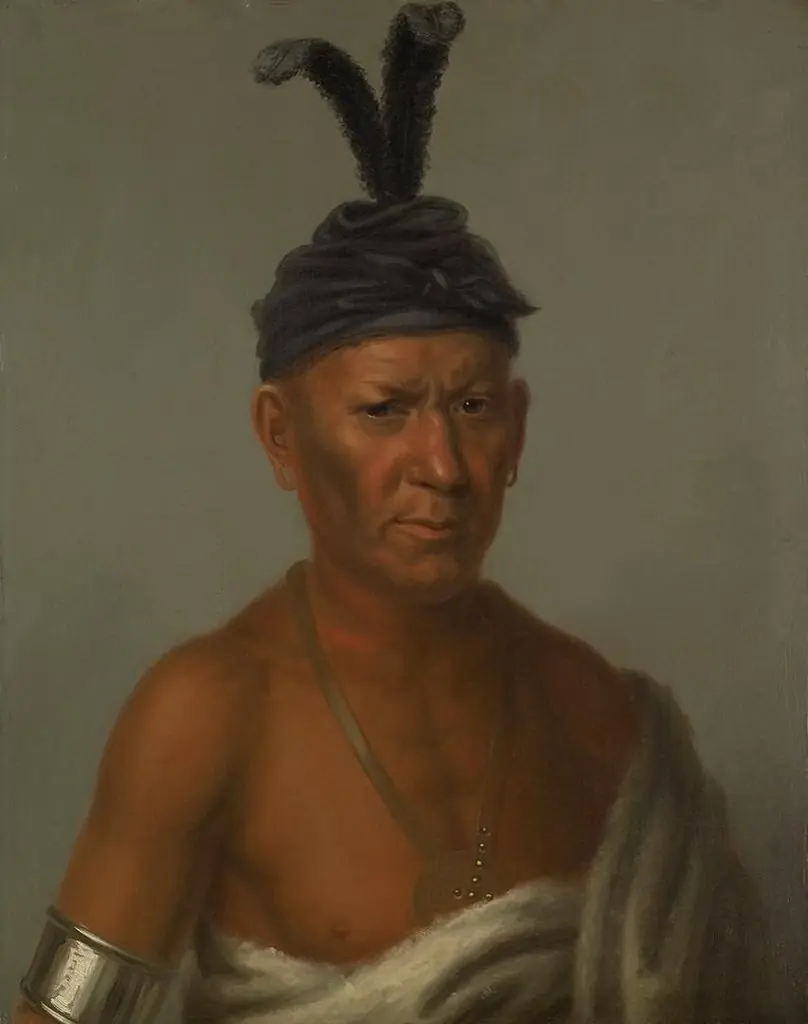
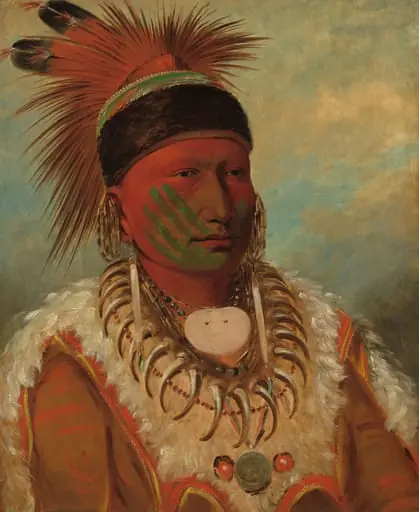
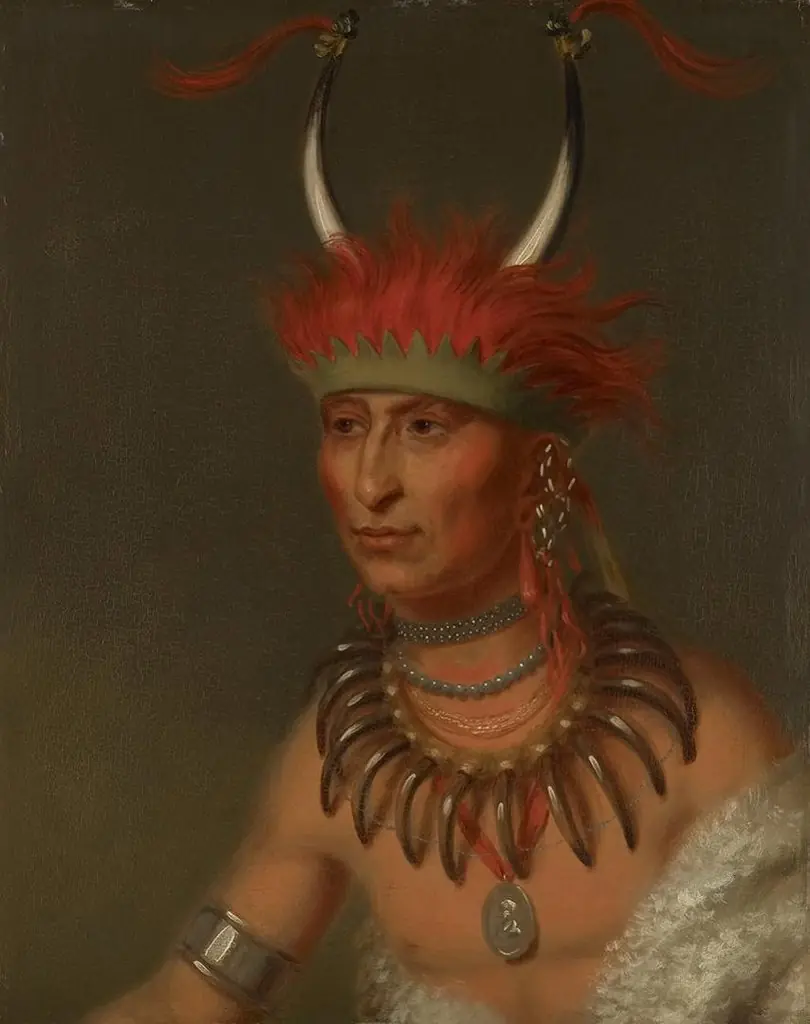
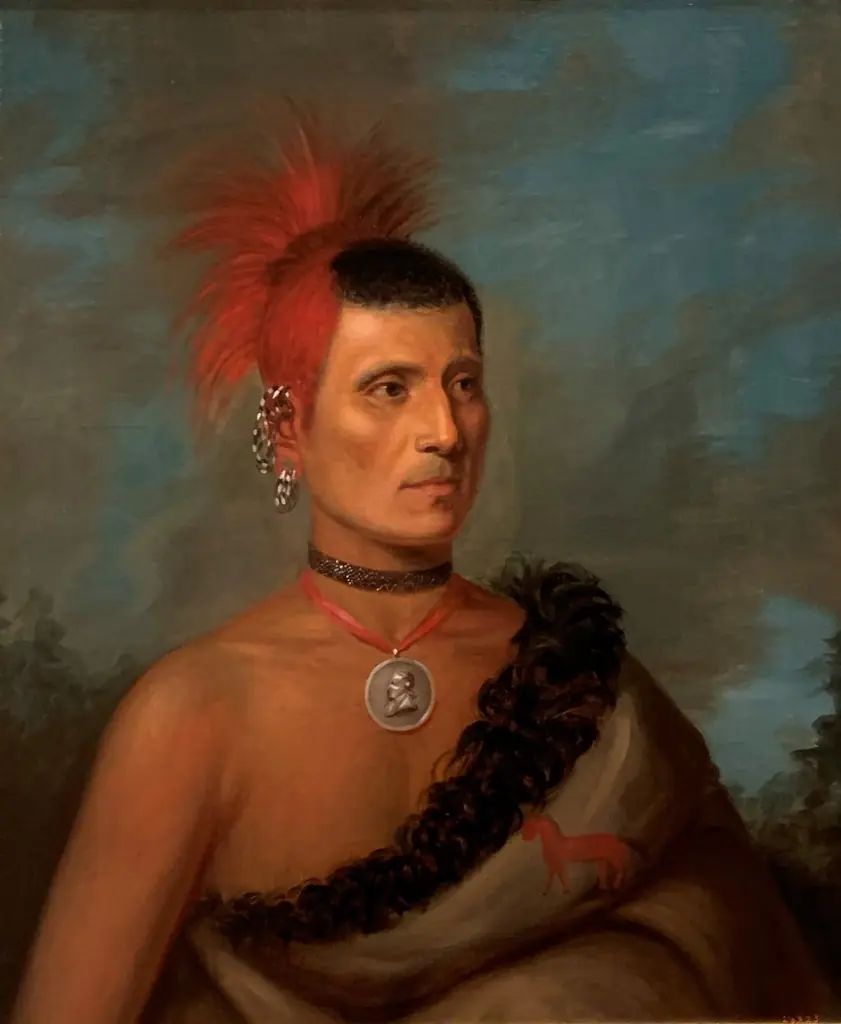
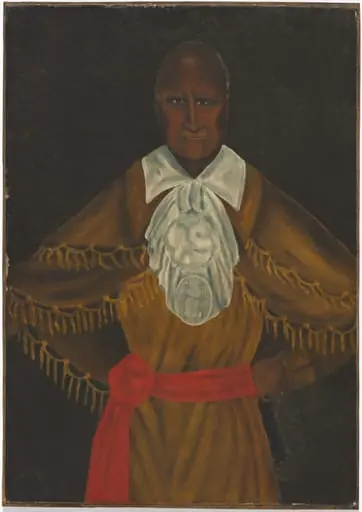
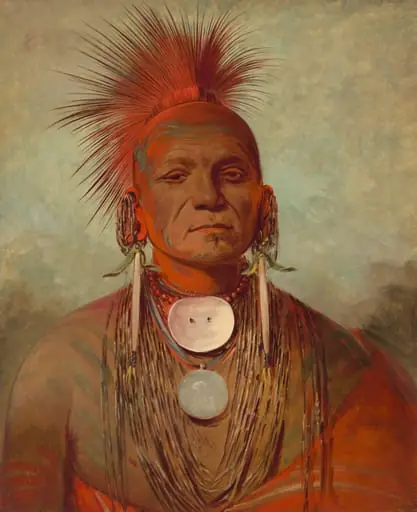
Chief Jumper of the Seminoles
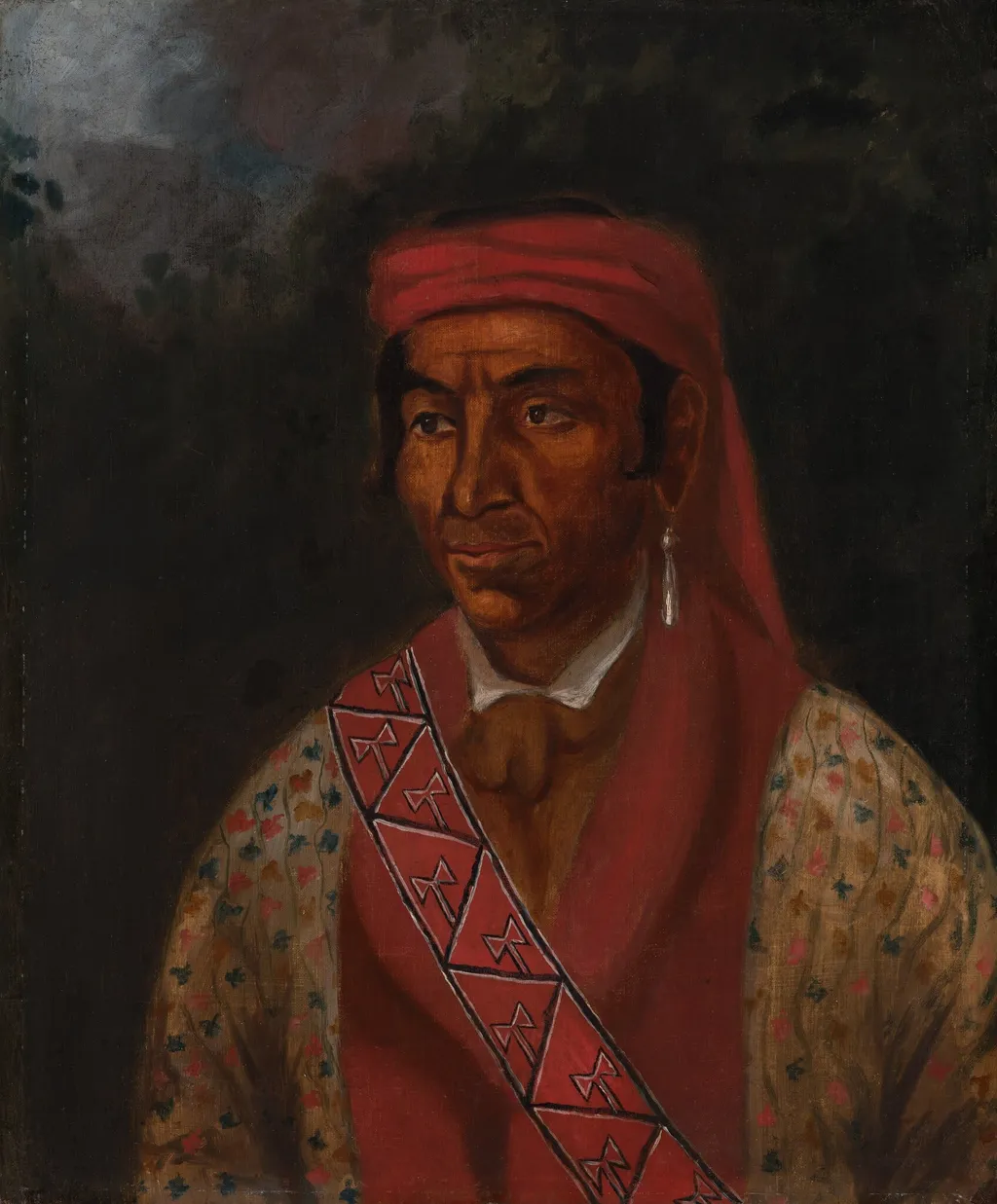
Chief Jumper of the Seminoles is an oil painting by the Romanticist artist American 19th Century. It dates from 1838 and is held in the collection of the National Gallery of Art.
About this work
Overview
Chief Jumper of the Seminoles is a portrait painting rendered in oil on canvas, characterized by a somber, dark background that contrasts sharply with the vibrant attire of its subject, emphasizing the sitter's presence.
Subject & Meaning
The portrait depicts a Seminole leader, identified by the title as Chief Jumper, distinguished by a red turban and a red sash adorned with black cross symbols, likely indicating his rank or leadership status within the Seminole community.
Technique & Style
The painting employs chiaroscuro, a technique leveraging strong contrasts between light and dark to create dramatic depth. The style suggests a mid-19th-century execution, specifically evocative of the 1830s, through its compositional and chromatic choices.
History & Provenance
While the exact date of creation is inferred to be around the 1830s based on stylistic elements, specific details regarding the painting's provenance, artist, or commission context are not provided.
Context
Created during a period of significant turmoil and relocation for the Seminole people, the portrait offers a visual representation of Seminole leadership during the early 19th century, though the artist's perspective or relationship with the subject is unclear.
Legacy
The painting serves as a historical artifact, providing insight into 19th-century Seminole attire and leadership symbols, as well as artistic techniques of the time. Its broader impact or influence on subsequent art or historical discourse is not detailed.
Own this work as a print
Artist & collection

Artist
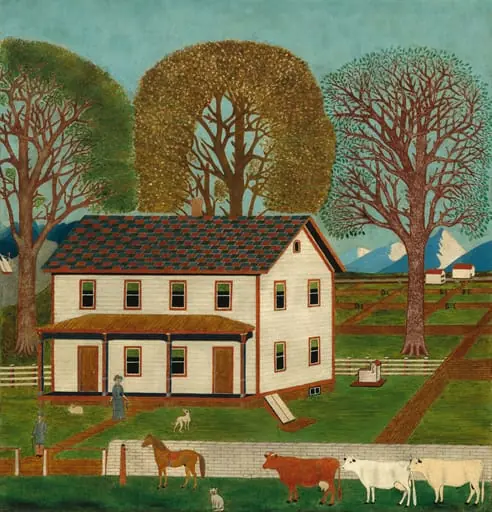
This artist painted everyday American life in the 1800s. Look at *Farmhouse in Mahantango Valley*—a quiet, sunlit scene of rural Pennsylvania. *Boy and Girl* shows two children standing close, their faces turned toward…