Artwork
The White Cloud, Head Chief of the Iowas
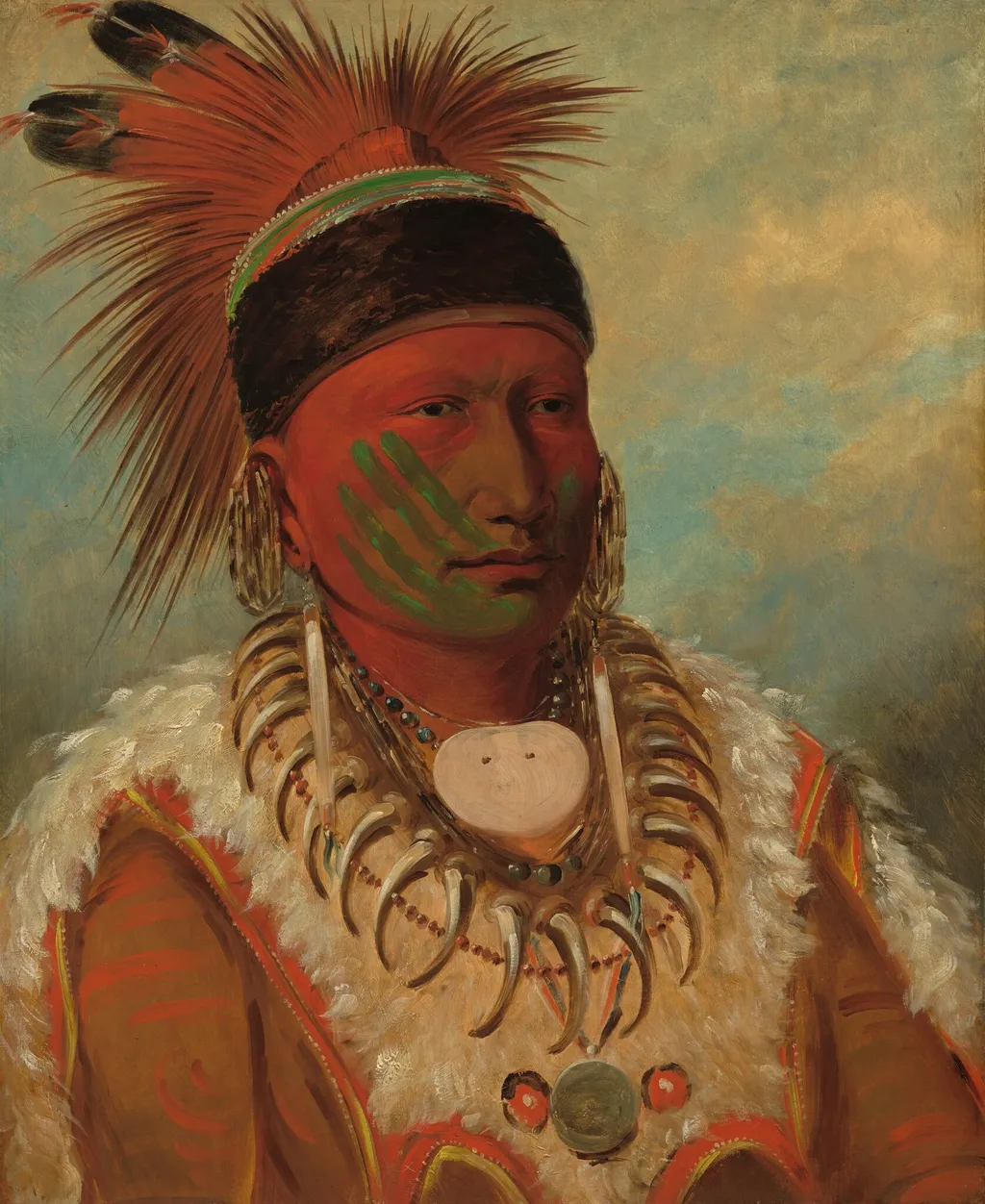
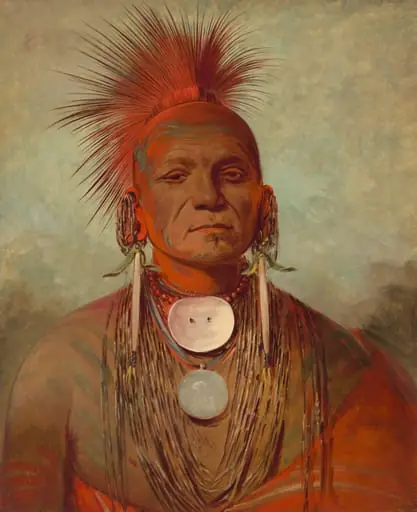
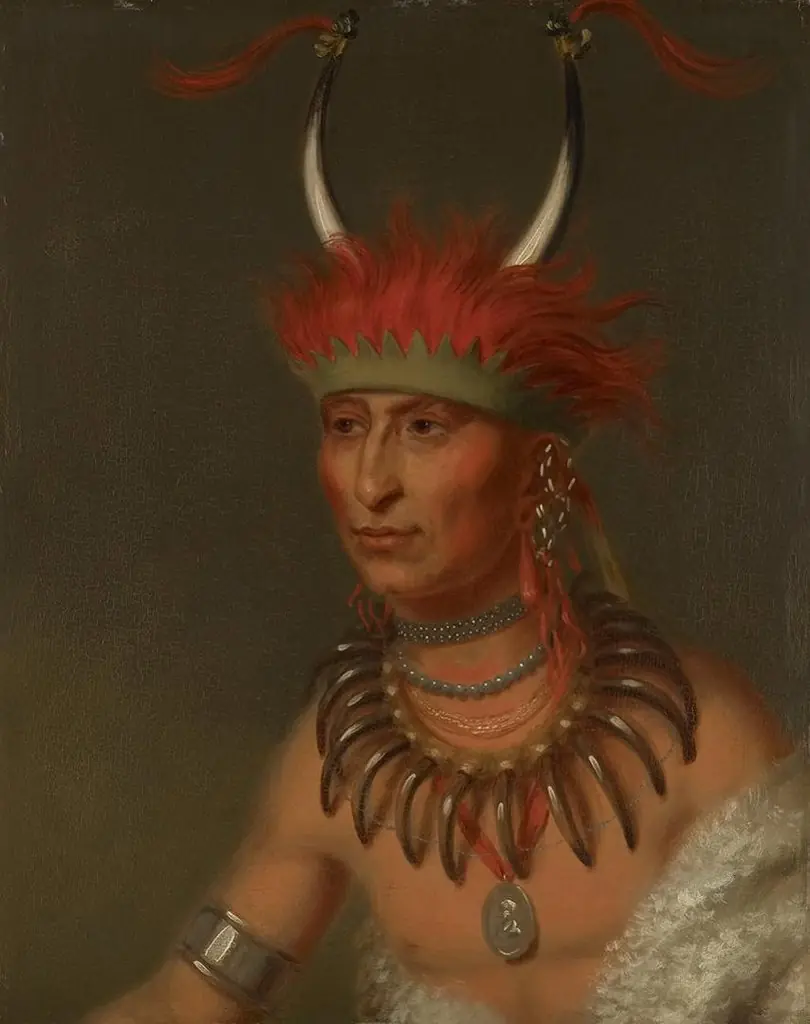
The White Cloud, Head Chief of the Iowas is an oil painting by the Romanticist artist George Catlin. It dates from 1844 and is held in the collection of the National Gallery of Art.
About this work
Overview
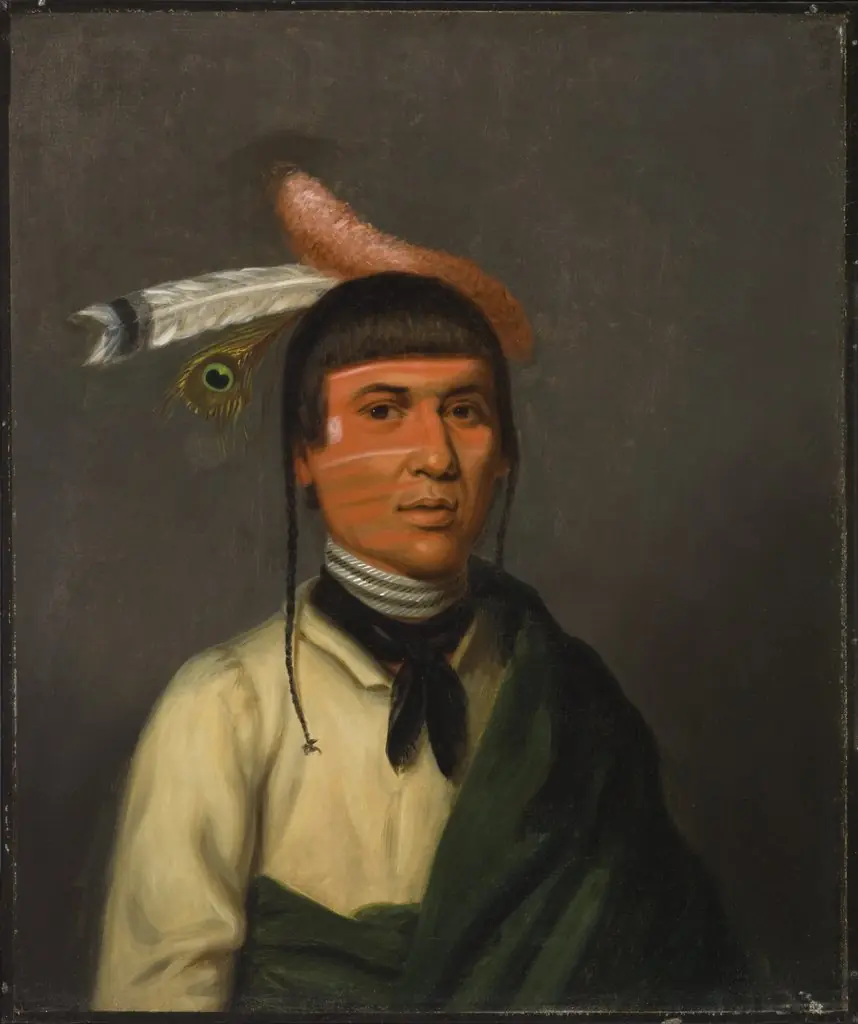
In 1844 George Catlin completed an oil on canvas portrait titled *The White Cloud, Head Chief of the Iowas*. The work is a single-figure depiction of the Iowan leader, rendered in the detailed, documentary style that characterizes Catlin’s extensive series of Native American portraits.
Subject & Meaning
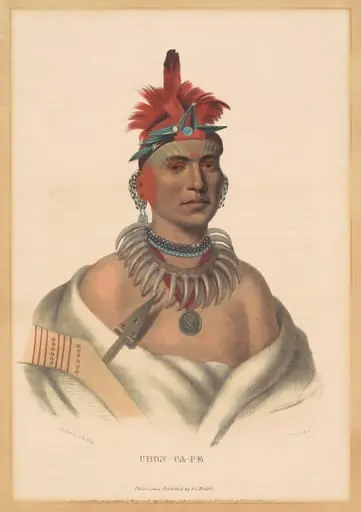
The sitter is shown with striking red facial paint and green cheek stripes, a tall feathered headdress, and a beaded necklace. A fur cloak drapes his shoulders and a white pipe rests in his hand, elements that together signal his status as a chief and his cultural identity within the Plains tradition.
Technique & Style
Catlin employed a realistic approach, emphasizing the textures of the chief’s clothing and accessories. Fine brushwork captures the sheen of the beads, the pattern of the medallions on his chest, and the intricate feather arrangement, while the oil medium allows for rich coloration of the paint and fabric.
History & Provenance
The portrait was created during Catlin’s 1830s–1840s expeditions across the western frontier, where he sought to record the appearance and roles of Indigenous leaders. It forms part of his larger corpus intended to preserve visual records of Plains peoples for American audiences.
Context
Catlin, originally a lawyer, turned to art as a means of documenting the rapidly changing lives of Native American communities. His portraits, including this one, were produced at a time when European‑American expansion threatened traditional cultures, and they served both ethnographic and artistic purposes.
Own this work as a print
Artist & collection

Artist
George Catlin ( KAT-lin; July 26, 1796 – December 23, 1872) was an American lawyer, painter, author, and traveler, who specialized in portraits of Native Americans in the American frontier.

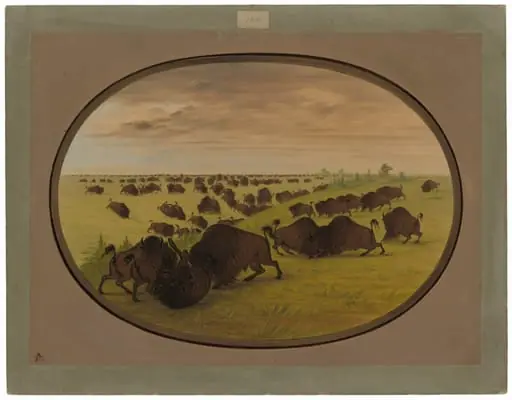 Bulls Fighting
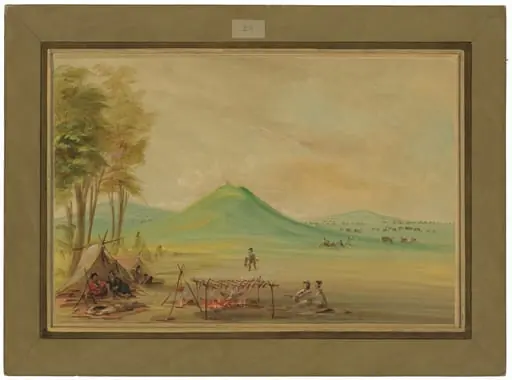 Expedition Encamped on a Texas Prairie. April 1686
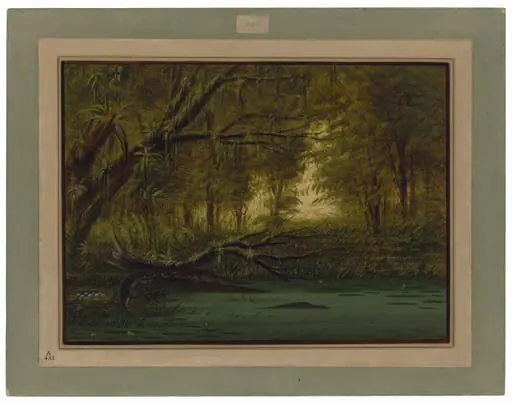 An Alligator's Nest
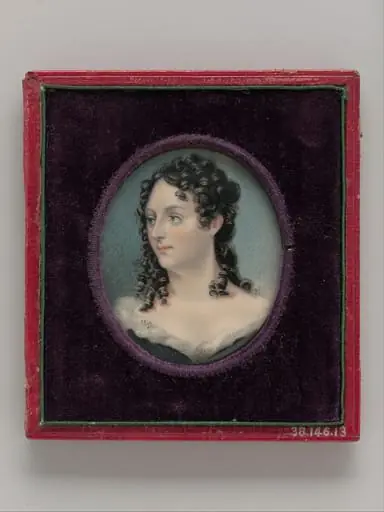 Mrs. George Catlin (Clara Bartlet Gregory)
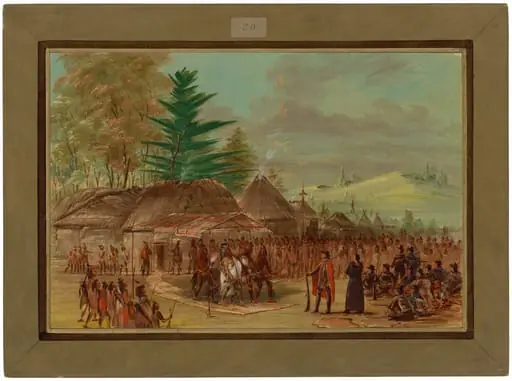 Chief of the Taensa Indians Receiving La Salle. March 20, 1682
 A Small Village - Payaguas Indians
 Omaha Chief, His Wife, and a Warrior
 Father Hennepin Leaving the Mississippi to Join La Salle. May 8, 1680