Artwork
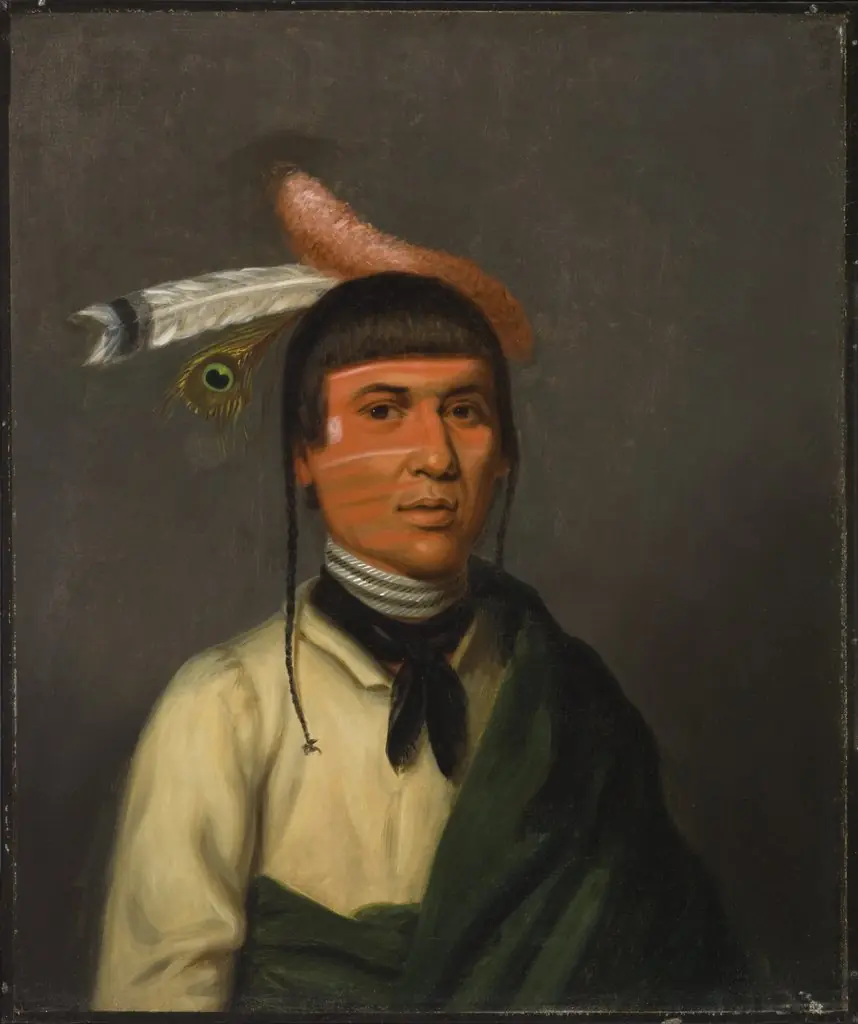
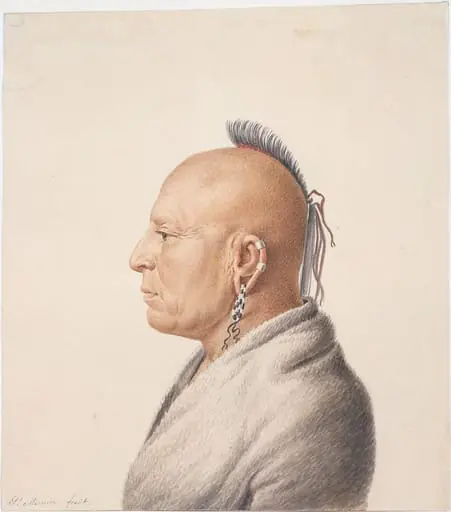
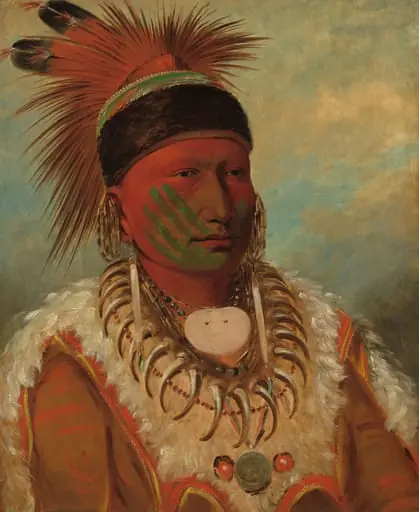
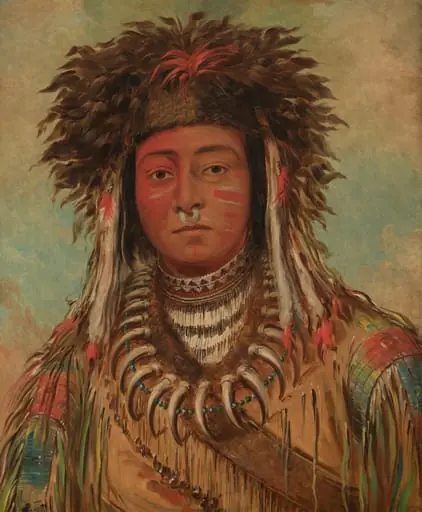
No-Way-Ke-Sug-Ga, Otoe
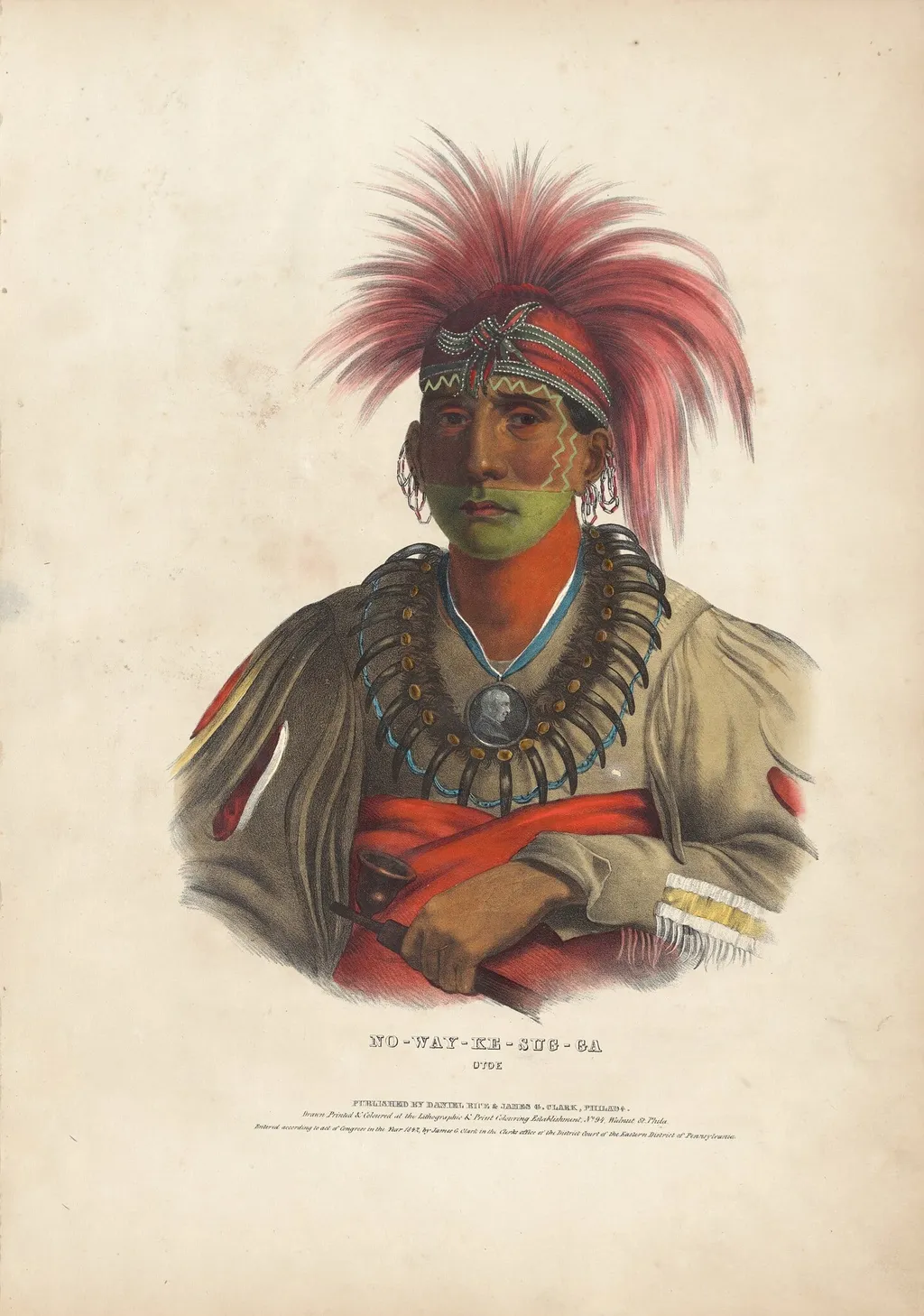
No-Way-Ke-Sug-Ga, Otoe is an ink print by the Romanticist artist Alfred Hoffy. It dates from 1842 and is held in the collection of the National Gallery of Art.
About this work
Overview
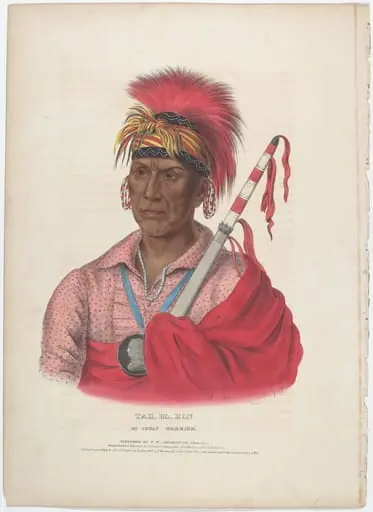
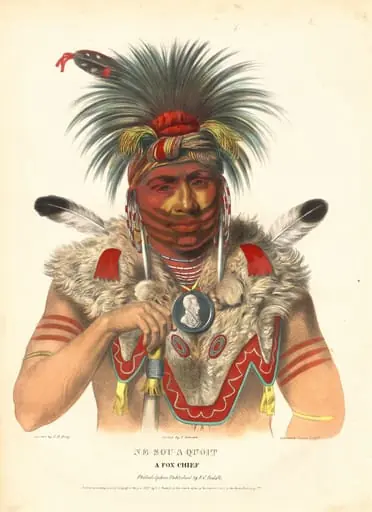
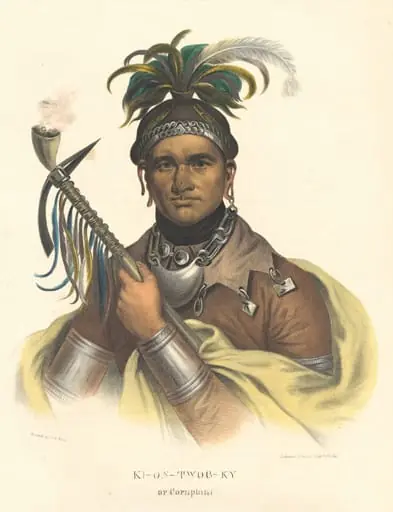
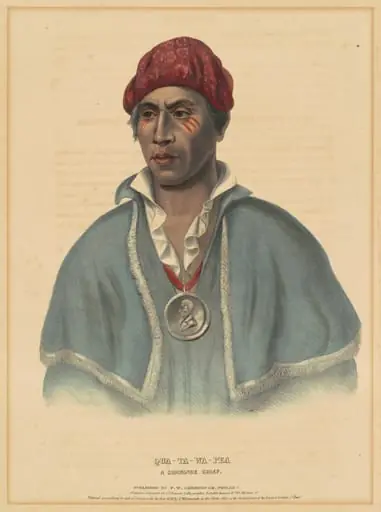
Alfred Hoffy’s 1842 hand‑colored lithograph depicts an Otoe individual identified as No‑Way‑Ke‑Sug‑Ga. The portrait presents the sitter in a frontal stance, emphasizing elaborate attire and personal adornments against an unadorned backdrop.
Subject & Meaning
The figure wears a tall feathered headdress dyed red, facial paint, a fringed shirt embellished with beads, a red sash, and a prominent medal around the neck. These elements signal status and cultural identity within the Otoe community, while the confident pose suggests personal dignity.
Technique & Style
Hoffy employed lithography, drawing the image on a flat stone surface, printing multiple copies, and then applying color manually. The hand‑coloring adds vivid reds and subtle tones, while the typographic rendering of the name at the bottom reflects mid‑nineteenth‑century lettering conventions.
History & Provenance
Created in 1842, the work originates from a period of increased European‑American interest in documenting Native American peoples. Hoffy, a British‑born artist active in the United States, produced a series of such portraits for ethnographic and commercial purposes.
Context
The lithograph belongs to a broader corpus of early American prints that sought to record Indigenous leaders and individuals for audiences unfamiliar with Native cultures. Its plain background aligns with contemporary portrait conventions that isolate the subject for clearer visual study.
Artist & collection