Artwork
The Morning Bell
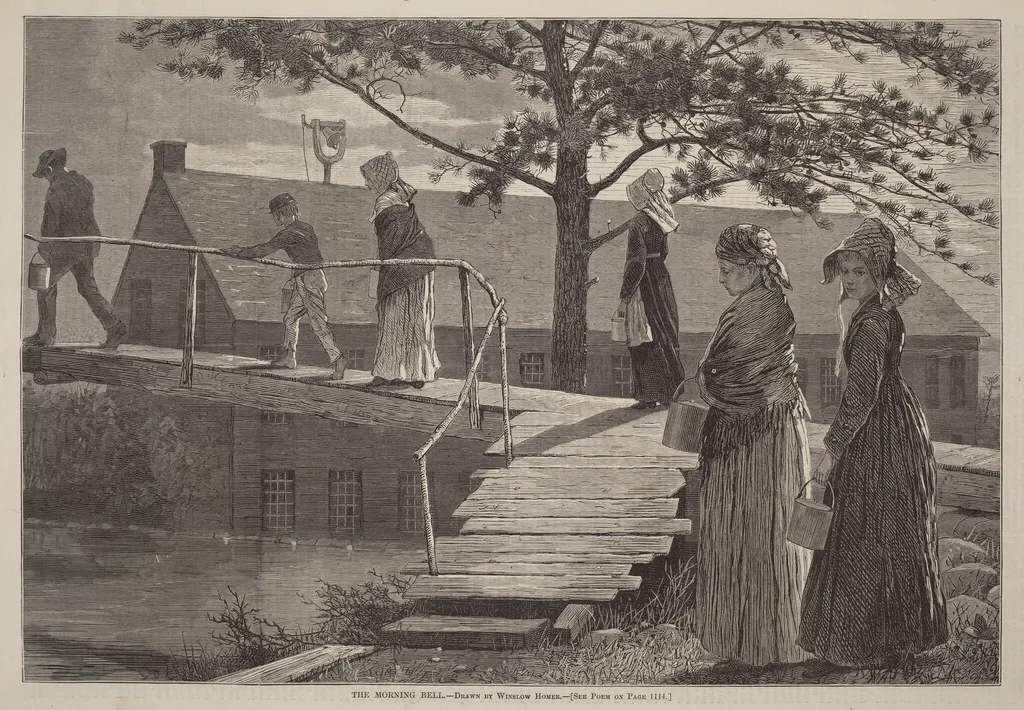
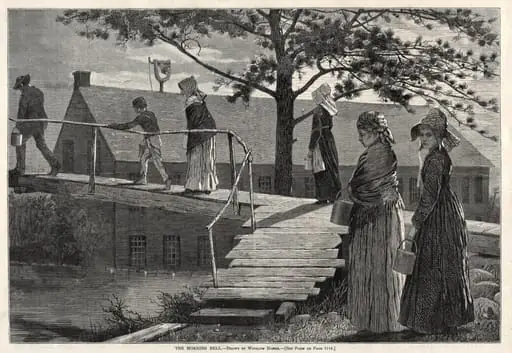
The Morning Bell is an ink print by the Impressionist artist American 19th Century. It dates from 1873 and is held in the collection of the National Gallery of Art. This black-and-white wood engraving depicts a quiet urban scene on a bridge, with figures moving between structures and water.
About this work
Overview
This black-and-white wood engraving depicts a quiet urban scene on a bridge, with figures moving between structures and water. The composition includes a railing, descending steps, a tree on the right, and distant buildings, one with a bell tower. The cloudy sky and subdued figures suggest a moment of ordinary daily life, rendered with fine linear detail typical of wood engraving techniques.
Subject & Meaning
The scene captures a routine morning ritual—people carrying buckets, lingering near the water, and approaching the bell tower. The presence of the bell suggests timekeeping or communal signaling, possibly tied to school or church schedules. The lack of dramatic action emphasizes the dignity of everyday routines, grounding the image in quiet realism rather than spectacle.
Technique & Style
Executed as a wood engraving, the work uses precise, incised lines to create texture and contrast. The monochrome palette enhances tonal gradations, with delicate hatching defining figures, foliage, and architecture. The style prioritizes clarity and detail over atmospheric brushwork, distinguishing it from painterly Impressionism despite its subject matter.
History & Provenance
The piece belongs to a series of prints produced in the late 19th century, often circulated in illustrated journals or as standalone educational images. Its origin is tied to printmakers who documented urban life for a middle-class audience, though the specific artist and initial ownership remain undocumented in widely accessible records.
Context
While the subject aligns with Impressionist interests in ordinary life, the medium reflects the enduring role of printmaking in mass visual culture. Wood engravings like this were common in newspapers and periodicals, serving as accessible representations of contemporary scenes before photography became widespread.
Legacy
This engraving contributes to a broader archive of 19th-century urban documentation, preserving the rhythms of public space before industrialization transformed cityscapes. It remains a reference for scholars studying how everyday life was visually recorded and disseminated through reproductive print technologies.
Artist & collection

Artist
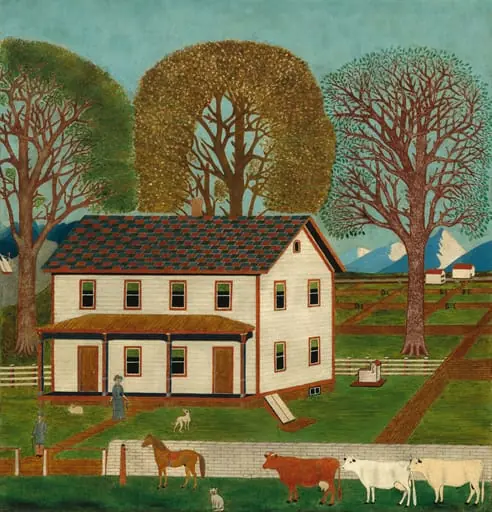
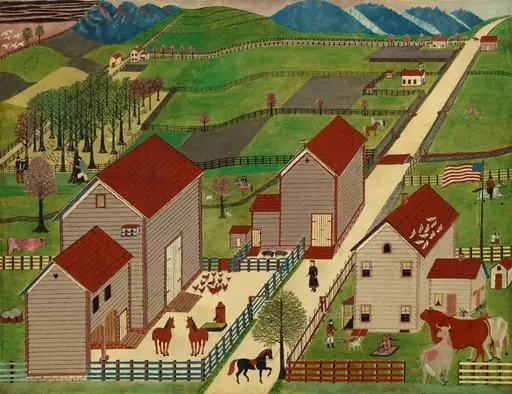
This artist painted everyday American life in the 1800s. Look at *Farmhouse in Mahantango Valley*—a quiet, sunlit scene of rural Pennsylvania. *Boy and Girl* shows two children standing close, their faces turned toward…

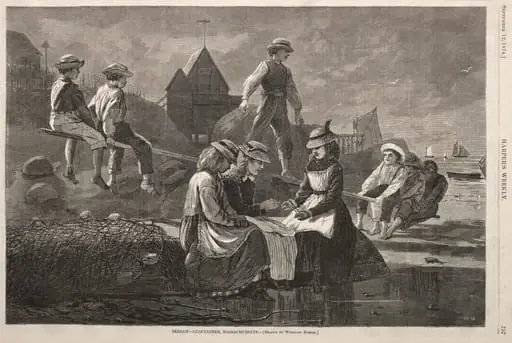 See Saw - Gloucester, Massachusetts
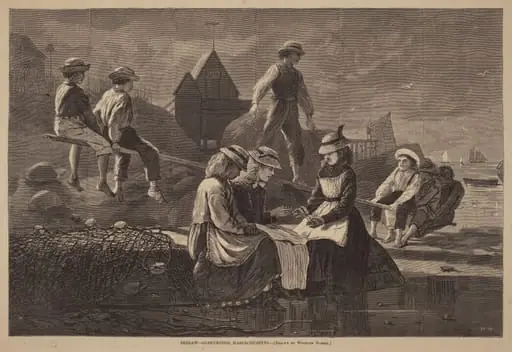 Seesaw - Gloucester, Massachusetts
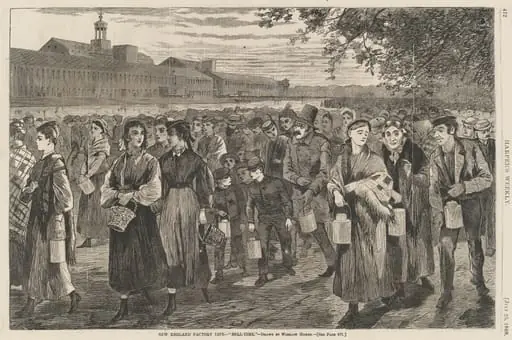 New England Factory Life - Bell-Time
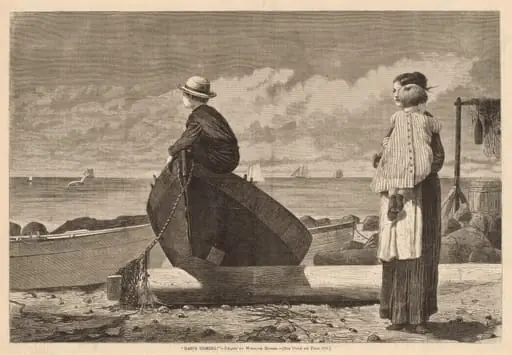 "Dad's Coming!"
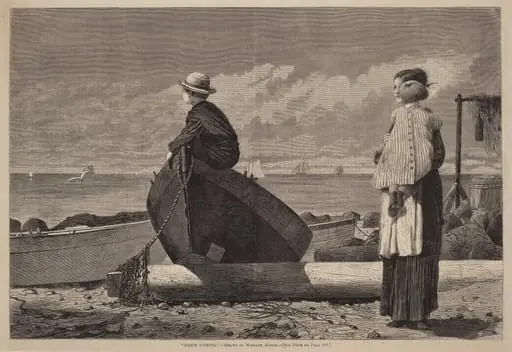 "Dad's Coming!"
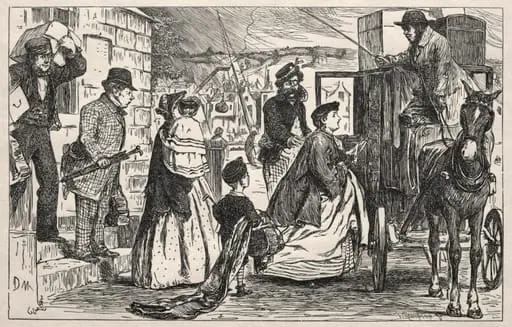 Our Brilliant Failure
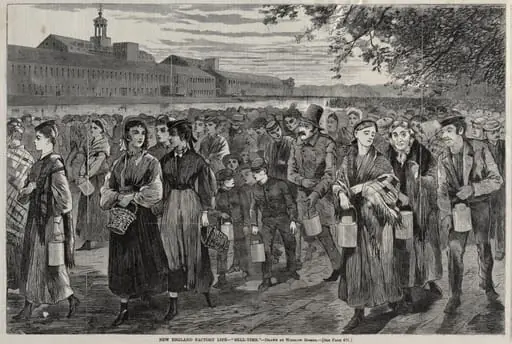 New England Factory Life - "Bell-Time"
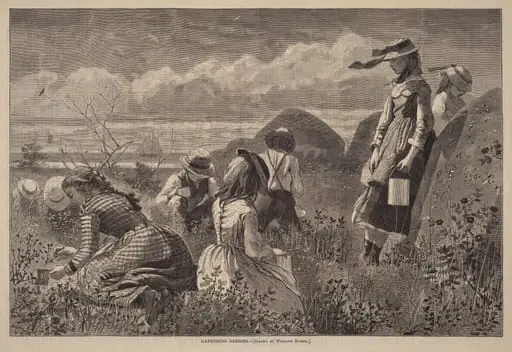 Gathering Berries
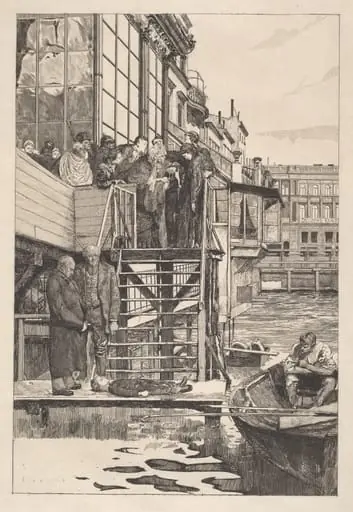 Eine Mutter
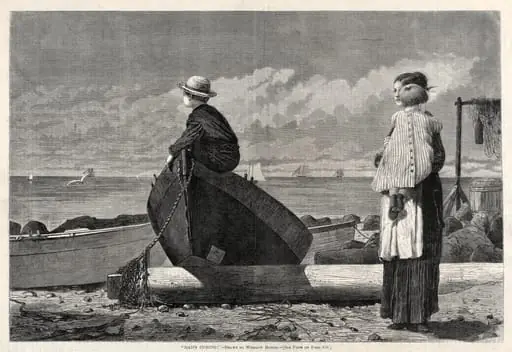 "Dad's Coming!"
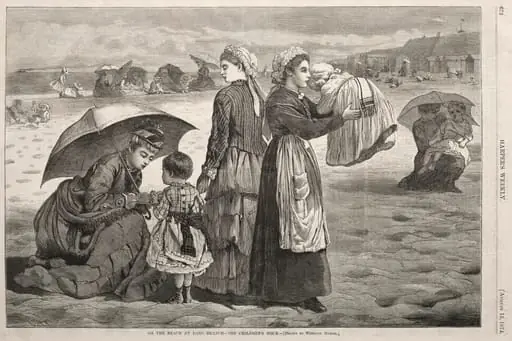 On the Beach at Long Branch - The Children's Hour
 The Morning Bell