Artwork
Untitled
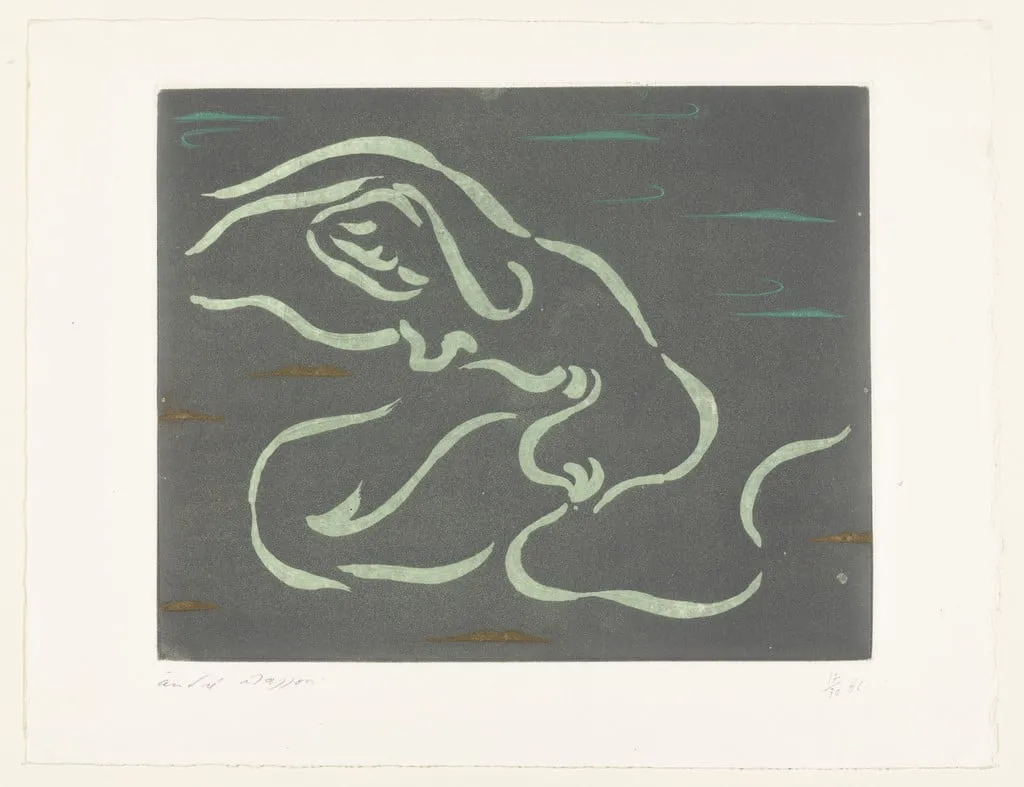
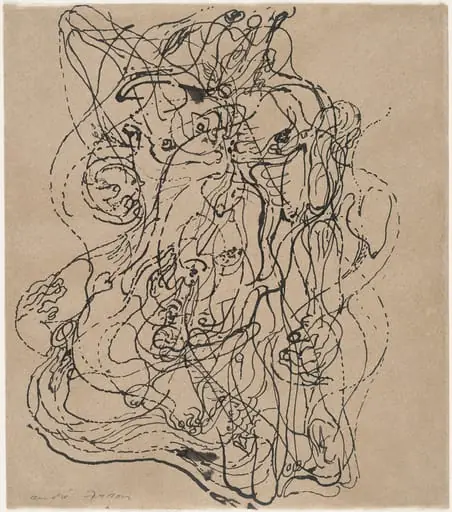
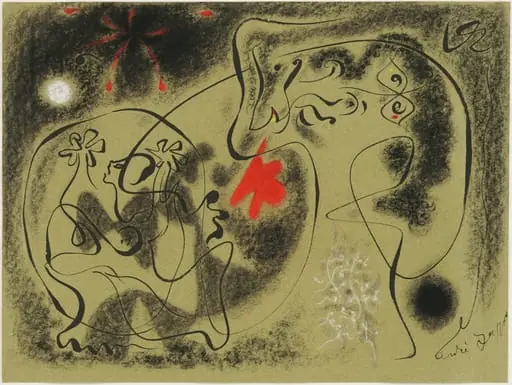
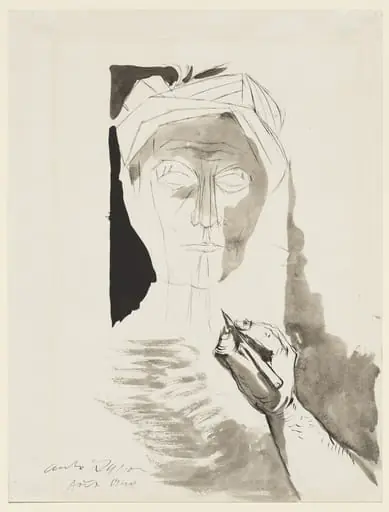
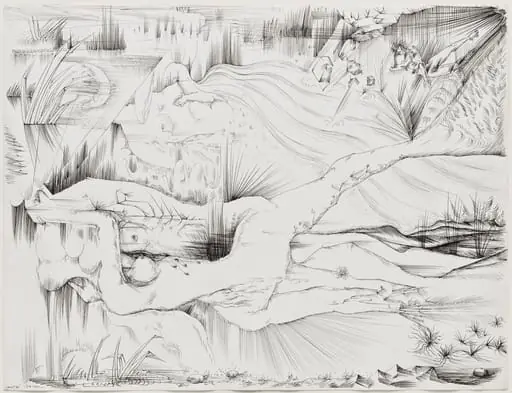
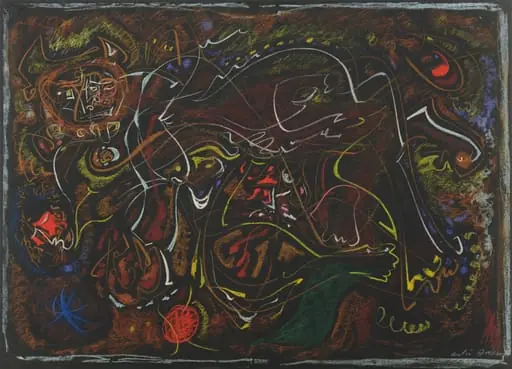
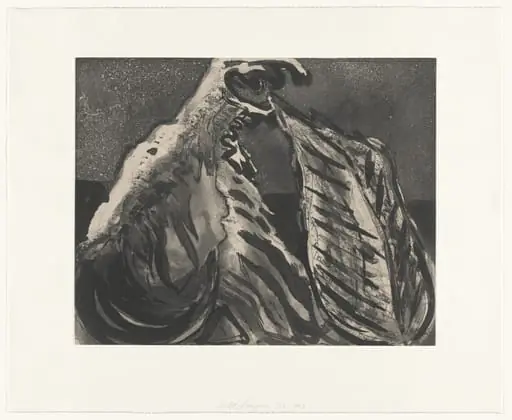
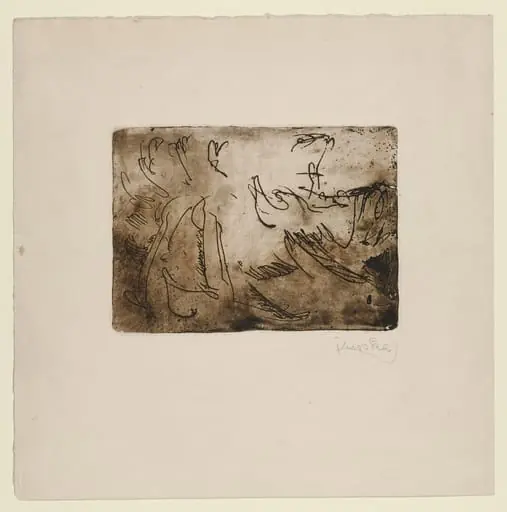
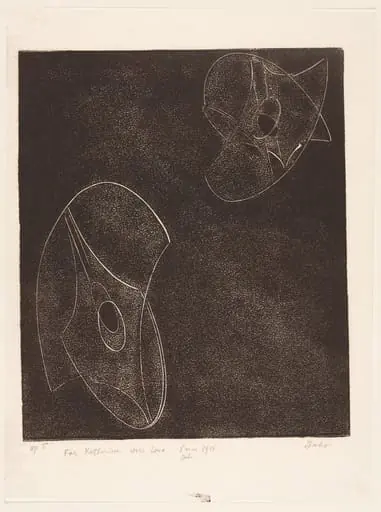
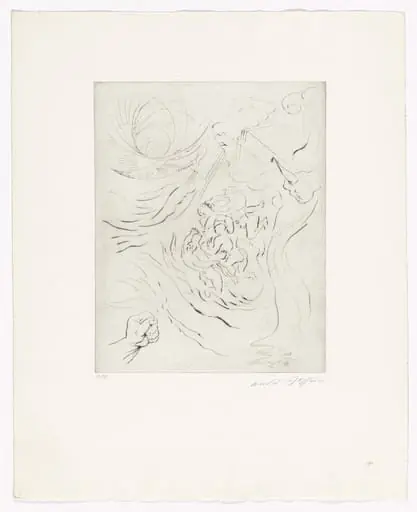
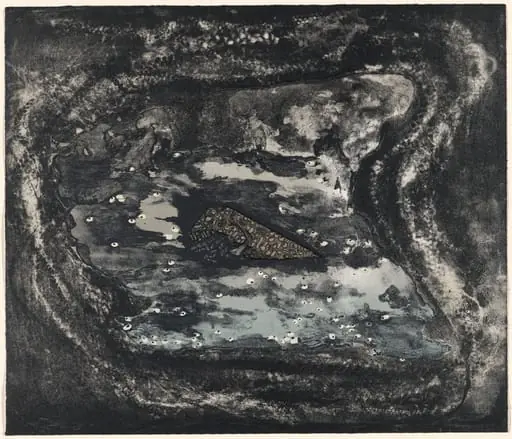
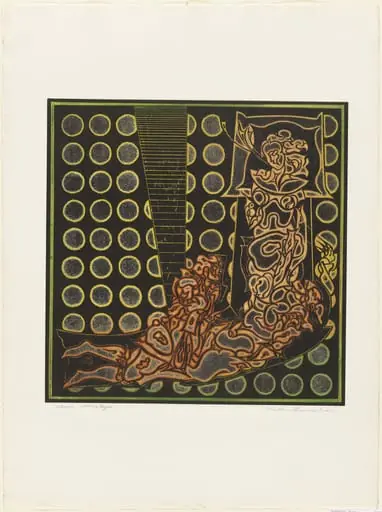
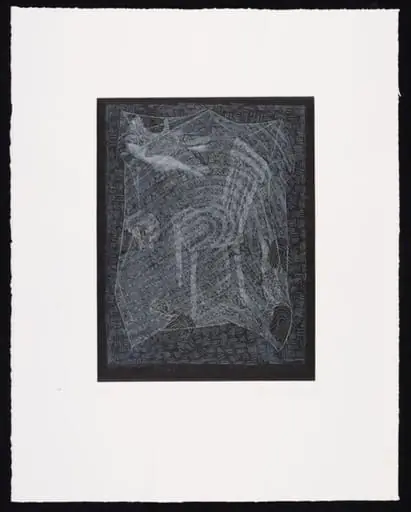
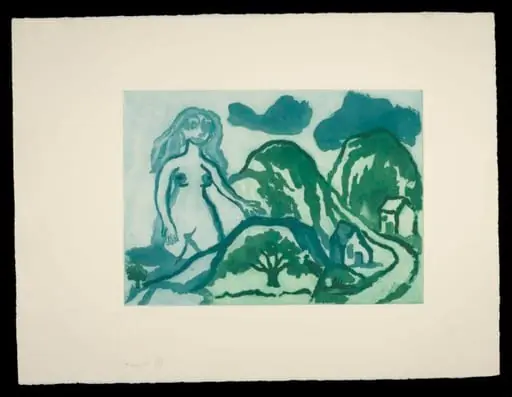
Untitled is an ink print by André Masson. It dates from 1954 and is held in the collection of the Museum of Modern Art.
About this work
Overview
Created in 1954, this aquatint print by André Masson exemplifies his exploration of non-representational form through printmaking.
Created in 1954, this aquatint print by André Masson exemplifies his exploration of non-representational form through printmaking. Unlike traditional etching, aquatint allowed Masson to achieve subtle gradations of tone, producing a hazy, atmospheric effect. The work is part of The Museum of Modern Art’s collection, reflecting its significance in postwar abstract practices and its role in bridging European Surrealism with emerging American abstraction.
Subject & Meaning
The composition features two indistinct, pale forms on a dark ground: one suggests a reclining human figure, the other a curled animal. Neither is clearly defined, inviting interpretation without fixed meaning. Floating above them, delicate lines evoke drifting smoke or atmospheric residue, reinforcing a dreamlike, subconscious quality. Masson’s intent was not narrative but evocation—inviting the viewer into a space of psychological suggestion rather than depiction.
Technique & Style
Masson employed aquatint, a printmaking technique that uses resin particles to create tonal areas rather than lines. This method enabled him to produce soft, watercolor-like transitions, contrasting with the precision of line-based etching. His approach aligned with his earlier automatic drawing experiments, prioritizing intuitive mark-making over control. The resulting image feels spontaneous, as if emerging from the ground rather than being imposed upon it.
History & Provenance
This work was produced during a period when Masson was deeply engaged with abstract expressionist concerns, following his move to the United States in the 1940s. Though rooted in Surrealist principles, his postwar prints increasingly emphasized materiality and gesture. The piece entered The Museum of Modern Art’s collection shortly after its creation, signaling institutional recognition of his evolving contribution to modern printmaking.
Context
In the 1950s, European artists like Masson were influencing American painters through their emphasis on process and psychological depth. His use of automatism and tonal abstraction resonated with contemporaries such as Pollock and Rothko, who were also moving away from figuration. This print reflects a transatlantic dialogue in which printmaking became a vehicle for exploring the unconscious, not just as a Surrealist tactic but as a broader artistic language.
Legacy
Masson’s aquatints from this era expanded the expressive potential of printmaking beyond illustration or reproduction. By embracing ambiguity and texture, he demonstrated how print could convey inner states as powerfully as painting. His work paved the way for later artists who treated print media as a site for experimental, non-narrative expression, influencing generations interested in the materiality of mark-making.
Artist & collection
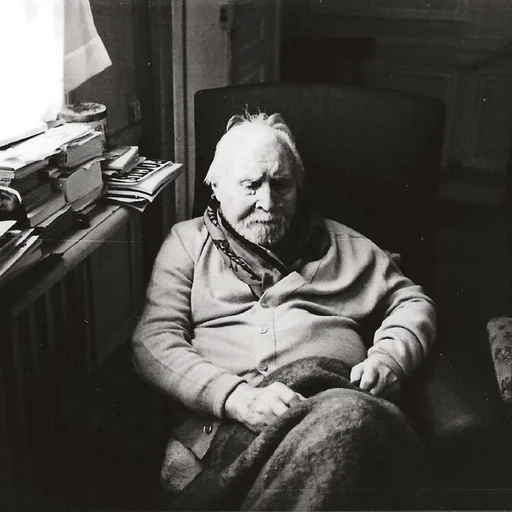
Artist
André-Aimé-René Masson (French: ; 4 January 1896 – 28 October 1987) was a French artist.