Artwork
Annunciation of the birth of John the Baptist
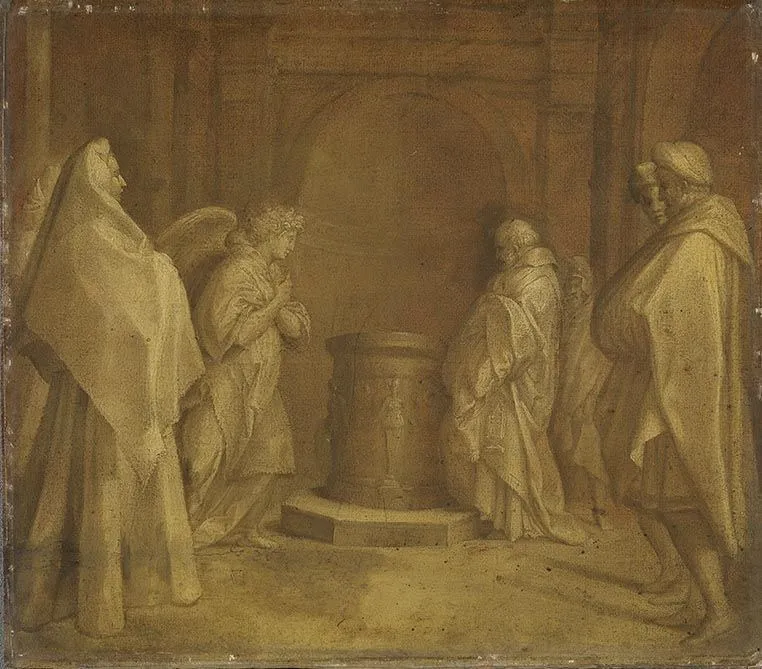
Annunciation of the birth of John the Baptist is an unspecified painting by the Early Baroque Italian artist Andrea del Sarto. It is held in the collection of the Bavarian State Painting Collections.
About this work
Overview
Five figures occupy the space: a bowed woman, an angel with wings, a small altar bearing a cross, and two robed men, one kneeling and the other gazing downward.
Andrea del Sarto’s 1597 work, *Annunciation of the birth of John the Baptist*, is an oil painting that resides in Munich’s Alte Pinakothek. The composition is set in a modest stone chamber illuminated by a subdued light source, creating a contemplative atmosphere. Five figures occupy the space: a bowed woman, an angel with wings, a small altar bearing a cross, and two robed men, one kneeling and the other gazing downward.
Subject & Meaning
The scene captures the moment of divine announcement concerning the future birth of John the Baptist. The angel’s outstretched hand toward the woman conveys the transmission of a sacred message, while the presence of the altar and the cross underscores the theological significance of the prophecy within Christian tradition.
Technique & Style
Del Sarto employs a restrained chiaroscuro, allowing the soft illumination to model the figures against the dark stone walls. The muted palette and delicate modeling of flesh and drapery reflect the artist’s mature Mannerist approach, balancing naturalistic detail with an elegant, composed arrangement that guides the viewer’s eye toward the central interaction.
History & Provenance
Completed in 1597, the painting entered the collection of the Alte Pinakothek, one of Germany’s foremost art museums, where it remains on display. Its acquisition history is documented through the museum’s records, confirming its attribution to Andrea del Sarto and its preservation within the European Renaissance canon.
Artist & collection
Artist
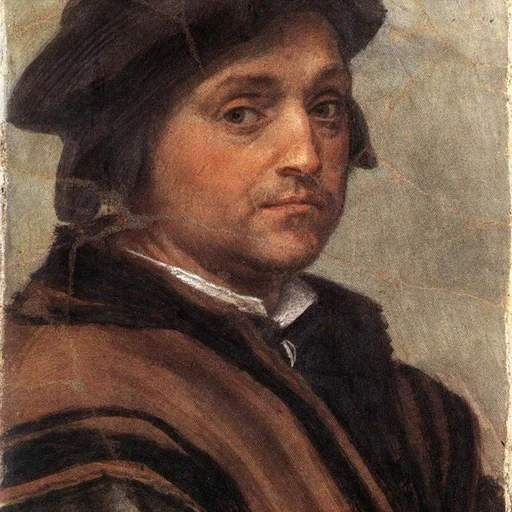
Andrea del Sarto was an Italian painter from Florence, whose career flourished during the High Renaissance and early Mannerism.

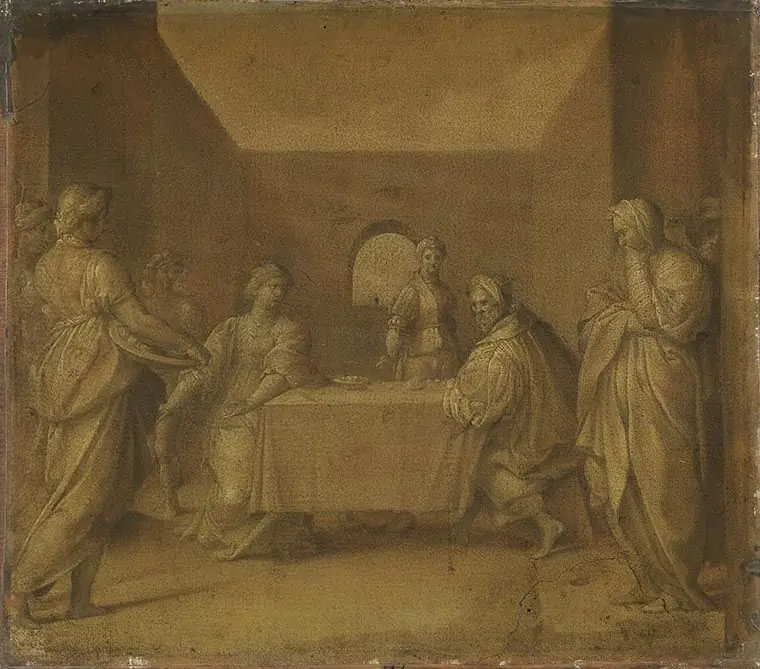 Salome brings the head of John the Baptist
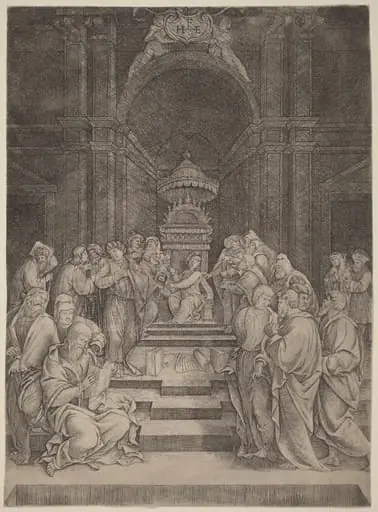 Christ Disputing with the Doctors
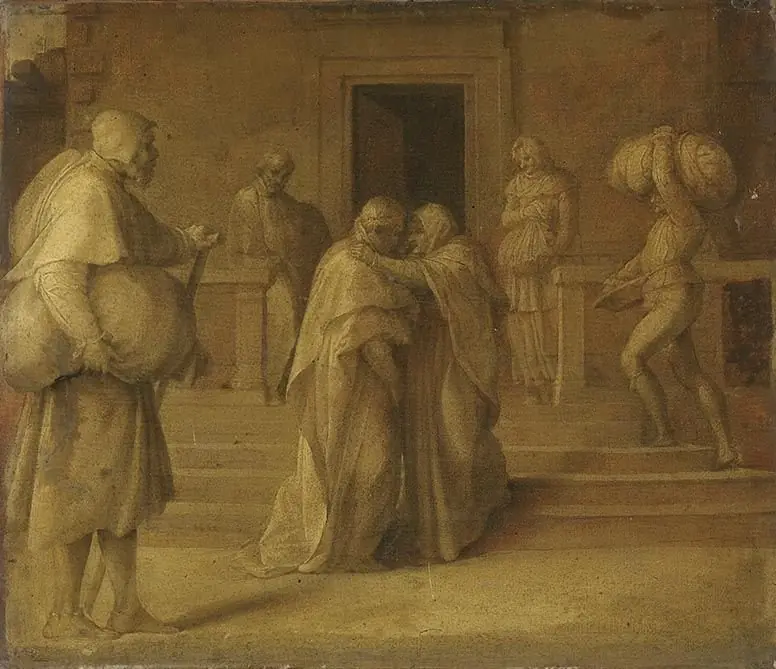 The visitation
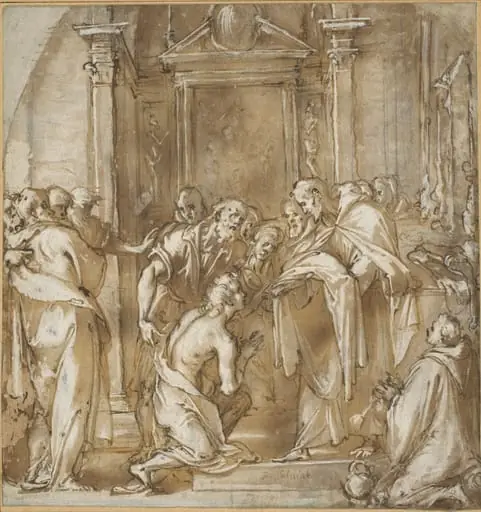 Saint Vincent Ferrer Taking His Vestments
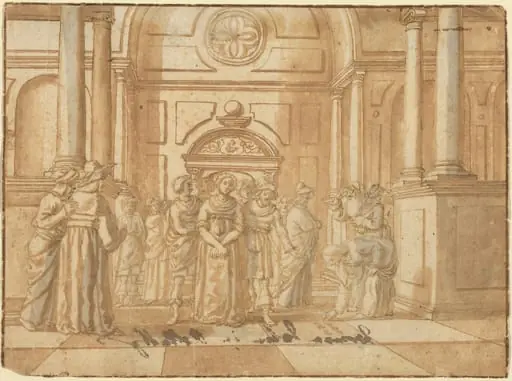 Christ and the Woman Taken in Adultery
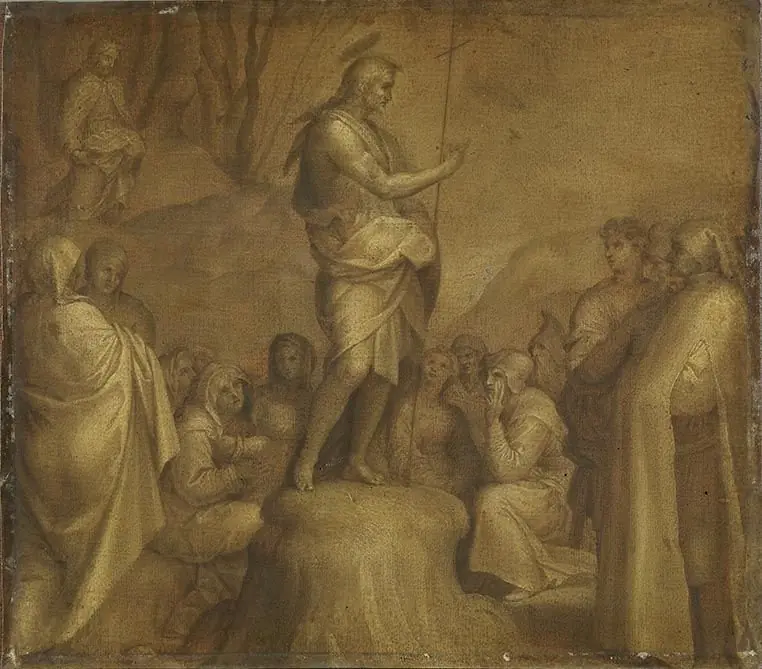 The preaching of John the Baptist
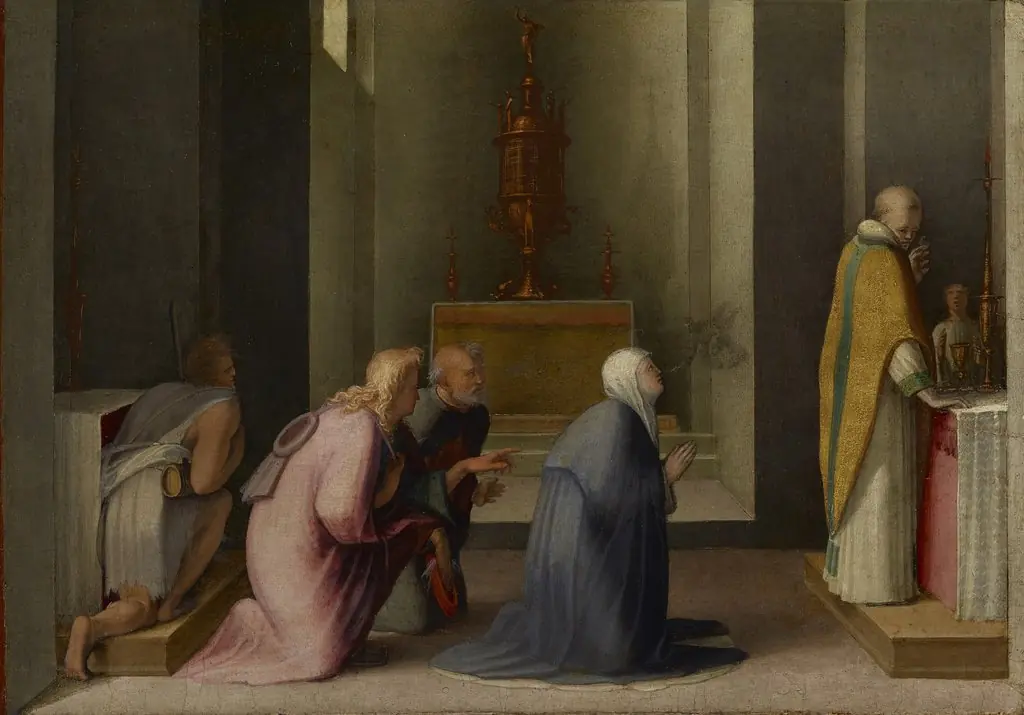 The Miraculous Communion of Saint Catherine of Siena
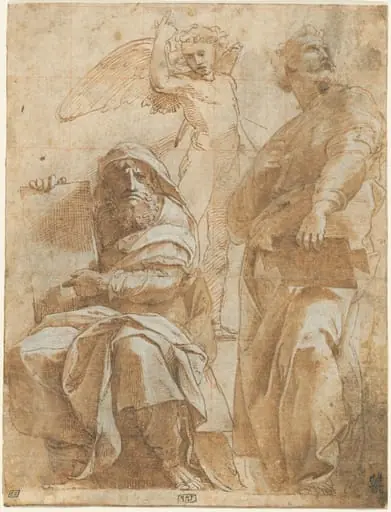 The Prophets Hosea and Jonah
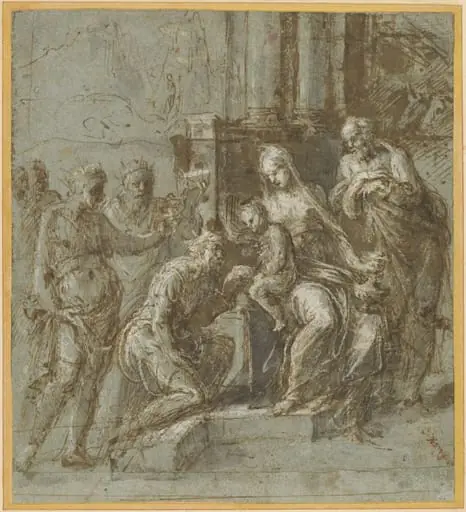 The Adoration of the Magi
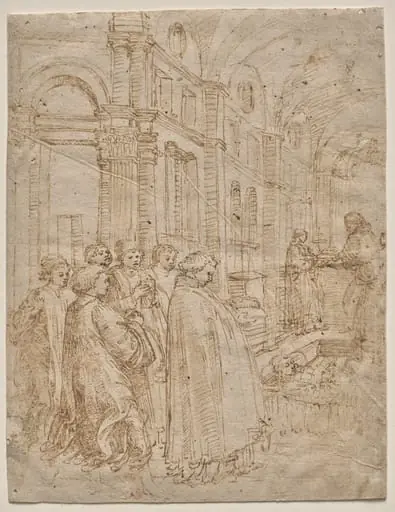 The Funeral of Saint Stephen
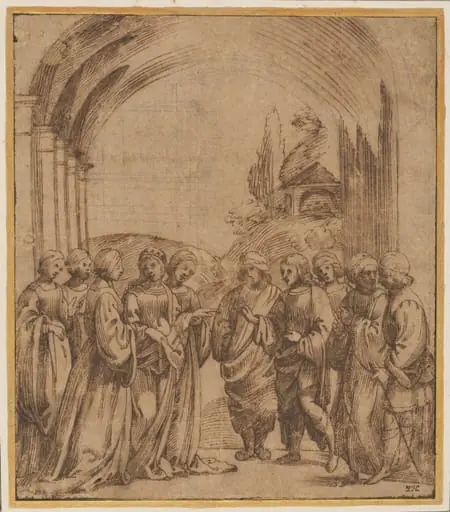 A Betrothal
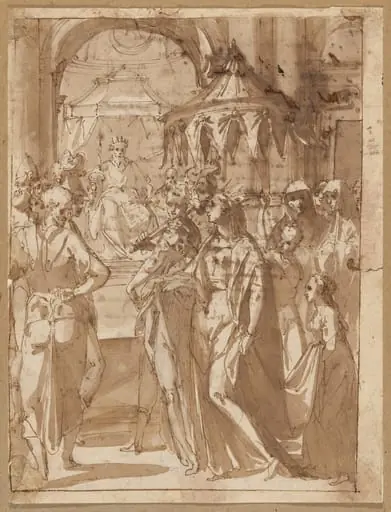 Esther before Ahasuerus