Artwork
Christ and the Woman Taken in Adultery
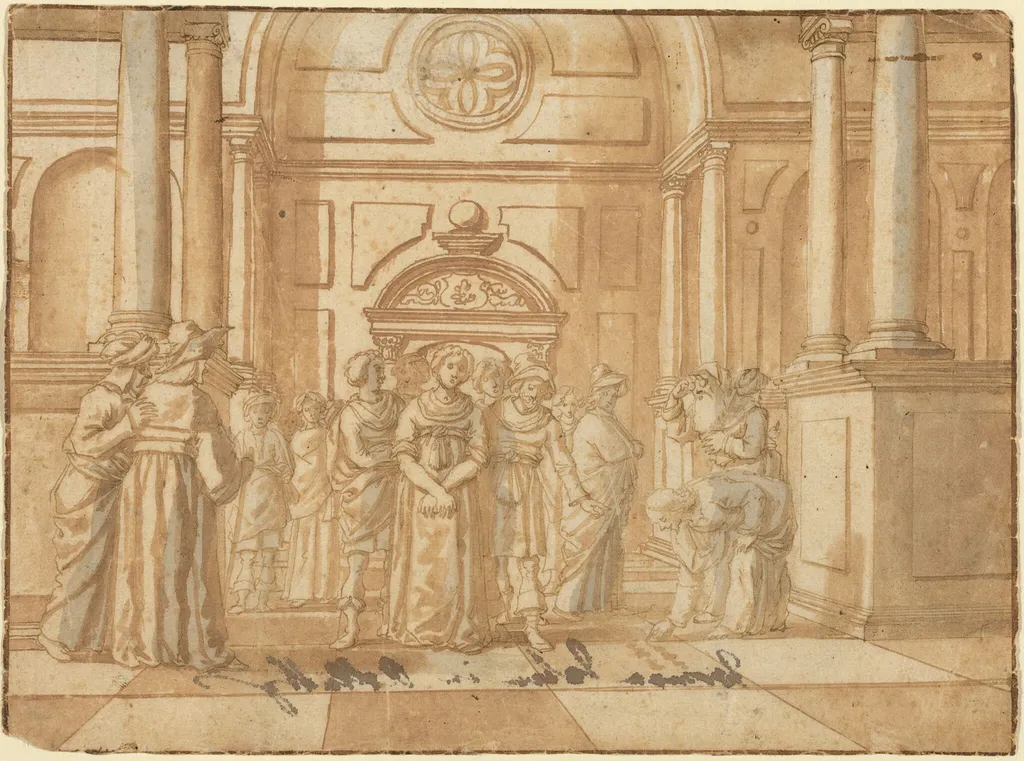
Christ and the Woman Taken in Adultery is an ink drawing by the Renaissance artist Netherlandish 16th Century. It dates from 1501 and is held in the collection of the National Gallery of Art.
About this work
Overview
This drawing depicts the biblical episode of Christ and the woman taken in adultery, rendered in pen and brown ink with washes on laid paper. The composition centers on Christ, bent slightly as if writing in the earth, while a group of onlookers surrounds a woman. Delicate, fine linework defines the figures and their expressions, creating a quiet tension between stillness and agitation.
Subject & Meaning
The scene illustrates John 8:7, where Christ challenges the crowd about sin and judgment by writing on the ground. His composed demeanor contrasts with the agitated posture of the accusers, emphasizing moral reflection over condemnation. The woman, held by others, remains passive, her vulnerability underscored by the focus on Christ’s action rather than her punishment.
Technique & Style
The artist employs fine, controlled pen lines and subtle brown and gray washes to model form and atmosphere. Shading is achieved through hatching and cross-hatching, creating depth without heavy contrast. The precision of the lines recalls the draftsmanship of Rembrandt, particularly in the rendering of facial expressions and fabric folds.
History & Provenance
The drawing’s origin is not definitively recorded, but its style and materials align with 17th-century Dutch artistic practices. It likely stems from a private collection or studio study, possibly connected to Rembrandt’s circle. No documented ownership before the 20th century has been established, though its technique suggests a close familiarity with his methods.
Context
During the Dutch Golden Age, biblical scenes were frequently explored in intimate drawings, often for personal meditation or as preparatory studies. Artists like Rembrandt used such moments to examine human psychology and moral ambiguity. This work fits within that tradition, prioritizing emotional nuance over narrative spectacle.
Legacy
The drawing’s refined linework and psychological depth reflect the influence of Rembrandt’s approach to biblical subjects. Its preservation offers insight into how such themes were interpreted in private artistic practice. Similar techniques appear in other works from the period, affirming its place within a broader culture of devotional draftsmanship.
Artist & collection

Artist
This artist carved scenes with fine lines, mostly religious and mythological ones.

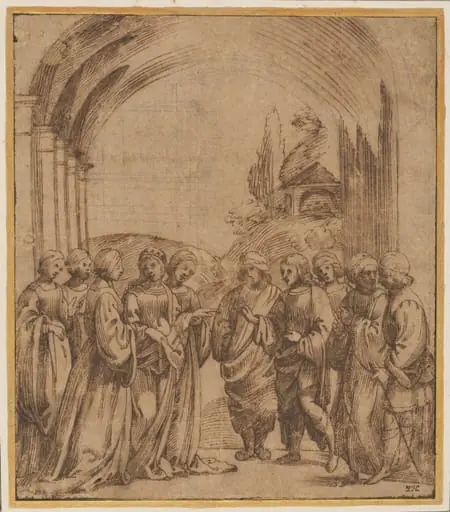 A Betrothal
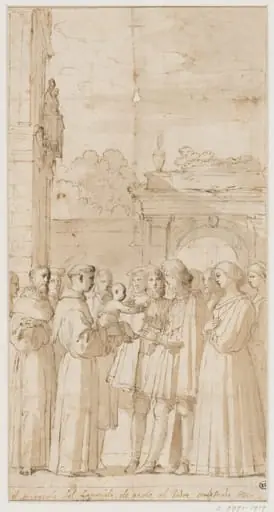 Untitled
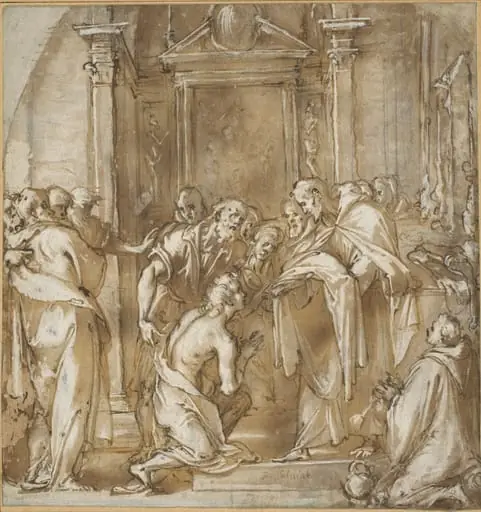 Saint Vincent Ferrer Taking His Vestments
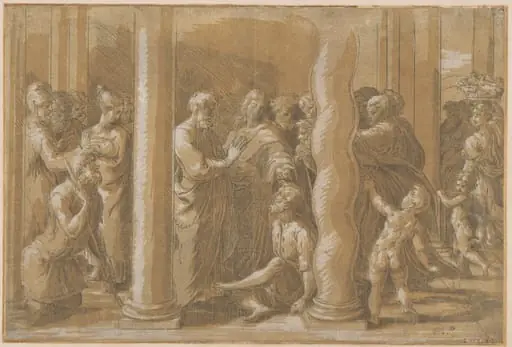 Saints Peter and John Healing the Lame Man at the Golden Gate
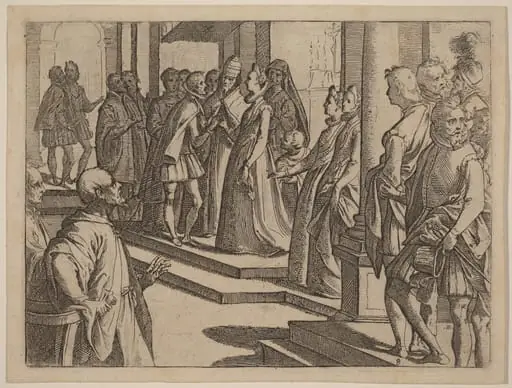 The Betrothal of Margaret of Austria to Philip III, King of Spain
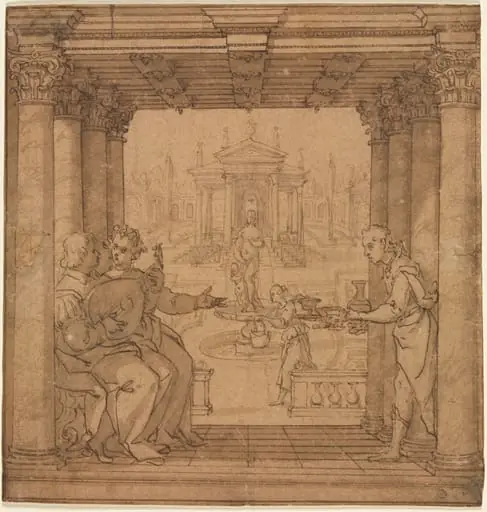 Illustration from Torquato Tasso's Gerusalemme Liberata
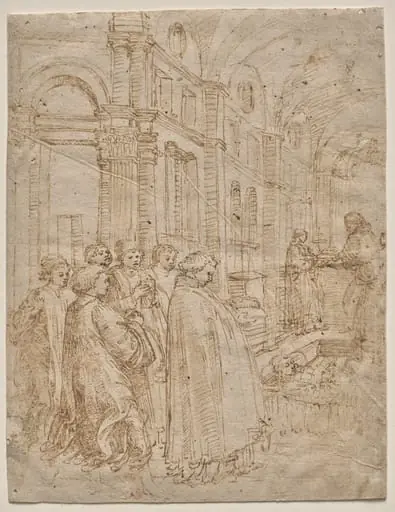 The Funeral of Saint Stephen
![Joseph and His Brother in Egypt [verso], by Italian 17th Century](https://artifactworldgallery.com/img/italian-17th-century--joseph-and-his-brother-in-egypt-verso--86cfb4fbb2662a76-w320.webp) Joseph and His Brother in Egypt [verso]
Joseph and His Brother in Egypt [verso]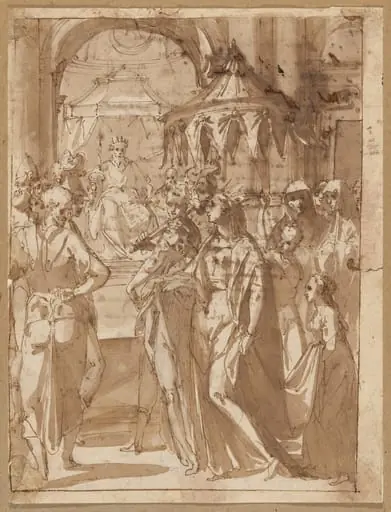 Esther before Ahasuerus
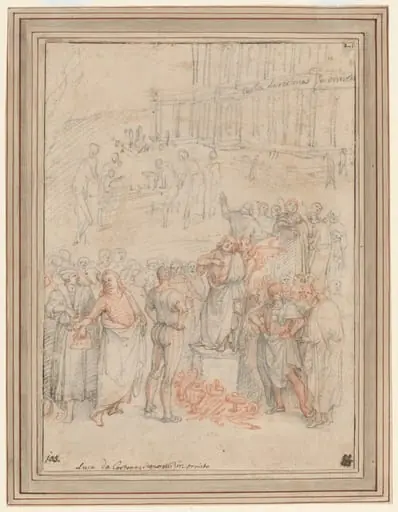 The Sermons and Deeds of the Antichrist
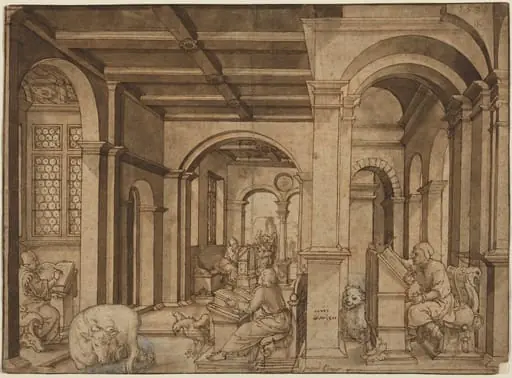 Four Evangelists in a Scriptorium
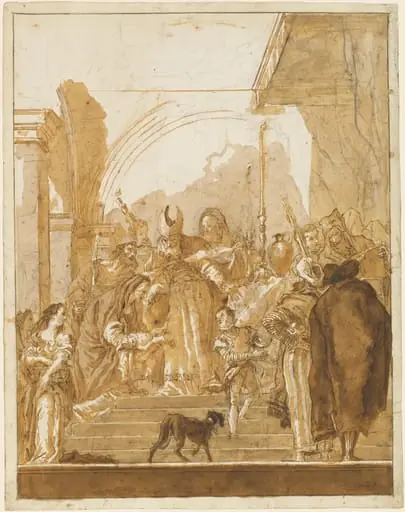 The Presentation in the Temple