Artwork
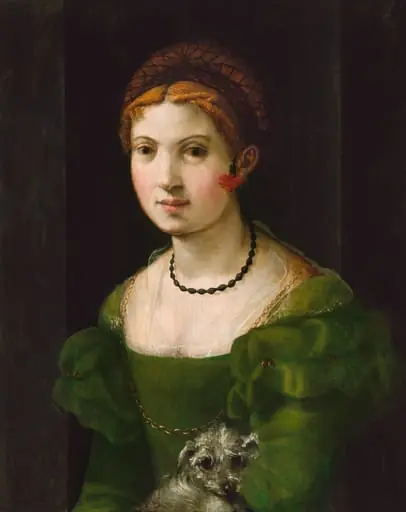
Portrait of a young woman
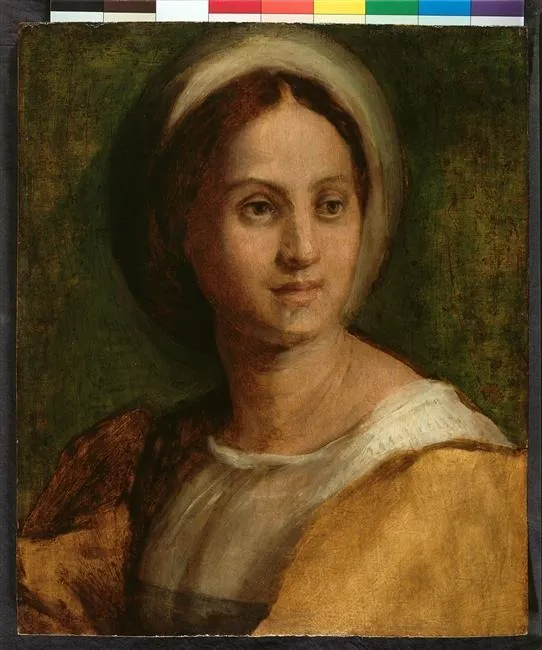
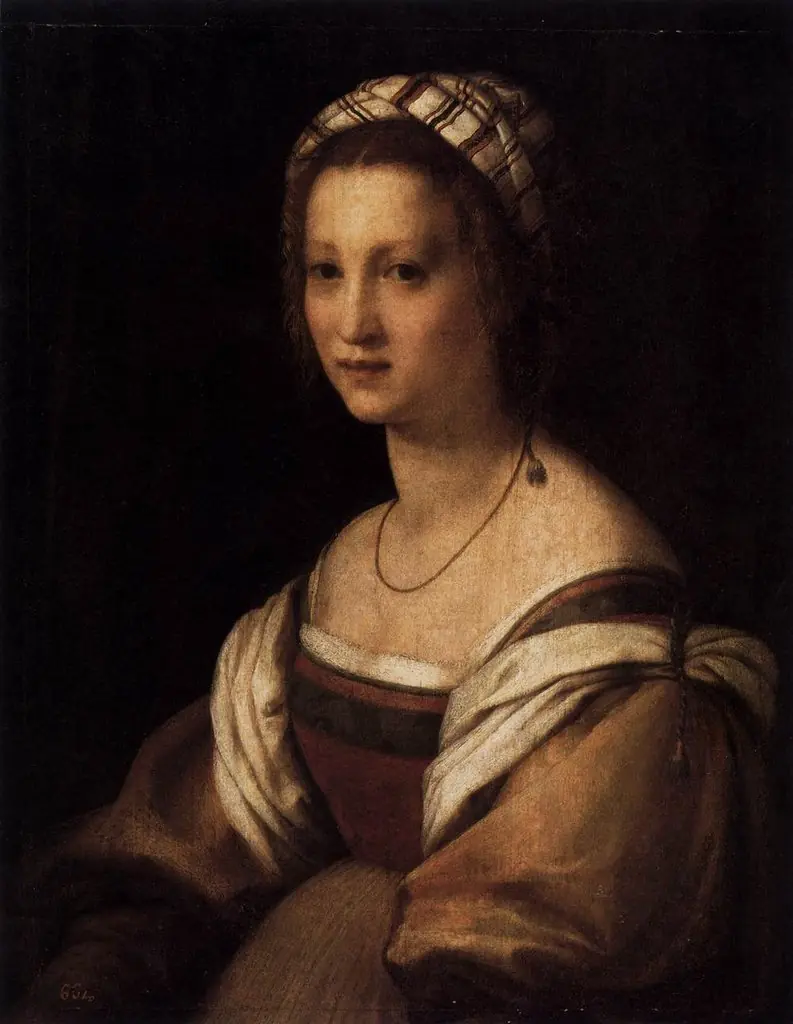
Portrait of a young woman is a paint painting by the High Renaissance artist Andrea del Sarto. It dates from 1518 and is held in the collection of the Gemäldegalerie Berlin.
About this work
Overview
Created around 1518, this oil painting by Andrea del Sarto presents a solitary young woman set against a subdued green backdrop. The work is part of the collection of the Gemäldegalerie in Berlin, where it is displayed among other Renaissance portraits. Its composition centers on the sitter, whose calm demeanor invites quiet observation.
Subject & Meaning
The figure is a youthful woman with dark hair, adorned with a simple white headband and a white dress featuring a contrasting brown sleeve. Her gaze meets the viewer directly, conveying a sense of introspection. The restrained attire and muted setting suggest a focus on personal virtue rather than overt narrative.
Technique & Style
Del Sarto employs delicate, blended brushwork to model the woman's facial features, achieving a soft transition between light and shadow. While the overall palette remains restrained, subtle chiaroscuro enhances the three‑dimensionality of the form, particularly in the folds of the dress and the folds of the sleeve, creating a gentle volumetric effect.
History & Provenance
The portrait entered the Gemäldegalerie Berlin's holdings in the early 20th century, having previously been part of a private collection in Italy. Documentation traces its attribution to del Sarto through stylistic comparison with his known works, confirming its place within his early mature period.
Context
Painted during the High Renaissance, the work reflects contemporary ideals of modesty and refined beauty in portraiture. Del Sarto, a Florentine artist, was known for his balanced compositions and subtle modeling, qualities evident in this piece and indicative of the broader artistic currents of early 16th‑century Italy.
Artist & collection
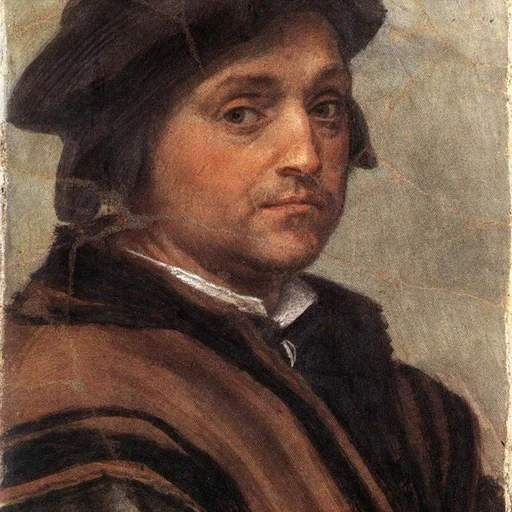
Artist
Andrea del Sarto was an Italian painter from Florence, whose career flourished during the High Renaissance and early Mannerism.


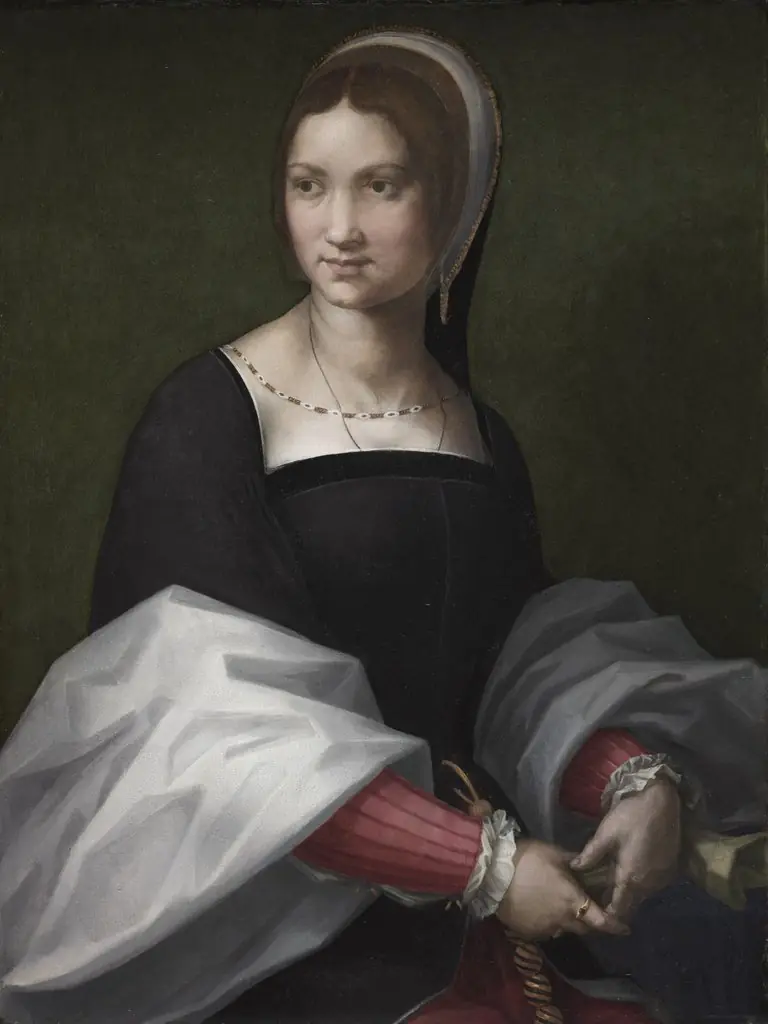
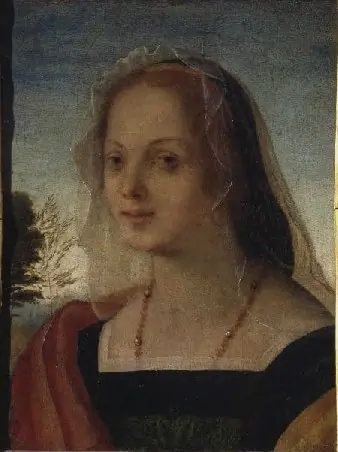 Portrait of a Young Woman
 Portrait of a Young Woman
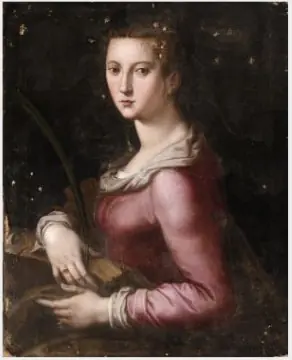 Saint Catherine of Alexandria
 The Head of Saint Catherine the Martyr
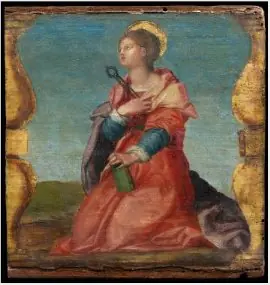 Saint Apollonia
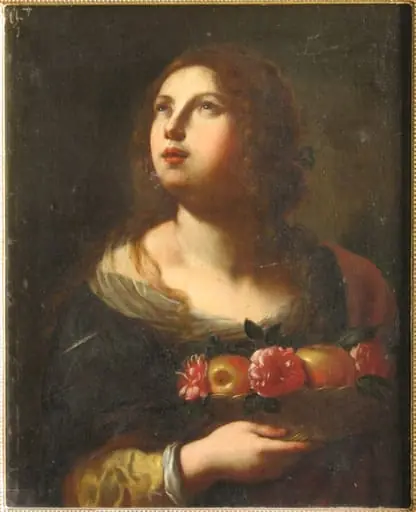 Sfânta Zita (în Reg. Inv.: Fată cu coș de flori)
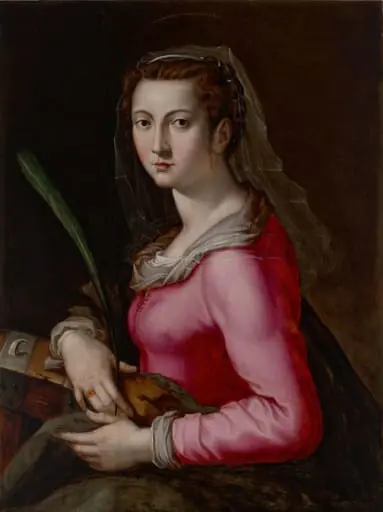 Portrait of a Woman as Saint Catherine
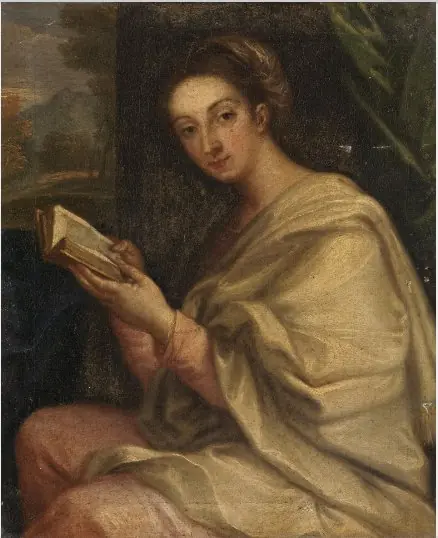 A Lady as a Sybil
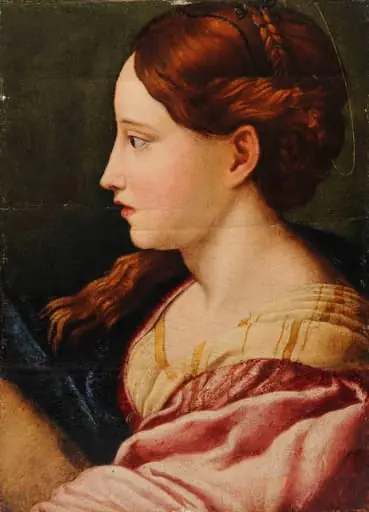 Sfânta Barbara
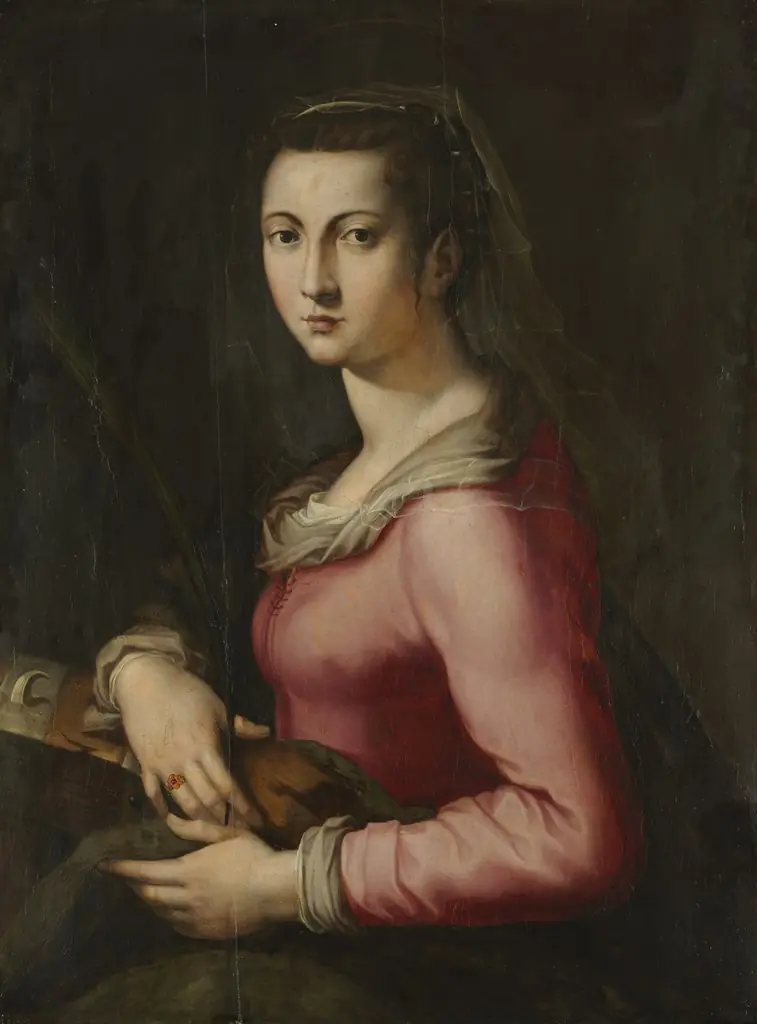 Portrait of a Woman as Saint Catherine
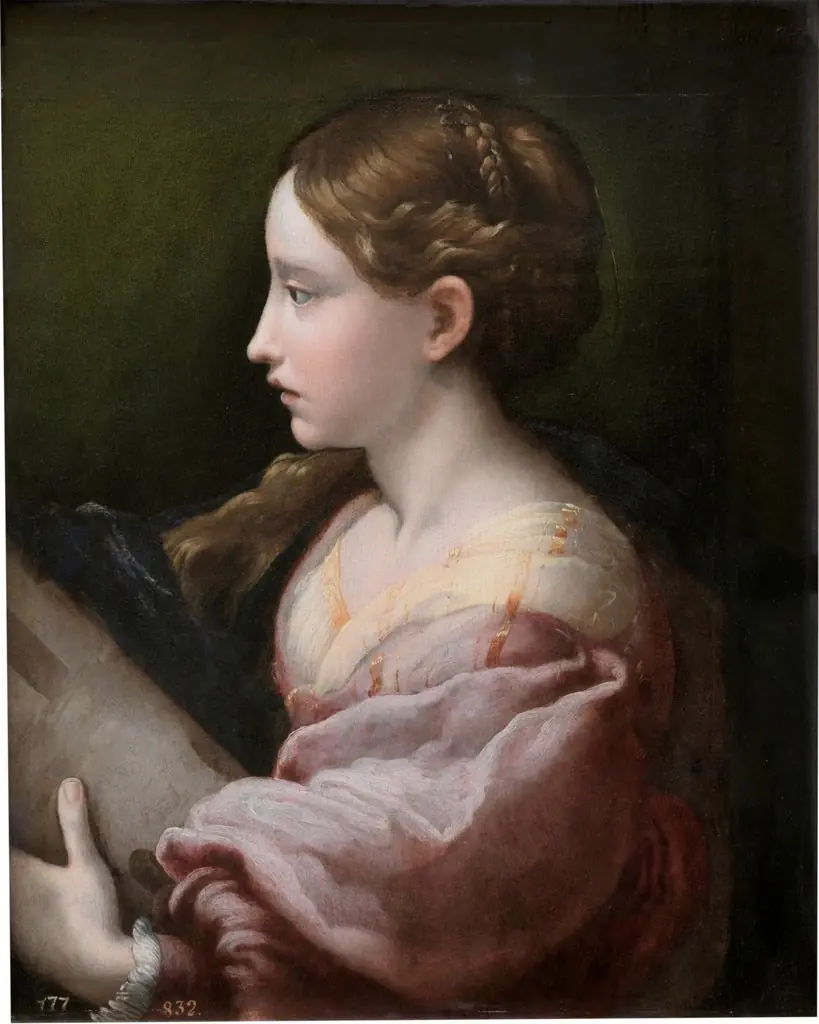 Saint Barbara
 St Agnes