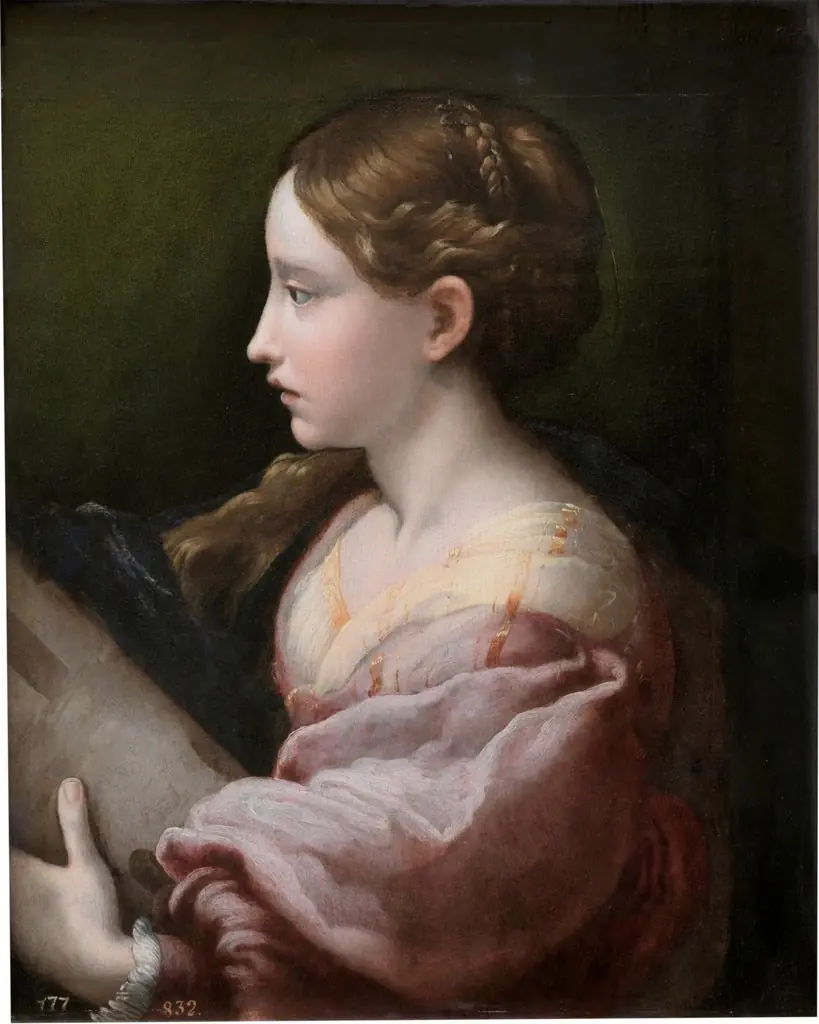
Artwork
The Head of Saint Catherine the Martyr
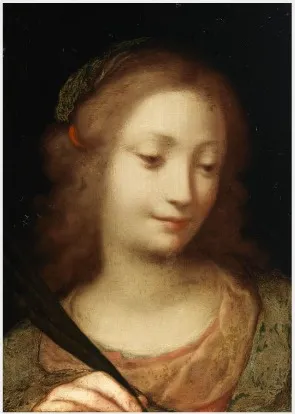
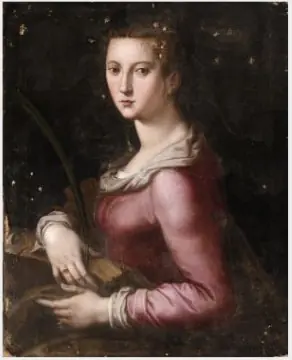
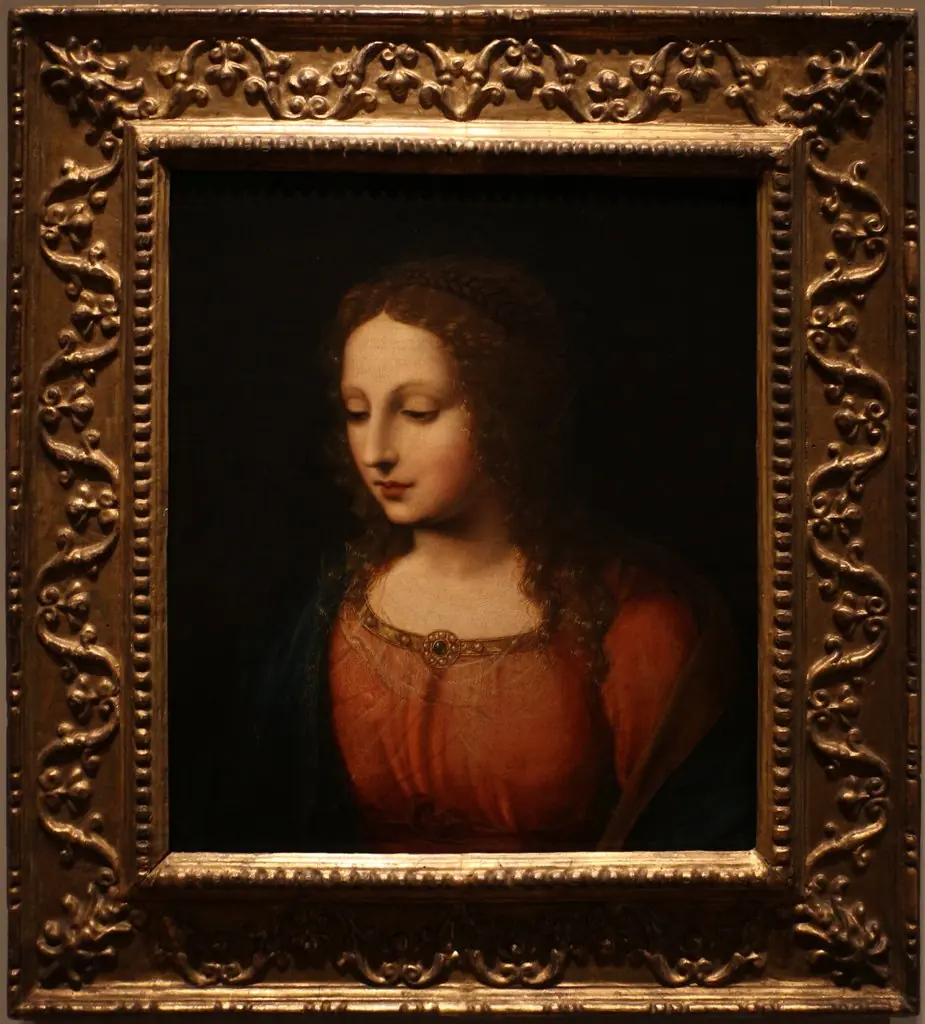
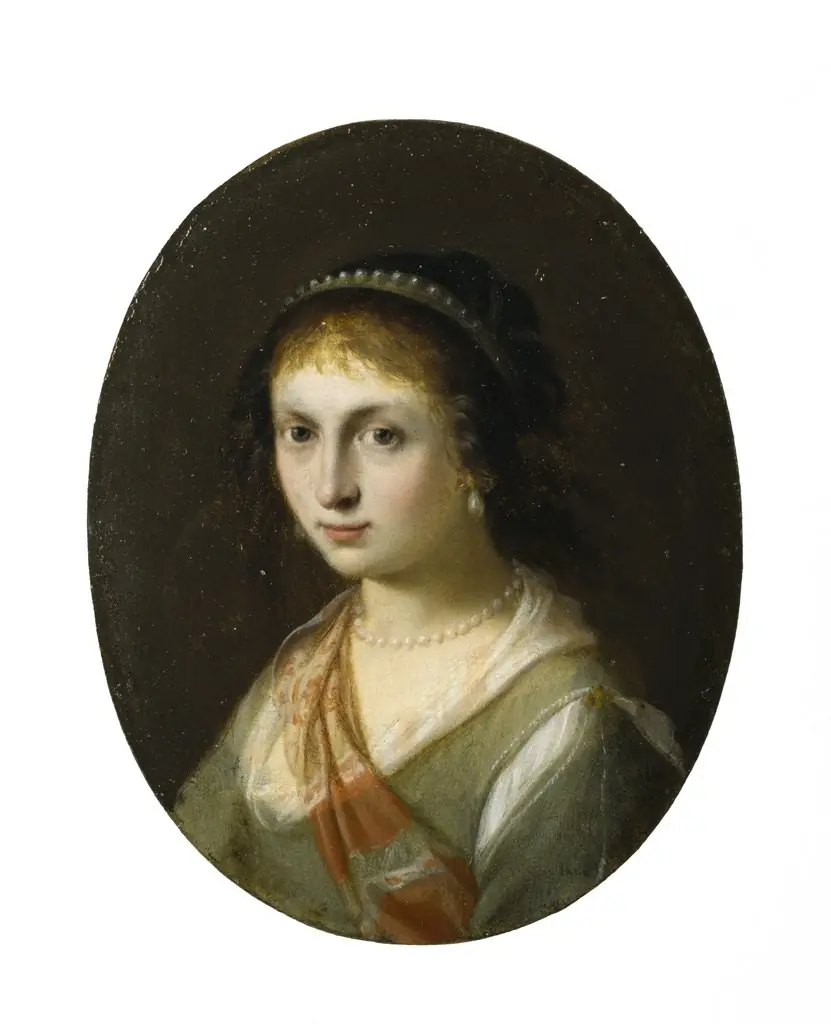
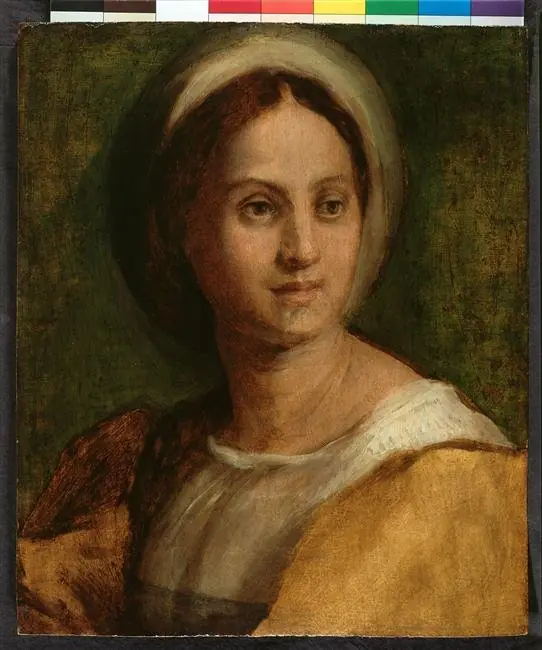
The Head of Saint Catherine the Martyr is an unspecified painting by the Mannerist artist Correggio. It dates from 1521 and is held in the collection of the National Gallery of Ireland.
About this work
Overview
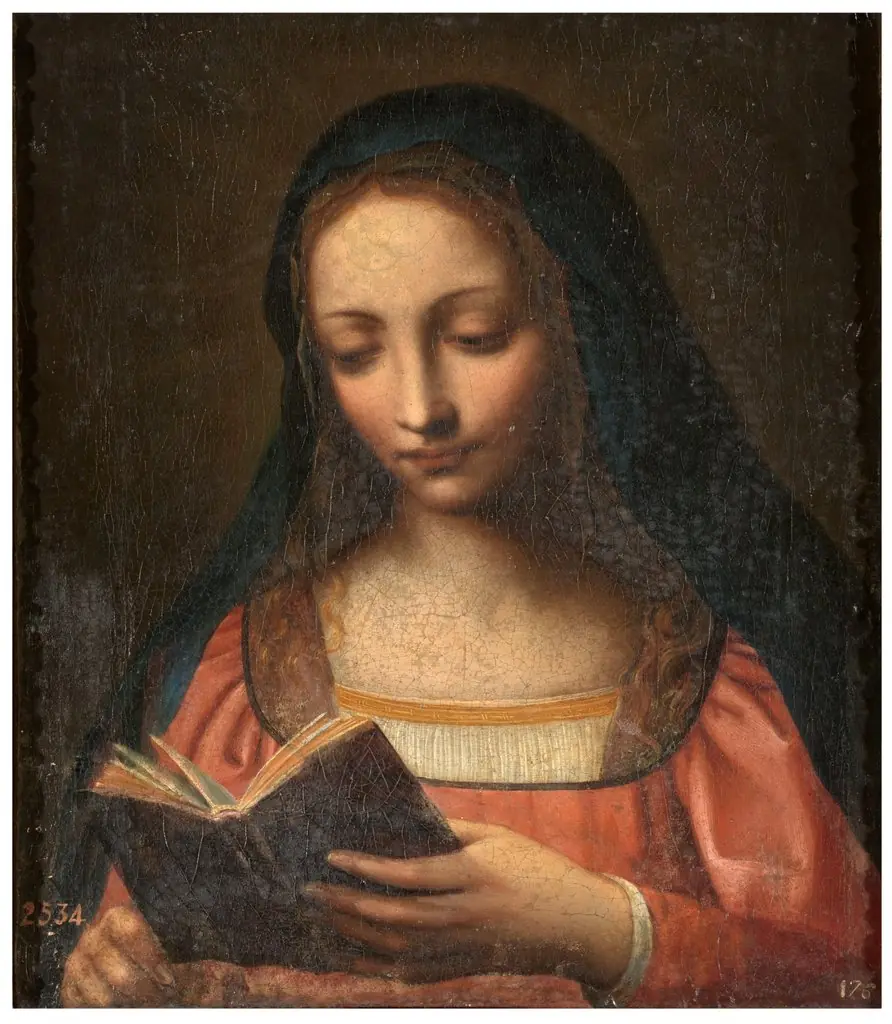
Painted around 1521 by Antonio da Correggio, this small devotional work depicts the severed head of Saint Catherine of Alexandria.
Painted around 1521 by Antonio da Correggio, this small devotional work depicts the severed head of Saint Catherine of Alexandria. Executed in oil on panel, it is now housed in the National Gallery of Ireland. The composition isolates the saint’s face and upper torso against a deep, unmodulated background, emphasizing her quiet presence. The painting’s intimacy suggests it was intended for private contemplation rather than public veneration.
Subject & Meaning
Saint Catherine, a fourth-century martyr, was traditionally depicted with attributes of her torture and faith, such as the breaking wheel. Here, Correggio omits these symbols, focusing solely on her serene, downcast gaze and gently raised hand over the heart. This gesture conveys inner devotion rather than external suffering, transforming the image into a meditation on spiritual grace and quiet endurance.
Technique & Style
Correggio employs subtle chiaroscuro to model the saint’s face and shoulders, lending a soft, sculptural volume to her form. The delicate transitions between light and shadow avoid harsh outlines, creating a lifelike presence. His brushwork is refined, particularly in the rendering of hair and fabric folds. The restrained palette—pale pink, muted green, and warm skin tones—is enlivened only by a single orange blossom, drawing attention without disrupting the calm mood.
History & Provenance
The painting entered the National Gallery of Ireland’s collection in the 19th century, having previously belonged to private European collections. Its early history is not fully documented, but its intimate scale and devotional character align with works produced during Correggio’s early career in Parma, when he was developing his signature approach to tender, emotionally resonant religious imagery.
Context
Created during the High Renaissance, this work reflects the period’s shift toward humanized religious figures. Unlike earlier, more formal icons, Correggio’s Catherine feels personally accessible. The emphasis on psychological depth and naturalistic detail echoes contemporary trends in northern Italian painting, particularly the influence of Leonardo da Vinci’s sfumato and expressive portraiture.
Legacy
Though not among Correggio’s largest or most widely known works, this painting exemplifies his ability to convey spiritual emotion through subtlety. Its influence can be seen in later devotional portraits that prioritize inner life over narrative spectacle. The work remains a quiet testament to his skill in rendering humanity within sacred subjects, bridging the sacred and the intimate.
Artist & collection

Artist
Antonio Allegri da Correggio (August 1489 – 5 March 1534), usually known as just Correggio (, also UK: , US: , Italian: ), was an Italian Renaissance painter who was the foremost painter of the Parma school of the High…