Artwork
The Triumphs of Caesar: The Corselet Bearers
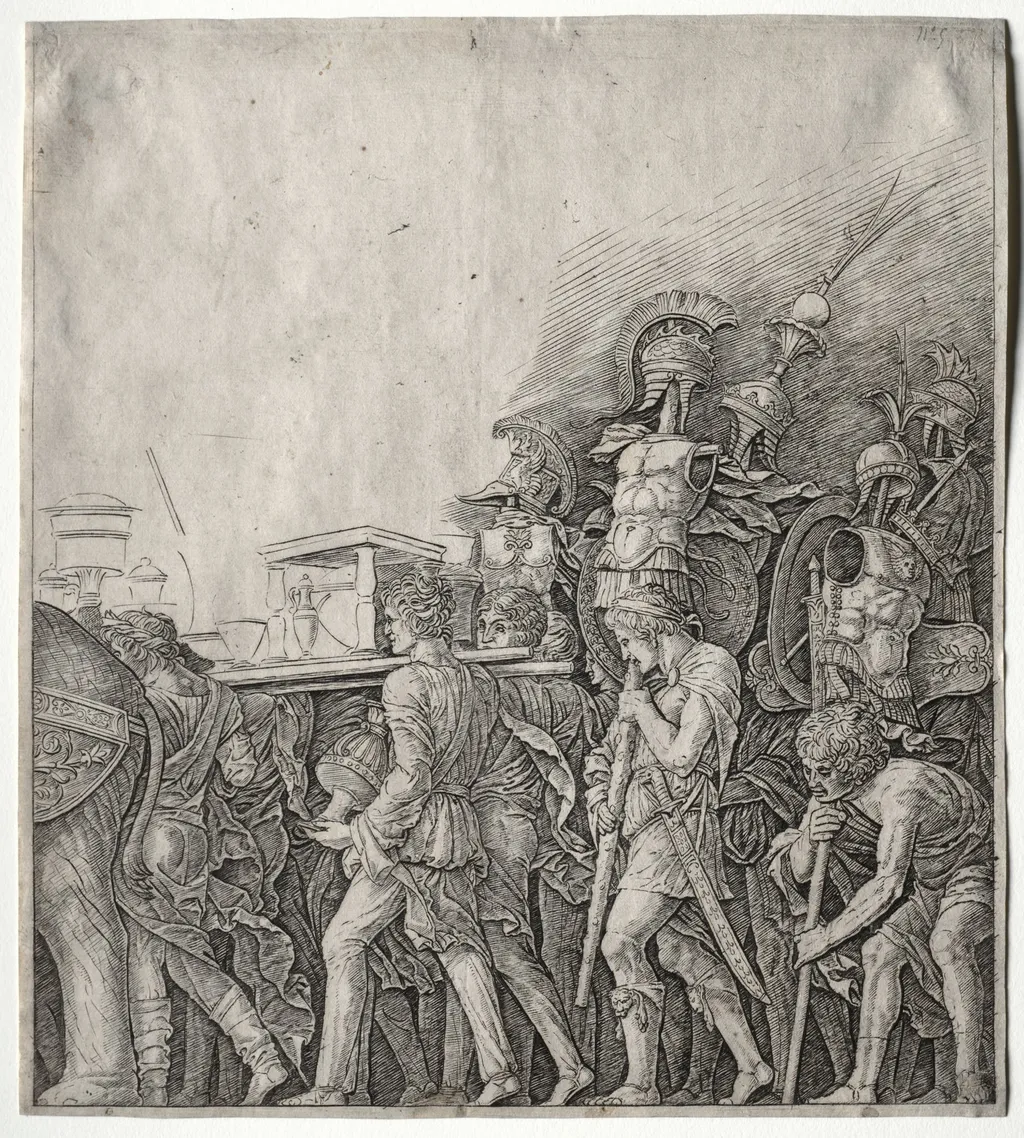
The Triumphs of Caesar: The Corselet Bearers is a print by the Renaissance artist Giulio Campagnola. It dates from 1498 and is held in the collection of the Cleveland Museum of Art.
About this work
Overview
The work is part of a larger narrative celebrating Roman military triumphs, rendered in monochrome with meticulous line work.
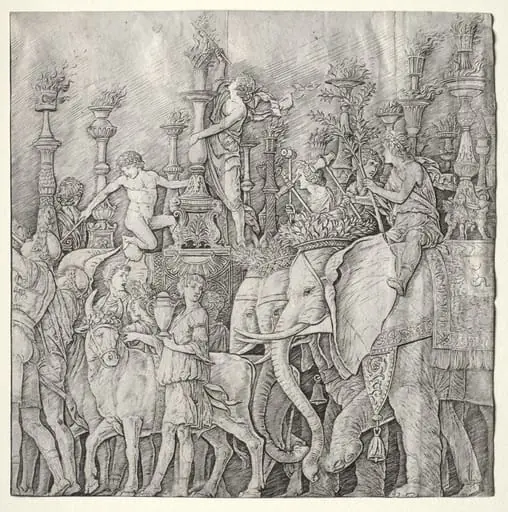
Created around 1498, this etching by Giulio Campagnola is one of nine panels in The Triumphs of Caesar series. It depicts a procession of bearers transporting a heavy wooden platform, likely meant to carry armor or trophies. The work is part of a larger narrative celebrating Roman military triumphs, rendered in monochrome with meticulous line work. It resides in the collection of The Cleveland Museum of Art.
Subject & Meaning
The scene portrays laborers bearing a ceremonial platform, possibly for a corselet or other armor, as part of a Roman triumphal parade. Their muscular forms and strained postures emphasize physical exertion, underscoring the scale and grandeur of imperial victory. The inclusion of armor and draped garments signals the ceremonial nature of the event, while the architectural backdrop suggests the civic and religious context of Roman processions.
Technique & Style
Campagnola employs fine, controlled etching lines to model form through gradations of tone. The figures are rendered with sharp anatomical definition, using chiaroscuro to create volume without color. The background, with its simplified temple and trees, provides spatial depth while maintaining focus on the central group. The precision of the lines reflects the artist’s skill in translating sculptural presence into print.
History & Provenance
The etching was produced during Campagnola’s early career in Venice, a period when he was refining his technique in reproductive printmaking. It was likely made as part of a commissioned series inspired by Renaissance interest in classical antiquity. The work entered the Cleveland Museum of Art’s collection in the 20th century, where it remains a key example of Northern Italian printmaking from the late 15th century.
Context
Campagnola’s series draws from ancient Roman triumphal processions described in historical texts and depicted in contemporary antiquarian studies. The Renaissance revival of classical themes influenced artists to reinterpret Roman imagery with heightened naturalism. This print reflects the period’s fascination with reconstructing the visual language of antiquity through detailed, human-centered compositions.
Legacy
The Triumphs of Caesar series established Campagnola as a leading printmaker of his time, influencing later artists in their approach to classical subjects and tonal modeling in etching. The series remains a significant reference for understanding how Renaissance artists engaged with antiquity, not through direct replication but through reinterpretation grounded in observation and technical innovation.
Artist & collection

Artist
Giulio Campagnola (Italian: ; c. 1482 – c. 1515) was an Italian engraver and painter, whose few, rare, prints translated the rich Venetian Renaissance style of oil paintings of Giorgione and the early Titian into the…

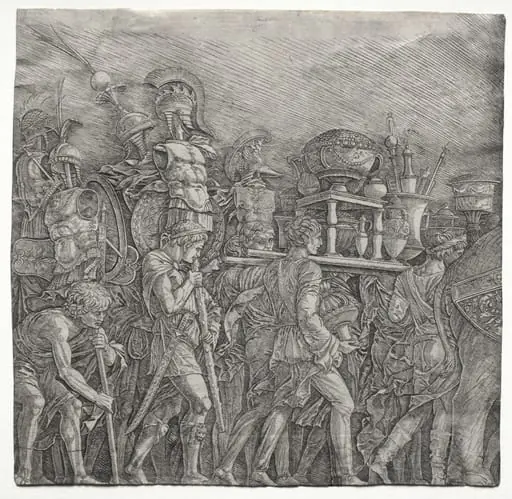 The Triumphs of Caesar: The Corselet Bearers
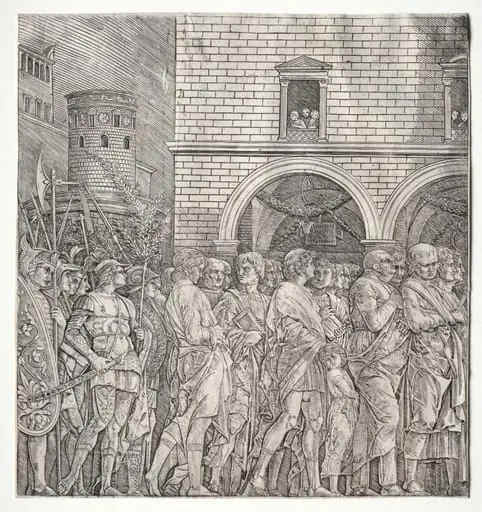 The Triumphs of Caesar: The Senators
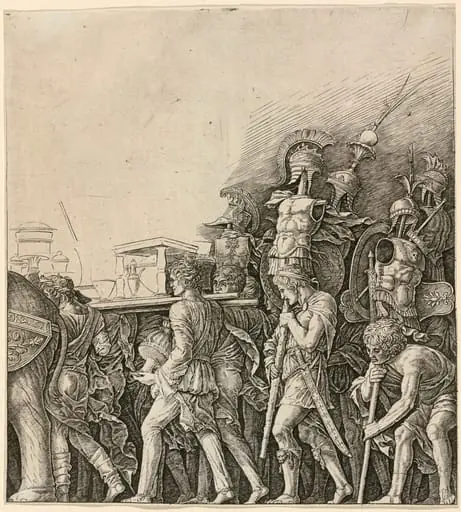 The Triumph of Caesar: Soldiers Carrying Trophies
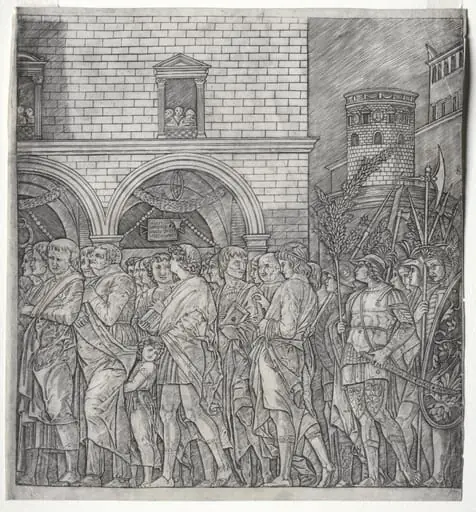 Triumph of Caesar: The Senators
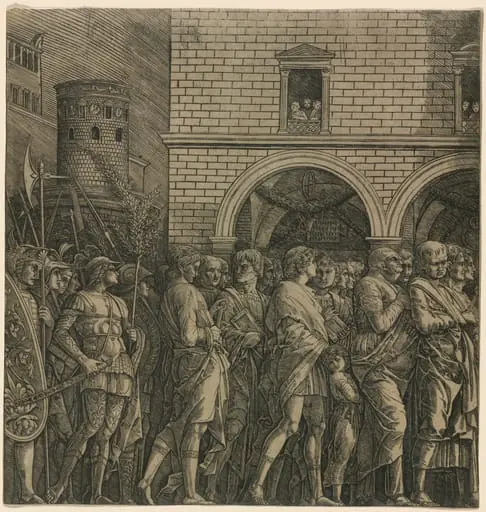 The Triumph of Caesar: The Senators
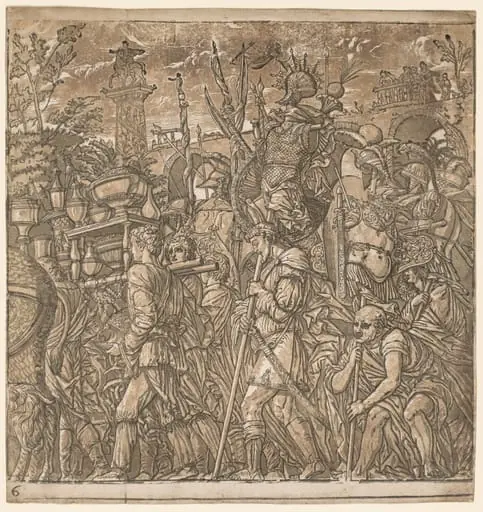 The Triumph of Julius Caesar: Soldiers Carrying Vases and Trophies of War
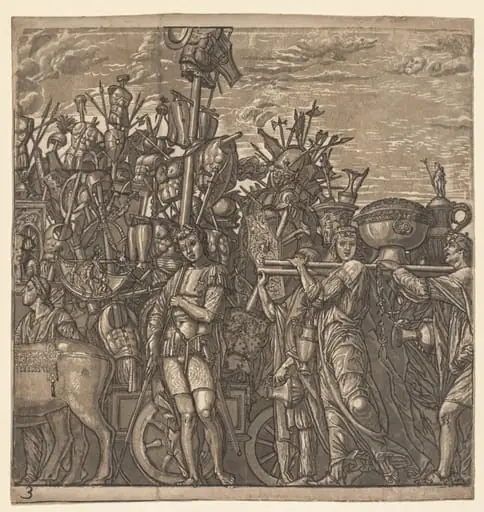 The Triumph of Julius Caesar: Soldiers Marching with Trophies of War
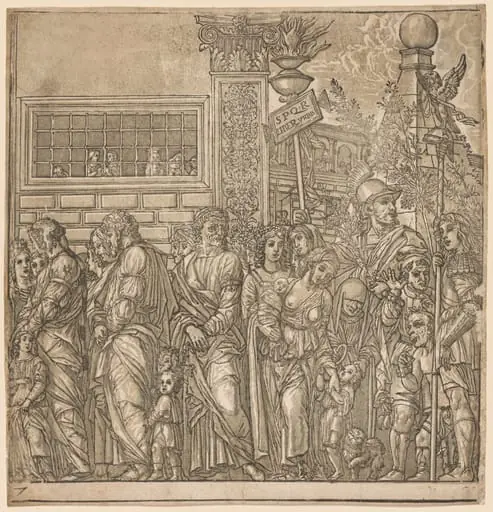 The Triumph of Julius Caesar: Procession of Men, Women and Children
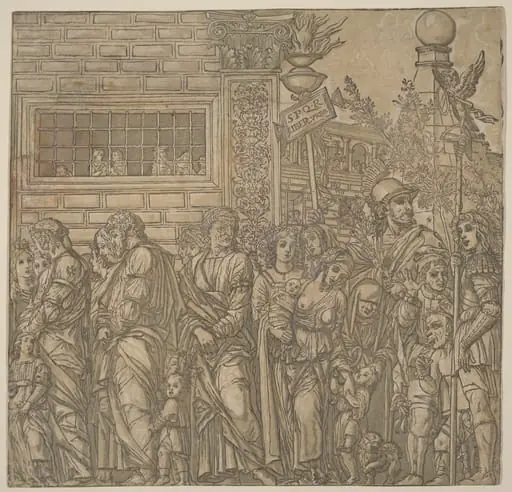 The Triumph of Julius Caesar
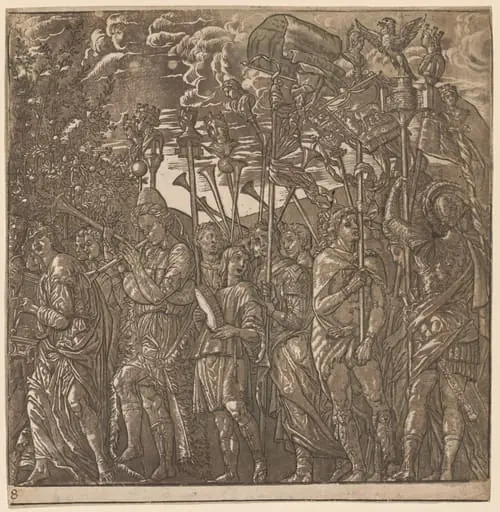 The Triumph of Julius Caesar: Soldiers Carrying Banners and Standards