Artwork
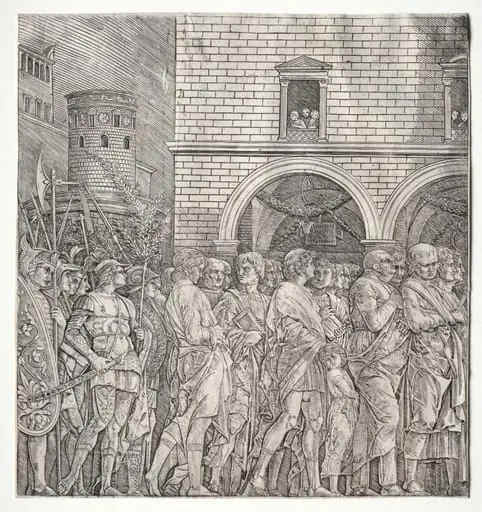
The Triumph of Julius Caesar: Soldiers Carrying the Pictures of War
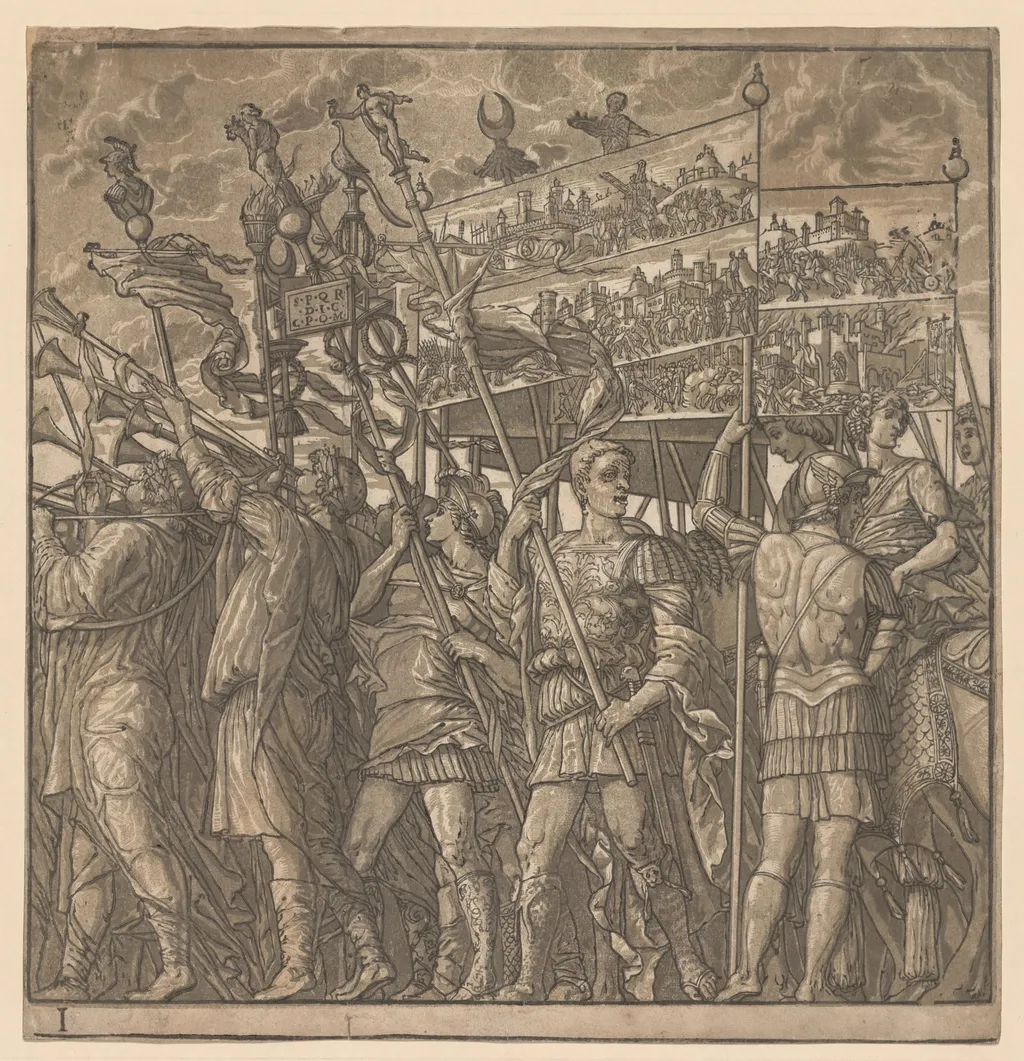
The Triumph of Julius Caesar: Soldiers Carrying the Pictures of War is a print by the Renaissance artist Andrea Andreani. It dates from 1596 and is held in the collection of the Cleveland Museum of Art.
About this work
Overview
The suite was designed to be assembled as a continuous decorative frieze, with detachable classical columns intended to separate individual scenes.
This print is one of nine in a series produced by Andrea Andreani, commissioned by Duke Vincenzo Gonzaga to reproduce Andrea Mantegna’s earlier painted cycle depicting Julius Caesar’s triumphal procession. Executed as chiaroscuro woodcuts, the images replicate the original compositions using layered blocks to simulate tonal gradations. The suite was designed to be assembled as a continuous decorative frieze, with detachable classical columns intended to separate individual scenes.
Subject & Meaning
The scene captures a segment of Julius Caesar’s 46 BCE triumph, celebrating his victories in Gaul. Soldiers carry spoils of war—shields, vessels, and weapons—along a processional route, following Roman ceremonial norms documented in historical sources. The imagery emphasizes imperial authority and the material rewards of conquest, reflecting Renaissance fascination with Roman antiquity as a model of political and military grandeur.
Technique & Style
Andreani employed the chiaroscuro woodcut technique, carving distinct blocks for light and dark tones to achieve depth and modeling. This method, rare in printmaking at the time, allowed him to mimic the painterly effects of Mantegna’s original frescoes. The composition unfolds horizontally, like a scroll, guiding the viewer’s eye along the procession’s path with rhythmic repetition of figures and objects.
History & Provenance
Commissioned by Duke Vincenzo Gonzaga of Mantua in the early 17th century, the series was produced to honor Mantegna’s legacy and display the Gonzaga family’s cultural patronage. The prints were distributed as collectible sets, often mounted in private collections as wall decorations. Fragments of the original detachable columns, colored orange, remain visible in some surviving arrangements, including the version at the Cleveland Museum of Art.
Context
Renaissance elites frequently turned to Roman antiquity for symbolic legitimacy and aesthetic inspiration. Mantegna’s paintings, completed around 1485–1492, were already celebrated for their archaeological detail and classical rigor. Andreani’s prints extended their reach beyond court walls, making the imagery accessible to collectors who sought to emulate aristocratic taste through printed reproductions.
Legacy
Andreani’s woodcut series preserved Mantegna’s vision for a broader audience and demonstrated the potential of printmaking to replicate complex pictorial narratives. The integration of architectural elements and the emphasis on historical accuracy influenced later decorative print cycles. Surviving sets remain important for understanding how Renaissance ideals of antiquity were disseminated and reimagined in early modern Europe.
Artist & collection

Artist
Andrea Andreani (1540–1623) was an Italian engraver on wood, who was among the first printmakers in Italy to use chiaroscuro, which required multiple colours.

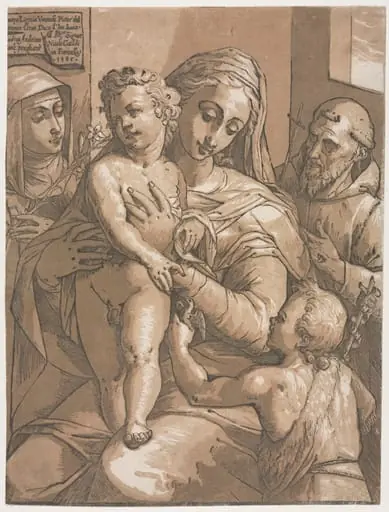 Virgin and Child with St. John, St. Catherine of Siena and St. Francis
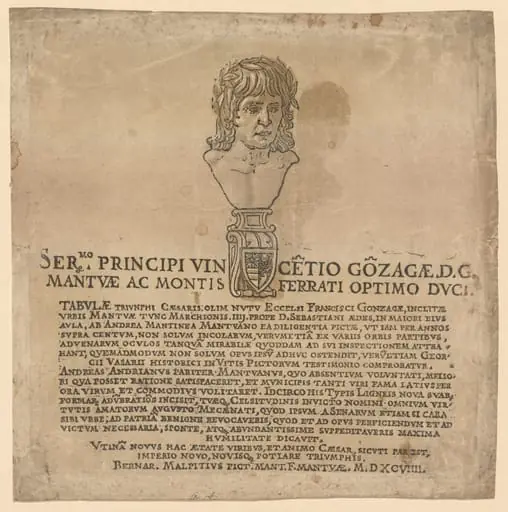 The Triumph of Julius Caesar
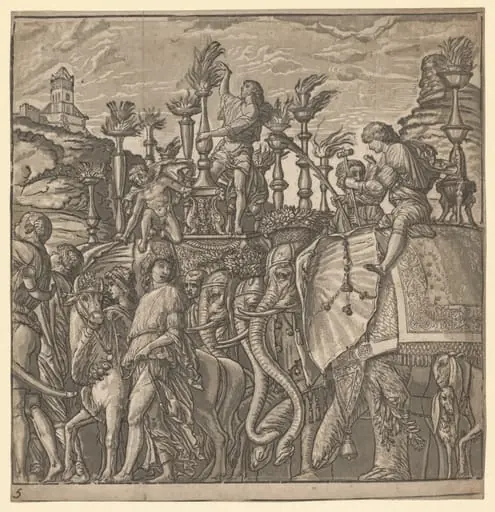 The Triumph of Julius Caesar: Elephants Carrying Torches
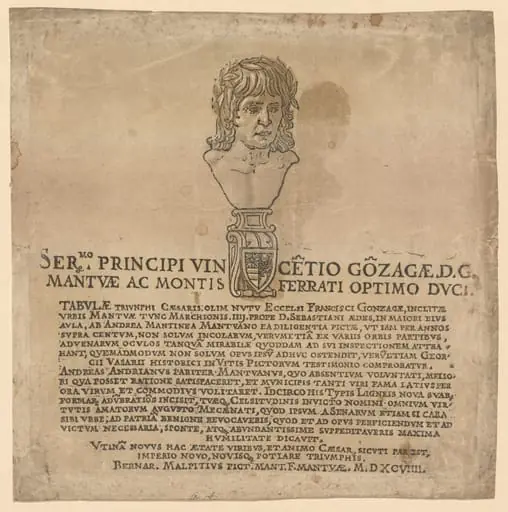 The Triumph of Julius Caesar: Frontispiece
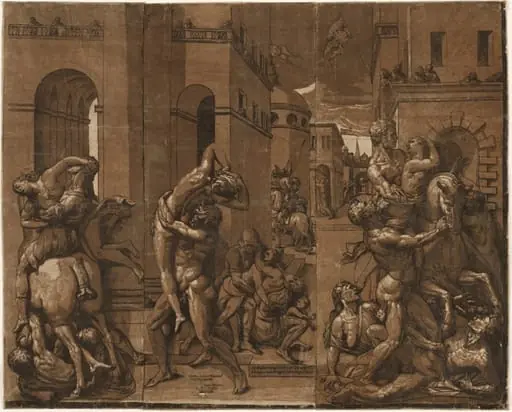 The Abduction of the Sabine Women
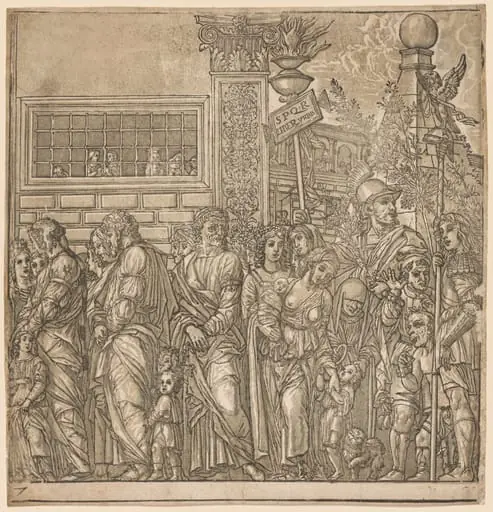 The Triumph of Julius Caesar: Procession of Men, Women and Children
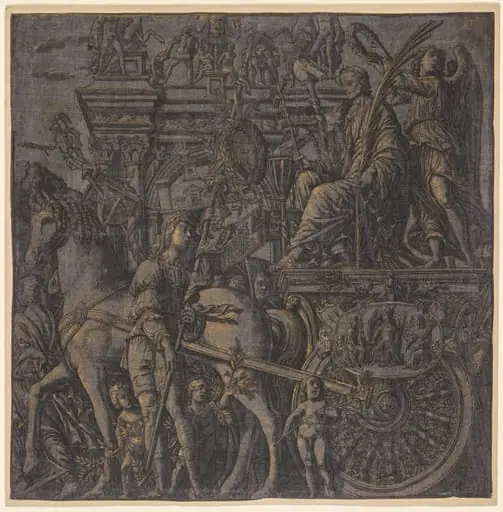 The Triumph of Julius Caesar: Caesar Triumphant
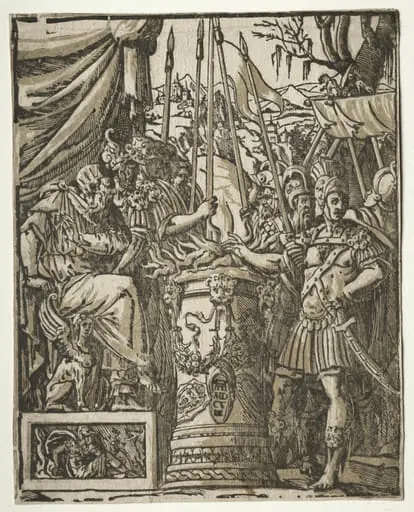 Mucius Scaevola
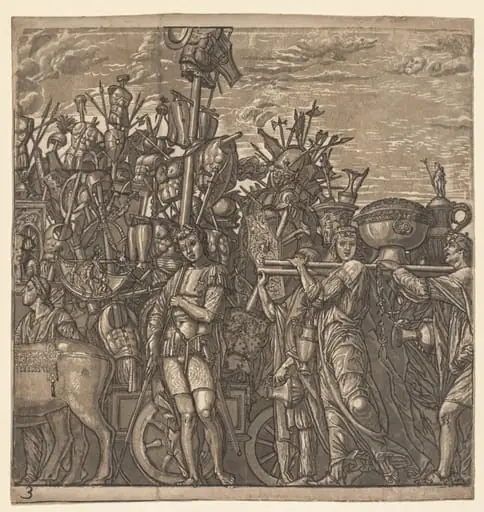 The Triumph of Julius Caesar: Soldiers Marching with Trophies of War
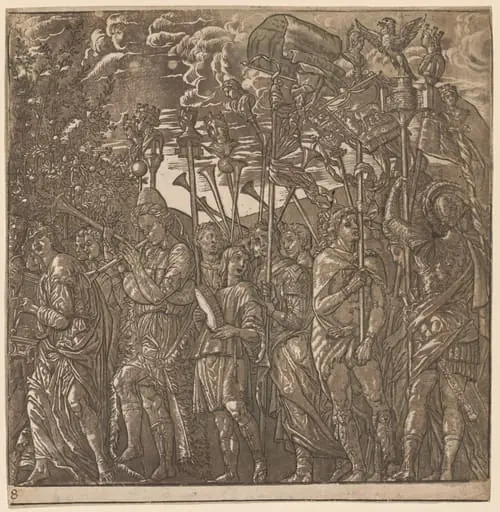 The Triumph of Julius Caesar: Soldiers Carrying Banners and Standards
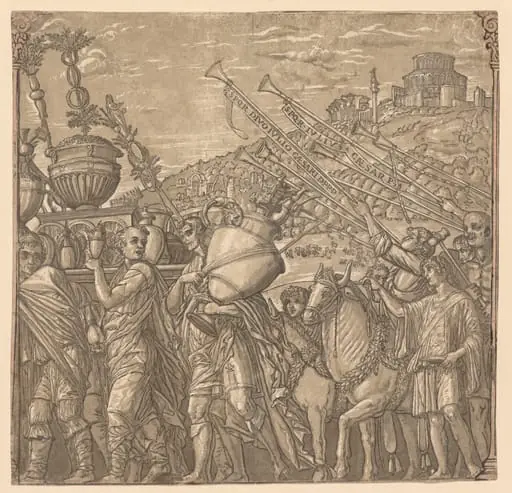 The Triumph of Julius Caesar: Soldiers Carrying Vases
![The Triumph of Julius Caesar [no.1 and 2 plus 2 columns], by Andrea Andreani](https://artifactworldgallery.com/img/andrea-andreani--the-triumph-of-julius-caesar-no-1-and-2-plus-2-columns--72fc49376c9f9633-w320.webp) The Triumph of Julius Caesar [no.1 and 2 plus 2 columns]
The Triumph of Julius Caesar [no.1 and 2 plus 2 columns]![The Triumph of Julius Caesar [no.9 plus 2 columns], by Andrea Andreani](https://artifactworldgallery.com/img/andrea-andreani--the-triumph-of-julius-caesar-no-9-plus-2-columns--26f4d2249baf2916-w320.webp) The Triumph of Julius Caesar [no.9 plus 2 columns]
The Triumph of Julius Caesar [no.9 plus 2 columns]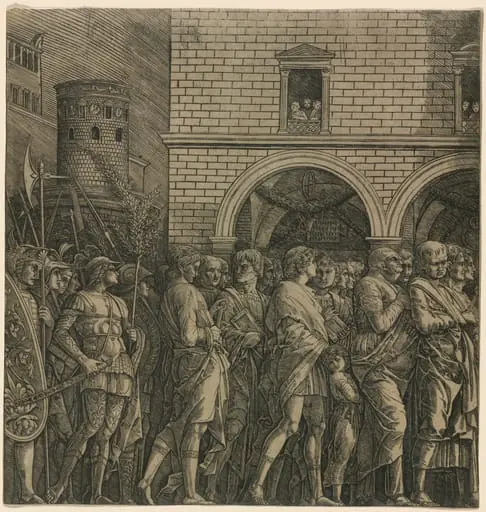 The Triumph of Caesar: The Senators
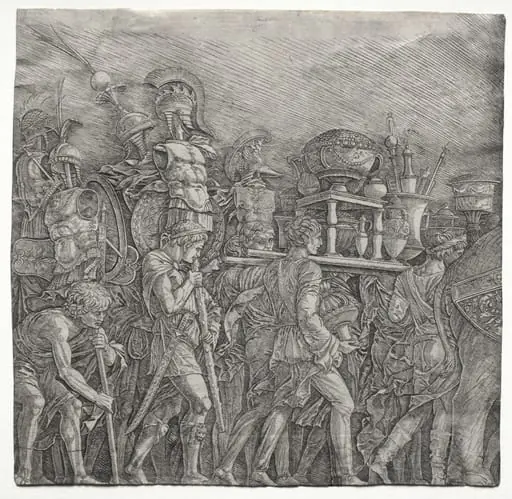 The Triumphs of Caesar: The Corselet Bearers
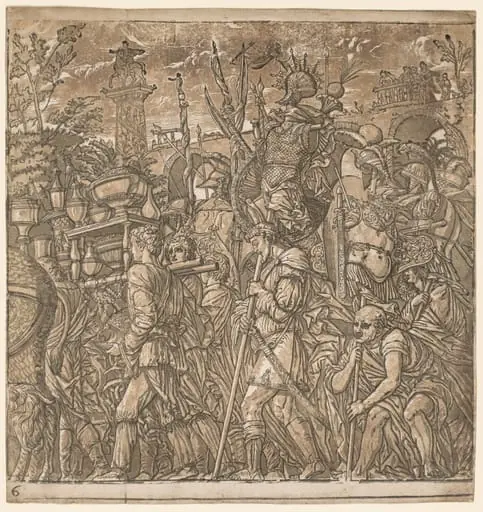 The Triumph of Julius Caesar: Soldiers Carrying Vases and Trophies of War
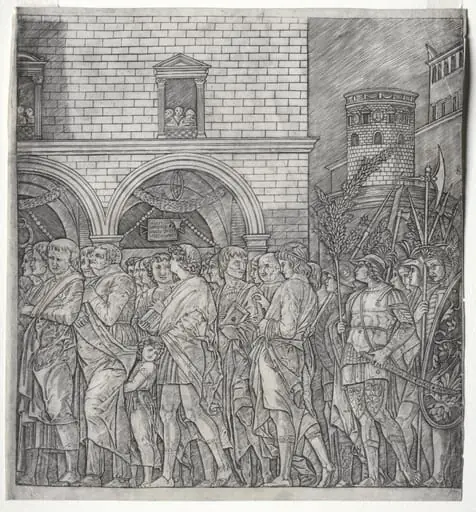 Triumph of Caesar: The Senators
 The Triumphs of Caesar: The Senators