Artwork
Găinile
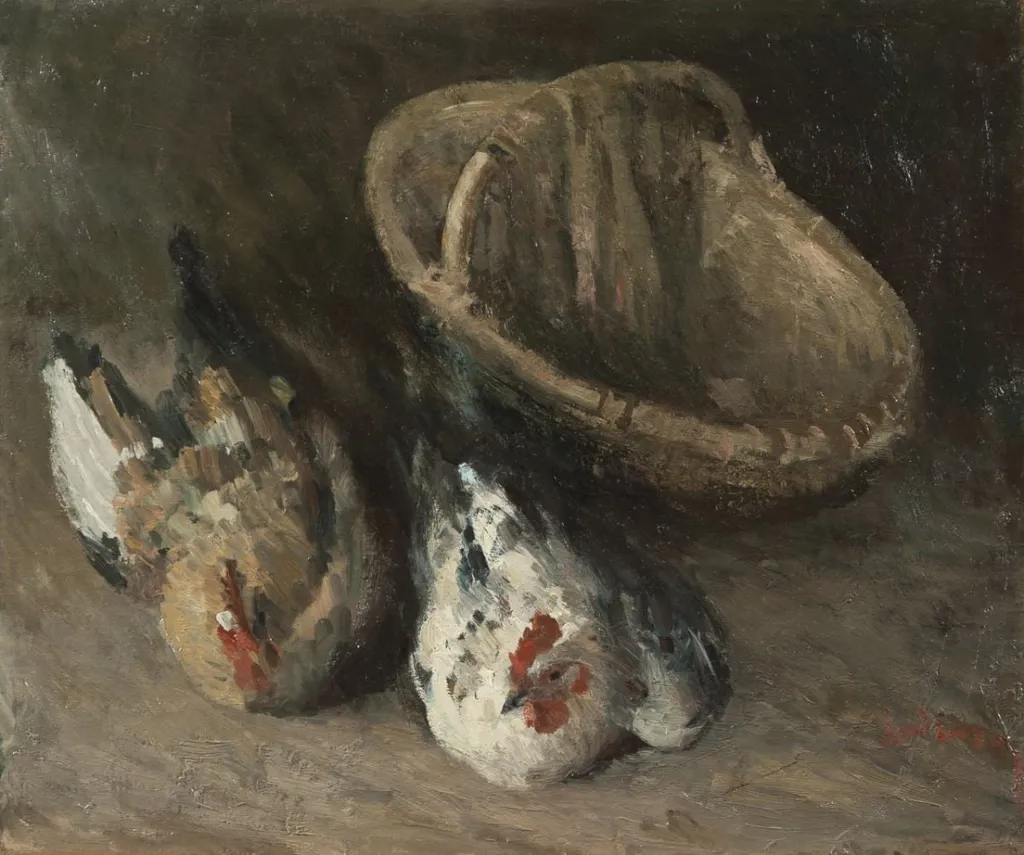
Găinile is a print by Ion Andreescu. It dates from 1850 and is held in the collection of the National Museum of Art of Romania.
About this work
Overview
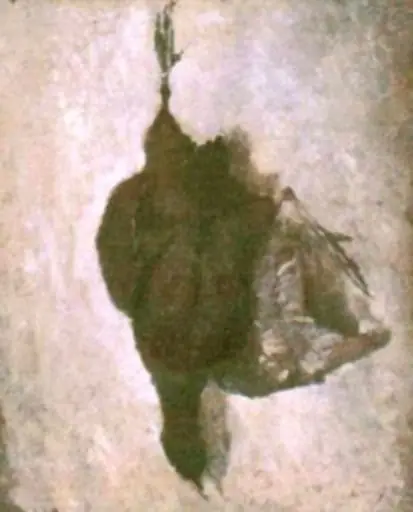
Găinile, painted around 1850 by Romanian artist Ion Andreescu, is a small-scale work depicting two domestic fowl on bare ground. The composition is intimate and unadorned, focusing solely on the birds without narrative context. Its modest subject and direct handling reflect a shift toward everyday observation in 19th-century Romanian art, moving away from idealized or historical themes.
Subject & Meaning
The two chickens, one predominantly white with reddish facial markings and the other mottled brown and white, are rendered without symbolism or allegory.
The two chickens, one predominantly white with reddish facial markings and the other mottled brown and white, are rendered without symbolism or allegory. Their disheveled feathers and grounded posture suggest quiet realism rather than idealization. The absence of human presence or environmental detail emphasizes their autonomy as subjects, inviting contemplation of ordinary life rather than moral or mythic interpretation.
Technique & Style
Andreescu employed thick, tactile brushwork to build the chickens’ forms, using impasto to capture the irregularity of feathers and skin. The paint is applied with visible, uneven strokes, avoiding smooth blending. The dark, indistinct background isolates the figures, heightening their physical presence. This approach prioritizes texture and immediacy over polished finish, aligning with emerging naturalist tendencies in Eastern European painting.
History & Provenance
Găinile was created during Andreescu’s early career, before his later travels to Europe. It remains among the few surviving works from this formative period. The painting has been held in Romanian public collections since the late 19th century, though its exact early ownership is undocumented. Its survival is notable given the fragility of works from this era and the limited institutional support for domestic subjects at the time.
Context
In mid-19th-century Romania, academic art favored grand historical or religious themes. Andreescu’s focus on humble animals signaled a quiet rebellion, aligning with broader European movements that valued direct observation. Though not widely exhibited in his lifetime, Găinile reflects a growing interest among local artists in depicting native life with sincerity, laying groundwork for later national artistic identity.
Legacy
Găinile is now recognized as an early example of Romanian naturalism, influencing later generations who sought to ground their work in local reality. Its unembellished treatment of common subjects helped legitimize everyday scenes in national art discourse. While not widely reproduced, it remains a touchstone for scholars examining the emergence of modern Romanian painting outside academic traditions.
Artist & collection