Artwork
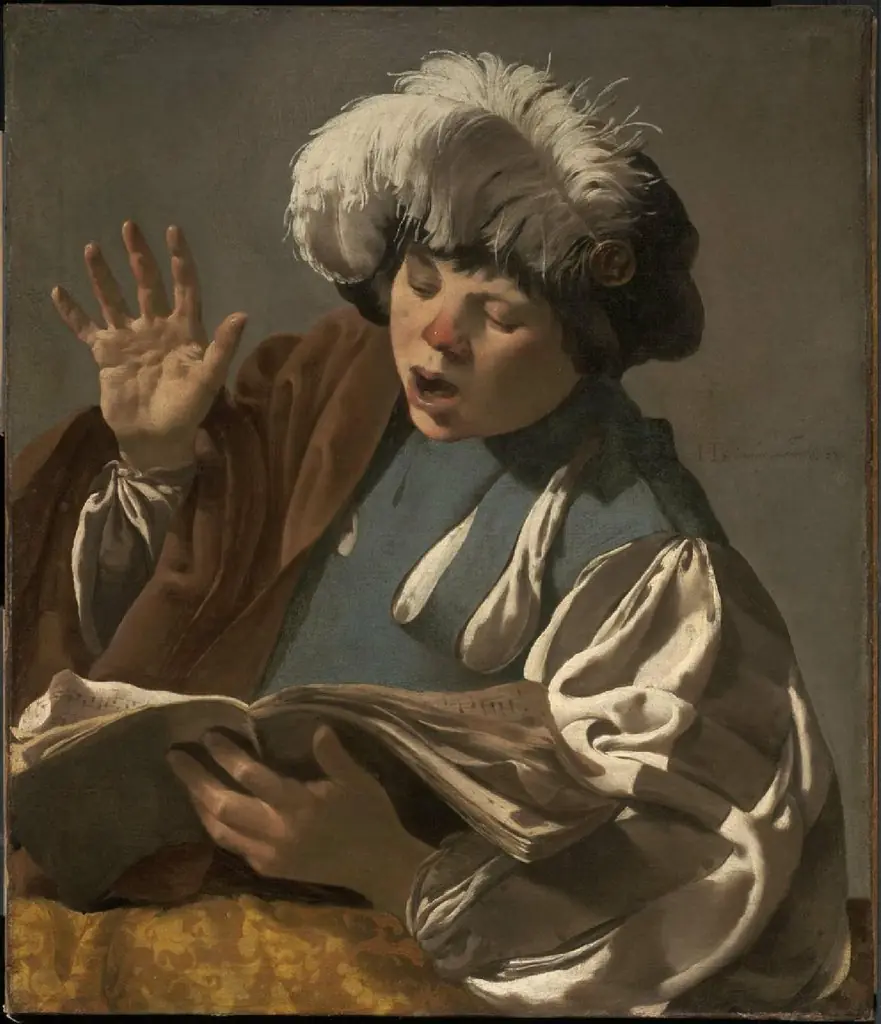
Singing man, possibly a self-portrait
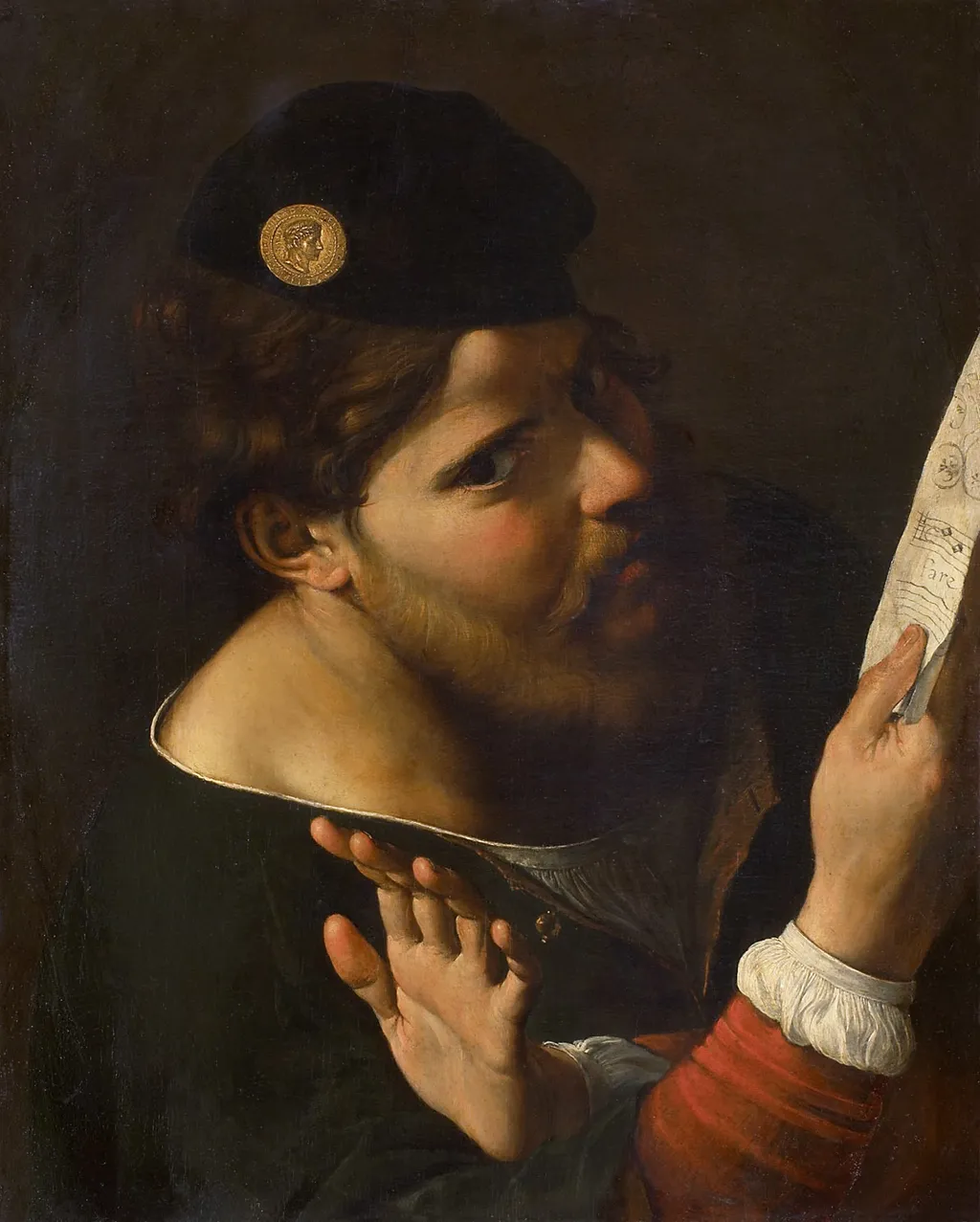
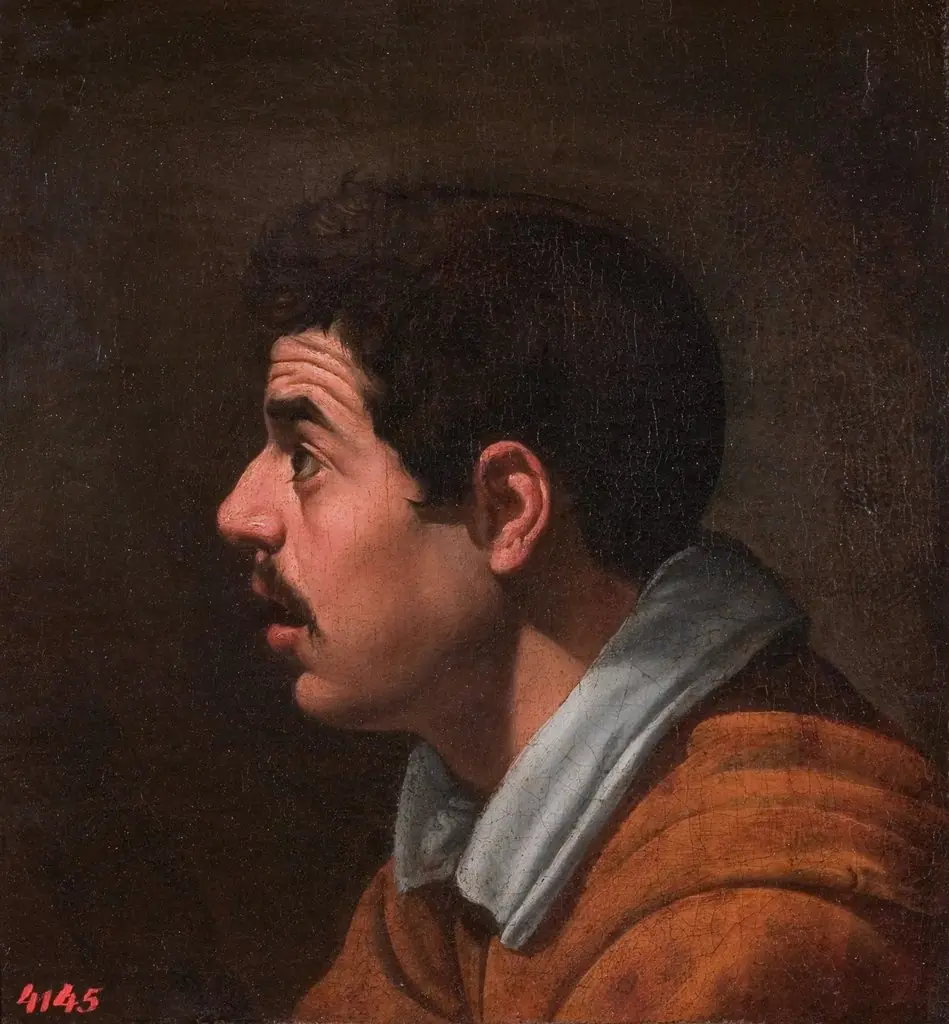
Singing man, possibly a self-portrait is a wood painting by the Early Baroque Italian artist Angelo Caroselli. It dates from 1620 and is held in the collection of the Kunsthistorisches Museum.
About this work
Overview
Around 1620, Italian Baroque painter Angelo Caroselli produced a wooden panel portrait that is generally identified as a self‑portrait of a singing figure. The work belongs to the early Baroque period in Rome and is part of the Kunsthistorisches Museum’s collection.
Subject & Meaning
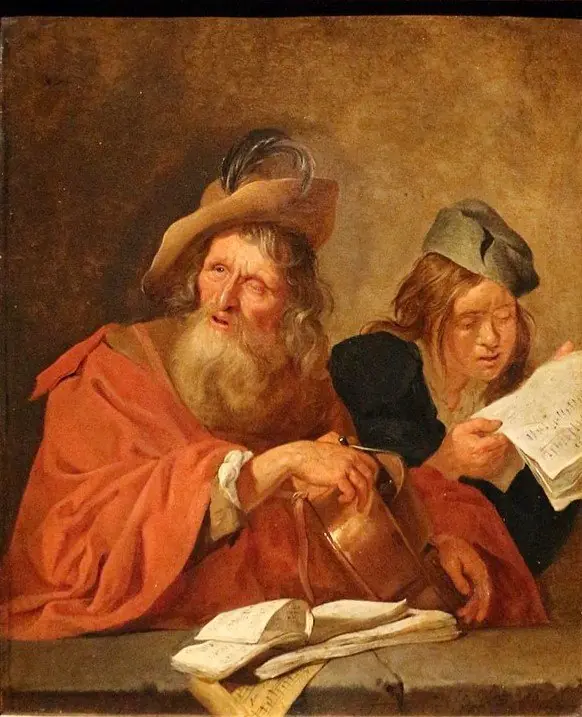
The image shows a man with curly hair, a dark cap and a red‑sleeved shirt, holding a sheet of music in one hand and a shallow bowl in the other. His gaze is directed slightly away, conveying a quiet concentration, while a small medal pinned to his cap adds a personal, perhaps symbolic, touch.
Technique & Style
Caroselli employs a strong chiaroscuro effect, with a dark background that isolates the sitter’s skin tones and the vivid red of his sleeve. The rough texture of his fingers and the three‑dimensional modeling of his face demonstrate the artist’s skill in rendering light and material on wood.
History & Provenance
The panel has remained in the Kunsthistorisches Museum’s holdings since its acquisition, though the exact path it followed from Caroselli’s workshop to the museum is not fully documented. Its identification as a possible self‑portrait stems from stylistic comparison with other known works by the artist.
Context
Caroselli’s oeuvre blends influences from Caravaggio’s dramatic lighting and the genre scenes of the Bamboccianti. Though he is also noted for paintings on witchcraft and religious allegory, this portrait reflects his interest in everyday subjects rendered with theatrical intensity.
Artist & collection
Artist
Angelo Caroselli or Carosèlli (11 February 1585 – 8 April 1652) was an Italian painter of the Baroque period, active mainly in his native Rome.