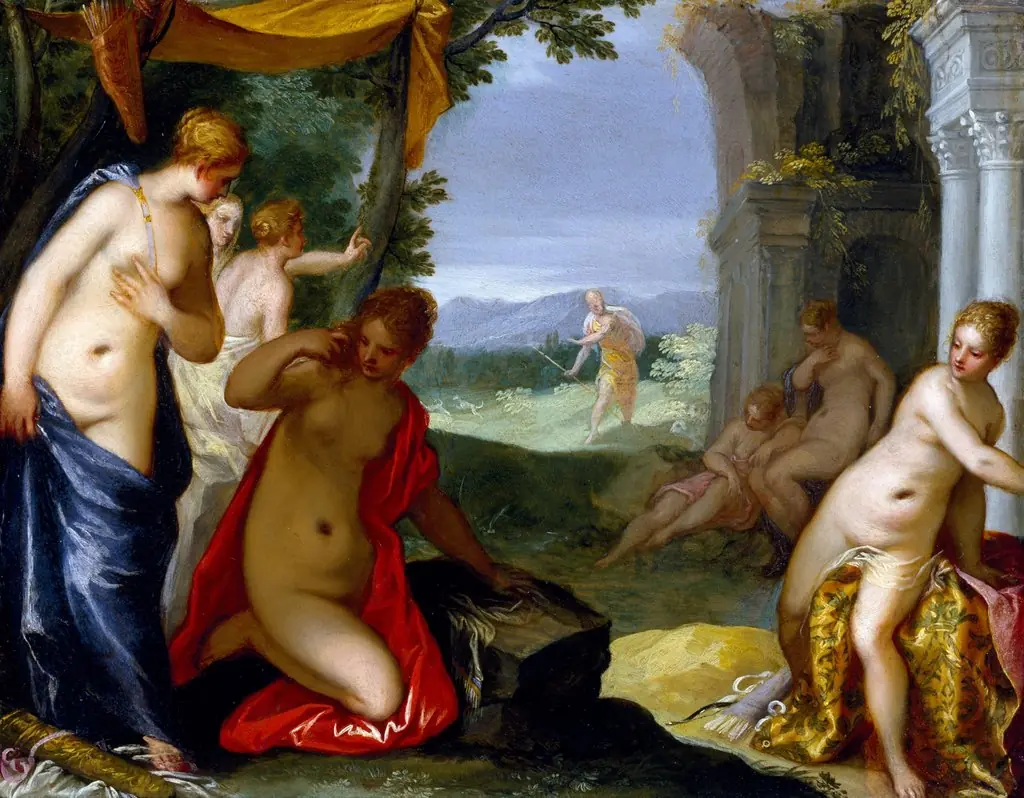
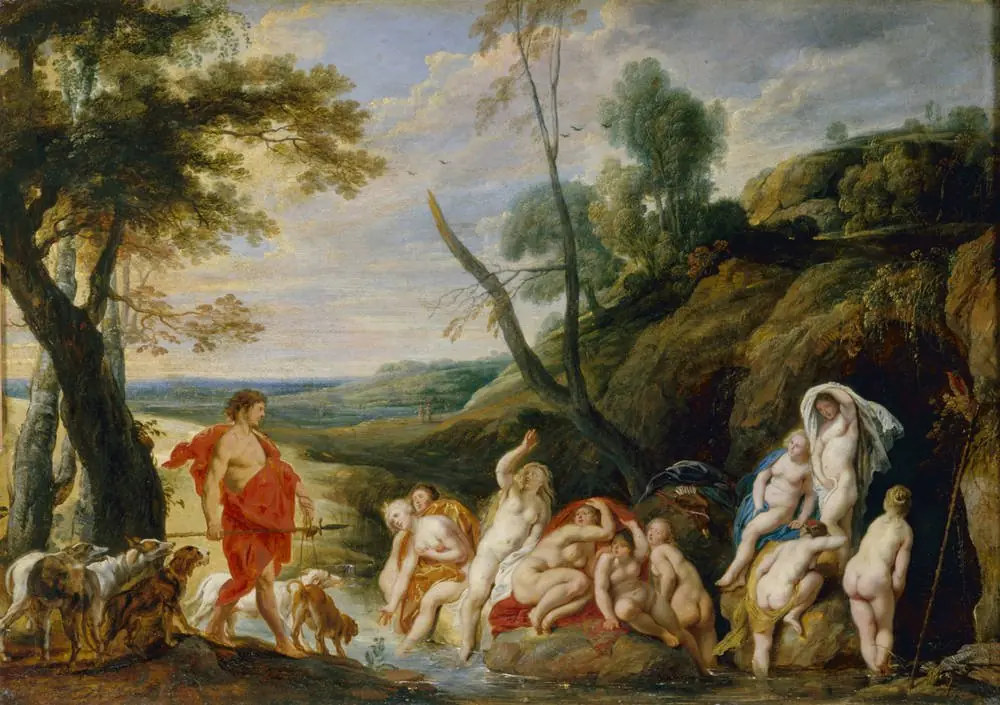
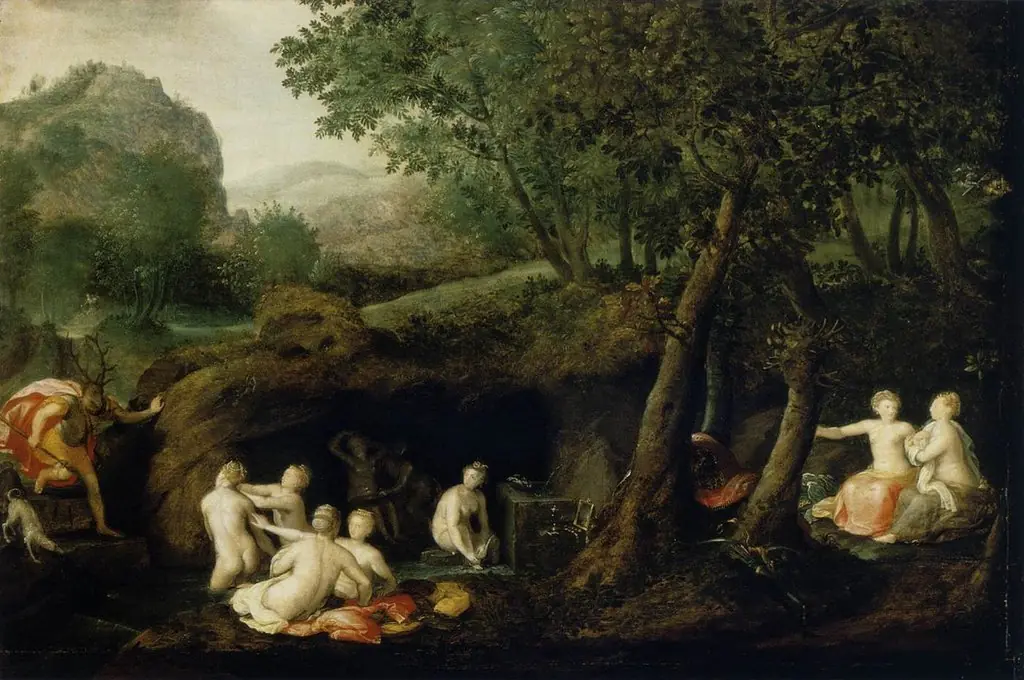
Artwork
Diana la baie pândită de Acteon
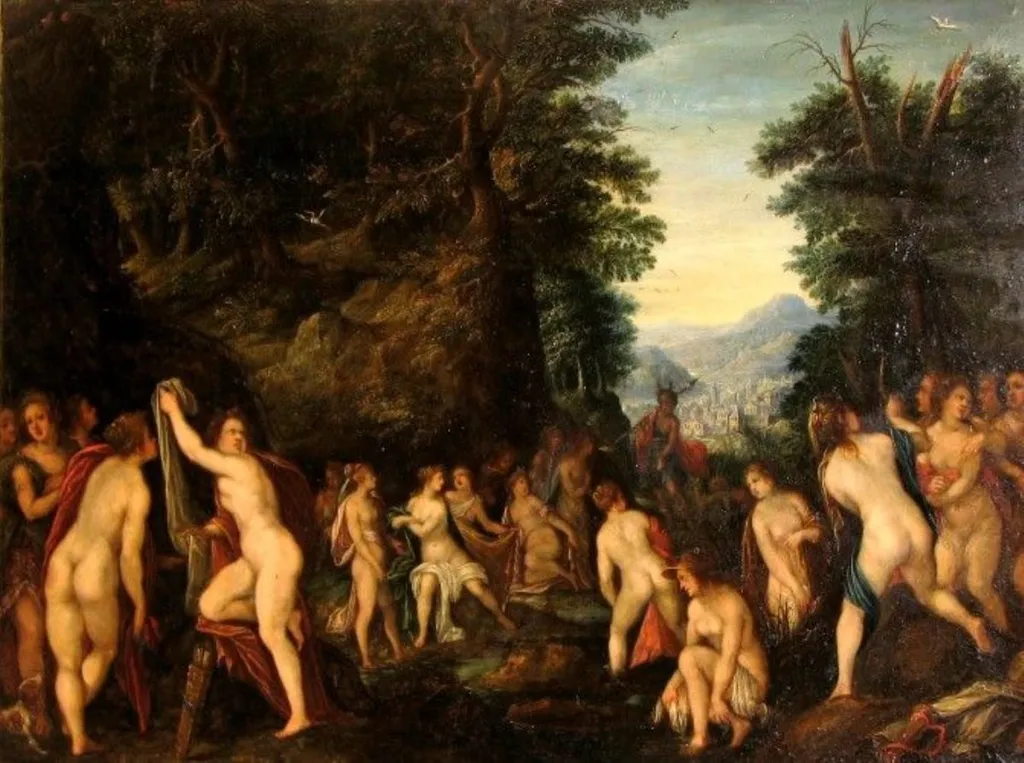
Diana la baie pândită de Acteon is an unspecified painting by the Baroque artist anonim german. It dates from 1650 and is held in the collection of the Brukenthal National Museum. This anonymous German painting, dated around 1650, depicts a moment from classical mythology in a wooded landscape.
About this work
Overview
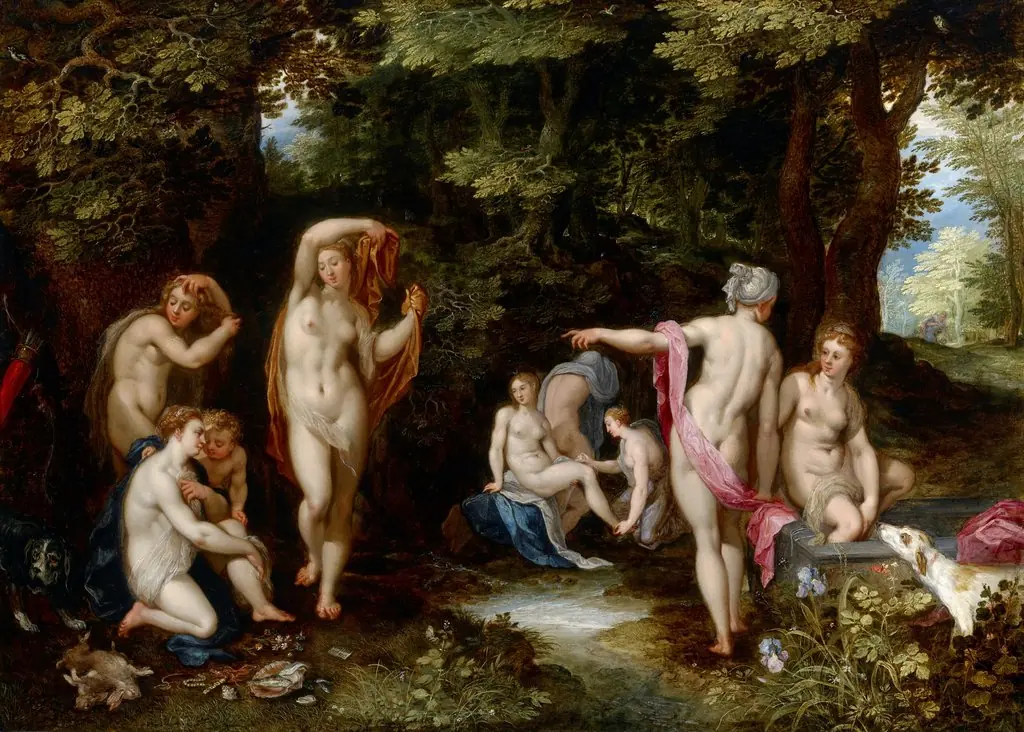
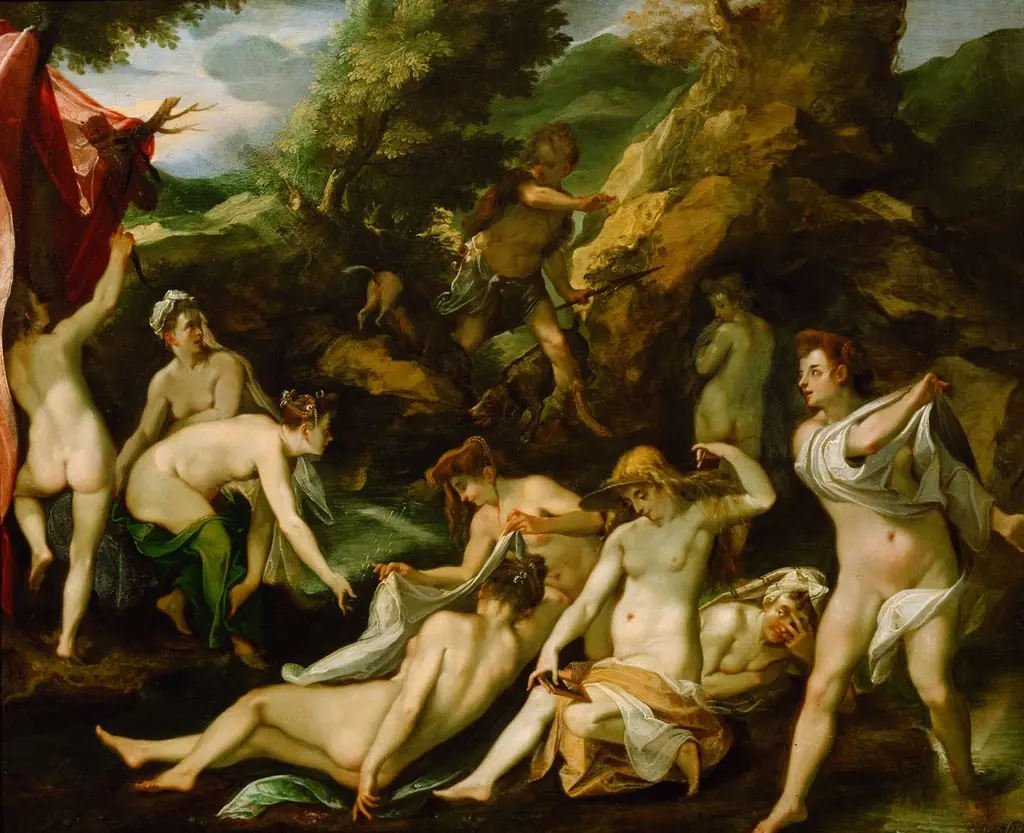
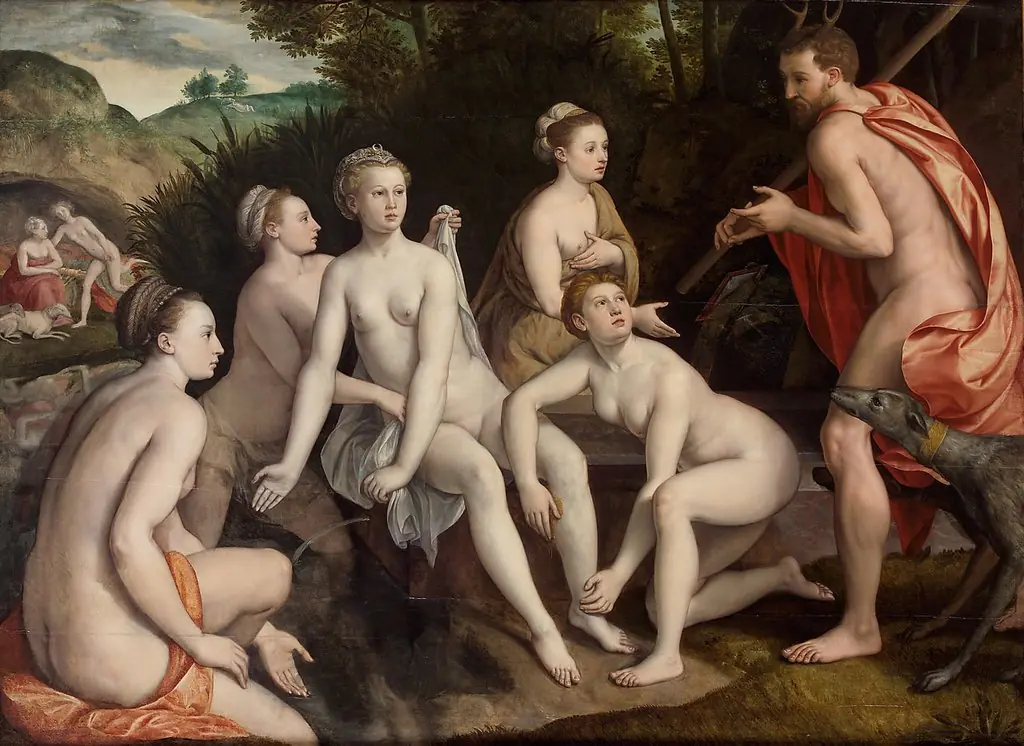
This anonymous German painting, dated around 1650, depicts a moment from classical mythology in a wooded landscape. It captures the goddess Diana and her companions during a private moment of rest, interrupted by the presence of Actaeon, though he is not visually present. The composition emphasizes naturalism and atmospheric depth through careful handling of light and shadow.
Subject & Meaning
The scene illustrates the myth of Diana, goddess of the hunt, bathing with her nymphs when discovered by Actaeon, who was later transformed into a stag as punishment. Though Actaeon is not shown, his unseen presence heightens the tension. The figures’ relaxed postures contrast with the implied consequence of their exposure, reflecting themes of divine retribution and the vulnerability of mortals.
Technique & Style
The artist employs chiaroscuro to model the human forms, using stark contrasts between light and shadow to create volume and spatial depth. Skin tones are rendered with subtle gradations, while the forest backdrop recedes into muted greens and blues. The arrangement of figures suggests a staged, theatrical composition, typical of Northern European mythological scenes of the period.
History & Provenance
The painting’s origin is undocumented, attributed to an anonymous German hand active in the mid-17th century. No records confirm its early ownership or exhibition history. Its survival suggests it may have been part of a private collection, possibly in the Rhineland or southern Germany, where mythological subjects remained popular among aristocratic patrons.
Context
Created during a time when German artists often drew from Italian and Flemish traditions, this work reflects the influence of Baroque mythological painting. While not tied to a specific school, its focus on the nude and natural setting aligns with broader European trends that blended classical narrative with observational realism, particularly in regions less dominated by religious commissions.
Legacy
Though not widely reproduced or studied, the painting contributes to the understanding of how mythological themes were interpreted outside Italy and the Netherlands. Its quiet intensity and technical restraint offer insight into the quieter, more introspective side of Baroque art in German-speaking territories, where overt drama was often tempered by subtlety.
Artist & collection