Artwork
Vedere de iarnă
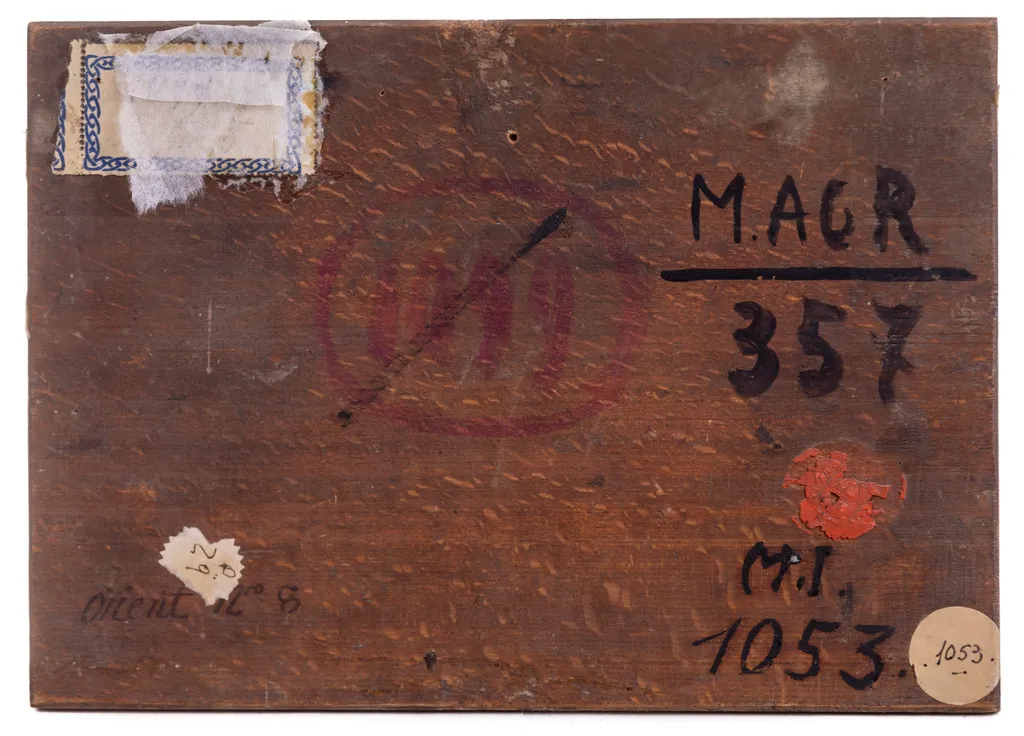
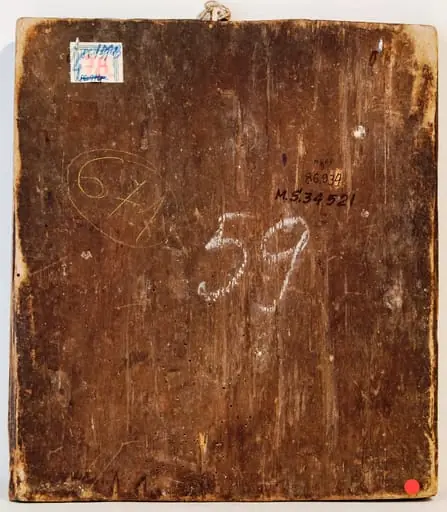
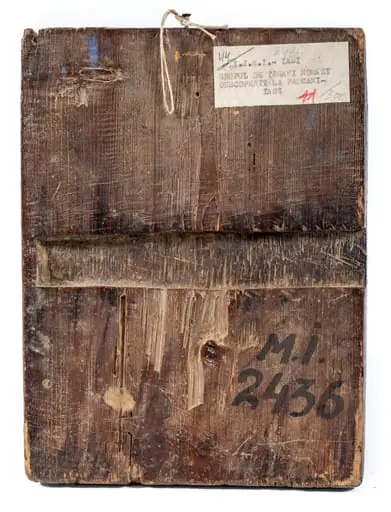
Vedere de iarnă is a print by anonim german. It is held in the collection of the Moldova National Museum Complex. The work consists of a fragment of aged wood bearing a weathered, brownish surface.
About this work
The surface is brownish and cracked, with patches of peeling paint and tape stuck in the top corner.
This looks like a piece of old, worn wood with faded paint and scribbled letters. The surface is brownish and cracked, with patches of peeling paint and tape stuck in the top corner. Numbers like "357" and "1053" are written in black ink, along with the letters "MAGR" and "Orient."
The paint is thin and patchy, suggesting this might once have been part of a larger work. The faded marks and labels hint at its age and how it’s been handled over time.
If you’re curious about old, damaged artworks, check out Museum of Ethnography.
Overview
The work consists of a fragment of aged wood bearing a weathered, brownish surface. Layers of thin, faded paint have cracked and peeled, revealing the underlying material. Scattered across the panel are black ink markings, including numeric strings such as “357” and “1053,” as well as the letters “MAGR” and the word “Orient.” A strip of tape adheres to the upper corner, suggesting later handling.
Subject & Meaning
The visible markings appear to be utilitarian annotations rather than a narrative composition. The numbers and abbreviated text likely functioned as inventory or identification labels, perhaps indicating catalog entries, measurements, or provenance notes. The presence of the term “Orient” hints at a geographic or cultural reference, though the fragment offers no visual cues to elaborate on a specific subject.
Technique & Style
The piece demonstrates a simple, pragmatic application of paint on wood, characteristic of low‑tech labeling or documentation practices. The pigment is applied in a thin, uneven layer that has deteriorated over time, resulting in cracking and flaking. Ink inscriptions were added post‑painting, using a fine-point pen or brush, and exhibit a straightforward, legible hand.
History & Provenance
Evidence of tape and the faded condition indicate the fragment has been stored or displayed for an extended period, likely within an institutional collection. The numeric and textual codes suggest it originated as part of a larger cataloguing system, perhaps within a museum or ethnographic archive. Its exact origin remains undocumented, but the material and markings align with mid‑20th‑century archival practices.
Context
Such painted wooden tags were commonly employed by ethnographic museums to label artifacts, recording acquisition numbers, provenance, or regional classification. The inclusion of “Orient” points to a possible connection with objects from Asian contexts. The fragment therefore reflects the administrative side of museum work, offering insight into historical collection management rather than artistic intent.
Artist & collection
 Tema este redată sub forma "Ospitalității lui Avraam", care se petrece în fața cortului lui Avraam. În prim plan cei trei îngeri așezați la o masă semicirculară. În planul doi, Avraam și Sara îi slujesc. Pe masă se află câte o azimă în fața tinerilor, în centru un potir. Îngerii sunt așezați simetric, unul în stânga, altul în dreapta, celălalt în spatele mesei. Înveșmântați cu chiton și himation, în culori complementare(roșu și bleumarin cei din față, posibil repictare, nuanțe mai deschise). Chipurile copilărești, asemănătoare, privirea melancolică, plete castanii lăsate pe spate. Aripi mari și aureole mărginite cu alb.Îngerii din față cu picioarele goale pe un subpedum. În planul doi Avraam,(în vârstă, cu chiton roșu și himation albastru) și Sara înveșmântată cu maforion roșu stins. Scena se proiectează pe fondul bleu(cerul) completat cu elemente de arhitectură. Tehnica picturală - iluminare treptată, chipurile expresive, proporțiile respectate. Compoziție echilibrată, cromatica dominată de culorile reci, cu nuanțe accentuate de culorile pe bază de ulei. Chenar lat de culoare brun roșcat, care se regăsește și pe spatele icoanei. Această culoare ulterioară a acoperit urmele de flacără de lumânare sau candelă de pe fața icoanei. După înlocuirea "e"-ului final cu "i" ar putea fi atribuită spațiului Moldovei.
 Dejun pe iarbă
 Iisus binecuvântând
 Peisaj de munte
 Peisaj din Făcăeni
 Peisaj la malul Dunării
 Natură statică cu cești de cafea
 Portret în oglindă
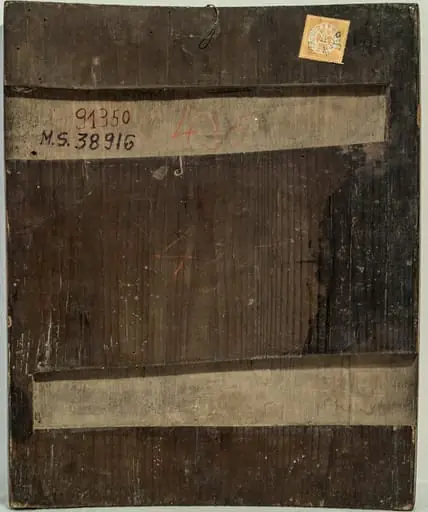 Sfânta Paraschiva încoronată este reprezentată frontal, 3/4, Nimbul trasat cu roșu depășește linia chenarului și partea superioară a coroanei. Tehnica iluminării treptate cu elemente specifice: accentuarea zonei ochilor, tonurile de pământ ale umbrelor. Tunica decorată cu motive fitomorfe ample incizate în stratul de foiță. Mantie închisă în față, cu decor linar și bordură lată cu motive geometrice 3 șiruri de incizii în grund). Pe cap, umeri lăsat pe spate, un maforion de culoare deschisă. În mâna dreaptă, Sfânta ține o cruce mică, rusească, (6 brațe)în stânga un rotulus desfășurat cu inscripția scrisă în limba slavonă: Cred în unul Dumnezeu… alte inscripții: pe chenar de o parte și de alta a nimbului: Chipul Sf. Mucenițe Parascheva Vineri, în colțul stâng al icoanei ѾOН pe nimbul cruciger al lui Iisus, reprezentat ca pe sfântul Keramion. Cromatica: Chenar roșu cu două linii galbene și mărginit cu brun; fond - foița metalică decorată prin incizare, cu chenar multiplu din motive geometrice reteate. Tip Krashnuskha. Pe spate, un timbru al miliței RPR.
 Trupul Mântuitorului Iisus Hristos, fiind coborât de pe cruce, este învelit în țesătura giulgiului alb. Maica Domnului împreună cu Sfinții Iosif din Arimateea, Nicodim și patru femei mironosițe aducătoare de mir țin în brațe trupul Mântuitorului. Compozițional se creează astfel o imagine concentrică de corabie, cu Crucea Răstignirii ca și catarg, corabia prefigurând Biserica. Giulgiul și îmbrățișarea celor apropiați, uniți întru dragoste și suferință, reprezintă axa orizontală perpendiculară pe Cruce. Icoana este o oglindă a Nașterii Mântuitorului-giulgiul fiind vechea înfășare in scutecele alb al Pruncului Iisus. În registrul inferior sunt doi îngeri îngenucheați, care susțin Trupul Mântuitorului, învelit în giulgiu. Lateral, stâng-dreapta, crucii sunt prezente soarele și luna, elemente astrale. Compoziția este echilibrată, simetrică și circulară. Cromatica, specifică autoarei Ana Deji, din Făgăraș, este alcătuită din roșu, albastru bleumari ceruleum, alb și negru. Stilul iconăriței Ana Deji se remarcă prin fondul icoanei cu un cer albastru cu stele albe și roșii, pensulațiiile albe și încadrarea tematicii narativ-iconografice într-un chenar din volutele unei draperii-drapaje.Trăsăturile personajelor sunt fin desenate, tristețea și durerea dezvăluindu-se. În inscripție se dezvăluie Mormântul Lui ICXC Iisus Hristos.