Artwork
Adormirea Maicii Domnului
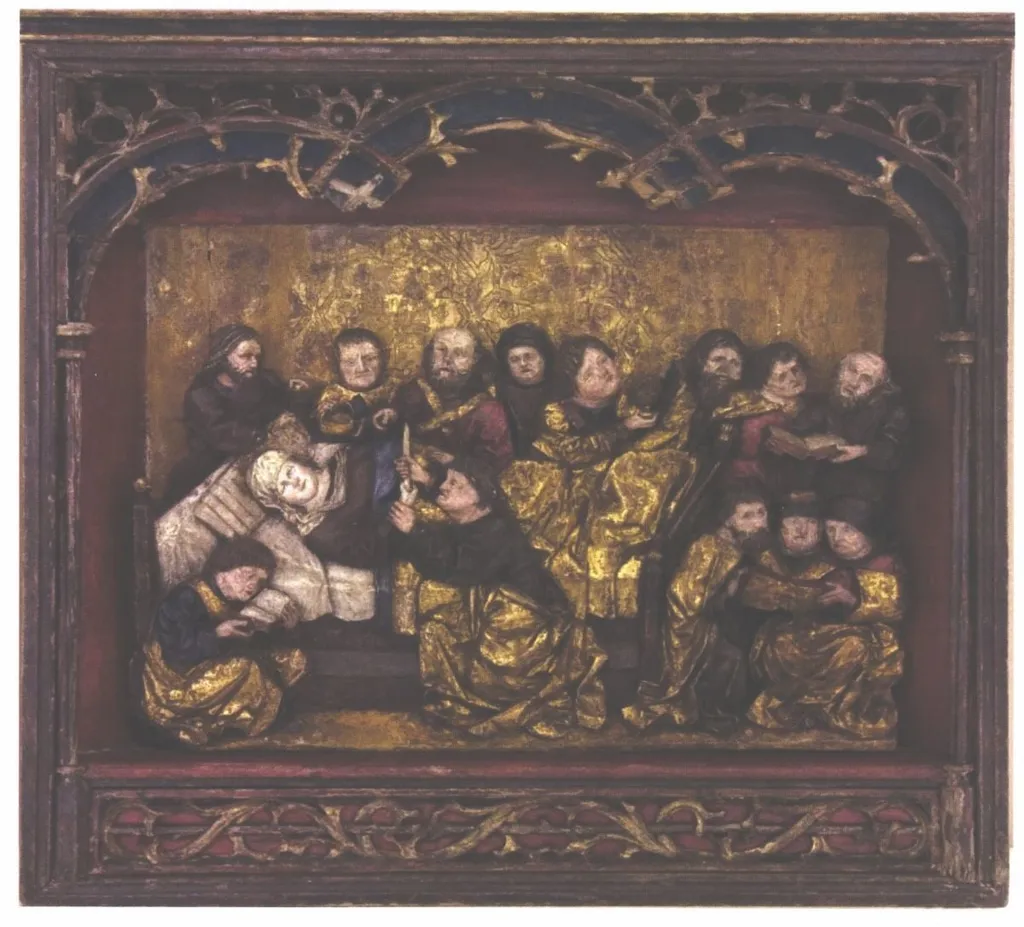
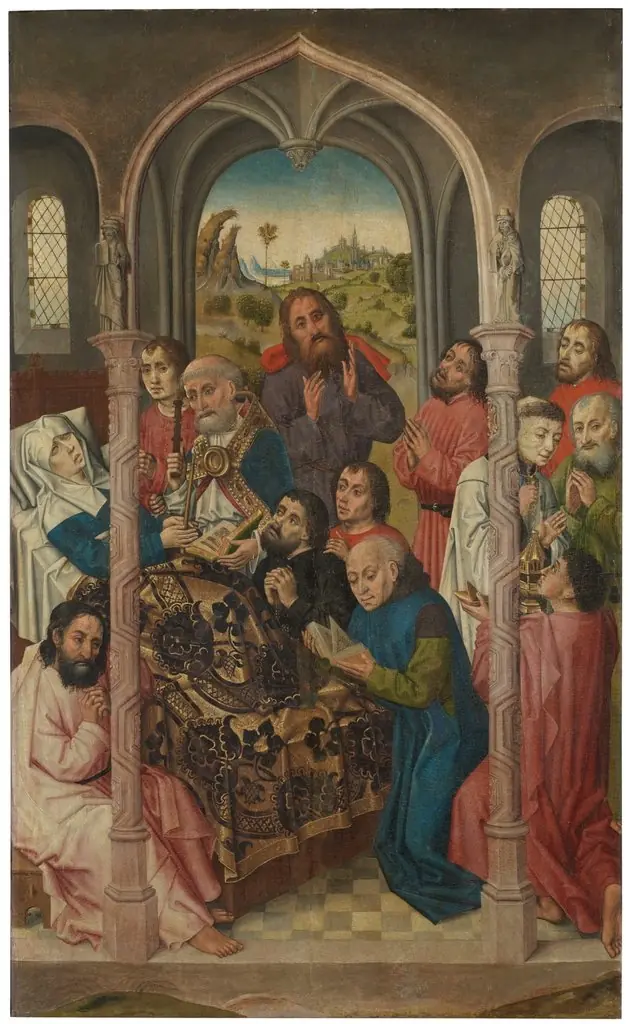
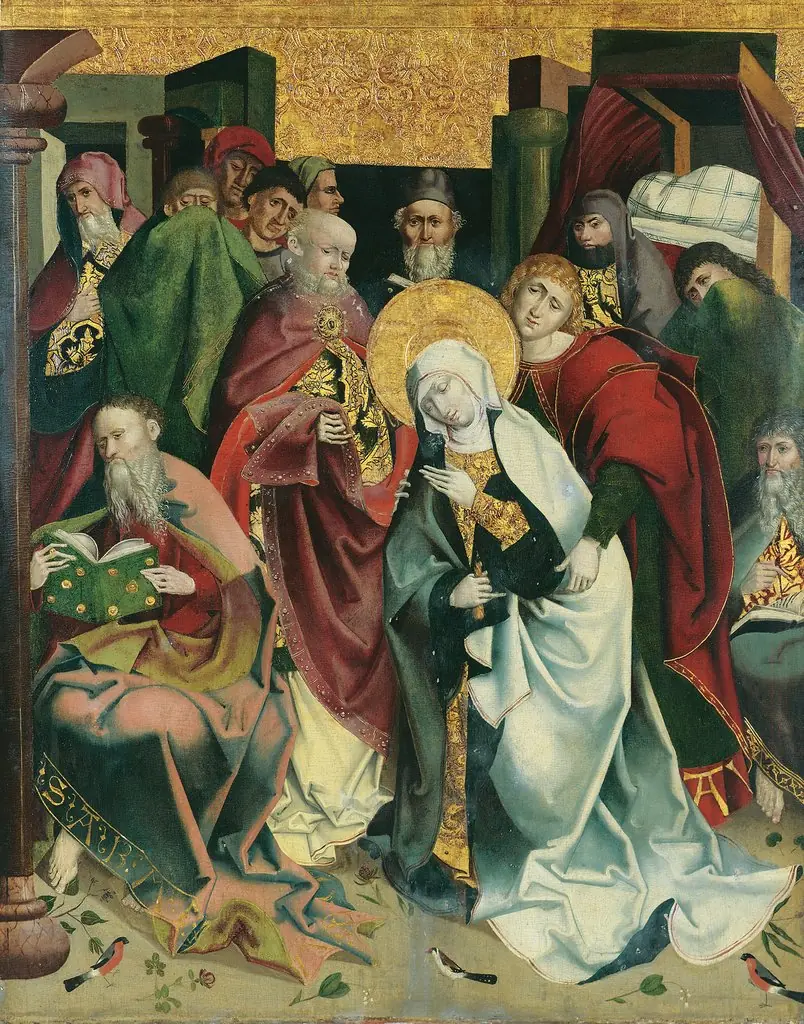
Adormirea Maicii Domnului is an unspecified painting by anonim german. It is held in the collection of the National Museum of Art of Romania.
About this work
Overview
This religious panel depicts the Dormition of the Mother of God, a moment when the Virgin Mary lies in repose surrounded by apostles and saints.
This religious panel depicts the Dormition of the Mother of God, a moment when the Virgin Mary lies in repose surrounded by apostles and saints. The composition centers on her figure, elevated on a gilded throne, bathed in radiant light. Surrounding figures, clad in dark and gold-hued garments, turn toward her in solemn reverence. The dark wooden frame, intricately carved with vine-like motifs, frames the scene without distracting from its spiritual focus.
Subject & Meaning
The scene illustrates the traditional belief in the Virgin Mary’s peaceful passing, followed by her assumption into heaven. Her central placement and luminous aura signify her divine status, while the gathered apostles express grief and awe. The absence of overt sorrow suggests acceptance of her transition, aligning with Eastern Orthodox theology that views her death as a transition to eternal life rather than an end.
Technique & Style
The painting employs a restrained palette dominated by deep tones and metallic gold, enhancing its sacred atmosphere. Light is used not for naturalism but symbolically, emanating from the Virgin to denote holiness. Figures are rendered with elongated proportions and still, frontal poses typical of Byzantine-inspired iconography, prioritizing spiritual presence over individual expression or movement.
History & Provenance
Though exact origins are unrecorded, the style and iconography suggest production in a Byzantine or post-Byzantine workshop, likely in the Balkans or Anatolia during the late medieval period. The carved wooden frame aligns with regional traditions of liturgical object preservation. Its survival indicates it was venerated in a church or private chapel, possibly serving as a focus for devotional practice.
Context
This image belongs to a broader tradition of Eastern Christian iconography that emphasized theological clarity over narrative detail. The Dormition was a widely celebrated feast, and such panels were common in monastic and parish settings. The use of gold and solemn composition reflects the liturgical importance of the event, reinforcing the Virgin’s role as intercessor and model of faithful surrender.
Legacy
The painting preserves a visual language that endured for centuries in Orthodox communities, influencing later icon painters and maintaining continuity with early Christian artistic principles. Its restrained aesthetics and symbolic use of light contrast with Western Renaissance developments, offering a distinct path in sacred art that prioritized contemplation over realism.
Artist & collection

 The Death of the Virgin
 Prohodul lui Iisus
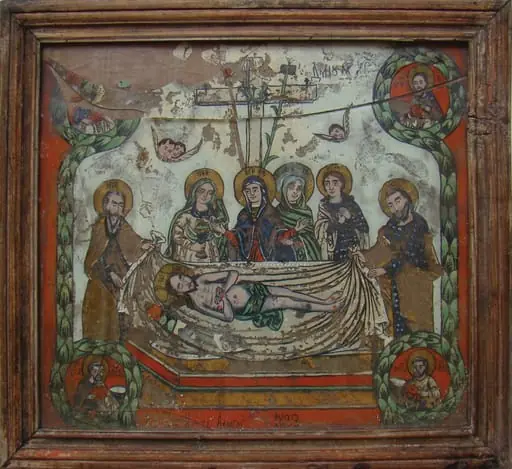 Prohodul lui Iisus
 Saint Hippolyte cures the Leg of the Oxherd Peter
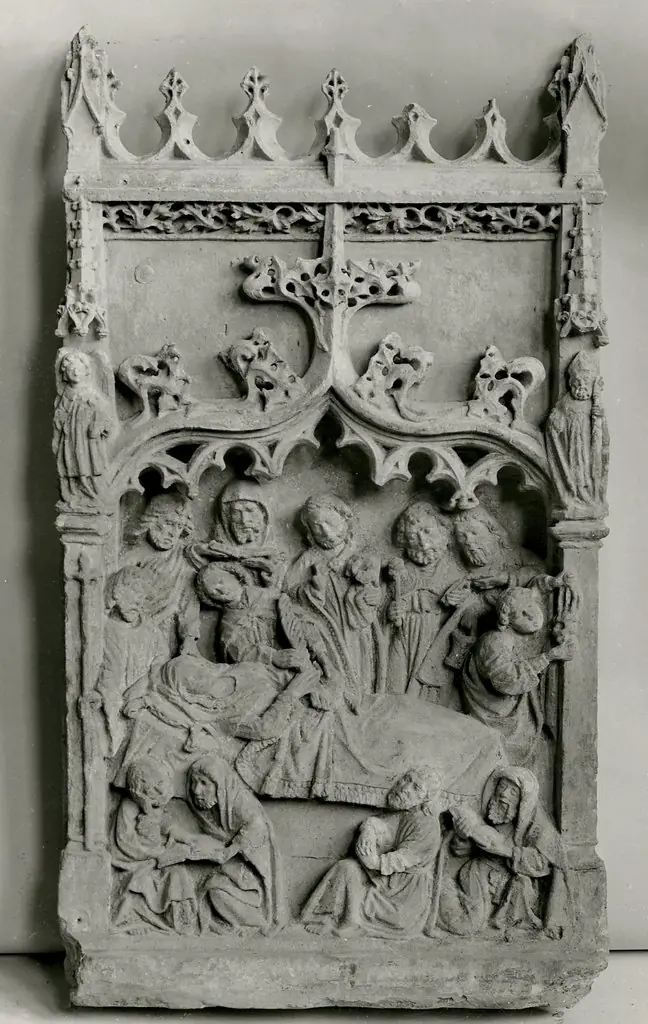 Dormition of the Virgin Relief
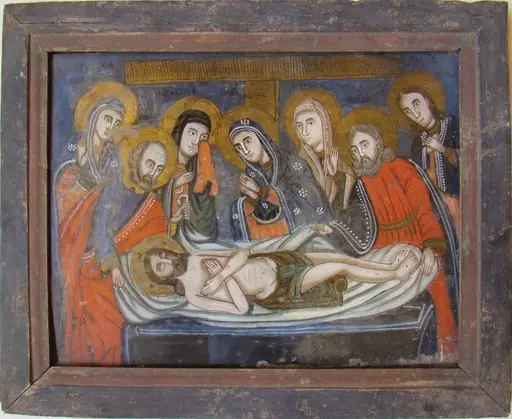 Prohodul lui Iisus
 Tod Mariens
 Shrine of Saint Anne and the Holy Kinship
 Prohodul lui Iisus
 Posthumous Miracles by Saint Vincent
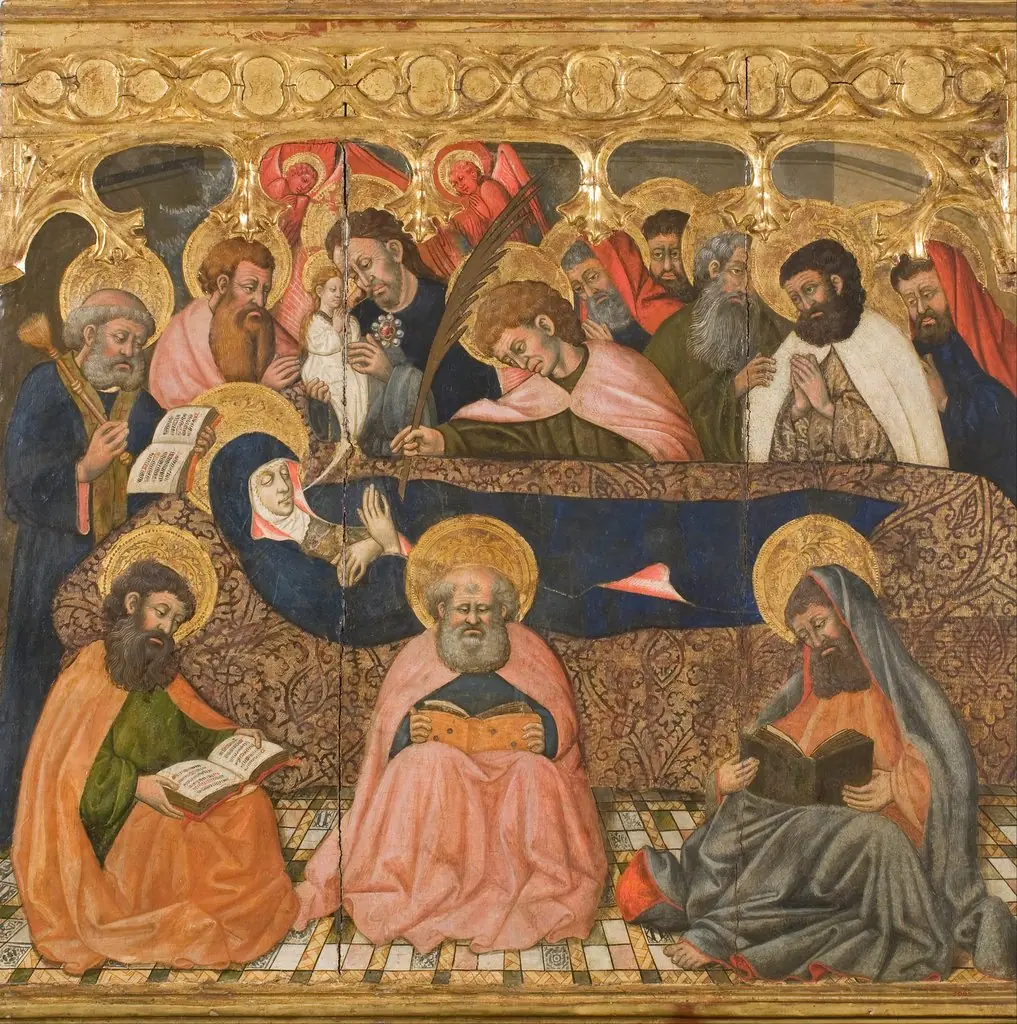 Dormition of the Virgin
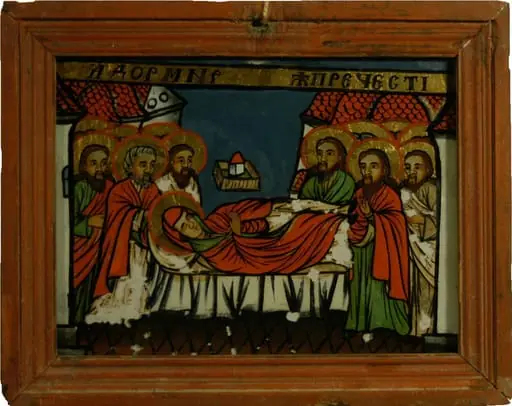 Adormirea Maicii Domnului