Artwork
Vir Dolorum
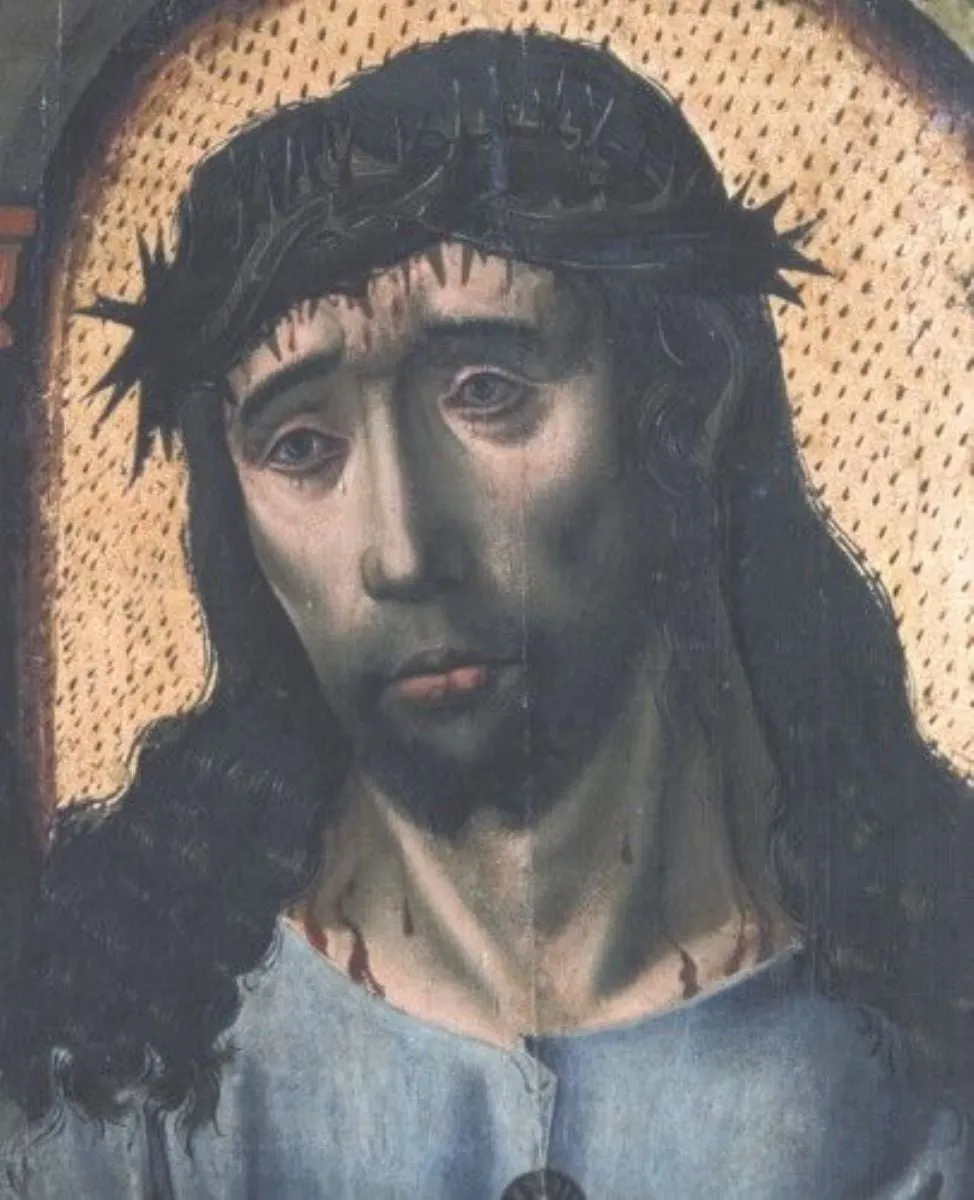
Vir Dolorum is an unspecified painting by anonim hispano-flamand. It dates from 1450 and is held in the collection of the National Museum of Art of Romania.
About this work
Overview
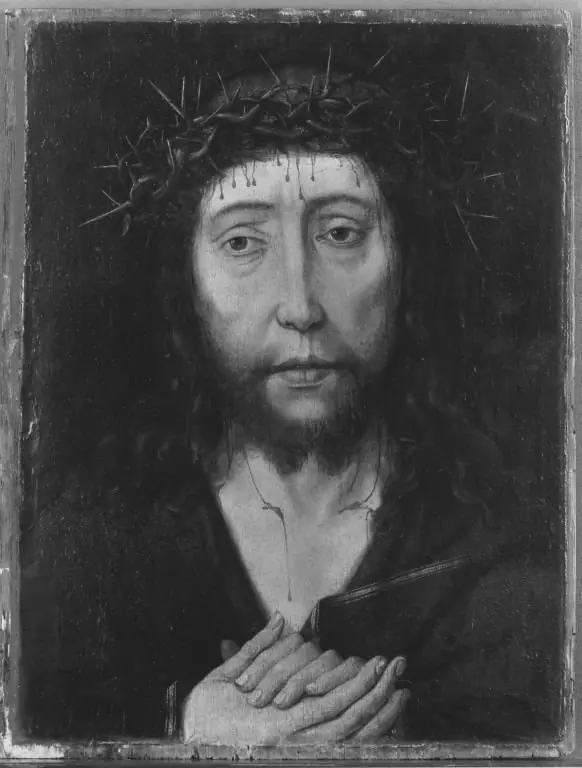
Vir Dolorum is an anonymous Hispano‑Flemish panel dating to around 1450. The work presents a solitary figure rendered in a restrained palette, centered against a luminous yellow field marked by scattered dark specks. The composition focuses on the figure’s upper body, emphasizing his expression and the symbolic elements surrounding him.
Subject & Meaning
The central figure is a man with long hair, crowned with thorns and clothed in a blue robe. His pallid complexion and the blood suggested by the thorns convey suffering, while his downcast gaze evokes contemplation and sorrow. The surrounding halo suggests a sanctified or martyrdom context, inviting reflection on human anguish and redemption.
Technique & Style
The painting employs chiaroscuro to model the face and crown, creating a three‑dimensional effect that draws the eye to the subject’s features. Contrasts between the dark shadows and the bright yellow background enhance the sense of depth, while the limited color range underscores the somber mood.
History & Provenance
Created circa 1450, the work remains unattributed, identified only as the product of an anonymous Hispano‑Flemish hand. Its provenance prior to modern collection is undocumented, and it has been catalogued primarily on the basis of stylistic analysis linking it to mid‑15th‑century Northern European painting traditions.
Artist & collection
Artist
This painter made a single surviving work called *Vir Dolorum*, showing the grieving Christ holding the cross.

 Christ Crowned with Thorns
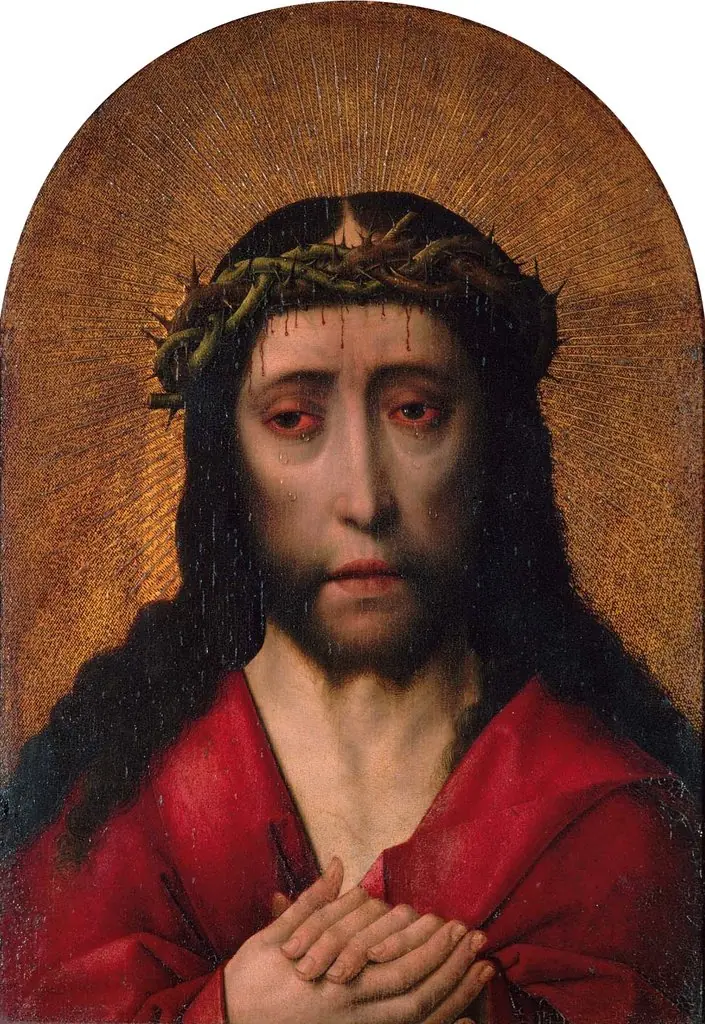 Christ Crowned with Thorns
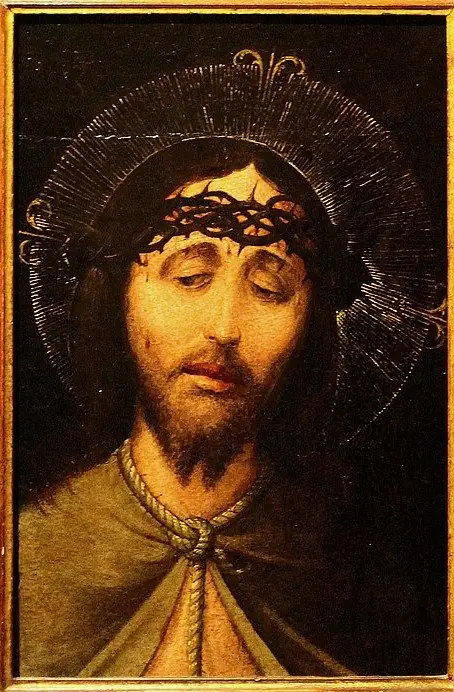 Ecce Homo
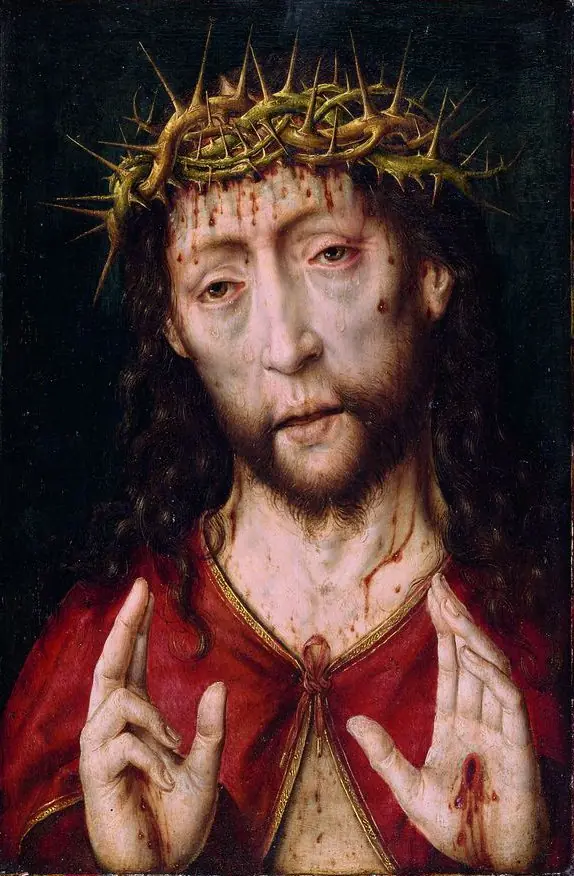 Christ Crowned with Thorns
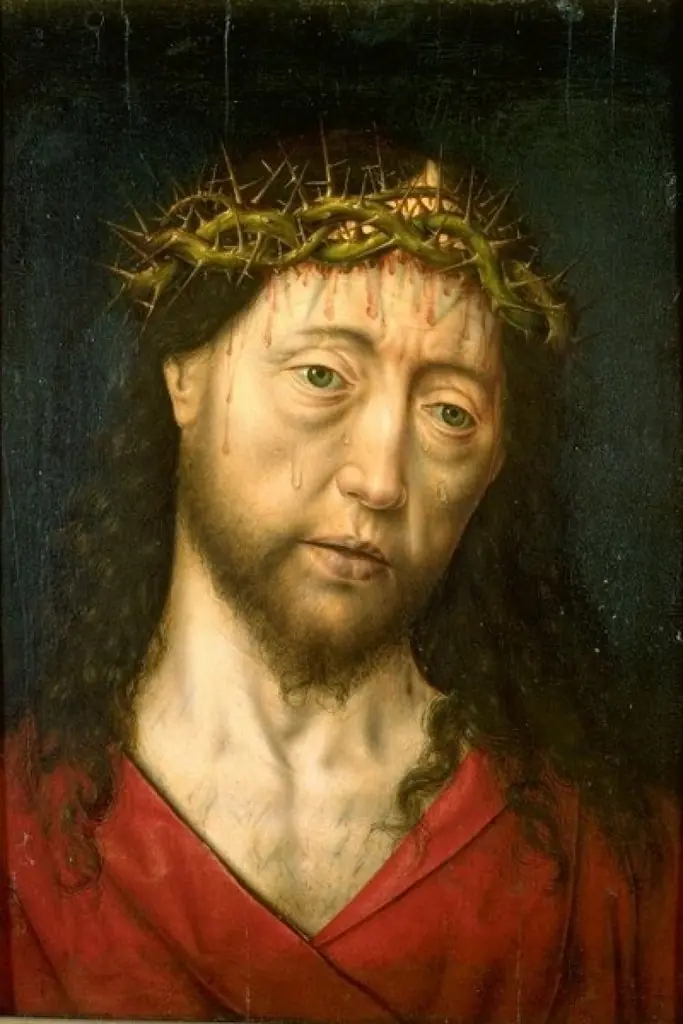 Christus mit der Dornenkrone
 Christ as the Man of Sorrows; Reverse, Skull with date 1534
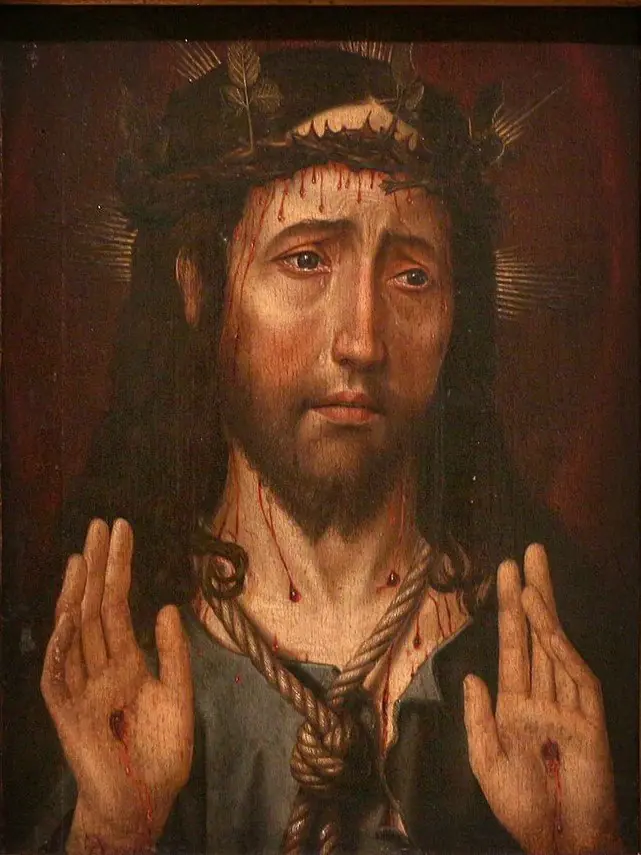 Cristo coroado de espinhos
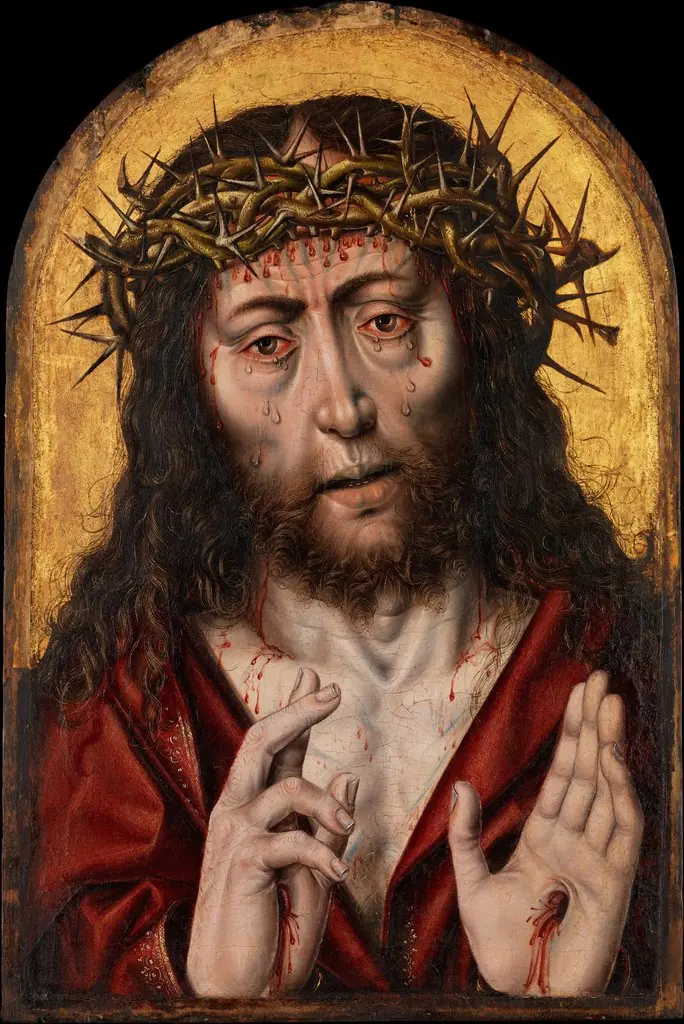 The Man of Sorrows
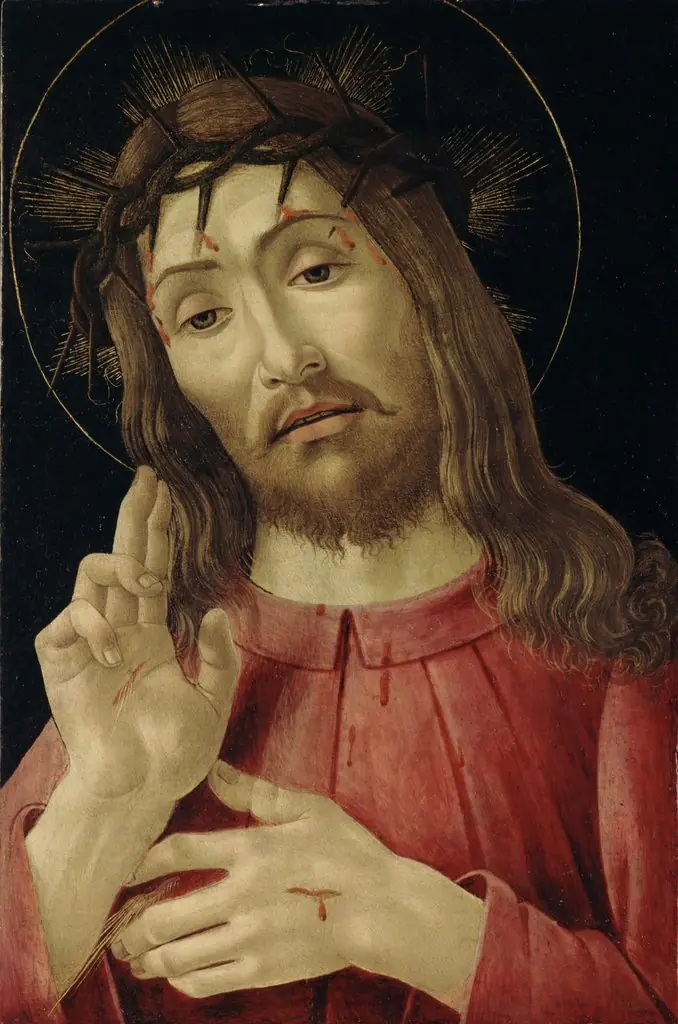 The Resurrected Christ
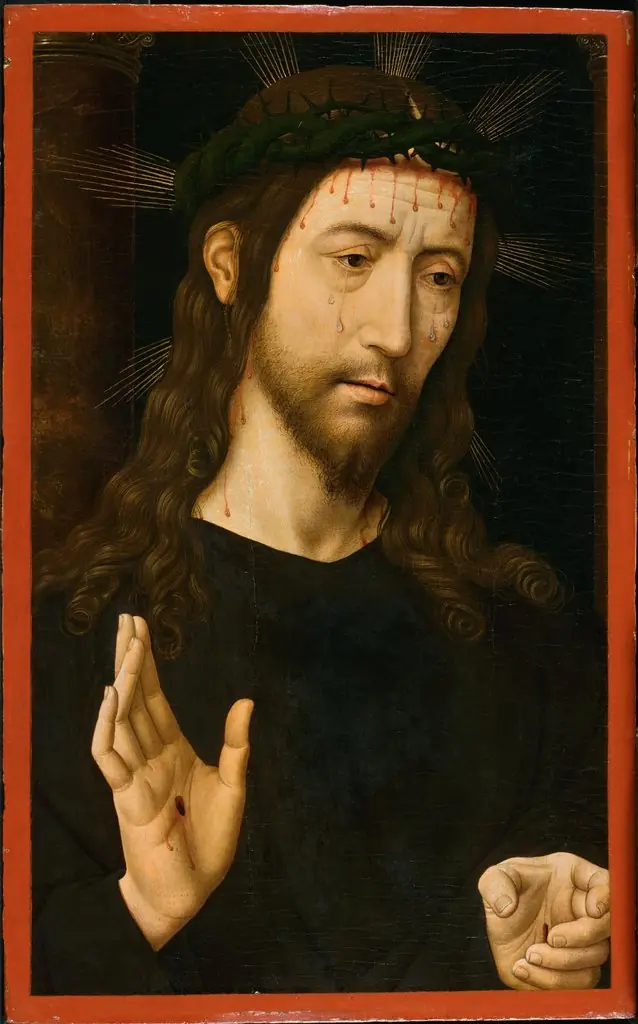 The Man of Sorrows (Christ Crowned with Thorns)
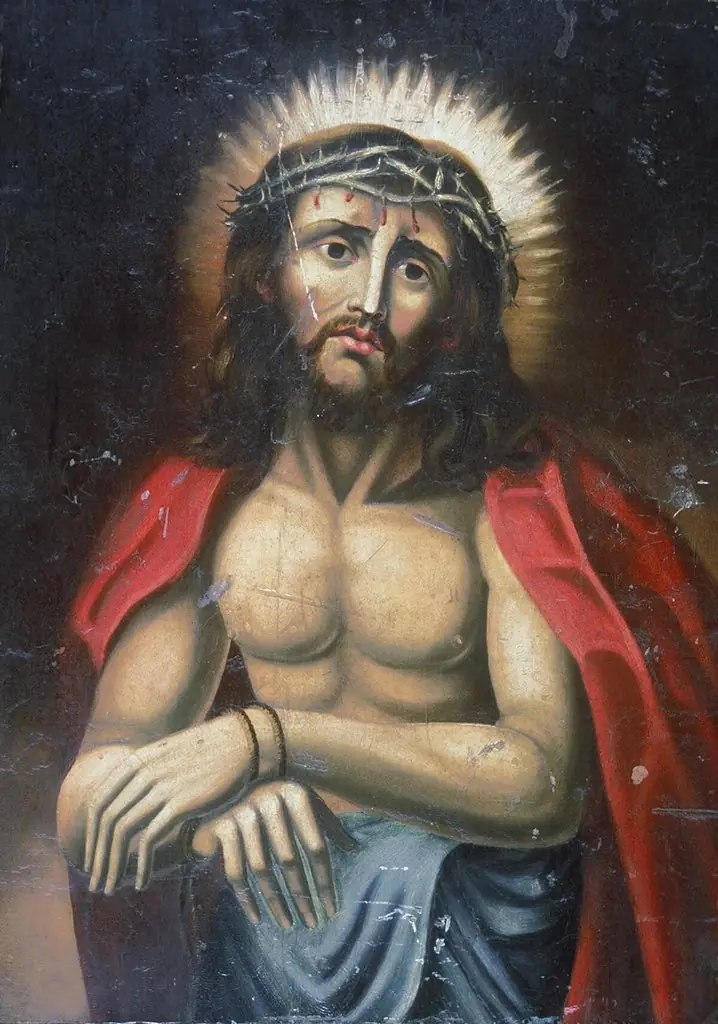 Christ with crown of thorns
 Christ with crown of thorns