Artwork
Bordure pour étoffe, projets de broderies de gilet, XVIIIème siècle
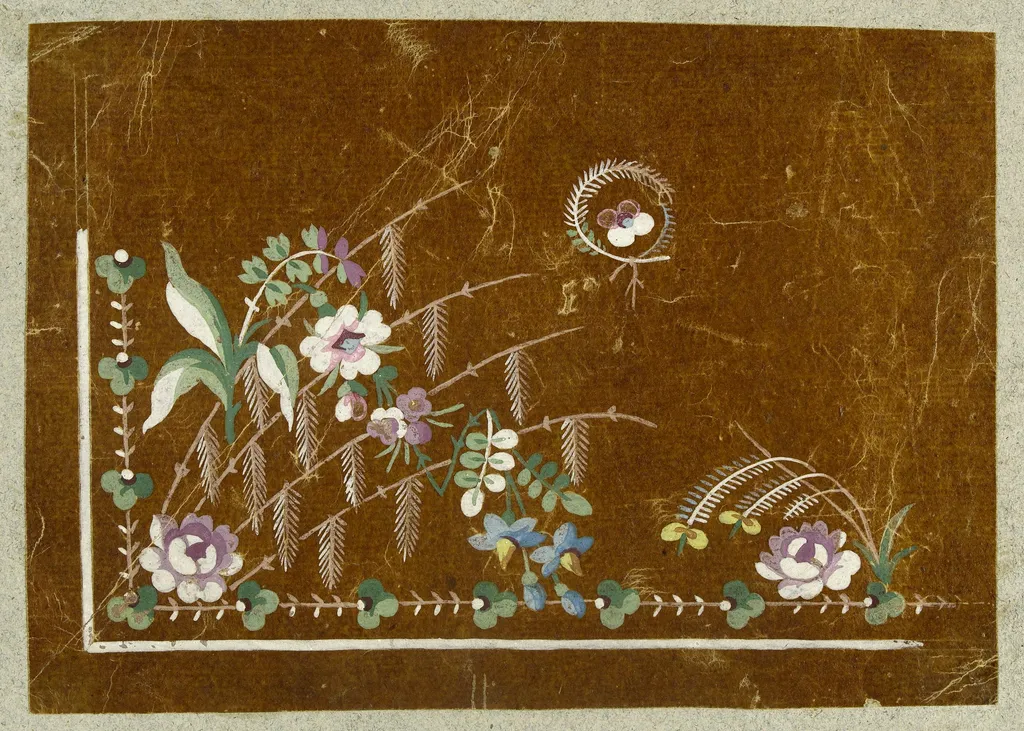
Bordure pour étoffe, projets de broderies de gilet, XVIIIème siècle is a drawing by the Romanticist artist Anonyme. It dates from 1790 and is held in the collection of the Palais Galliera - Musée de la Mode de la Ville de Paris. This 1790s design fragment, attributed to an unknown artist, functions as a pattern guide for embroidery on waistcoats.
About this work
Overview
This 1790s design fragment, attributed to an unknown artist, functions as a pattern guide for embroidery on waistcoats. Executed in ink on paper, it presents a continuous floral border with botanical elements arranged in a rhythmic, repeatable sequence. The brown background enhances the precision of the delicate outlines, suggesting its use by textile artisans rather than as a standalone artwork.
Subject & Meaning
The motif combines stylized flowers—white, purple, and blue—with green foliage and pine sprigs, reflecting a naturalistic yet conventional aesthetic common in late 18th-century French decorative arts. The inclusion of pine, often associated with endurance, subtly elevates the design beyond mere ornament, aligning with period ideals of refined nature in domestic textiles.
Technique & Style
Rendered in fine ink lines, each plant form is carefully delineated with minimal shading. Tiny dots within petals suggest stitch placement, while the uniform spacing of elements indicates a template for mechanical reproduction. The absence of color washes and the emphasis on contour reflect its practical purpose: a working draft for embroiderers to translate into thread.
History & Provenance
The drawing resides in the Museum of Ethnography, where it is cataloged as part of a collection of textile design sources. Its survival suggests it was preserved not as art but as a functional artifact, possibly from a workshop or private atelier. No documented ownership prior to its museum acquisition is known.
Context
In the 1790s, embroidered waistcoats were markers of social distinction among urban elites. Designers produced pattern sheets like this one to guide skilled needleworkers, who translated them into luxurious garments. This piece exemplifies the intersection of artisanal craft and emerging commercial textile production in pre-revolutionary France.
Legacy
Though not signed or widely circulated, such patterns inform modern understanding of how decorative motifs were systematized before industrial printing. They reveal the quiet labor behind elite fashion and preserve the visual vocabulary of pre-industrial textile design, offering insight into the craftsmanship that sustained domestic aesthetics of the era.
Artist & collection
Artist
A French designer from the 1700s made delicate flower drawings meant to decorate vests.
Museum
Palais Galliera - Musée de la Mode de la Ville de Paris
Continue through works from the same source collection.
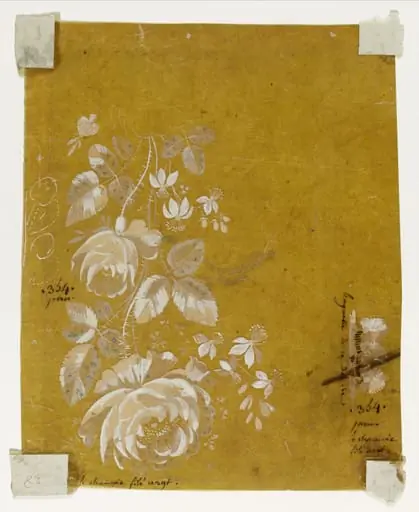 Bouquet de roses blanches pour étoffe, projets de broderies de gilet, XVIIIème siècle
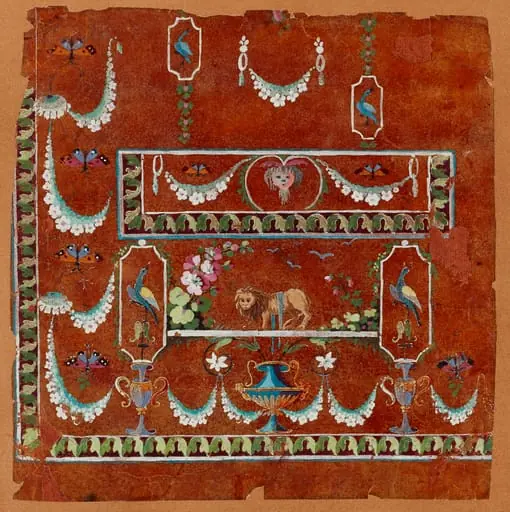 Gilet décor à grotesques, projets de broderies de gilet, XVIIIeme siècle
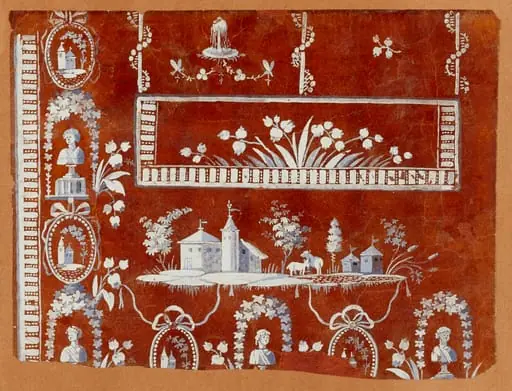 Gilet décor architectures rurales, projets de broderies de gilet, XVIIIème siècle
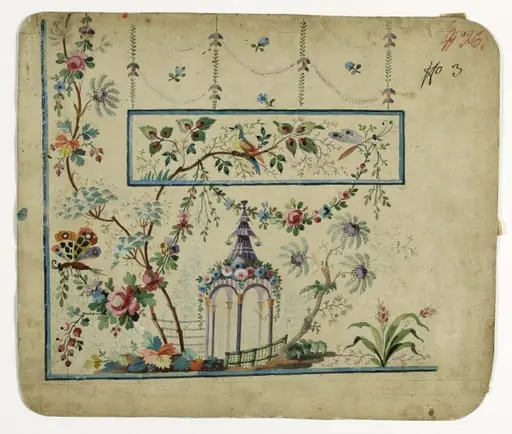 Gilet décor pagode, projets de broderies de gilet, XVIIIème siècle
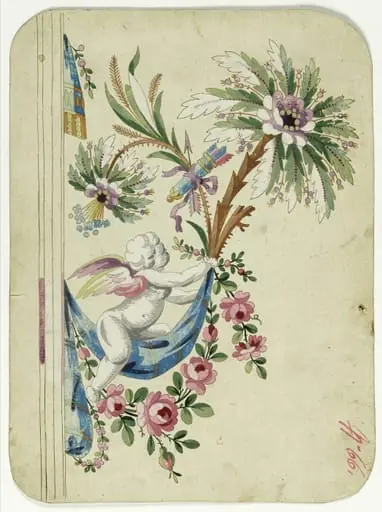 Décor de putti sur palmier, projets de broderies de gilet, XVIIIème siècle
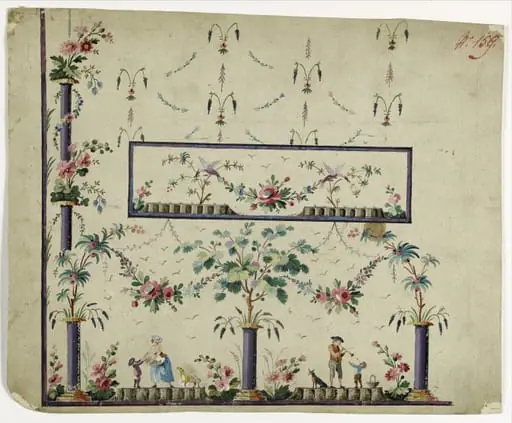 Gilet décor couple avec enfants, projets de broderies de gilet, XVIIIème siècle
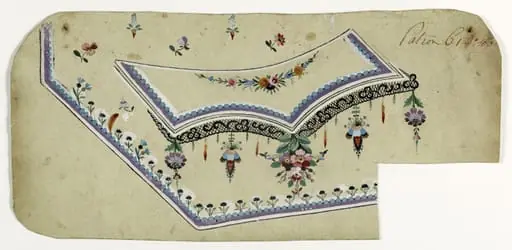 Gilet à la dentelle noire, projets de broderies de gilet, XVIIIème siècle
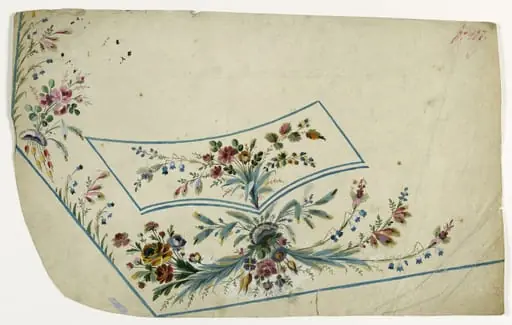 Gilet aux feuilles bleu-gris, projets de broderies de gilet, XVIIIème siècle
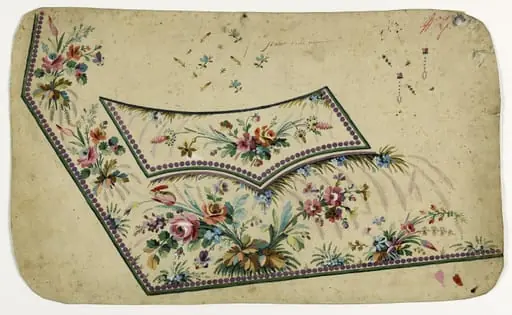 Gilet fleurs et perles mauves, projets de broderies de gilet, XVIIIème siècle
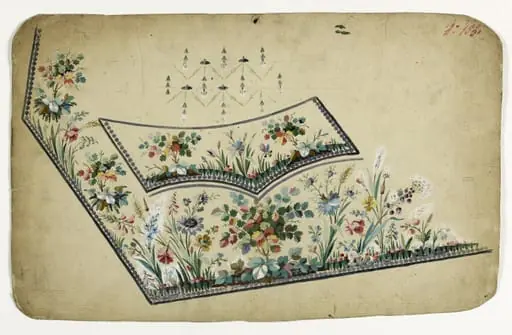 Gilet au buisson de feuilles colorées, projets de broderies de gilet, XVIIIème siècle
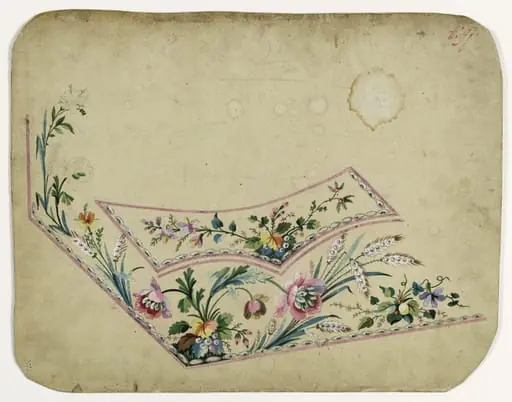 Gilet à la bordure rose, projets de broderies de gilet, XVIIIème siècle
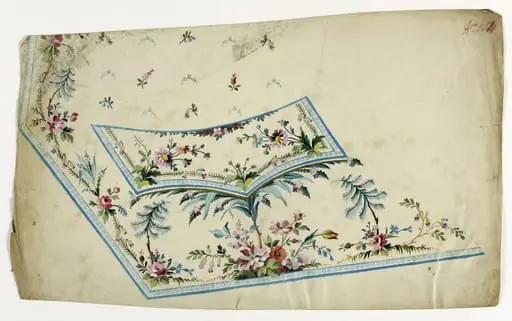 Gilet aux perles bleues, projets de broderies de gilet, XVIIIème siècle
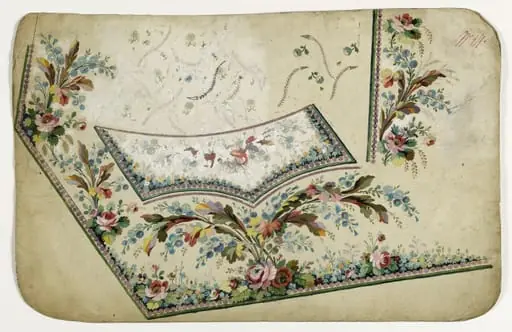 Gilet fleurs et feuilles multicolores, projets de broderies de gilet, XVIIIème siècle
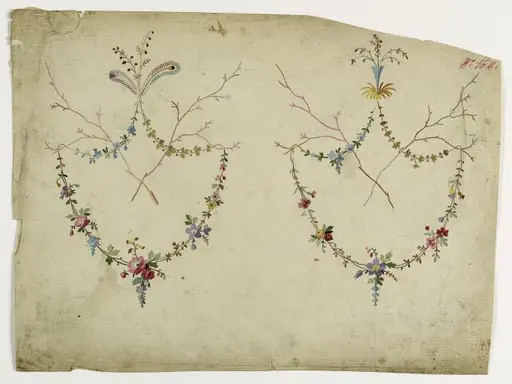 Guirlandes de fleurs des bois, projets de broderies de gilet, XVIIIème siècle