Artwork
Gilet à la bordure rose, projets de broderies de gilet, XVIIIème siècle
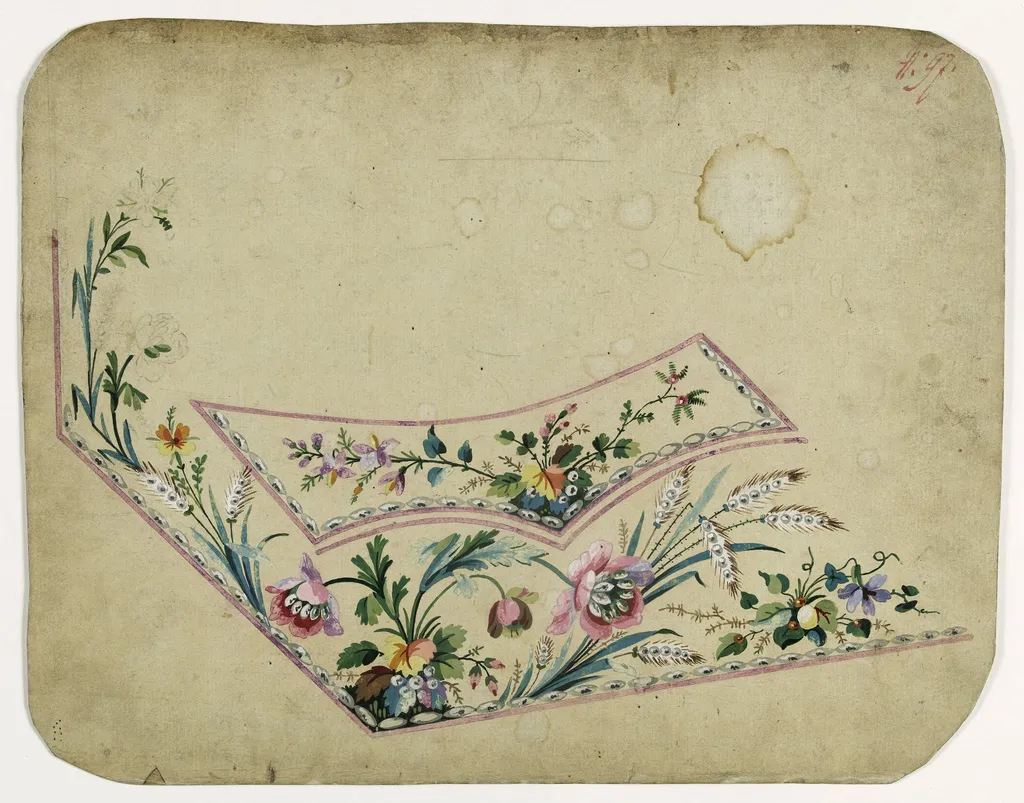
Gilet à la bordure rose, projets de broderies de gilet, XVIIIème siècle is a drawing by Anonyme. It dates from 1750 and is held in the collection of the Palais Galliera - Musée de la Mode de la Ville de Paris.
About this work
Overview
This eighteenth‑century paper sketch, attributed to an unknown artist and dated around 1750, functions as a design proposal for a men’s vest. The drawing is part of the Museum of Ethnography’s collection and presents a decorative scheme intended for embroidery, featuring a central motif surrounded by a pink‑edged frame.
Subject & Meaning
The composition arranges a lively assortment of stylised blossoms, foliage and diminutive birds within a curving border that narrows toward the centre. The bright pinks, blues and yellows of the flowers contrast with the softer background, evoking a cultivated garden scene that would have signified elegance and refinement when rendered in textile.
Technique & Style
Executed in fine pen and wash on aged yellow paper, the drawing outlines the intended stitch work rather than depicting actual thread. The flowing lines and delicate shading suggest a guide for needleworkers, while the ornamental border, with its inward‑curving arc, reflects the Rococo taste for asymmetrical, naturalistic decoration.
History & Provenance
Created circa 1750, the design remained in paper form until it entered the Museum of Ethnography’s holdings, where it serves as a documentary example of eighteenth‑century French garment ornamentation. Its anonymous authorship is typical of workshop patterns that were circulated among tailors and embroiderers.
Context
During the mid‑1700s, men’s fashion increasingly incorporated elaborate embroidered vests as status symbols. Pattern books such as this one provided artisans with ready‑made motifs, merging the period’s fascination with botanical illustration and the desire for personalized, luxurious dress.
Artist & collection
Artist
A French designer from the 1700s made delicate flower drawings meant to decorate vests.
Museum
Palais Galliera - Musée de la Mode de la Ville de Paris
Continue through works from the same source collection.
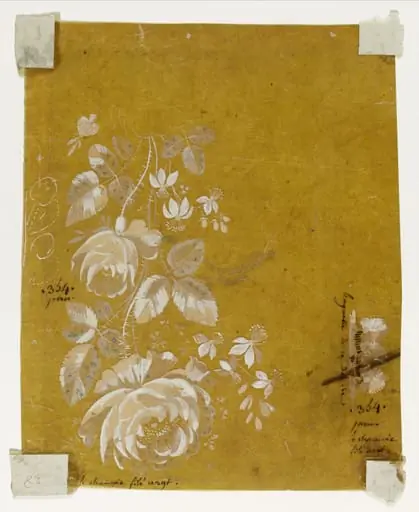 Bouquet de roses blanches pour étoffe, projets de broderies de gilet, XVIIIème siècle
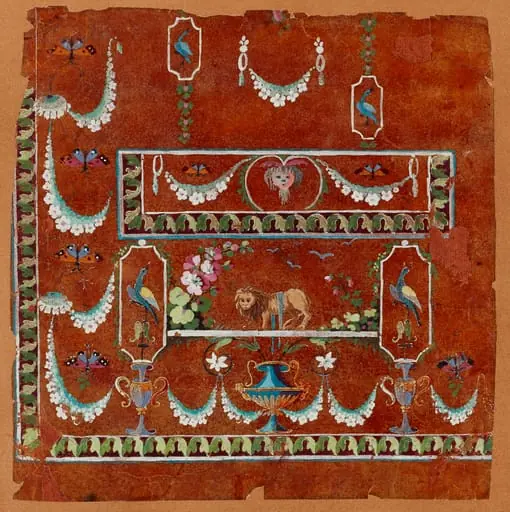 Gilet décor à grotesques, projets de broderies de gilet, XVIIIeme siècle
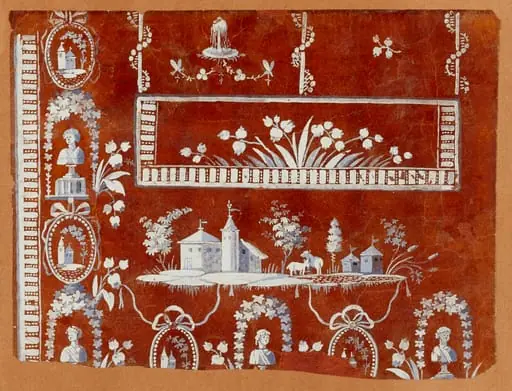 Gilet décor architectures rurales, projets de broderies de gilet, XVIIIème siècle
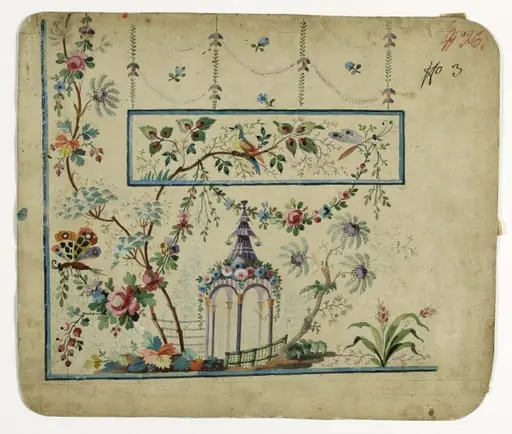 Gilet décor pagode, projets de broderies de gilet, XVIIIème siècle
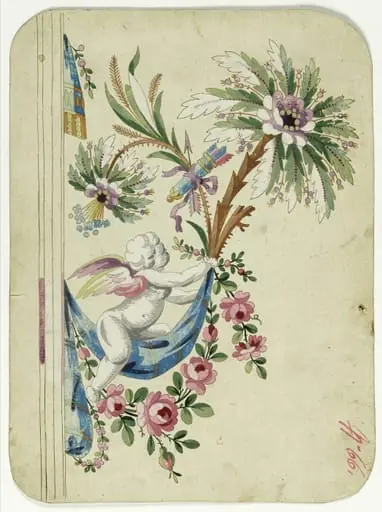 Décor de putti sur palmier, projets de broderies de gilet, XVIIIème siècle
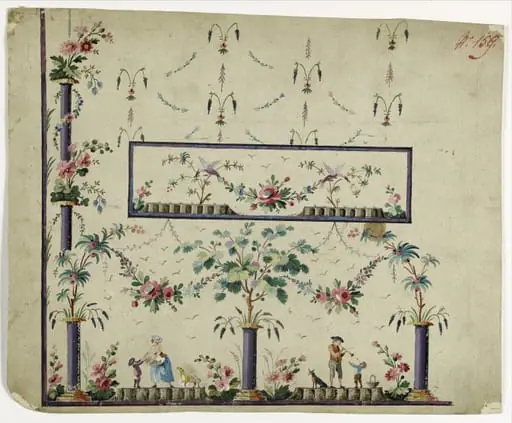 Gilet décor couple avec enfants, projets de broderies de gilet, XVIIIème siècle
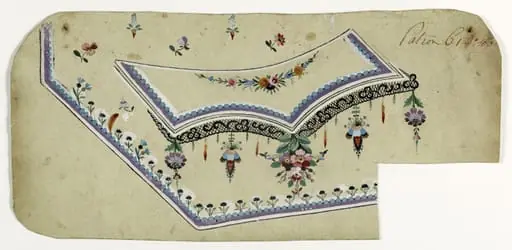 Gilet à la dentelle noire, projets de broderies de gilet, XVIIIème siècle
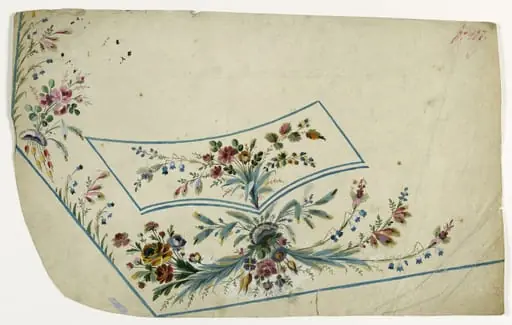 Gilet aux feuilles bleu-gris, projets de broderies de gilet, XVIIIème siècle
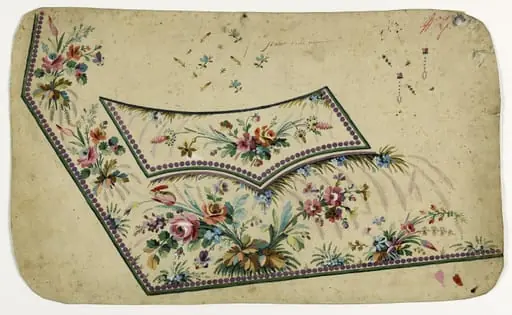 Gilet fleurs et perles mauves, projets de broderies de gilet, XVIIIème siècle
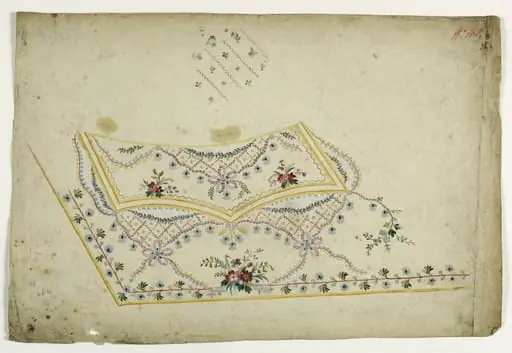 Gilet bouquets et noeuds, projets de broderies de gilet, XVIIIème siècle
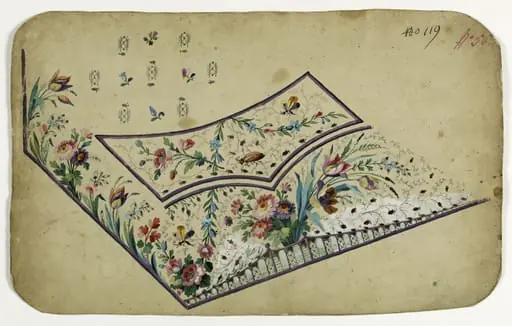 Gilet fleurs, papillons et scarabée, projets de broderies de gilet, XVIIIème siècle
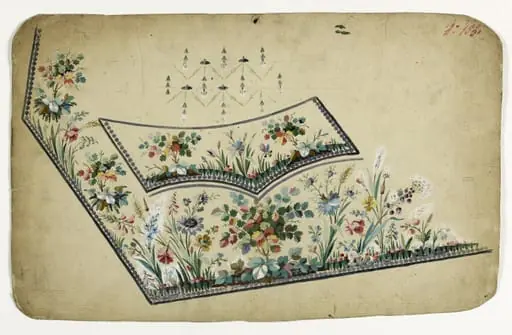 Gilet au buisson de feuilles colorées, projets de broderies de gilet, XVIIIème siècle
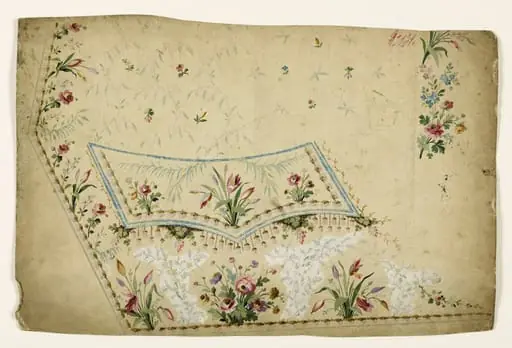 Composition avec bouquets de fleurs, frises de grappes et clochettes stylisées, projets de broderies de gilet, XVIIIème siècle
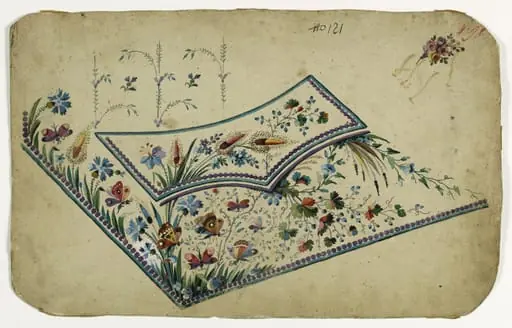 Gilet aux papillons multicolores, projets de broderies de gilet, XVIIIème siècle