Artwork
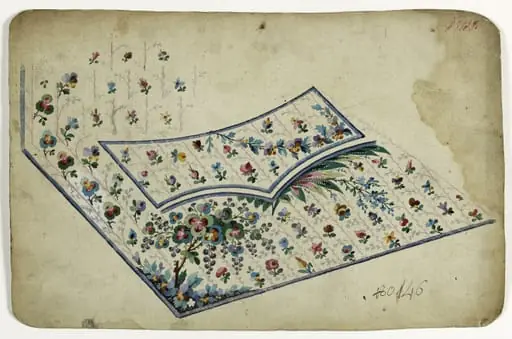
Gilet au buisson de feuilles colorées, projets de broderies de gilet, XVIIIème siècle
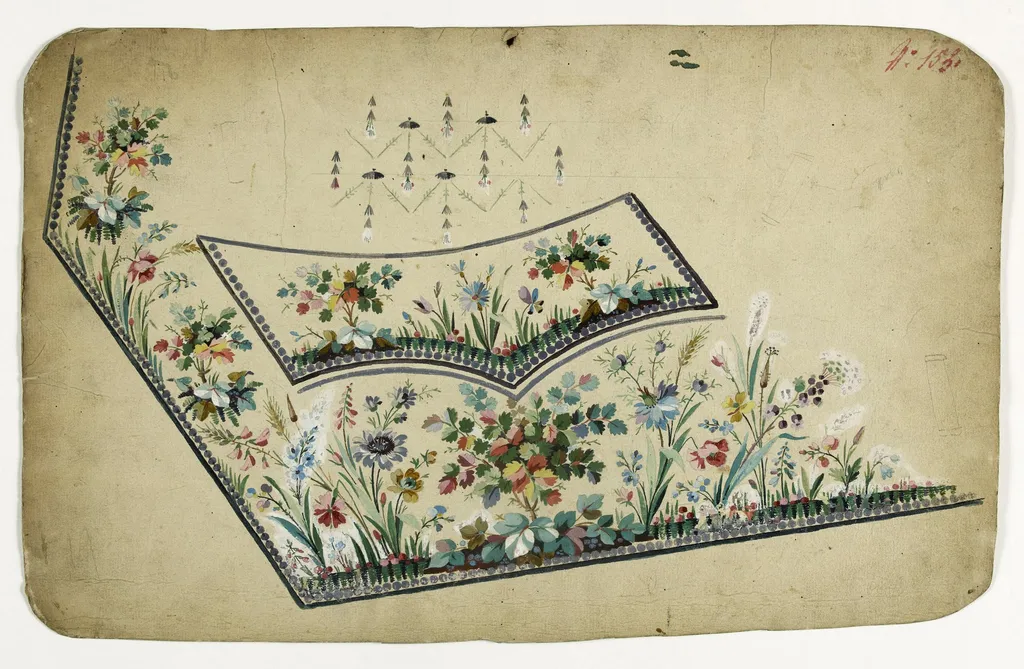
Gilet au buisson de feuilles colorées, projets de broderies de gilet, XVIIIème siècle is a drawing by Anonyme. It dates from 1750 and is held in the collection of the Palais Galliera - Musée de la Mode de la Ville de Paris. This 18th-century design sheet, attributed to an unknown artist, presents a pattern intended for embroidery on a waistcoat.
About this work
Overview
This 18th-century design sheet, attributed to an unknown artist, presents a pattern intended for embroidery on a waistcoat. Executed around 1750, it features a pale yellow ground adorned with two sinuous floral motifs. The composition suggests it was a working template for textile decoration, likely used by artisans to transfer ornamental designs onto garments.
Subject & Meaning
The motif depicts stylized clusters of blossoms and foliage arranged in flowing curves, evoking natural abundance without literal representation. The flowers—painted in muted pinks, blues, and whites—are organized along the edges, implying placement on garment borders or pockets. Such patterns reflected contemporary tastes for delicate, organic ornamentation in elite fashion.
Technique & Style
The design is rendered in fine ink lines with subtle watercolor washes. Tiny black dots outline the floral forms, possibly to guide stitch placement. The soft palette and rhythmic arrangement of petals and leaves suggest a hand-drawn prototype, not a finished textile. The precision of the draft indicates skilled craftsmanship aimed at reproducibility.
History & Provenance
The sheet resides in the Museum of Ethnography, though its exact origin and prior ownership remain undocumented. It likely belonged to a workshop or tailor’s archive, preserved as a reference for embroidery patterns. Its survival is uncommon, as such working drawings were often discarded after use.
Context
In mid-18th-century Europe, embroidered waistcoats were markers of refined taste among the upper classes. Design sheets like this one circulated among artisans, allowing for variation while maintaining stylistic coherence. Floral patterns, inspired by botanical illustrations and Asian textiles, dominated decorative arts during this period.
Legacy
This fragment offers insight into the unseen labor behind fashionable dress. Though the garment it may have adorned is lost, the drawing preserves the methodology of textile design before industrialization. It stands as a quiet testament to the precision and artistry of pre-mechanized craft traditions.
Artist & collection
Artist
A French designer from the 1700s made delicate flower drawings meant to decorate vests.
Museum
Palais Galliera - Musée de la Mode de la Ville de Paris
Continue through works from the same source collection.
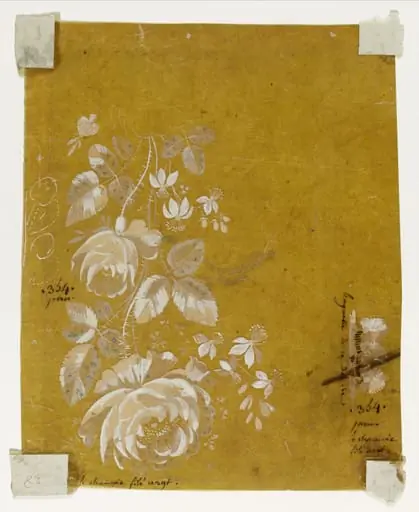 Bouquet de roses blanches pour étoffe, projets de broderies de gilet, XVIIIème siècle
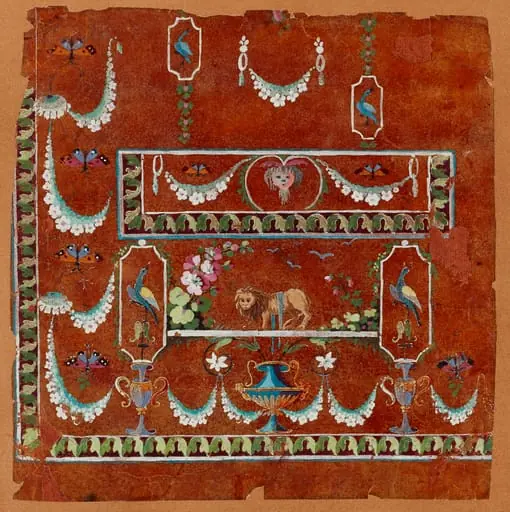 Gilet décor à grotesques, projets de broderies de gilet, XVIIIeme siècle
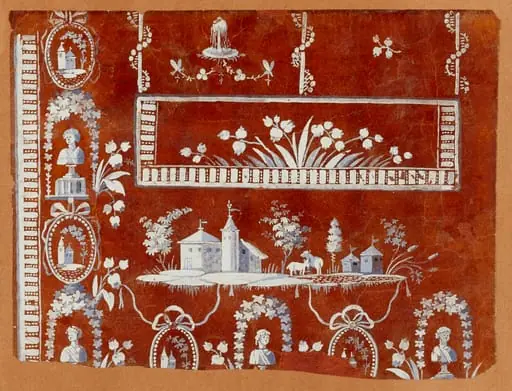 Gilet décor architectures rurales, projets de broderies de gilet, XVIIIème siècle
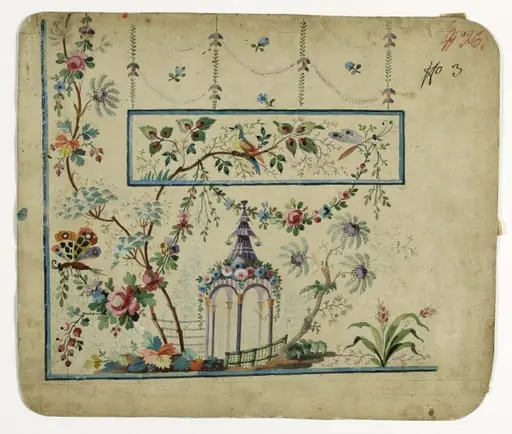 Gilet décor pagode, projets de broderies de gilet, XVIIIème siècle
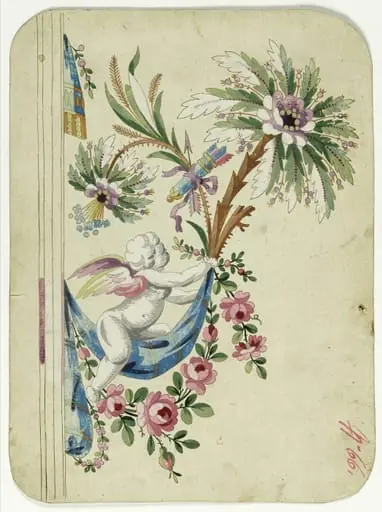 Décor de putti sur palmier, projets de broderies de gilet, XVIIIème siècle
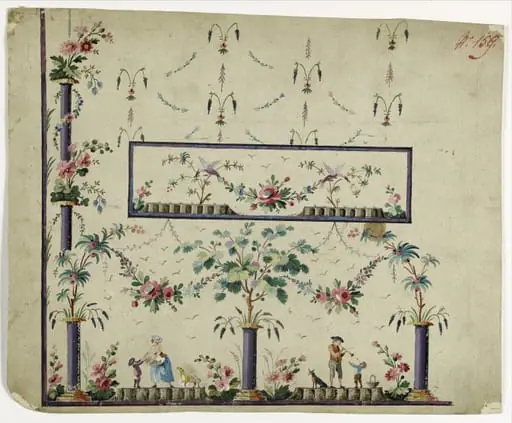 Gilet décor couple avec enfants, projets de broderies de gilet, XVIIIème siècle
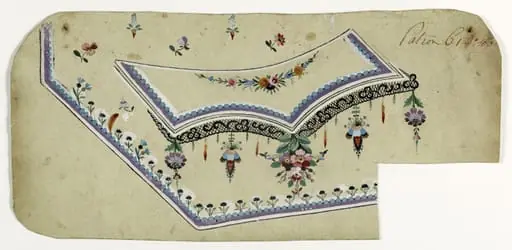 Gilet à la dentelle noire, projets de broderies de gilet, XVIIIème siècle
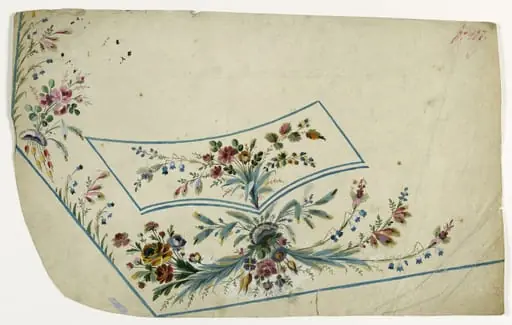 Gilet aux feuilles bleu-gris, projets de broderies de gilet, XVIIIème siècle
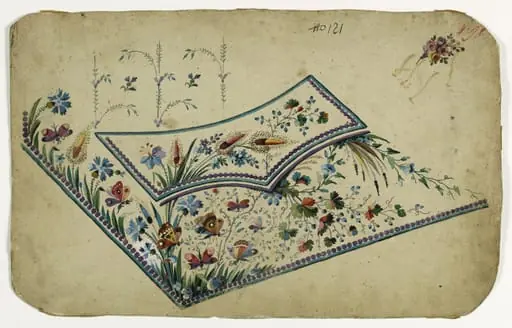 Gilet aux papillons multicolores, projets de broderies de gilet, XVIIIème siècle
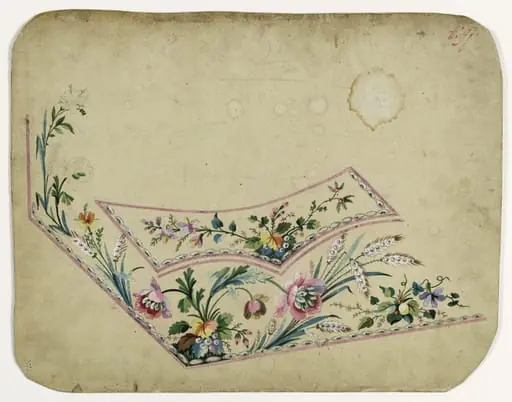 Gilet à la bordure rose, projets de broderies de gilet, XVIIIème siècle
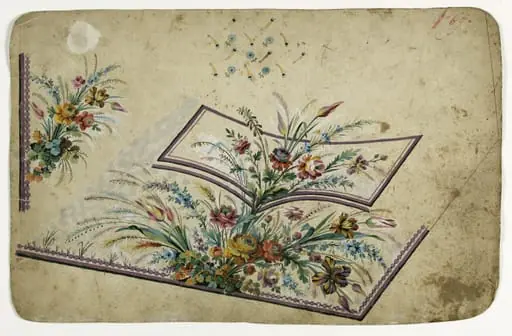 Gilet au bouquet de fleurs multicolores, projets de broderies de gilet, XVIIIème siècle
 Gilet à l'arbre fleuri, projets de broderies de gilet, XVIIIème siècle
 Gilet fleurs, papillons et scarabée, projets de broderies de gilet, XVIIIème siècle