Artwork
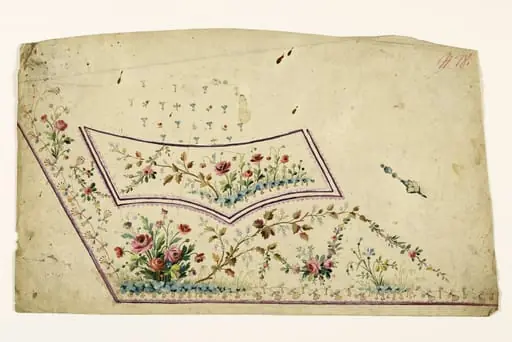
Bouquet suspendu surmonté d'un motif floral rayonnant, bouquets de fleurs et grappes, rayures fleuries, projets de broderies de gilet, XVIIIème siècle
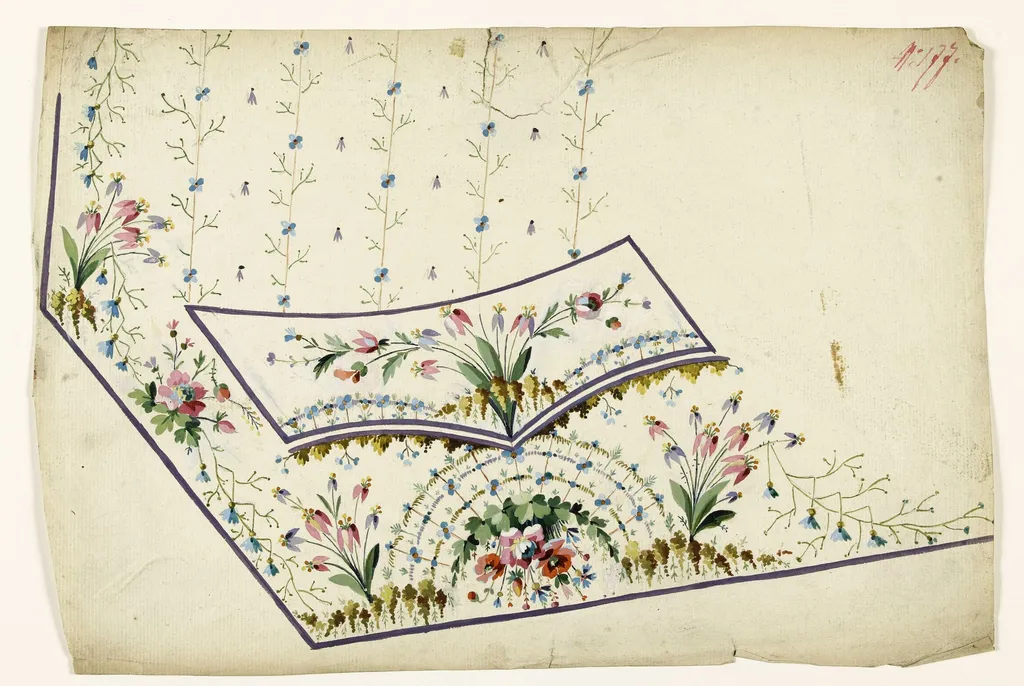
Bouquet suspendu surmonté d'un motif floral rayonnant, bouquets de fleurs et grappes, rayures fleuries, projets de broderies de gilet, XVIIIème siècle is a drawing by Anonyme. It dates from 1750 and is held in the collection of the Palais Galliera - Musée de la Mode de la Ville de Paris.
About this work
Overview
Executed in ink and wash on paper, it features three clustered bouquets arranged in a triangular formation, surrounded by delicate vines and small blooms.
This anonymous 18th-century drawing, dated around 1750, presents a decorative composition of suspended floral arrangements intended as a design template. Executed in ink and wash on paper, it features three clustered bouquets arranged in a triangular formation, surrounded by delicate vines and small blooms. The work was likely used as a pattern guide for textile embellishment, reflecting the era’s demand for ornamental motifs in garment decoration.
Subject & Meaning
The drawing depicts stylized floral clusters—pink, red, and yellow blooms with green foliage—suspended as if weightless, connected by slender stems. These elements are not naturalistic but arranged for visual rhythm and symmetry. The inclusion of tiny blue flowers and winding vines in the negative space suggests an emphasis on continuous, repeatable patterns, aligning with embroidery practices where floral motifs symbolized abundance and refinement in aristocratic dress.
Technique & Style
The artist employed flat, unmodulated colors and clean, linear outlines to define each element, avoiding shading or perspective. Thin purple borders frame the composition, while the cream background enhances contrast. The overall aesthetic is schematic and repetitive, resembling a textile sample rather than a fine art piece. This method prioritizes clarity and replicability, indicating its function as a practical guide for artisans crafting embroidered vests.
History & Provenance
Created in France during the mid-18th century, the drawing entered the collection of the Museum of Ethnography, where it is preserved as an artifact of domestic craft. Its origin is anonymous, typical of many design sheets produced by or for embroidery workshops. No record of its original owner survives, but its condition and format suggest it was used regularly in a professional setting before being archived.
Context
In 18th-century France, embroidered garments were markers of social status, particularly among the elite. Designers and artisans circulated pattern sheets like this one to standardize floral motifs across textiles. Similar motifs appear in silk damasks and lace, where stylized blooms and vines echoed botanical illustrations but were simplified for stitching. This drawing is one of many such templates that bridged artistic design and manual craft.
Legacy
Though unsigned and utilitarian, the drawing survives as evidence of the systematic approach to textile decoration in pre-industrial Europe. It illustrates how floral patterns were codified, reproduced, and adapted across regions and workshops. Today, it offers insight into the collaborative, often invisible labor behind ornamental fashion, preserving the visual language of a craft now largely forgotten.
Artist & collection
Artist
A French designer from the 1700s made delicate flower drawings meant to decorate vests.
Museum
Palais Galliera - Musée de la Mode de la Ville de Paris
Continue through works from the same source collection.
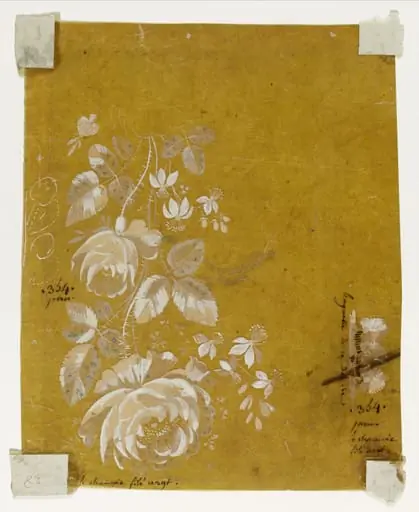 Bouquet de roses blanches pour étoffe, projets de broderies de gilet, XVIIIème siècle
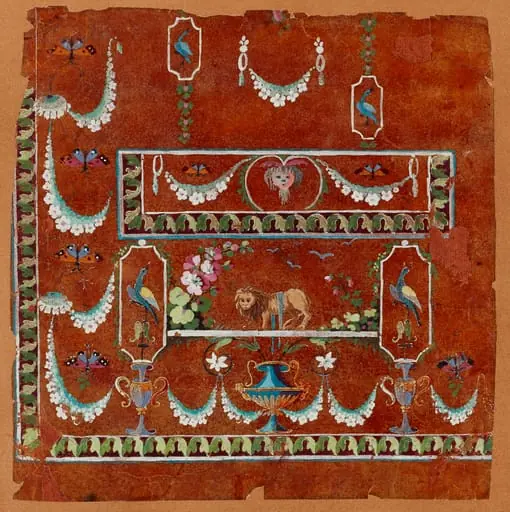 Gilet décor à grotesques, projets de broderies de gilet, XVIIIeme siècle
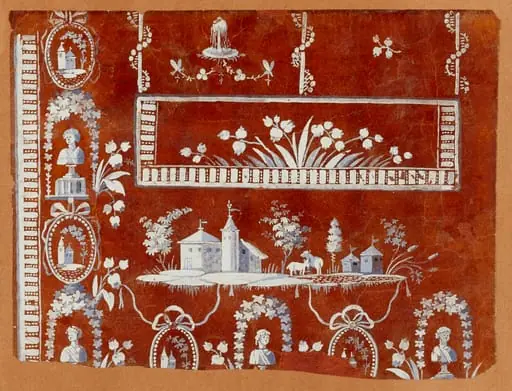 Gilet décor architectures rurales, projets de broderies de gilet, XVIIIème siècle
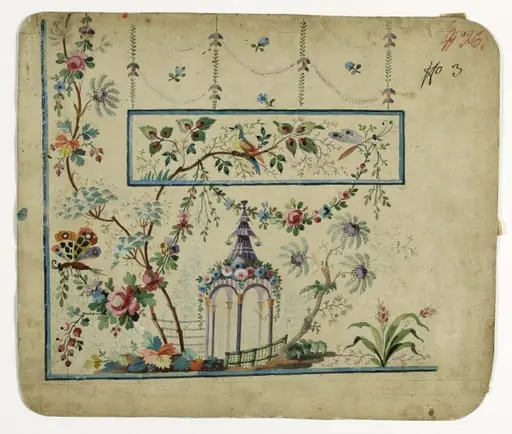 Gilet décor pagode, projets de broderies de gilet, XVIIIème siècle
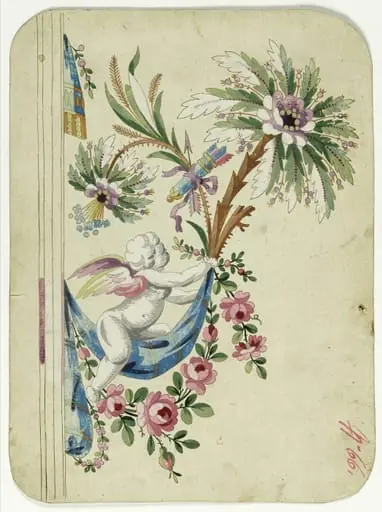 Décor de putti sur palmier, projets de broderies de gilet, XVIIIème siècle
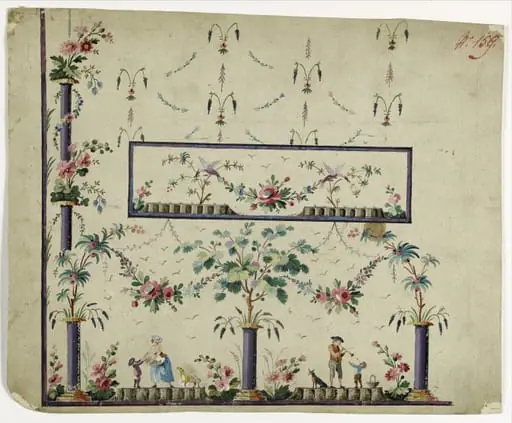 Gilet décor couple avec enfants, projets de broderies de gilet, XVIIIème siècle
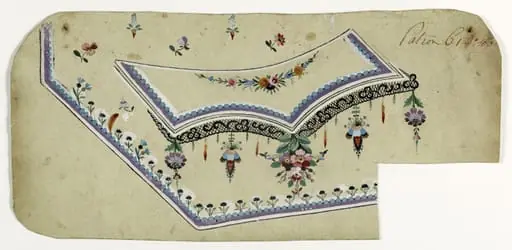 Gilet à la dentelle noire, projets de broderies de gilet, XVIIIème siècle
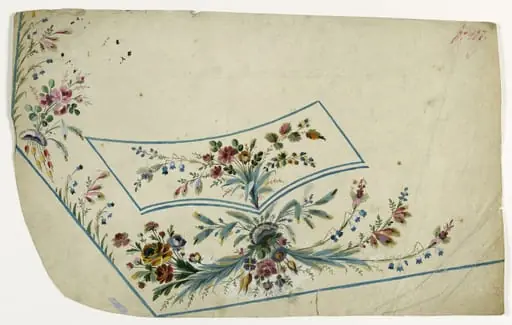 Gilet aux feuilles bleu-gris, projets de broderies de gilet, XVIIIème siècle
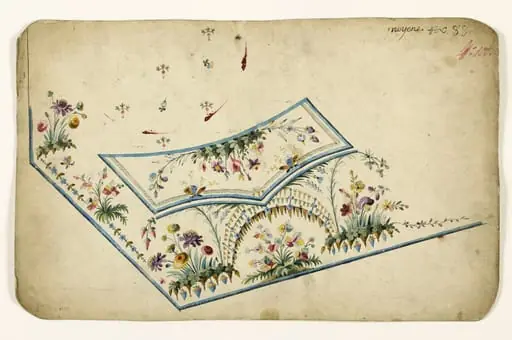 Composition en bouquets de fleurs multicolores et motifs de grappes rayonnants, projets de broderies de gilet, XVIIIème siècle
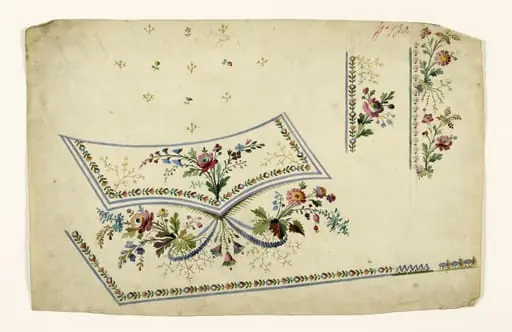 Composition florale avec bouquets et frises de fleurs stylisées, projets de broderies de gilet, XVIIIème siècle
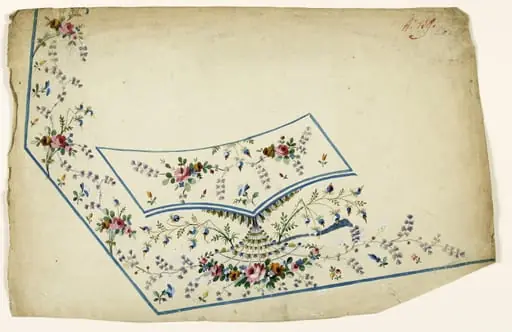 Composition à bouquet de fleurs en éventail et guirlandes de fleurs mauves, projets de broderies de gilet, XVIIIème siècle
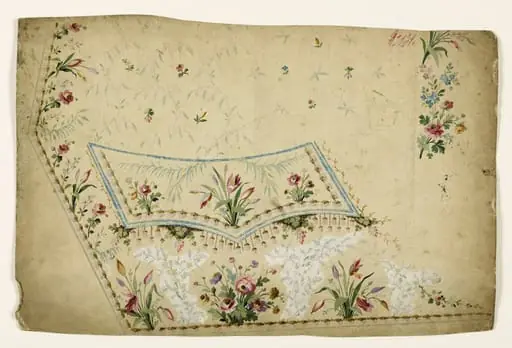 Composition avec bouquets de fleurs, frises de grappes et clochettes stylisées, projets de broderies de gilet, XVIIIème siècle
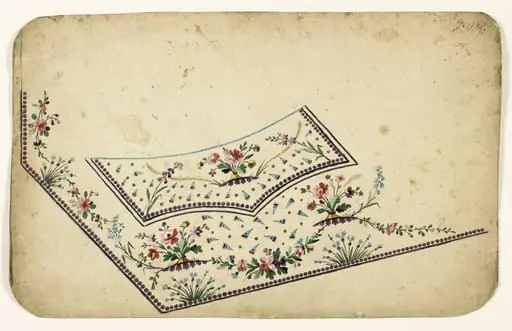 Composition de bouquets et guirlandes de fleurs, frises de perles pourpres et semis de motifs coniques bleus
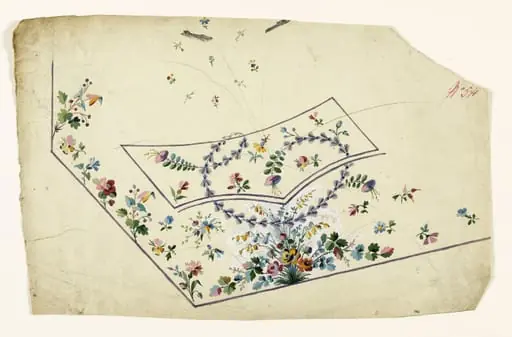 Composition de bouquets de fleurs multicolores et guirlandes de fleurs mauves, projets de broderies de gilet, XVIIIème siècle
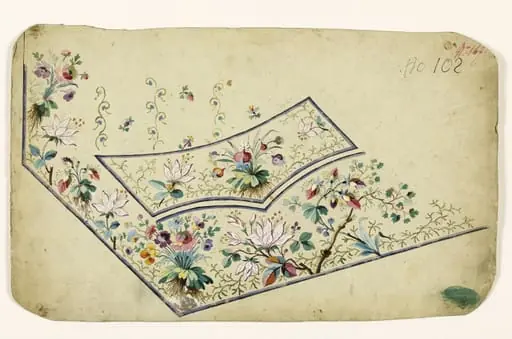 Composition de fleurs champêtres en branches et en bouquets, projets de broderies de gilet, XVIIIème siècle
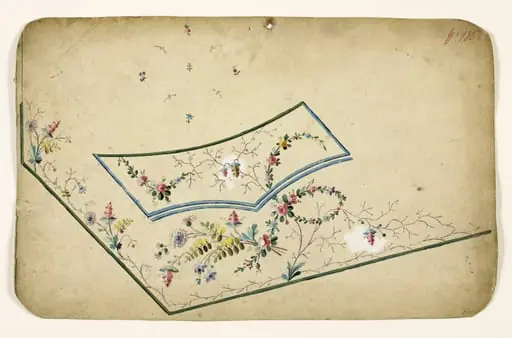 Composition florale avec guirlandes de branches et bandes bleues et vertes, projets de broderies de gilet, XVIIIème siècle
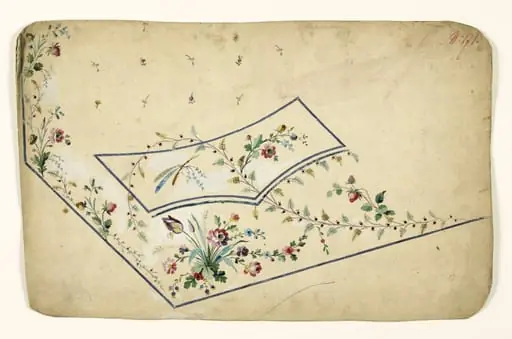 Composition avec bouquets et guirlandes de fleurs et phasme sur branche, projets de broderies de gilet, XVIIIème siècle
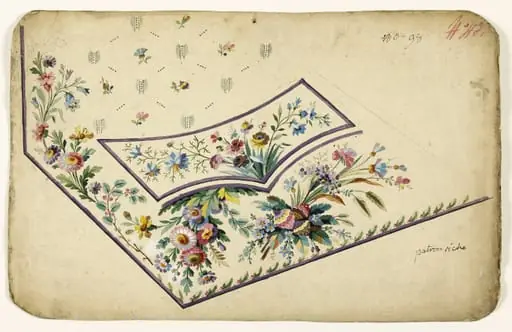 Composition de fleurs sauvages et fantaisistes en bouquets multicolores, projets de broderies de gilet, XVIIIème siècle
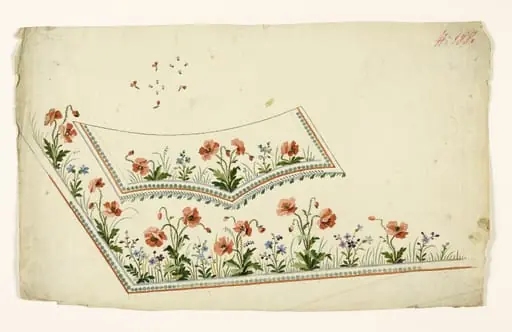 Composition florale aux coquelicots, projets de broderies de gilet, XVIIIème siècle
 Composition avec bouquet et guirlandes de fleurs et branches de feuilles et de baies bleues, projets de broderies de gilet, XVIIIème siècle