Artwork
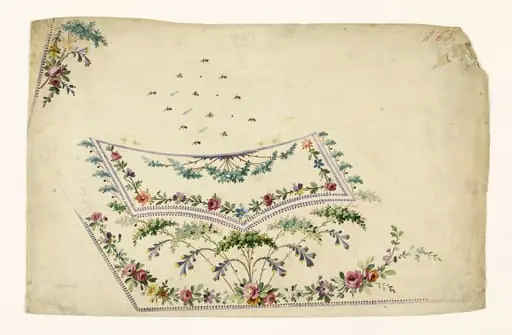
Composition avec trophée de fruits et volatile, guirlandes de fleurs stylisées à noeuds d'épis et de glycine, frises de denticules mauves, projets de broderies de gilet, XVIIIème siècle
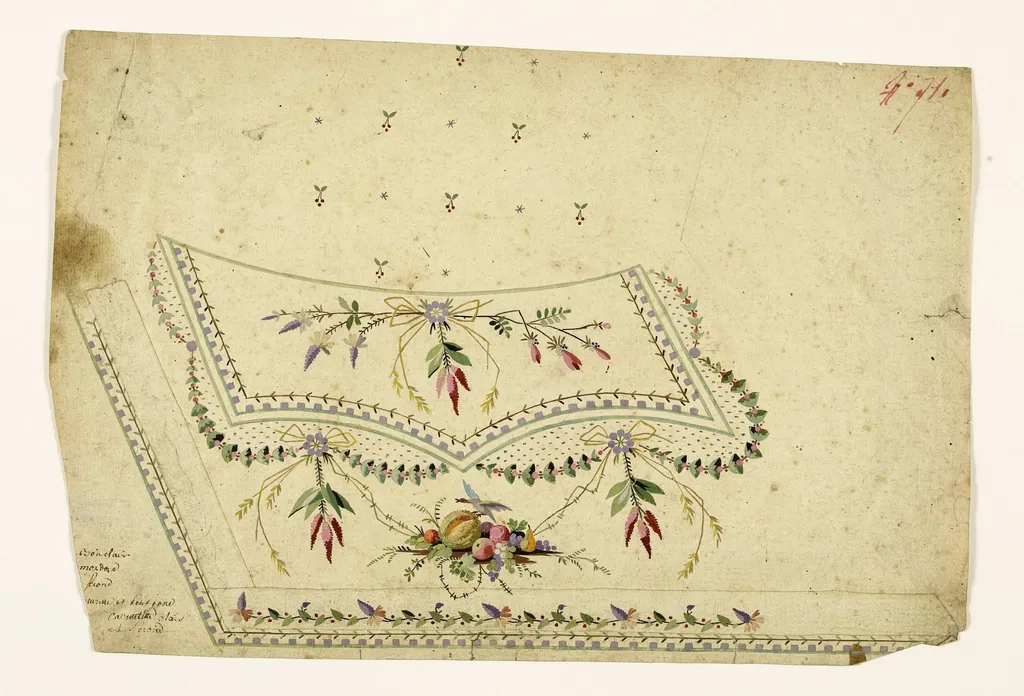
Composition avec trophée de fruits et volatile, guirlandes de fleurs stylisées à noeuds d'épis et de glycine, frises de denticules mauves, projets de broderies de gilet, XVIIIème siècle is a drawing by Anonyme. It dates from 1750 and is held in the collection of the Palais Galliera - Musée de la Mode de la Ville de Paris. Composition avec trophée de fruits et volatile is an 18th-century drawing, circa 1750, attributed to an anonymous artist.
About this work
Overview
Composition avec trophée de fruits et volatile is an 18th-century drawing, circa 1750, attributed to an anonymous artist. It is part of the collection at the Museum of Ethnography.
Subject & Meaning
The drawing features a decorative composition centered around a curved, floral border incorporating fruits, a bird (volatile), and stylized flowers tied in knots with wheat ears and wisteria. The arrangement suggests a design for embroidery, specifically for a gilet (vest).
Technique & Style
Executed in soft, pastel hues predominantly of greens, purples, and yellows, with accents of red, the work showcases intricate, detailed floral patterns. A distinctive row of purple, denticle-like shapes and a simple line motif adorn the bottom. The overall style is characteristic of 18th-century decorative arts.
History & Provenance
Created around 1750, the artwork's history prior to its acquisition by the Museum of Ethnography is not detailed here. Faded, unreadable writing on the paper hints at potential, unrecorded contextual information.
Context
This piece reflects the 18th century's penchant for ornate, naturalistic motifs in decorative arts and fashion. Its design for embroidery on a gilet situates it within the era's textile and apparel aesthetics.
Legacy
While not attributed to a specific artist, the drawing contributes to the understanding of 18th-century design principles, particularly in embroidery and decorative pattern-making. Its influence, if any, on subsequent design practices is not highlighted in available information.
Artist & collection
Artist
A French designer from the 1700s made delicate flower drawings meant to decorate vests.
Museum
Palais Galliera - Musée de la Mode de la Ville de Paris
Continue through works from the same source collection.
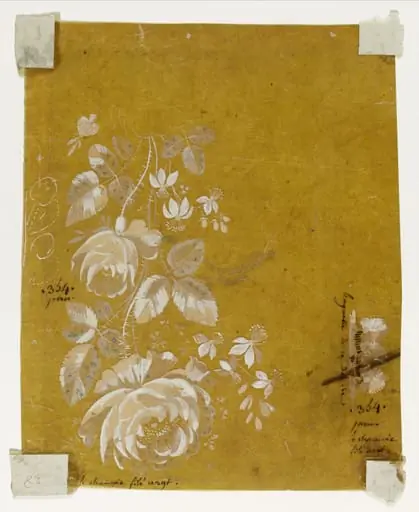 Bouquet de roses blanches pour étoffe, projets de broderies de gilet, XVIIIème siècle
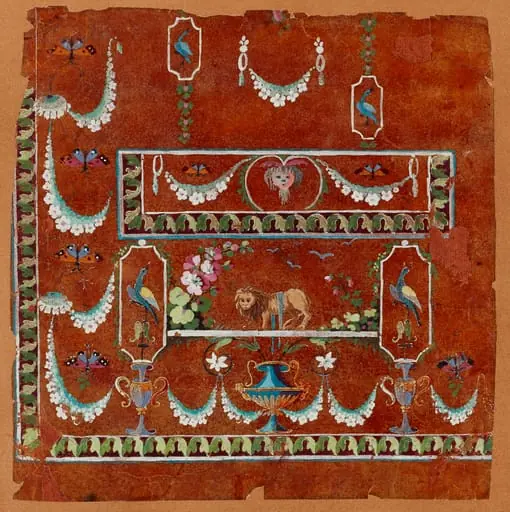 Gilet décor à grotesques, projets de broderies de gilet, XVIIIeme siècle
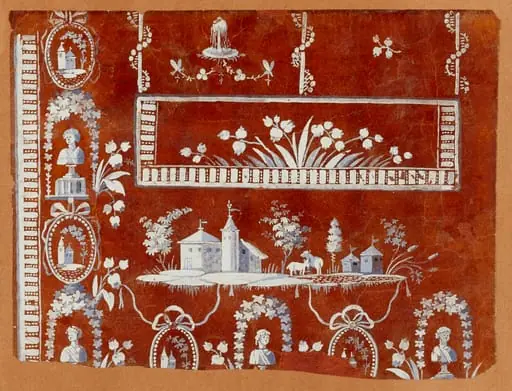 Gilet décor architectures rurales, projets de broderies de gilet, XVIIIème siècle
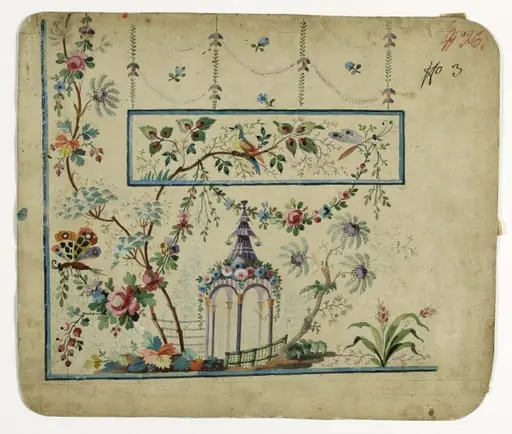 Gilet décor pagode, projets de broderies de gilet, XVIIIème siècle
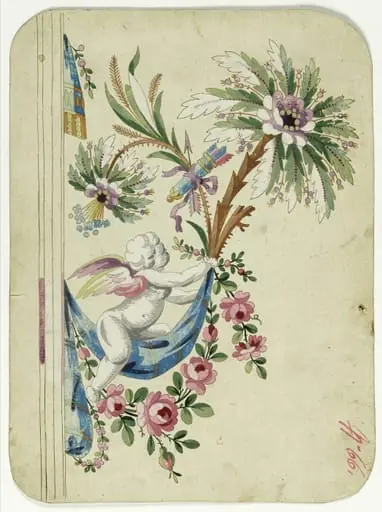 Décor de putti sur palmier, projets de broderies de gilet, XVIIIème siècle
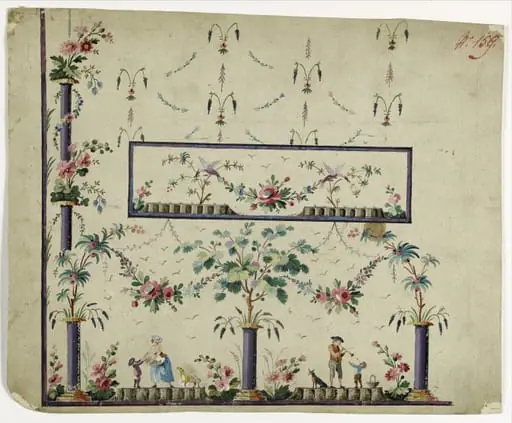 Gilet décor couple avec enfants, projets de broderies de gilet, XVIIIème siècle
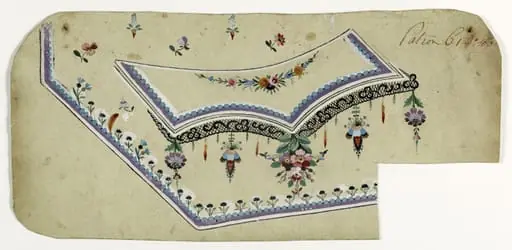 Gilet à la dentelle noire, projets de broderies de gilet, XVIIIème siècle
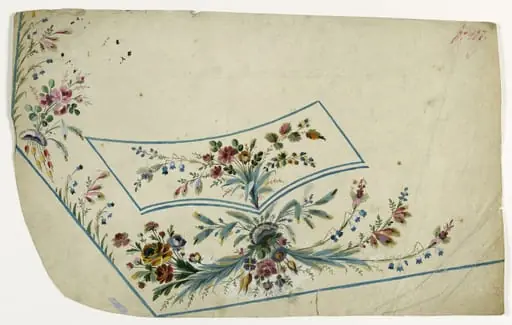 Gilet aux feuilles bleu-gris, projets de broderies de gilet, XVIIIème siècle
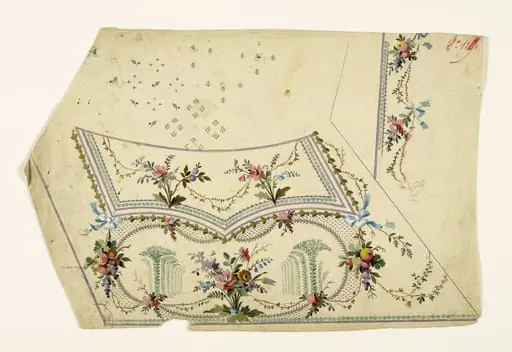 Composition avec bouquet de fleurs, guirlandes stylisées avec rubans bleus et grappes de fruits suspendues, projets de broderies de gilet, XVIIIème siècle
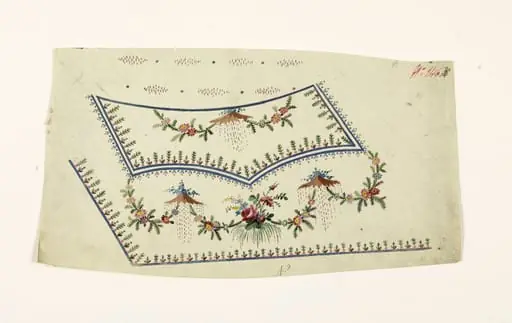 Composition avec bouquet et guirlandes de fleurs, bleuets sur tertres et frises de fleurs stylisées, projets de broderies de gilet, XVIIIème siècle
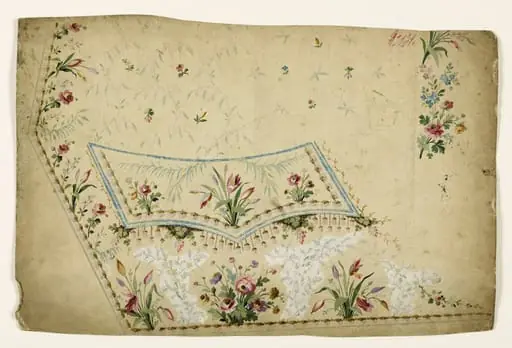 Composition avec bouquets de fleurs, frises de grappes et clochettes stylisées, projets de broderies de gilet, XVIIIème siècle
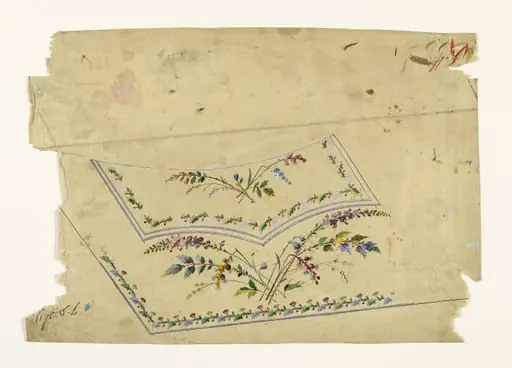 Composition avec brins de fleurs champêtres et guirlandes de feuilles et de fleurs, projets de broderies de gilet, XVIIIème siècle
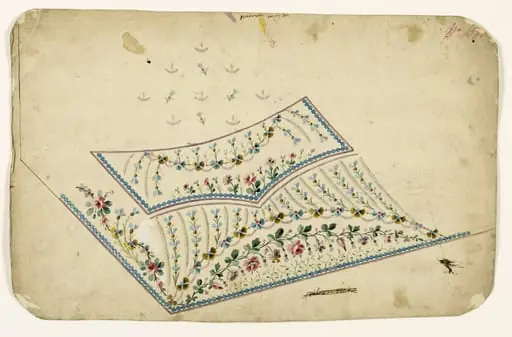 Composition de guirlandes de fleurs et de feuilles et frises de perles bleues, projets de broderies de gilet, XVIIIème siècle
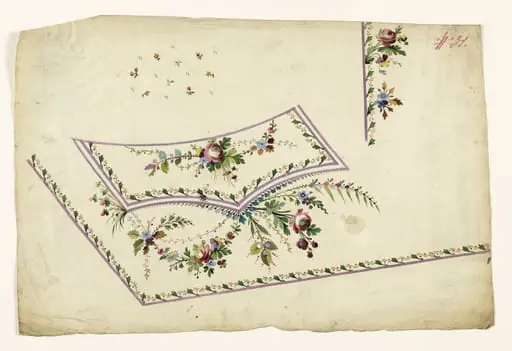 Composition de guirlandes de fleurs, frises de feuilles et de baies rouges, projets de broderies de gilet, XVIIIème siècle
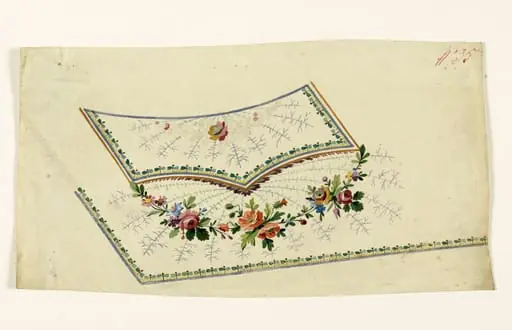 Composition avec guirlandes de fleurs multicolores, motifs rayonnants de branches et frises stylisées, projets de broderies de gilet, XVIIIème siècle
 Composition avec guirlandes de fleurs et feuilles en grappes, projets de broderies de gilet, XVIIIème siècle