Artwork
Gilet aux papillons multicolores, projets de broderies de gilet, XVIIIème siècle
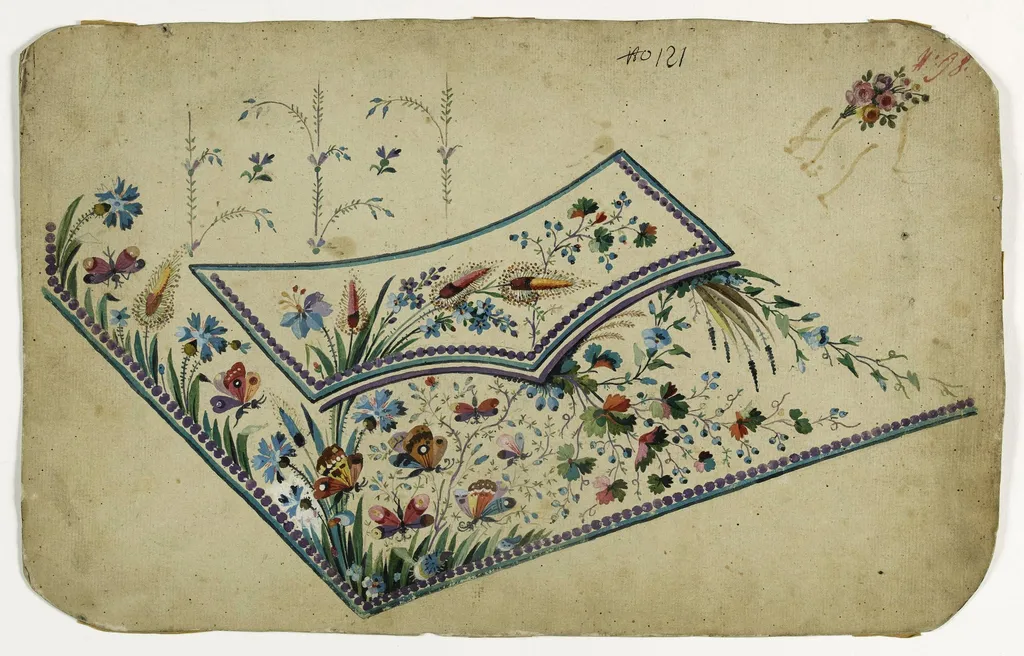
Gilet aux papillons multicolores, projets de broderies de gilet, XVIIIème siècle is a drawing by Anonyme. It dates from 1750 and is held in the collection of the Palais Galliera - Musée de la Mode de la Ville de Paris. The piece, a design sketch for a vest dating from around 1750, is attributed to an unknown artist.
About this work
Overview
The piece, a design sketch for a vest dating from around 1750, is attributed to an unknown artist. Executed on aged paper, the drawing presents a vivid arrangement of flowers, butterflies and foliage intended for embroidery. The work is part of the collection of the Museum of Ethnography and exemplifies eighteenth‑century decorative planning for textile garments.
Subject & Meaning
The composition centers on a profusion of stylised blossoms in purple, blue and green, interspersed with multicoloured butterflies and diminutive leaves. The motifs are arranged to fill the surface of a folded fabric panel, suggesting a celebratory or courtly aesthetic that prized naturalistic ornamentation and the visual delight of colourful insects within fashionable attire.
Technique & Style
Rendered as a flat drawing, the design employs fine line work and stippled borders of dots and swirls to indicate stitching outlines. The vivid palette, though applied with pigment on paper, anticipates the thread colours that would be used in the final embroidered garment, reflecting the Rococo taste for asymmetrical, flowing patterns and intricate detail.
History & Provenance
Created circa 1750, the sketch entered the Museum of Ethnography’s holdings through an acquisition of eighteenth‑century textile design materials. Its anonymous authorship is typical of workshop drawings of the period, which were often produced for commercial embroidery workshops rather than signed by individual artists.
Context
During the mid‑eighteenth century, embroidered garments such as vests and waistcoats were fashionable among the European elite. Designs featuring butterflies and exotic flora catered to the era’s fascination with natural history and the decorative arts, linking sartorial display with the broader Enlightenment interest in cataloguing nature.
Artist & collection
Artist
A French designer from the 1700s made delicate flower drawings meant to decorate vests.
Museum
Palais Galliera - Musée de la Mode de la Ville de Paris
Continue through works from the same source collection.
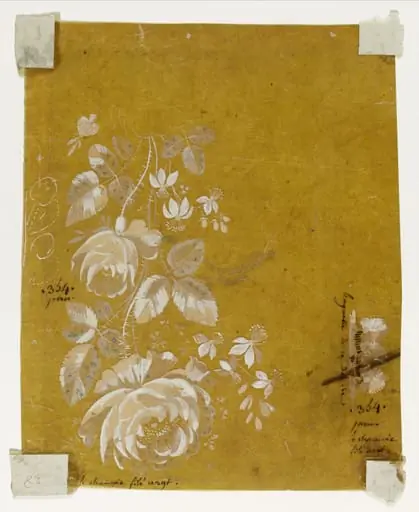 Bouquet de roses blanches pour étoffe, projets de broderies de gilet, XVIIIème siècle
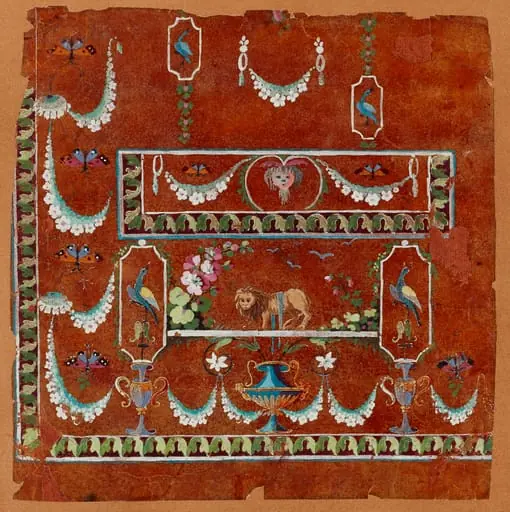 Gilet décor à grotesques, projets de broderies de gilet, XVIIIeme siècle
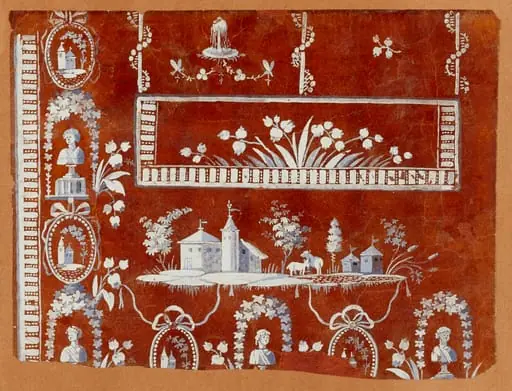 Gilet décor architectures rurales, projets de broderies de gilet, XVIIIème siècle
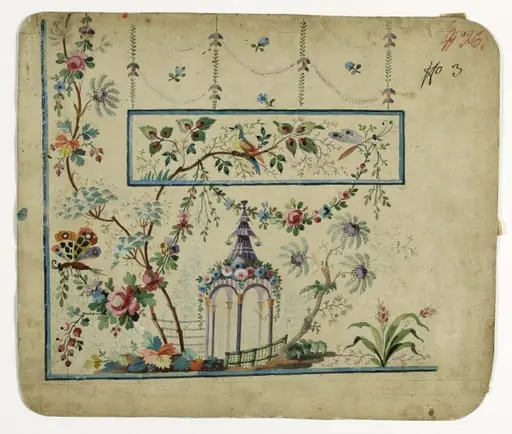 Gilet décor pagode, projets de broderies de gilet, XVIIIème siècle
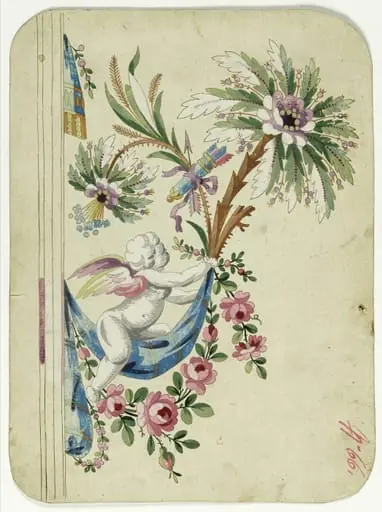 Décor de putti sur palmier, projets de broderies de gilet, XVIIIème siècle
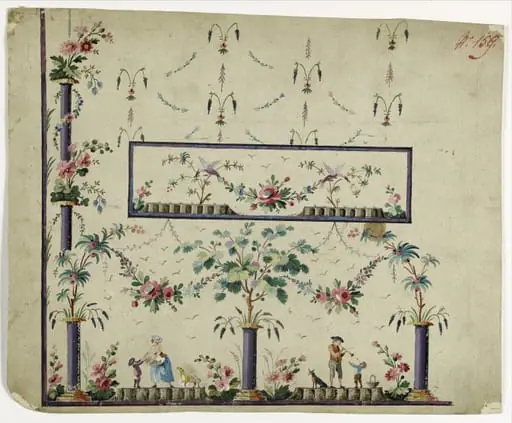 Gilet décor couple avec enfants, projets de broderies de gilet, XVIIIème siècle
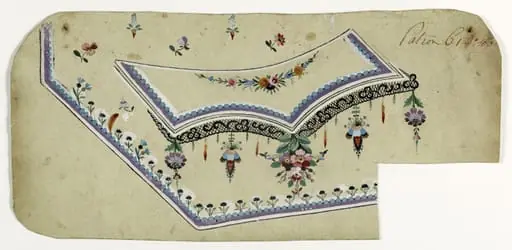 Gilet à la dentelle noire, projets de broderies de gilet, XVIIIème siècle
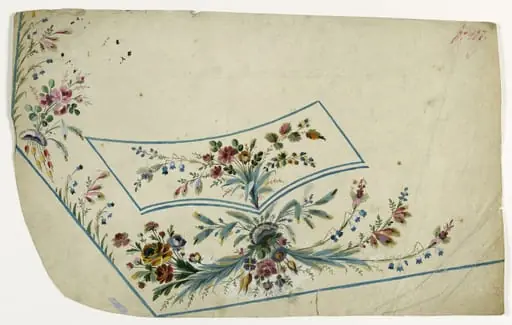 Gilet aux feuilles bleu-gris, projets de broderies de gilet, XVIIIème siècle
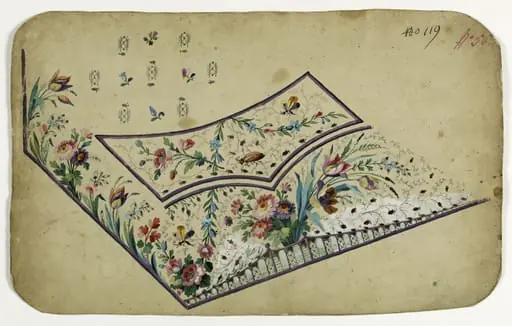 Gilet fleurs, papillons et scarabée, projets de broderies de gilet, XVIIIème siècle
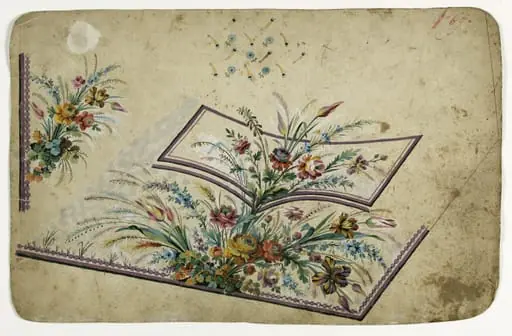 Gilet au bouquet de fleurs multicolores, projets de broderies de gilet, XVIIIème siècle
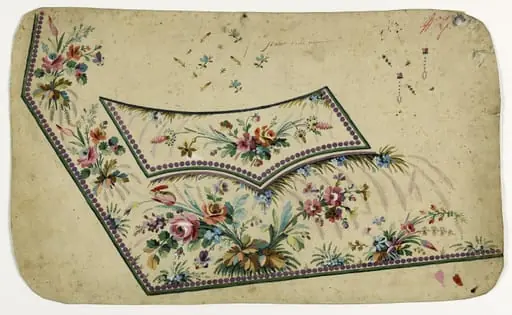 Gilet fleurs et perles mauves, projets de broderies de gilet, XVIIIème siècle
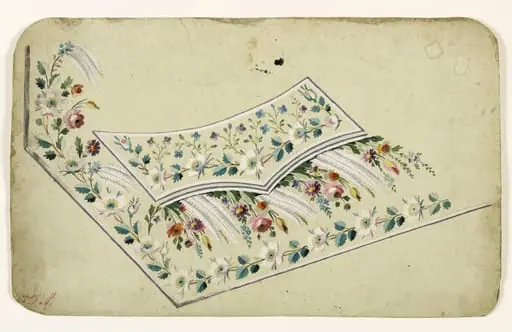 Composition de fleurs multicolores et de feuilles blanches et frises de fleurs de poirier, projets de broderies de gilet, XVIIIème siècle
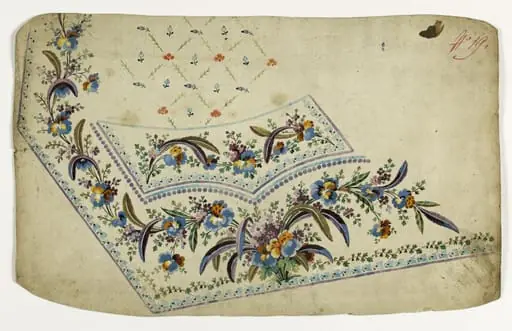 Gilet fleurs bleues et orange, projets de broderies de gilet, XVIIIème siècle
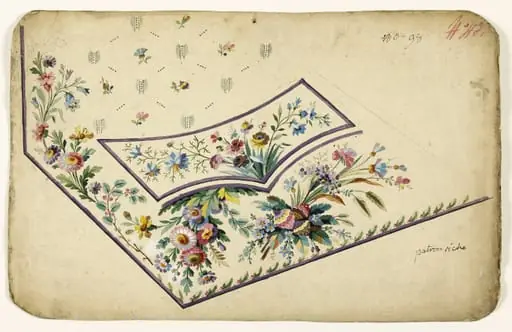 Composition de fleurs sauvages et fantaisistes en bouquets multicolores, projets de broderies de gilet, XVIIIème siècle