Artwork
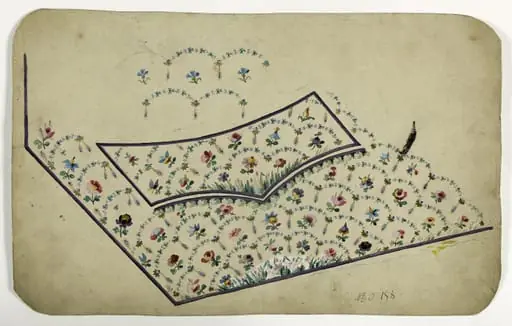
Gilet fleurs, papillons et scarabée, projets de broderies de gilet, XVIIIème siècle
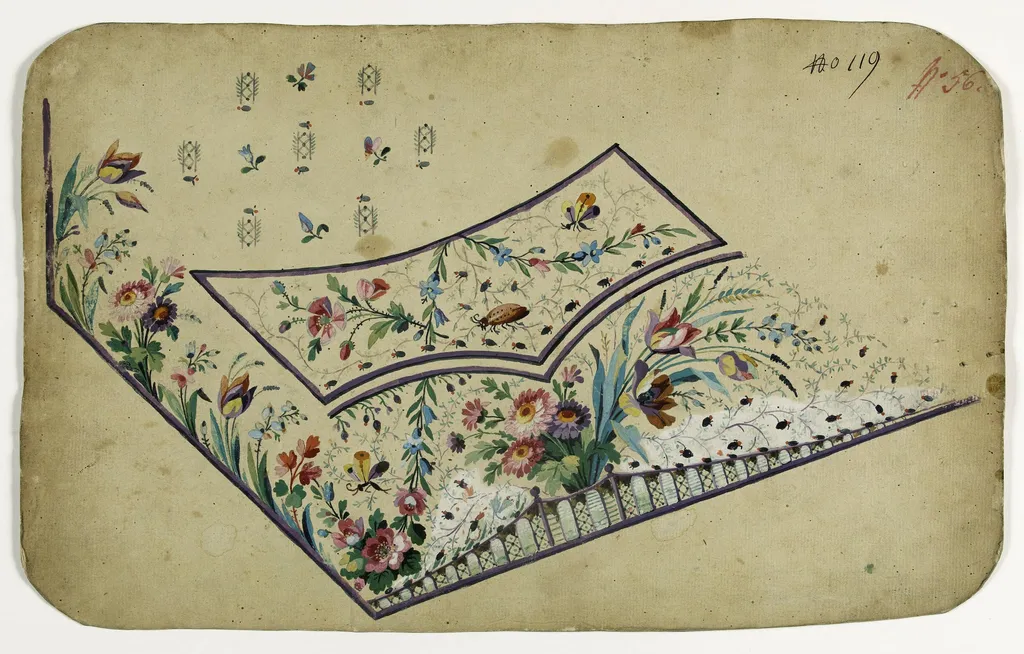
Gilet fleurs, papillons et scarabée, projets de broderies de gilet, XVIIIème siècle is a drawing by Anonyme. It dates from 1750 and is held in the collection of the Palais Galliera - Musée de la Mode de la Ville de Paris. This 18th-century textile design sketch, attributed to an anonymous artisan, illustrates projected embroidery patterns for a waistcoat.
About this work
Overview
The composition functions as a practical guide for needlework, suggesting how decorative elements might be arranged and stitched onto garment surfaces.
This 18th-century textile design sketch, attributed to an anonymous artisan, illustrates projected embroidery patterns for a waistcoat. Executed around 1750, it presents two folded fabric panels adorned with floral motifs and insect details. The composition functions as a practical guide for needlework, suggesting how decorative elements might be arranged and stitched onto garment surfaces. It resides today in the Museum of Ethnography.
Subject & Meaning
The design features stylized blossoms in vivid reds, pinks, and yellows, interwoven with green foliage and delicate butterflies. A scarab beetle is placed centrally on one panel, possibly symbolizing renewal or protection, common in decorative arts of the period. The arrangement reflects a preference for naturalistic ornamentation, blending botanical and entomological forms into a harmonious, repeatable pattern suited to luxury garments.
Technique & Style
Rendered in precise draftsmanship, the drawing uses ink and watercolor to define outlines and color fields, likely intended for transfer to fabric. The borders are edged in dark purple, framing the central motifs. Patterns are symmetrically balanced and scaled for embroidery, indicating the artist’s familiarity with textile production. The clarity of lines and color zones suggests a working template rather than a finished artwork.
History & Provenance
Created in the mid-18th century, the sketch likely originated in a Parisian atelier where fashion and embroidery design intersected. It passed through private or workshop collections before entering the Museum of Ethnography’s holdings. Its survival is uncommon, as such working drawings were often discarded after use. Its preservation offers rare insight into the preparatory stages of elite garment decoration.
Context
During the 1750s, embroidered waistcoats were status symbols among European elites, particularly in France. Designers produced pattern sheets for skilled needleworkers, often women, who translated these into intricate hand-stitched textiles. This drawing reflects the collaborative nature of fashion production, where artists, tailors, and embroiderers worked in tandem to meet the demand for ornate, personalized attire.
Legacy
Though unsigned and utilitarian, the sketch endures as a tangible link to the craftsmanship behind 18th-century fashion. It illuminates the meticulous planning required for textile decoration and preserves the visual language of a time when nature-inspired motifs dominated elite dress. Today, it serves as a reference for historians studying the intersection of art, labor, and clothing in pre-industrial Europe.
Artist & collection
Artist
A French designer from the 1700s made delicate flower drawings meant to decorate vests.
Museum
Palais Galliera - Musée de la Mode de la Ville de Paris
Continue through works from the same source collection.
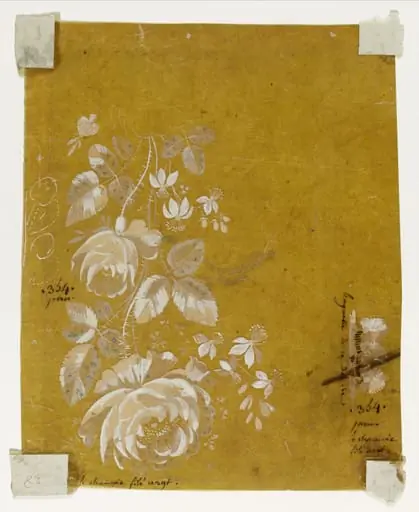 Bouquet de roses blanches pour étoffe, projets de broderies de gilet, XVIIIème siècle
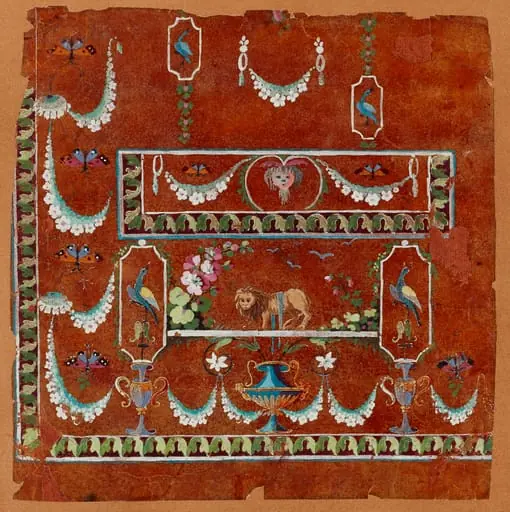 Gilet décor à grotesques, projets de broderies de gilet, XVIIIeme siècle
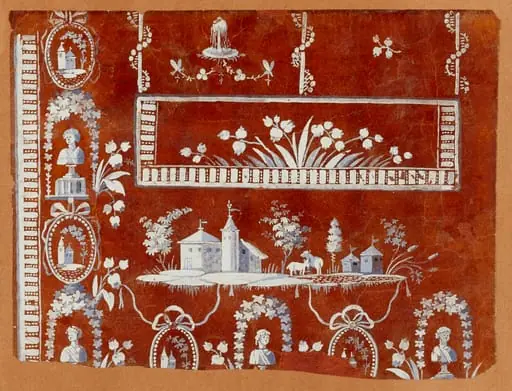 Gilet décor architectures rurales, projets de broderies de gilet, XVIIIème siècle
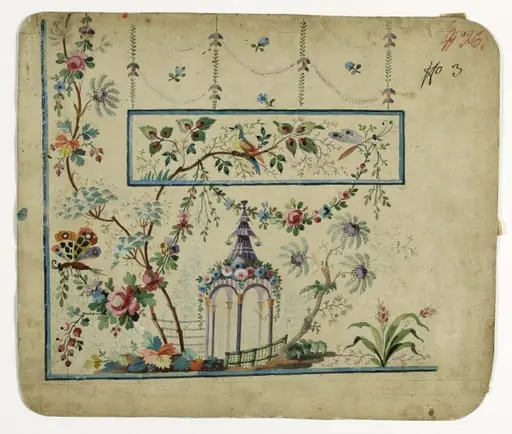 Gilet décor pagode, projets de broderies de gilet, XVIIIème siècle
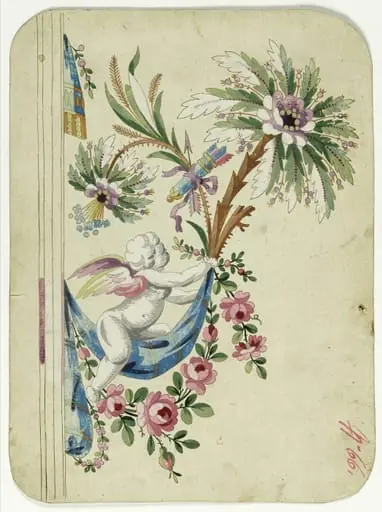 Décor de putti sur palmier, projets de broderies de gilet, XVIIIème siècle
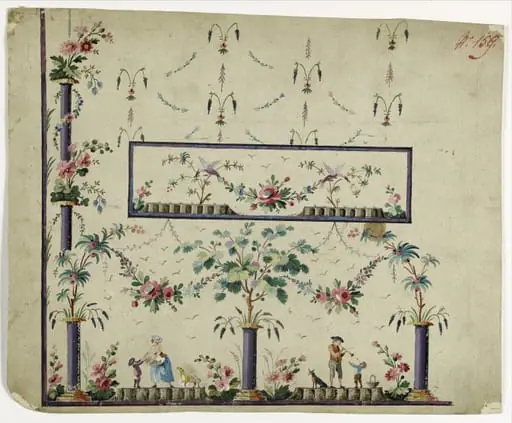 Gilet décor couple avec enfants, projets de broderies de gilet, XVIIIème siècle
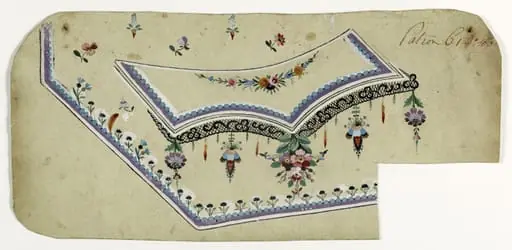 Gilet à la dentelle noire, projets de broderies de gilet, XVIIIème siècle
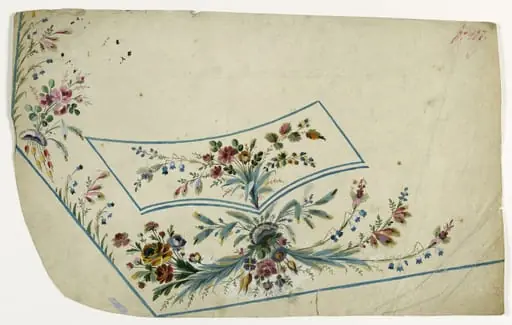 Gilet aux feuilles bleu-gris, projets de broderies de gilet, XVIIIème siècle
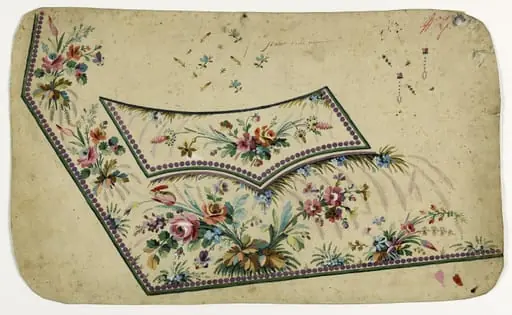 Gilet fleurs et perles mauves, projets de broderies de gilet, XVIIIème siècle
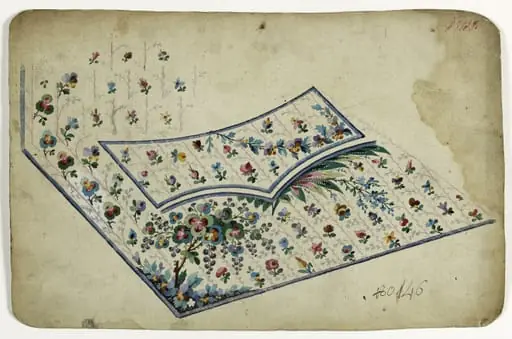 Gilet à l'arbre fleuri, projets de broderies de gilet, XVIIIème siècle
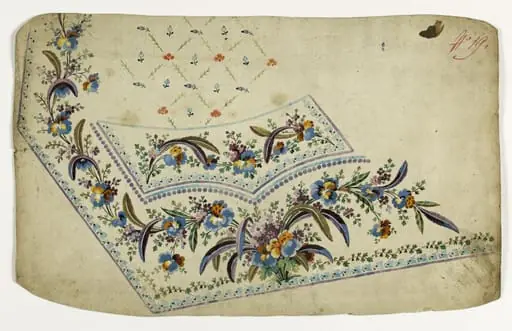 Gilet fleurs bleues et orange, projets de broderies de gilet, XVIIIème siècle
 Gilet fleurs dans un réseau, projets de broderies de gilet, XVIIIème siècle
 Gilet fleurs et feuilles multicolores, projets de broderies de gilet, XVIIIème siècle
 Gilet perles et fleurs, projets de broderies de gilet, XVIIIème siècle