Artwork
Gilet au décor tapissant, projets de broderies de gilet, XVIIIème siècle
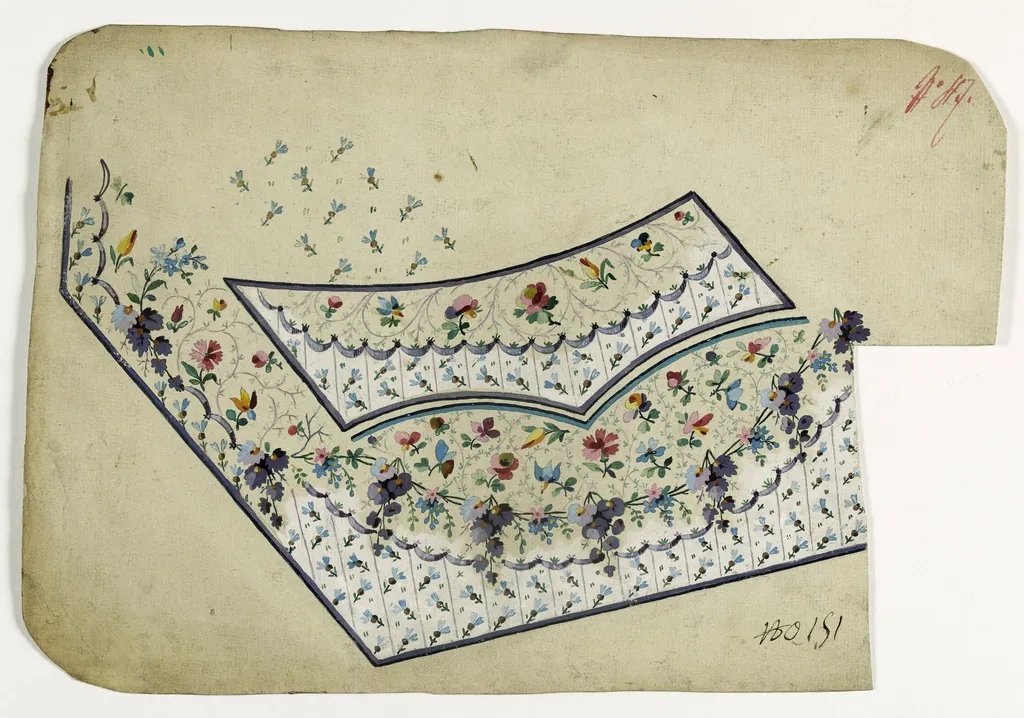
Gilet au décor tapissant, projets de broderies de gilet, XVIIIème siècle is a drawing by Anonyme. It dates from 1750 and is held in the collection of the Palais Galliera - Musée de la Mode de la Ville de Paris. This 18th-century draft, dated around 1750, presents a design intended for embroidery on a waistcoat.
About this work
Overview
This 18th-century draft, dated around 1750, presents a design intended for embroidery on a waistcoat. Executed on aged paper with a soft yellow tone, it depicts a folded textile surface adorned with repeating floral motifs. The composition suggests it was a working template, not a finished piece, used to guide needlework artisans in replicating intricate patterns across fabric surfaces.
Subject & Meaning
The inclusion of birds may hint at themes of harmony or domesticity, common in ornamental motifs of the time.
The design features stylized blossoms in blue, pink, and yellow, interwoven with delicate vines and small birds, reflecting the naturalistic ornamentation favored in aristocratic dress of the period. These elements convey refinement and leisure, aligning with decorative trends in European textile arts. The inclusion of birds may hint at themes of harmony or domesticity, common in ornamental motifs of the time.
Technique & Style
The drawing employs fine, precise lines to outline each floral element, with careful attention to symmetry and repetition. Scalloped edges and tightly spaced motifs indicate the pattern was meant for precise transfer onto fabric. The scale and density suggest it was designed for a small garment section, possibly a pocket or front panel, where embroidery would be most visible and valued.
History & Provenance
The work is held in the collection of the Museum of Ethnography, though its origin and maker remain undocumented. Likely produced in a Parisian atelier or by a skilled artisan’s assistant, it reflects the industrialized yet hand-crafted nature of 18th-century fashion design. Its survival suggests it was preserved as a reference or sample, rather than discarded after use.
Context
During the mid-1700s, embroidered waistcoats were status symbols among European elites, requiring months of labor by specialized workers. Pattern drafts like this were essential tools in workshops, ensuring consistency across garments. This example illustrates the intersection of artistic design and textile production, where creativity was channeled through structured, repeatable forms.
Legacy
Though unsigned and anonymous, the drawing preserves a glimpse into the unseen labor behind luxury fashion. It exemplifies how design was systematized before mass production, relying on skilled draftsmen and embroiderers. Today, it serves as a historical record of craftsmanship, revealing the meticulous planning behind ornate garments now displayed in museums.
Artist & collection
Artist
A French designer from the 1700s made delicate flower drawings meant to decorate vests.
Museum
Palais Galliera - Musée de la Mode de la Ville de Paris
Continue through works from the same source collection.
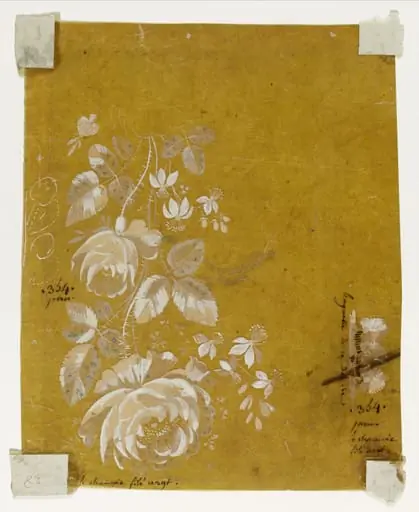 Bouquet de roses blanches pour étoffe, projets de broderies de gilet, XVIIIème siècle
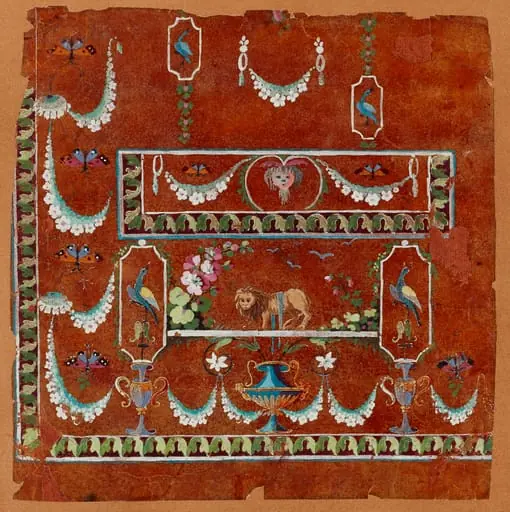 Gilet décor à grotesques, projets de broderies de gilet, XVIIIeme siècle
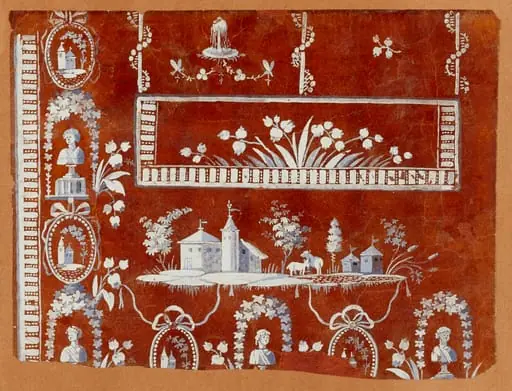 Gilet décor architectures rurales, projets de broderies de gilet, XVIIIème siècle
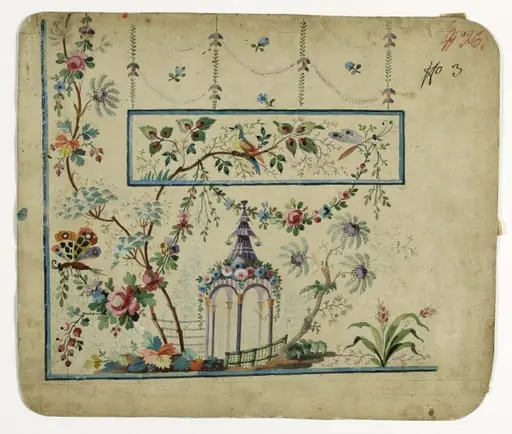 Gilet décor pagode, projets de broderies de gilet, XVIIIème siècle
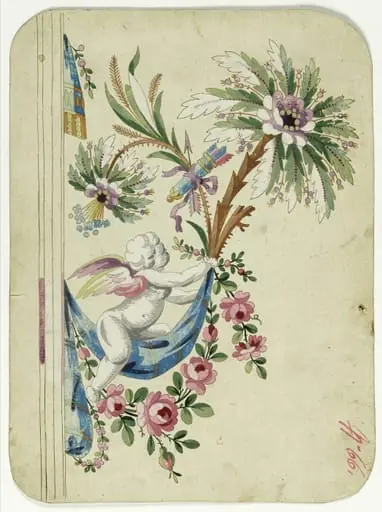 Décor de putti sur palmier, projets de broderies de gilet, XVIIIème siècle
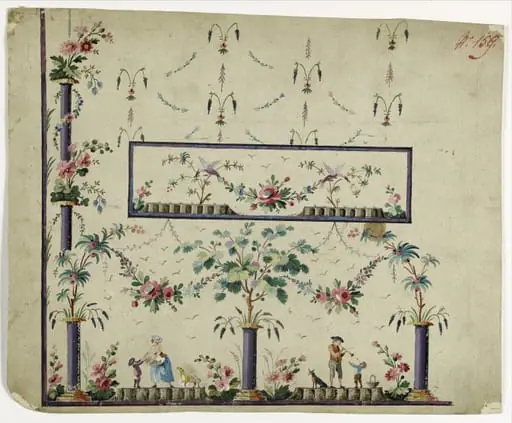 Gilet décor couple avec enfants, projets de broderies de gilet, XVIIIème siècle
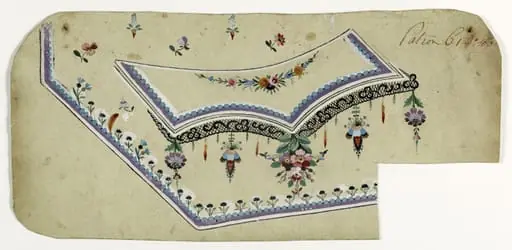 Gilet à la dentelle noire, projets de broderies de gilet, XVIIIème siècle
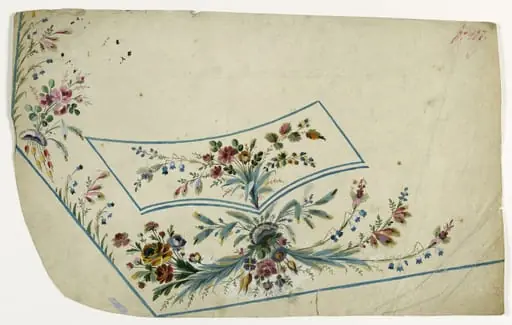 Gilet aux feuilles bleu-gris, projets de broderies de gilet, XVIIIème siècle
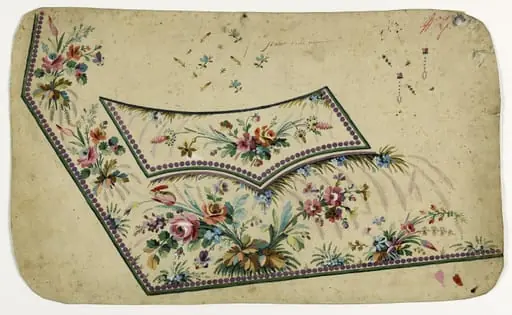 Gilet fleurs et perles mauves, projets de broderies de gilet, XVIIIème siècle
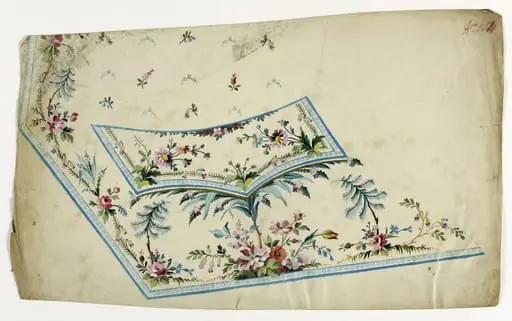 Gilet aux perles bleues, projets de broderies de gilet, XVIIIème siècle
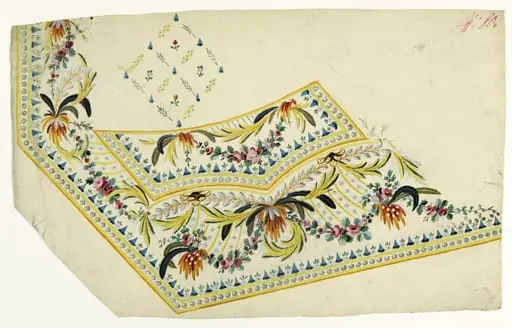 Gilet décor de perles, plumes et paillettes, projets de broderies de gilet, XVIIIème siècle
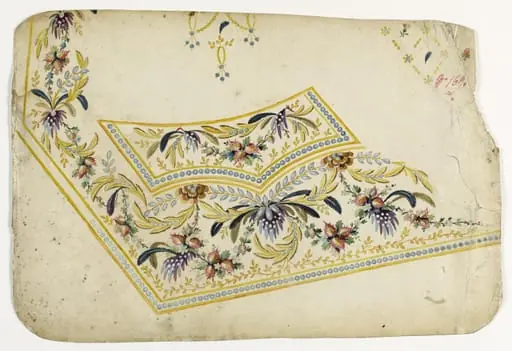 Gilet décor de plumes, fraises et perles, projets de broderies de gilet, XVIIIème siècle
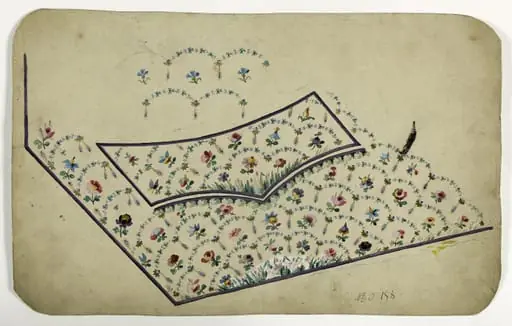 Gilet fleurs dans un réseau, projets de broderies de gilet, XVIIIème siècle
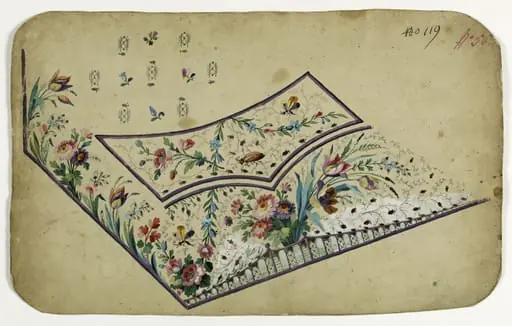 Gilet fleurs, papillons et scarabée, projets de broderies de gilet, XVIIIème siècle
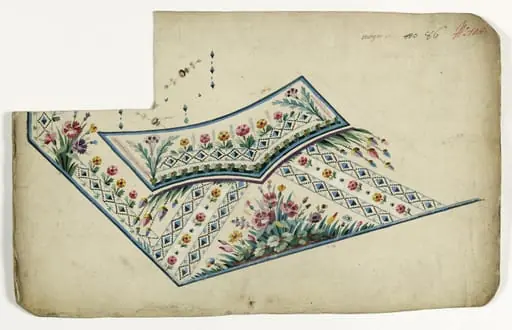 Gilet fleurs et losanges, projets de broderies de gilet, XVIIIème siècle