Artwork
Gilet fleurs dans un réseau, projets de broderies de gilet, XVIIIème siècle
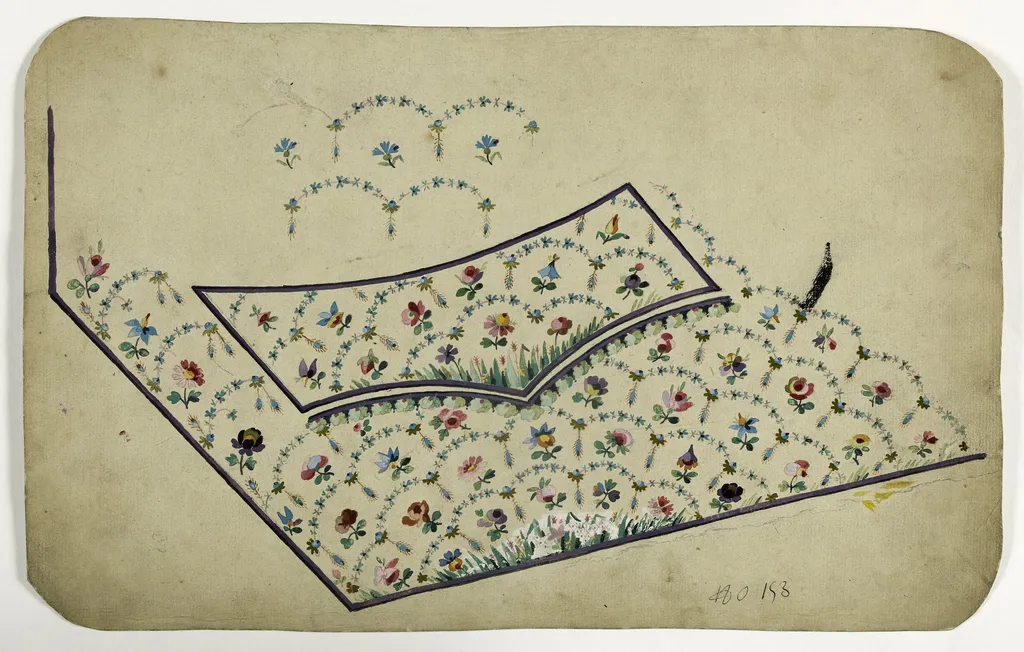
Gilet fleurs dans un réseau, projets de broderies de gilet, XVIIIème siècle is a drawing by Anonyme. It dates from 1750 and is held in the collection of the Palais Galliera - Musée de la Mode de la Ville de Paris.
About this work
Overview
Executed in watercolor on paper, the design is laid out to mimic the folded form of a garment, with scalloped edges suggesting the finished silhouette.
This eighteenth-century draft depicts a vest pattern adorned with densely arranged floral motifs, likely intended as a guide for hand embroidery. Executed in watercolor on paper, the design is laid out to mimic the folded form of a garment, with scalloped edges suggesting the finished silhouette. Bright hues of pink, blue, and yellow define the blossoms against a pale beige ground, indicating a decorative scheme meant for textile application rather than standalone art.
Subject & Meaning
The motif centers on naturalistic flowers and foliage arranged in a repeating, symmetrical pattern. Such designs reflected contemporary tastes for ornamental botany in fashion, particularly among elite French and European dressmakers. The absence of figures or narrative suggests the piece served a purely functional role: to communicate a decorative template for garment embellishment, emphasizing elegance through repetition and botanical precision.
Technique & Style
The drawing employs fine brushwork and opaque watercolor to render minute floral details with clarity. Each petal and leaf is carefully outlined and filled, demonstrating a methodical approach to pattern drafting. The composition is tightly contained within the vest’s implied form, with no negative space wasted. This precision reflects the standardized practices of textile design studios, where clarity and reproducibility were paramount for artisans executing the embroidery.
History & Provenance
Created around 1750, the work originates from a period when fashion plates and embroidery patterns circulated among skilled seamstresses and aristocratic households. It is now held by the Museum of Ethnography, suggesting its value lies in its role as a material artifact of domestic craft rather than fine art. Its anonymous authorship is typical of such functional designs, often produced by unnamed artisans in textile workshops.
Context
In mid-eighteenth-century Europe, embroidered garments were markers of status and refinement. Design drafts like this one were essential tools in the production of luxury textiles, bridging the gap between designer intent and artisan execution. Similar patterns appear in surviving garments from the period, confirming that such drawings were practical instruments in the fashion industry, not mere illustrations.
Legacy
Though created for immediate use, this draft endures as a record of pre-industrial textile production. It offers insight into the labor-intensive processes behind ornamental dress, preserving the aesthetic priorities of its time. Today, it serves as a reference for historians studying the intersection of craft, gender, and material culture in eighteenth-century Europe.
Artist & collection
Artist
A French designer from the 1700s made delicate flower drawings meant to decorate vests.
Museum
Palais Galliera - Musée de la Mode de la Ville de Paris
Continue through works from the same source collection.
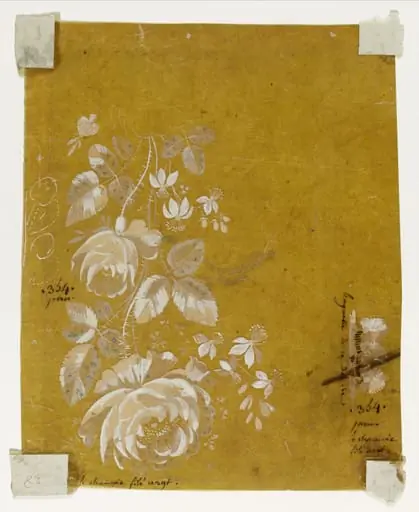 Bouquet de roses blanches pour étoffe, projets de broderies de gilet, XVIIIème siècle
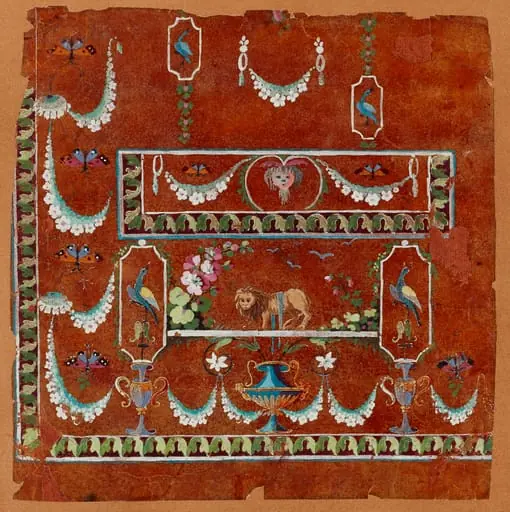 Gilet décor à grotesques, projets de broderies de gilet, XVIIIeme siècle
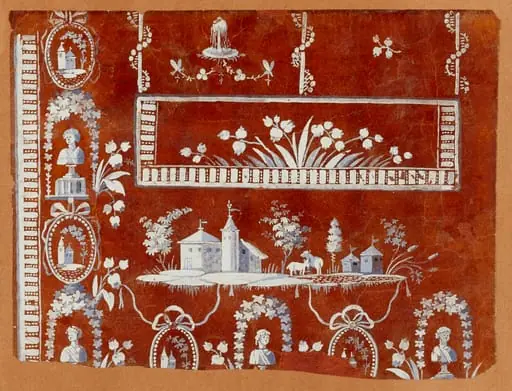 Gilet décor architectures rurales, projets de broderies de gilet, XVIIIème siècle
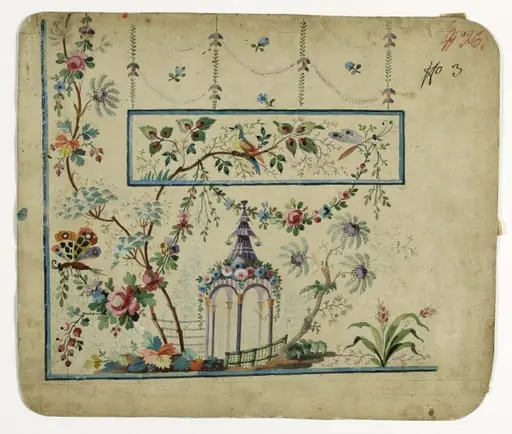 Gilet décor pagode, projets de broderies de gilet, XVIIIème siècle
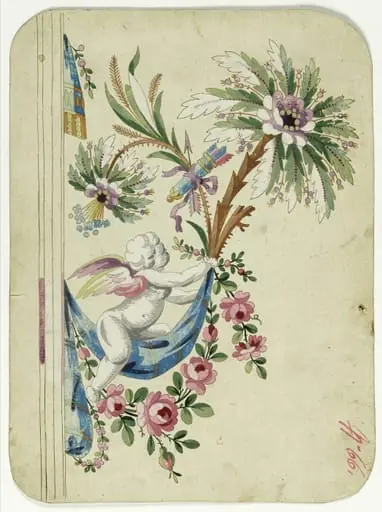 Décor de putti sur palmier, projets de broderies de gilet, XVIIIème siècle
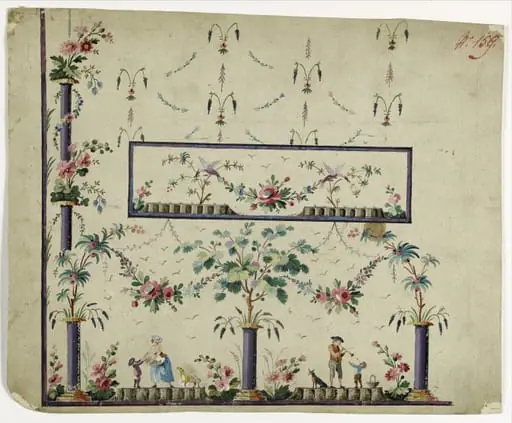 Gilet décor couple avec enfants, projets de broderies de gilet, XVIIIème siècle
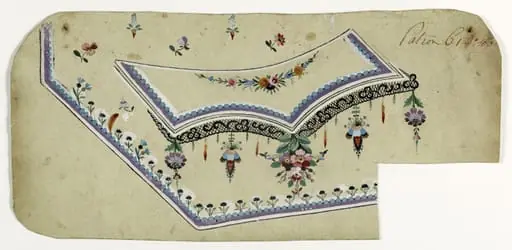 Gilet à la dentelle noire, projets de broderies de gilet, XVIIIème siècle
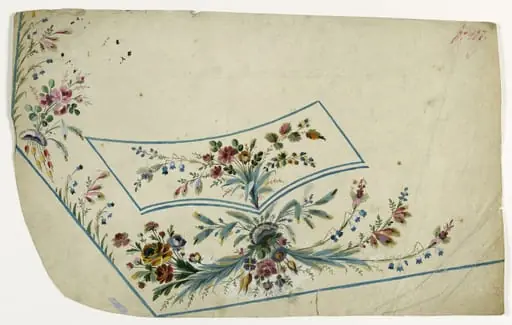 Gilet aux feuilles bleu-gris, projets de broderies de gilet, XVIIIème siècle
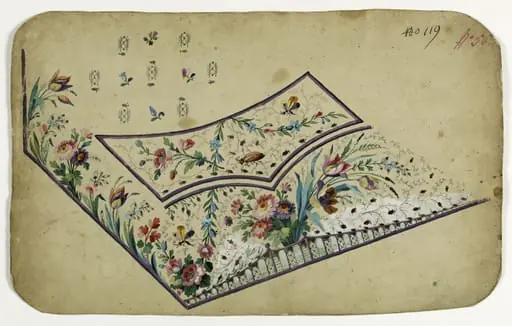 Gilet fleurs, papillons et scarabée, projets de broderies de gilet, XVIIIème siècle
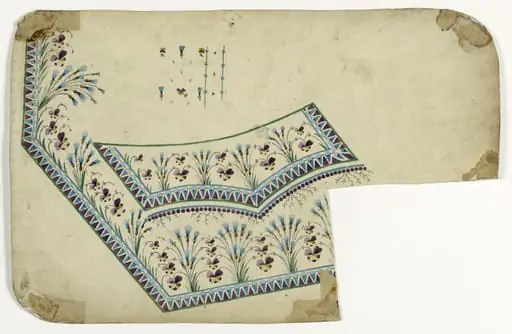 Gilet aux fleurs bleues et mauves, projets de broderies de gilet, XVIIIème siècle
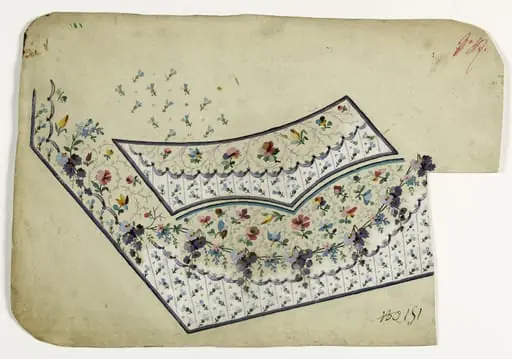 Gilet au décor tapissant, projets de broderies de gilet, XVIIIème siècle
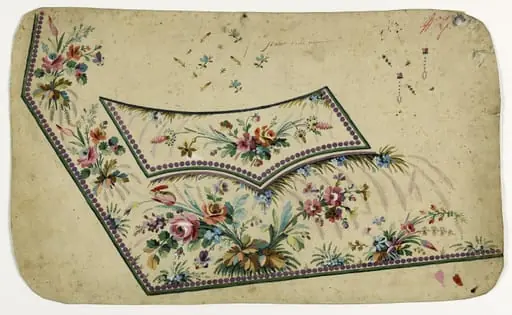 Gilet fleurs et perles mauves, projets de broderies de gilet, XVIIIème siècle
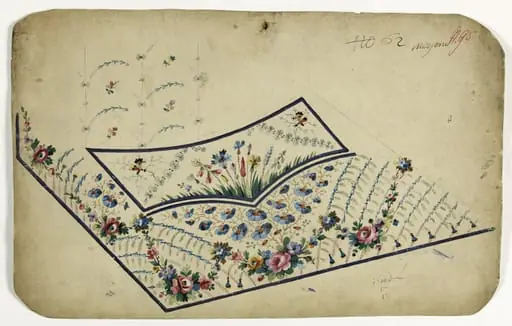 Gilet aux fleurs bleues et orange, projets de broderies de gilet, XVIIIème siècle
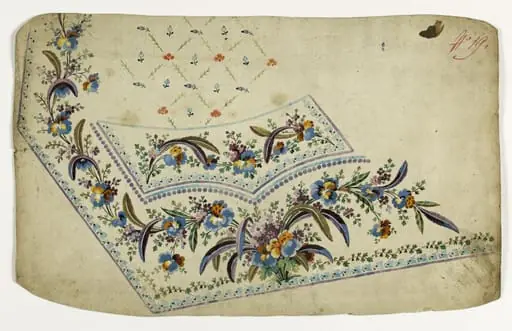 Gilet fleurs bleues et orange, projets de broderies de gilet, XVIIIème siècle
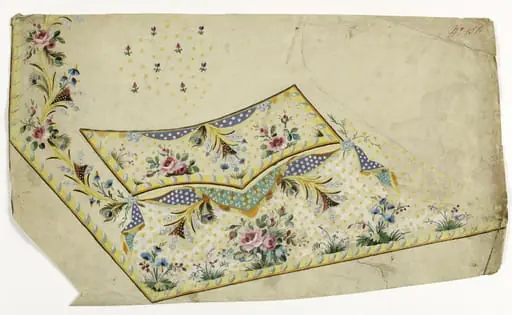 Gilet aux plumes de paon, projets de broderies de gilet, XVIIIème siècle
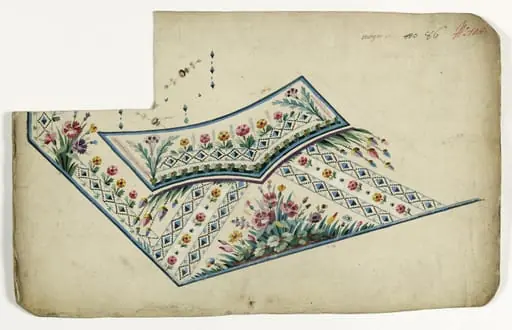 Gilet fleurs et losanges, projets de broderies de gilet, XVIIIème siècle
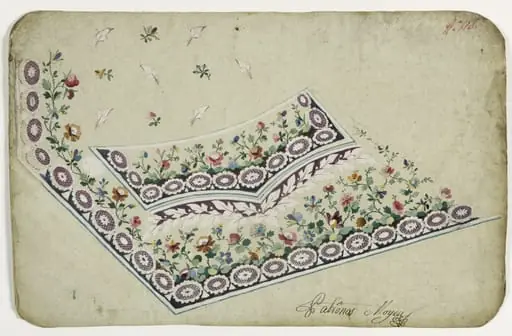 Gilet aux fleurs mauves, projets de broderies de gilet, XVIIIème siècle
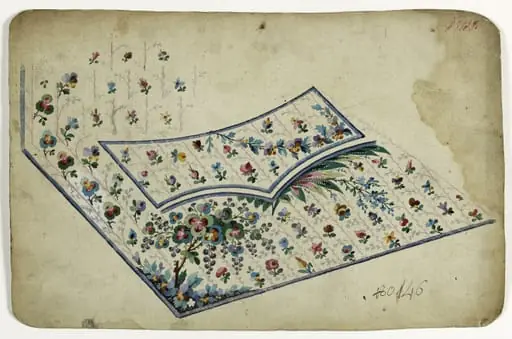 Gilet à l'arbre fleuri, projets de broderies de gilet, XVIIIème siècle
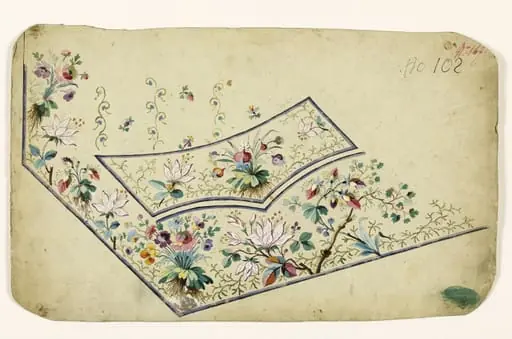 Composition de fleurs champêtres en branches et en bouquets, projets de broderies de gilet, XVIIIème siècle