Artwork
Gilet fleurs bleues et orange, projets de broderies de gilet, XVIIIème siècle
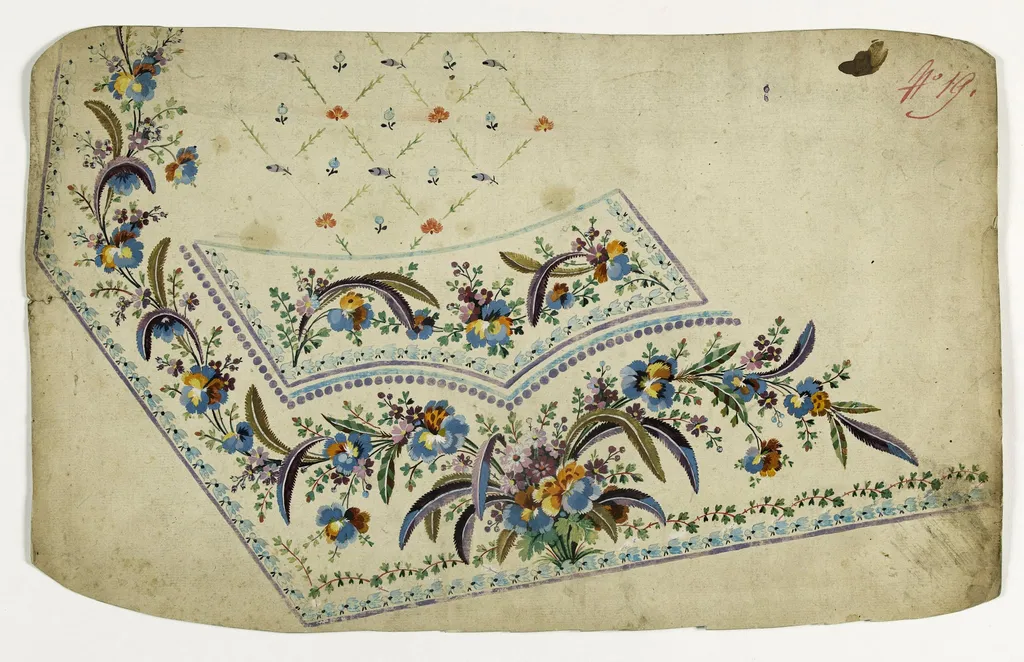
Gilet fleurs bleues et orange, projets de broderies de gilet, XVIIIème siècle is a drawing by Anonyme. It dates from 1750 and is held in the collection of the Palais Galliera - Musée de la Mode de la Ville de Paris. This eighteenth‑century drawing, attributed to an unknown artist and dated to around 1750, serves as a decorative plan for a men’s vest.
About this work
Overview
This eighteenth‑century drawing, attributed to an unknown artist and dated to around 1750, serves as a decorative plan for a men’s vest.
This eighteenth‑century drawing, attributed to an unknown artist and dated to around 1750, serves as a decorative plan for a men’s vest. Rendered on light‑coloured paper, the composition features a repeated floral motif in vivid blues, oranges and yellows, set against a subtle background of tiny birds and scattered blossoms. The design is framed by a narrow border of leaves and dots, suggesting its use as a template for hand‑embroidery.
Subject & Meaning
The central motif consists of clustered flowers with curved stems, each bloom rendered in contrasting hues of blue, orange and yellow. Green foliage surrounds the blossoms, while diminutive birds and additional small flowers populate the surrounding space, creating a lively, naturalistic scene. Such ornamental schemes were intended to convey elegance and refinement on personal garments, reflecting contemporary tastes for botanical decoration in aristocratic attire.
Technique & Style
Executed in fine line work, the drawing employs a combination of hatching and stippling to suggest texture and depth on the fabric surface. The repetition of the floral cluster demonstrates a systematic approach typical of pattern books used by embroiderers, where motifs could be scaled and applied to various garment parts. The palette, though indicated only by shading in the original, is identified by later annotations as bright blues, oranges and yellows.
History & Provenance
The work is part of the collection of the Museum of Ethnography, acquired as an example of eighteenth‑century textile design. Its anonymous authorship reflects the collaborative nature of pattern creation in the period, where designers often remained unnamed. The drawing likely functioned as a practical guide for craftsmen producing embroidered vests for fashionable clients in mid‑century France.
Artist & collection
Artist
A French designer from the 1700s made delicate flower drawings meant to decorate vests.
Museum
Palais Galliera - Musée de la Mode de la Ville de Paris
Continue through works from the same source collection.
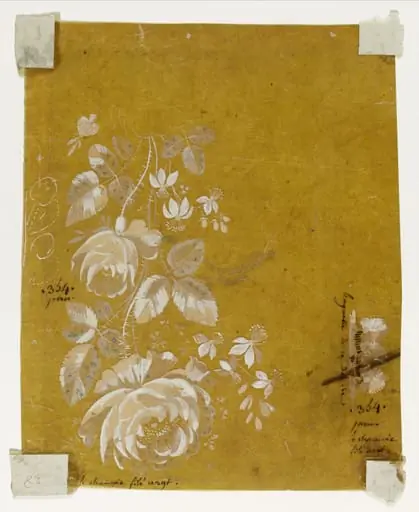 Bouquet de roses blanches pour étoffe, projets de broderies de gilet, XVIIIème siècle
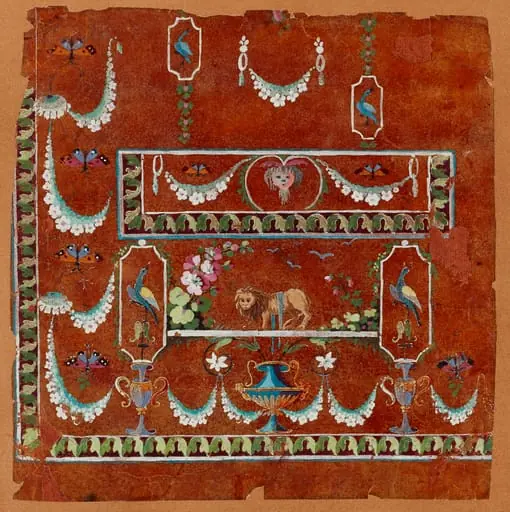 Gilet décor à grotesques, projets de broderies de gilet, XVIIIeme siècle
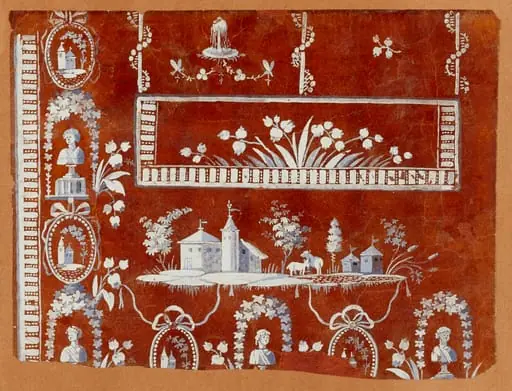 Gilet décor architectures rurales, projets de broderies de gilet, XVIIIème siècle
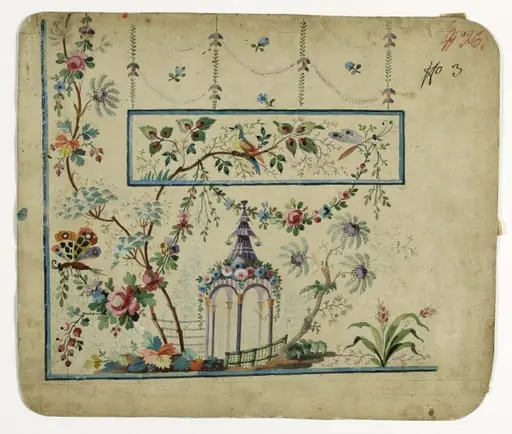 Gilet décor pagode, projets de broderies de gilet, XVIIIème siècle
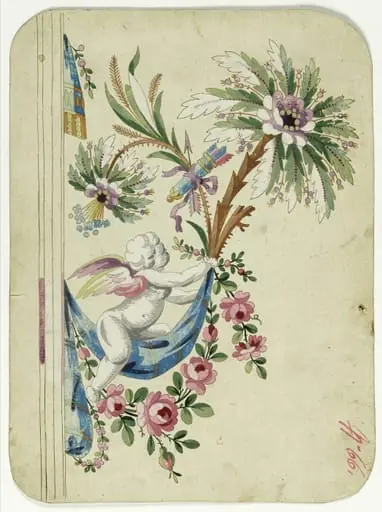 Décor de putti sur palmier, projets de broderies de gilet, XVIIIème siècle
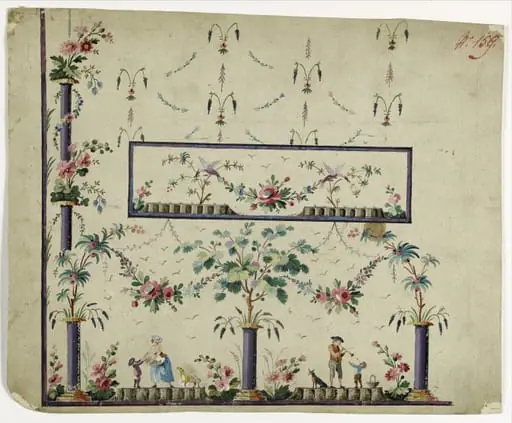 Gilet décor couple avec enfants, projets de broderies de gilet, XVIIIème siècle
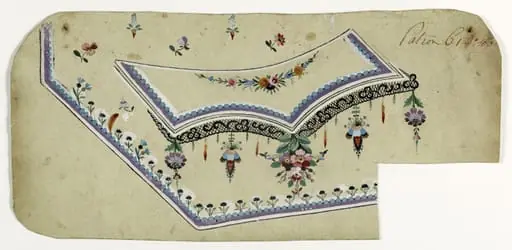 Gilet à la dentelle noire, projets de broderies de gilet, XVIIIème siècle
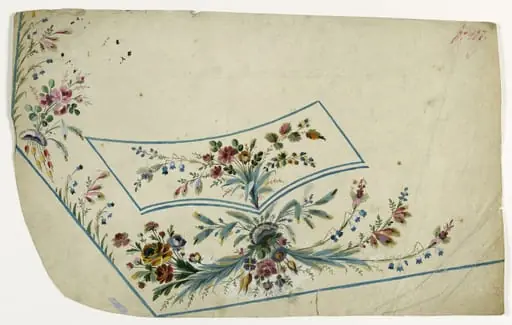 Gilet aux feuilles bleu-gris, projets de broderies de gilet, XVIIIème siècle
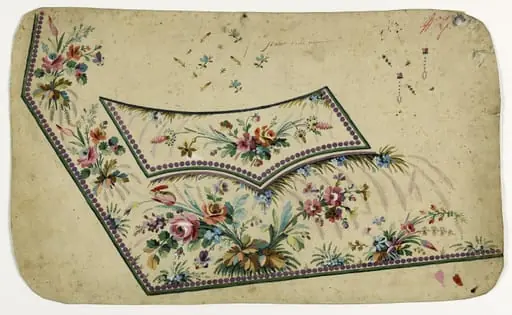 Gilet fleurs et perles mauves, projets de broderies de gilet, XVIIIème siècle
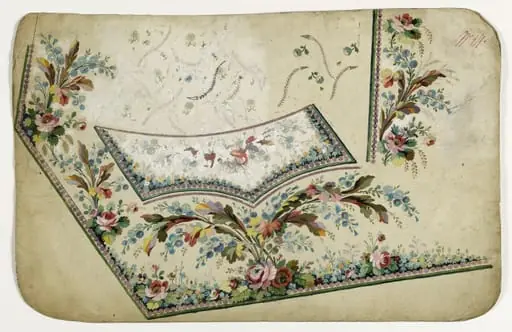 Gilet fleurs et feuilles multicolores, projets de broderies de gilet, XVIIIème siècle
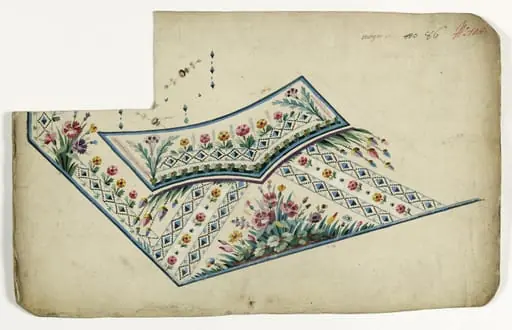 Gilet fleurs et losanges, projets de broderies de gilet, XVIIIème siècle
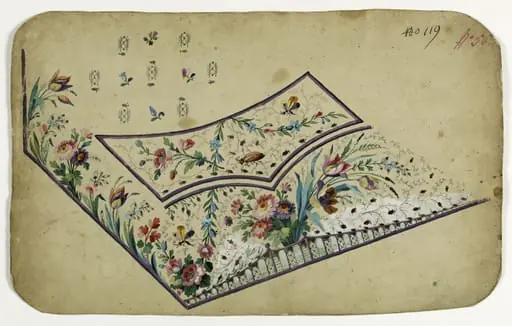 Gilet fleurs, papillons et scarabée, projets de broderies de gilet, XVIIIème siècle
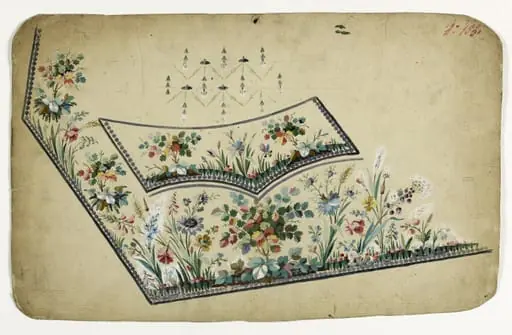 Gilet au buisson de feuilles colorées, projets de broderies de gilet, XVIIIème siècle
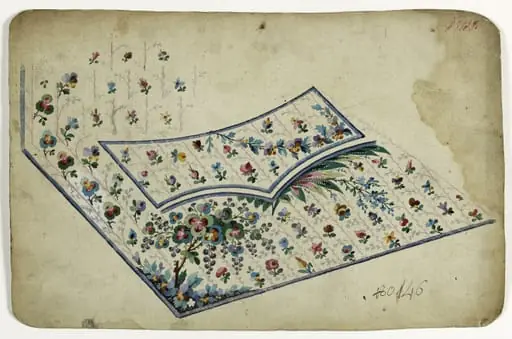 Gilet à l'arbre fleuri, projets de broderies de gilet, XVIIIème siècle
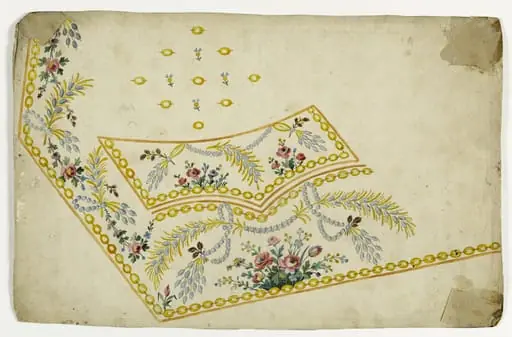 Gilet perles et fleurs, projets de broderies de gilet, XVIIIème siècle
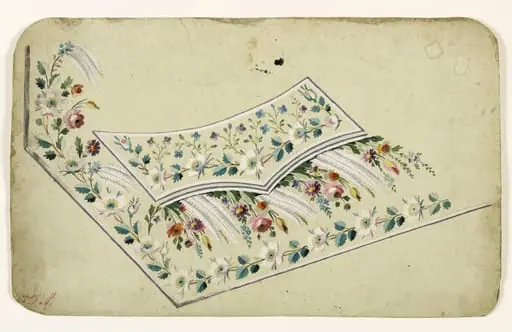 Composition de fleurs multicolores et de feuilles blanches et frises de fleurs de poirier, projets de broderies de gilet, XVIIIème siècle
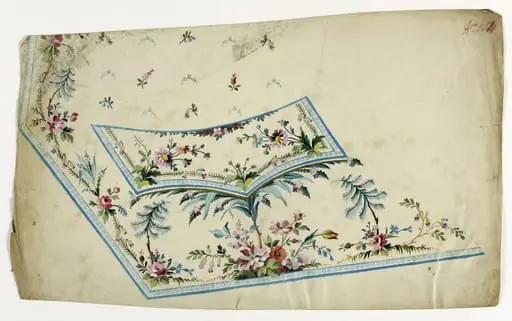 Gilet aux perles bleues, projets de broderies de gilet, XVIIIème siècle
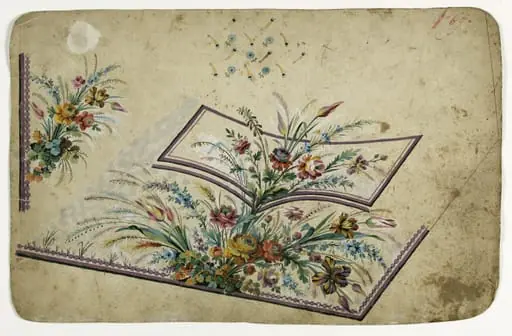 Gilet au bouquet de fleurs multicolores, projets de broderies de gilet, XVIIIème siècle