Artwork
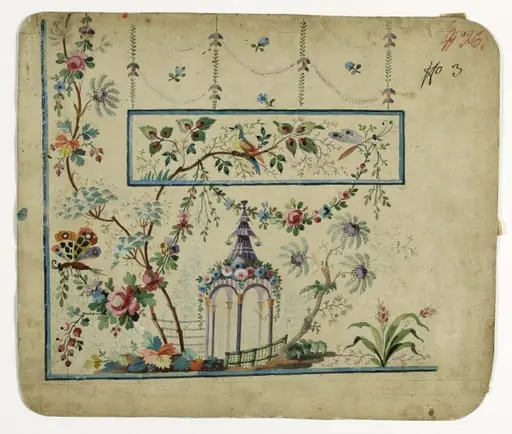
Gilet décor chinois sous une pagode, projets de broderies de gilet, XVIIIème siècle
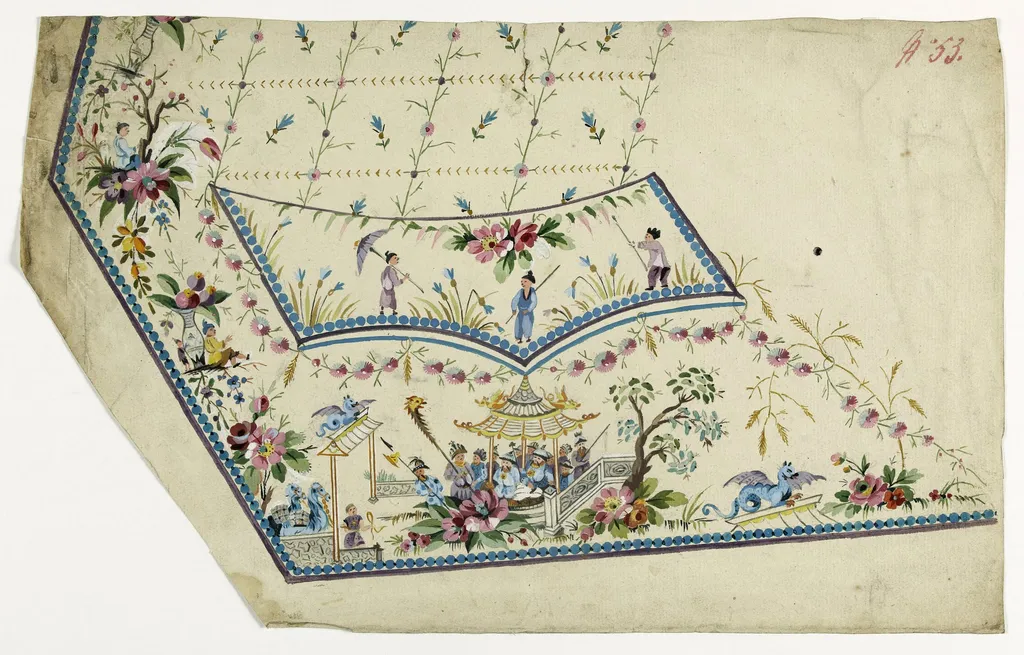
Gilet décor chinois sous une pagode, projets de broderies de gilet, XVIIIème siècle is a drawing by the Romanticist artist Anonyme. It dates from 1780 and is held in the collection of the Palais Galliera - Musée de la Mode de la Ville de Paris.
About this work
Overview
The drawing, attributed to an anonymous hand and dated to around 1780, serves as a design proposal for an embroidered vest featuring a Chinese‑themed scene. Executed on a light‑toned paper, the composition is dense with figures, flora, and fauna, all arranged within a decorative border. The work is part of the collection of the Museum of Ethnography.
Subject & Meaning
The central motif depicts a group of elegantly dressed figures gathered beneath a small, yellow‑tiled pagoda, a stylised reference to Chinese architecture. Birds flutter overhead and a profusion of blossoms frames the scene, suggesting an idealised, exotic garden that reflects European fascination with Oriental aesthetics in the late eighteenth century.
Technique & Style
Rendered as a detailed line drawing, the design employs fine hatching and stippling to suggest texture and depth, while the surrounding border is filled with alternating blue dots and green leaf motifs. The intricate arrangement of miniature elements—birds, trees, and human activity—indicates its purpose as a template for needlework, where each line would guide individual stitches.
History & Provenance
Created circa 1780, the piece likely originated in a workshop that supplied fashionable embroidery patterns to aristocratic clients. It entered the Museum of Ethnography’s holdings through a 20th‑century acquisition of decorative arts, though the exact path of ownership remains undocumented.
Context
During the eighteenth century, European decorative arts were heavily influenced by Chinoiserie, a trend that romanticised Chinese motifs and architecture. This drawing exemplifies how such exotic themes were adapted for domestic textiles, allowing patrons to display cultural curiosity through wearable art.
Artist & collection
Artist
A French designer from the 1700s made delicate flower drawings meant to decorate vests.
Museum
Palais Galliera - Musée de la Mode de la Ville de Paris
Continue through works from the same source collection.
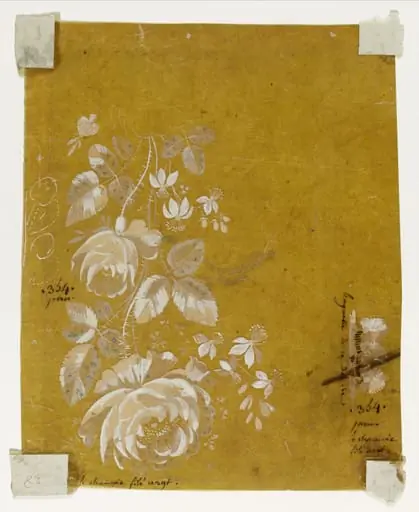 Bouquet de roses blanches pour étoffe, projets de broderies de gilet, XVIIIème siècle
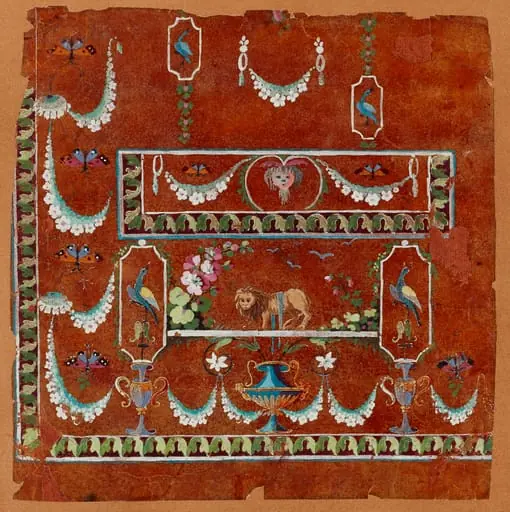 Gilet décor à grotesques, projets de broderies de gilet, XVIIIeme siècle
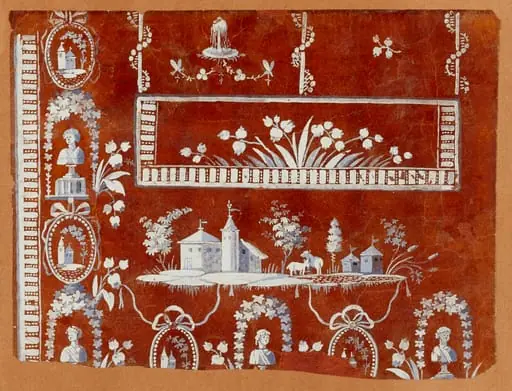 Gilet décor architectures rurales, projets de broderies de gilet, XVIIIème siècle
 Gilet décor pagode, projets de broderies de gilet, XVIIIème siècle
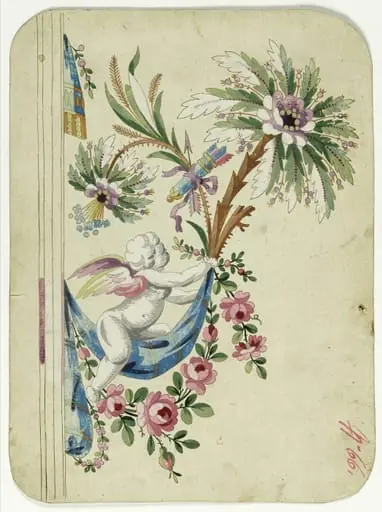 Décor de putti sur palmier, projets de broderies de gilet, XVIIIème siècle
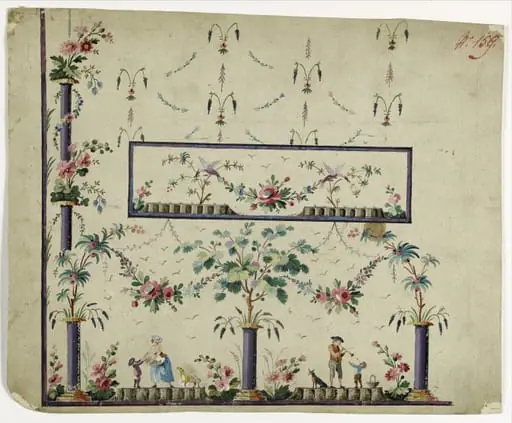 Gilet décor couple avec enfants, projets de broderies de gilet, XVIIIème siècle
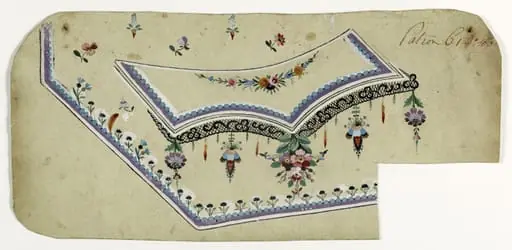 Gilet à la dentelle noire, projets de broderies de gilet, XVIIIème siècle
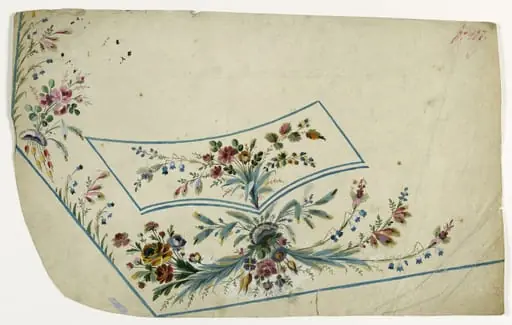 Gilet aux feuilles bleu-gris, projets de broderies de gilet, XVIIIème siècle
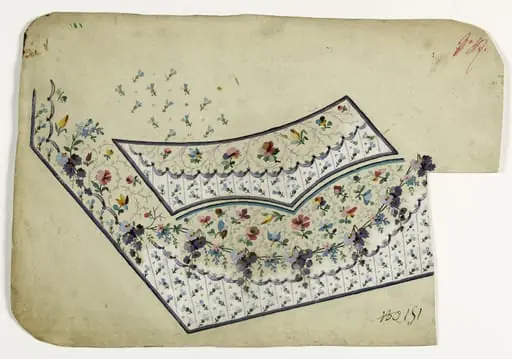 Gilet au décor tapissant, projets de broderies de gilet, XVIIIème siècle
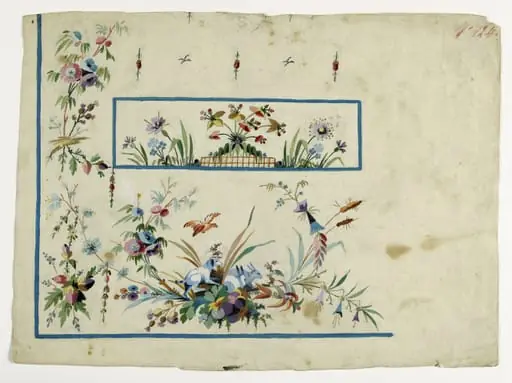 Gilet décor fleurs et fruits avec chien et lapins, projets de broderies de gilet, XVIIIème siècle
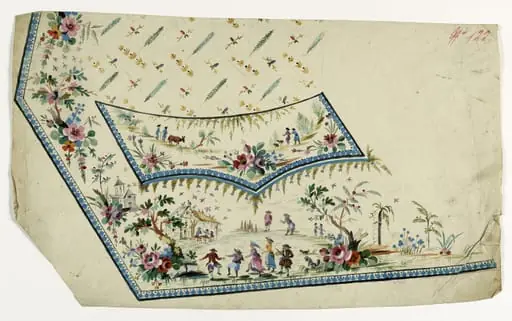 Gilet décor fête paysanne, projets de broderies de gilet, XVIIIème siècle
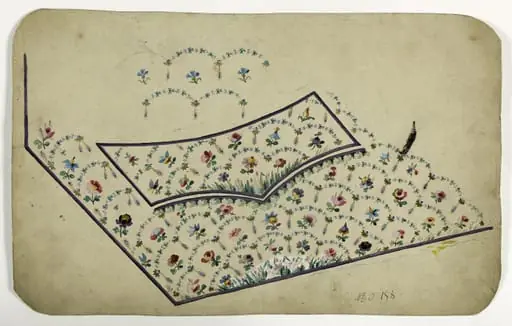 Gilet fleurs dans un réseau, projets de broderies de gilet, XVIIIème siècle
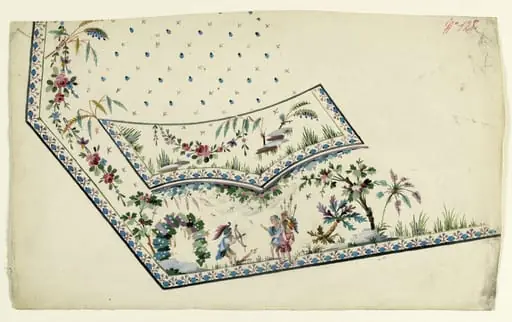 Gilet décor de paysage avec guerriers, projets de broderies de gilet, XVIIIème siècle
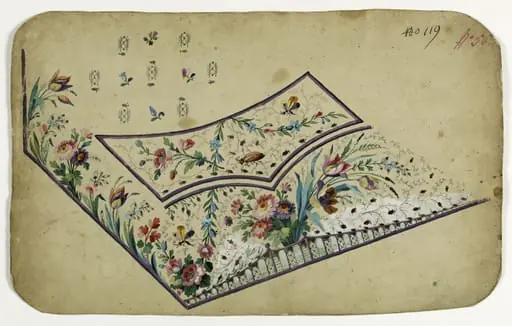 Gilet fleurs, papillons et scarabée, projets de broderies de gilet, XVIIIème siècle
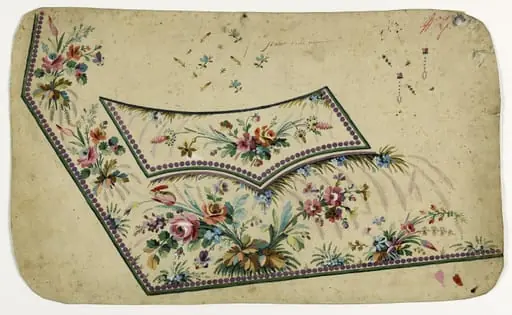 Gilet fleurs et perles mauves, projets de broderies de gilet, XVIIIème siècle
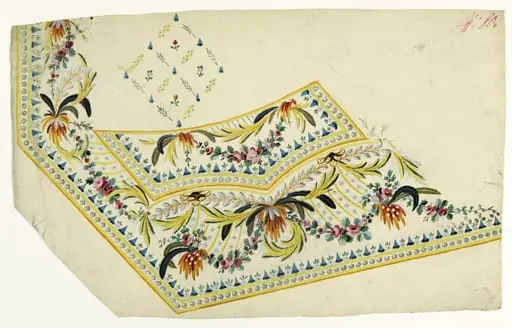 Gilet décor de perles, plumes et paillettes, projets de broderies de gilet, XVIIIème siècle
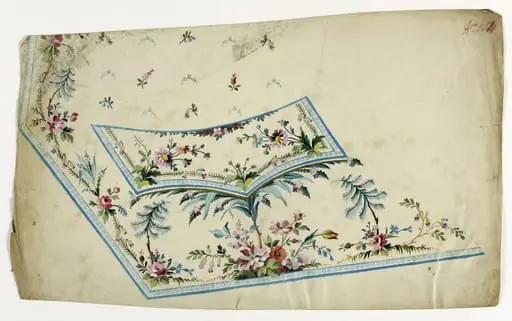 Gilet aux perles bleues, projets de broderies de gilet, XVIIIème siècle
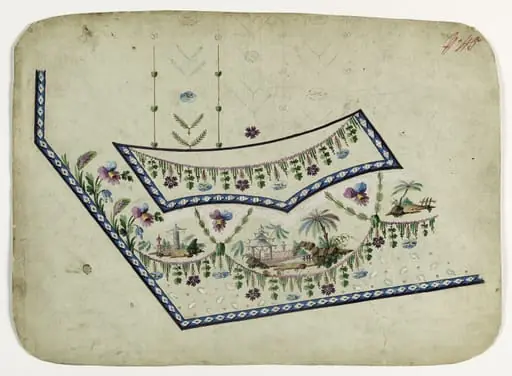 Gilet décor paysage chinois, projets de broderies de gilet, XVIIIème siècle